
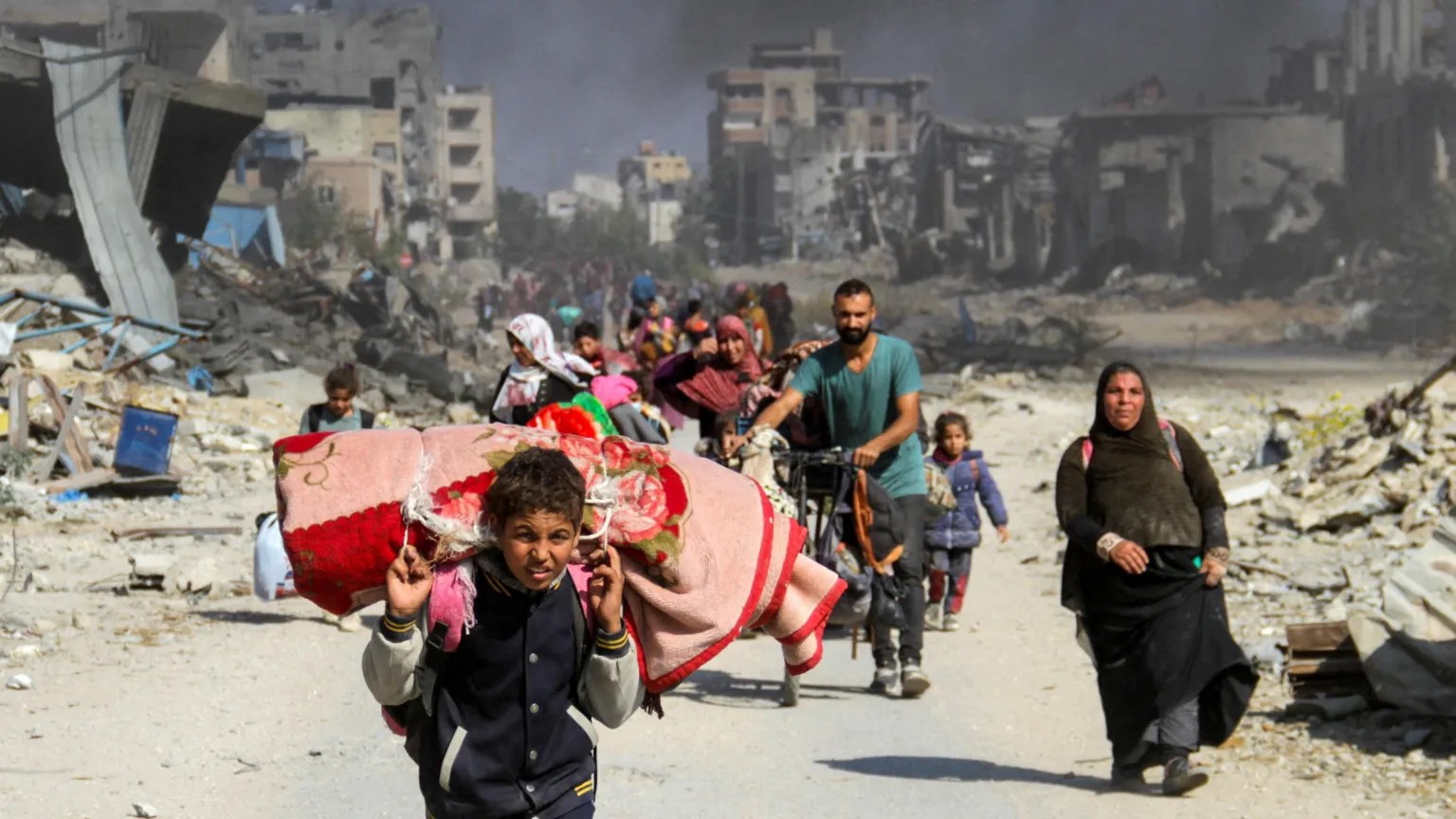
Atrocities in Sudan, Gaza, and Ukraine raise a question: do people in countries far away, like Canada, have a role in addressing the suffering of others?
While these conflicts can appear remote, affecting only distant strangers, the horrors they produce increase the chances that not only victims, but also perpetrators, seek to enter Canada. It’s unsurprising, then, that Canadian authorities are busier than ever in identifying suspected perpetrators of war crimes, crimes against humanity, and genocide. Yet Canada continues to deport perpetrators without any guarantee that they’ll be subsequently held accountable. Ottawa needs to put its money where its mouth is and use its courts to prosecute alleged war criminals.
The last report of Canada’s Crimes Against Humanity and War Crimes Program was released a decade ago. Back then, authorities suspected that some 200 perpetrators of international crimes resided in Canada. Ottawa’s goal was to prevent the entry or to deport suspects without any guarantee that they’d be subsequently prosecuted for their alleged crimes. Believing that trials were too expensive, the government was explicit: prosecuting perpetrators in Canadian courts under the Crimes Against Humanity and War Crimes Act was a last resort.
For the first time since 2016, we have a snapshot into what the War Crimes Program is doing, thanks to written questions submitted to the government by Conservative Member of Parliament Pierre Paul-Hus. The answers tell an important story.
Between 2016 and October 2025, the Program processed and analyzed 56 allegations that suspects present in Canada had been involved in international crimes abroad. A major uptick came in 2024-2025, with 35 allegations assessed during that period – seven times more than any preceding year.
What might have caused this increase in allegations?
Earlier this year, it was revealed that a structural investigation had been launched into international crimes committed in the “Israel-Hamas conflict”. The probe was opened in 2024 but only revealed in 2025. Canada has two other structural investigations, into Ukraine and into atrocities committed against the Yazidi people by the Daesh terrorist group. Rather than focus on individual perpetrators, structural investigations examine contexts, typically armed conflicts, and collect evidence of international crimes via the testimony of refugees and migrants as well as open-source evidence like social media postings.
As of October 2025, the RCMP has 18 active criminal investigations against suspected perpetrators of war crimes, crimes against humanity, or genocide. Who these individuals are or where they committed their alleged crimes is unclear. As for convictions in Canada for atrocity crimes? Zero: “There were no criminal convictions under the Crimes Against Humanity and War Crimes Act during the reporting period”.
That could soon change. For the first time in over a decade, Canada charged someone with war crimes in 2024. As an alleged member of ISIS, Ahmed Eldidi faces charges of torture, mutilation, and murder. His trial is set to take place in 2026. Mr. Eldidi cannot be deported because he is a Canadian citizen.
The information shared by the government also reaffirms a reluctance to prosecute perpetrators in Canadian courts and a preference for immigration-related approaches to dealing with suspects. Between 2016-2025, over 400 people were rendered inadmissible to Canada. A total of 84 removal orders were issued and 111 people were denied refugee protection. 426 people suspected of involvement in international crimes were denied entry into Canada and 63 were deported. A further nine individuals were subjected to proceedings to revoke their citizenship due to their suspected involvement in atrocity crimes; four revocations were successful.
The government will not share where the persons were deported to due to “privacy considerations”. But it added that “no individuals involved in atrocity crimes “were surrendered to a foreign state or international tribunal,” suggesting that where Canada has deported perpetrators, they have not been subsequently prosecuted. It is entirely possible that they were returned to live among their victims. That isn’t justice; it’s a hand-washing exercise.
Of course, money speaks louder than words, and the War Crimes Program’s budget has remained stagnant since 1998; the Carney government offered no additional funds in its recent budget. Given the growing case load and demand for accountability for atrocities in Canada, this is troubling. A budget is a moral document – so goes the quote often attributed to Martin Luther King, Jr. – and if the program’s funding stagnates, Canada’s moral commitment to international justice risks stagnating, too.
While efforts to prevent perpetrators from entering Canada are laudable, suspects who do enter must not get away with their crimes. Canada shouldn’t be exporting war criminals. It should hold them to account. Doing so means using Canadian courts to address the suffering of others – not as a concession to strangers, but as an act of solidarity with those who flee atrocity for the safety and promise of Canada.
*******************************************
A version of this article first appeared in the Globe and Mail.


 Justice in Conflict
Interesting post.
What we couldn’t understand from this post, is whether such policy of avoiding prosecution of perpetrators of international crimes, has been ever challenged in courts ( administrative petitions for example).
Normally or typically, if there is law or provisions, enabling the exercise of universal jurisdiction, It means, that the government or executive branch, has obligation to prosecute. Maybe not always. There is some room for discretion one may assume. Yet, if it is totally avoiding it, what for such law exists one may argue ? ( besides one case as so presented in the post it seems).
Thanks
Thank you very much for the comment, and interesting question. I will have to look into this, but my understanding is that it has not been challenged in court to date – although some private prosecutions have been initiated (and ultimately failed). If I learn anything, I will reach out here.