
The following is the fourth instalment in a four-part series by Jenna Dolecek on justice and accountability for victims and survivors of atrocities committed in Myanmar. For the first, second, and third parts of the series, please see here and here.
The world’s rapid mobilization to support Ukraine’s pursuit of justice stands in stark contrast to its inconsistent response to Myanmar. This final installment asks why and what these disparities reveal about political will, global empathy, and the unequal attention of international justice. It reflects on what Myanmar’s struggle tells us about who receives global solidarity and who is left waiting.
Our previous posts have discussed what justice means to the people of Myanmar and how the leveraging of universal jurisdiction (UJ) is an attempt to fill a gap in accountability. We have also explored possible alternative justice mechanisms, such as hybrid courts, like the Extraordinary Chambers of the Courts of Cambodia, and the local, tiered gacaca court system in Rwanda. Today, we end on a comparison, examining why some conflicts receive more attention and support than others.
Double Standards in Global Support for Ukraine and Myanmar
Why do some conflicts and demands for accountability receive more attention and support than others?
One possible answer is that civil war does not garner the same reaction as external acts and wars of aggression. But why? The only difference between external aggression and internal attacks is crossing a border. Yet, it is civilians whopay the price regardless of the attacker’s origin.
Studies have shown that less attention is paid to civil wars as opposed to interstate wars. When it comes to media coverage, which shapes much of public opinion, some believe the priority in coverage is due to countries’ geopolitical and economic significance. If a country is less economically and politically significant, it is less likely to receive as much coverage as conflicts involving countries with more power and influence. For example, the conflict in Sudan has costover 150,000 people their lives and displaced over 10 million. Yet, it has been eclipsed in media coverage by the suffering in Ukraine and Gaza, two conflicts with far reaching geopolitical and economic consequences. However, the instability in Sudan has important geopolitical consequences, affecting neighbouring countries and trade partners. It may not be as globally significant, but the conflict has serious regional implications.
This also appears to be the case for Myanmar. The country’s economy and politics may not be globally significant, but they are regionally significant, especially given China and Russia’s economic interests and roles in the conflict. Yet, the conflict in Myanmar does not galvanize global opinion and politics the way Ukraine and Gaza do, leaving people with less assistance and protection.
Since Russia’s second invasion of Ukraine in February 2022, numerous organizations and their resources have poured into Ukraine to investigate crimes, update its criminal code and judicial system (in parallel with European Union accession requirements), as well as train those in the judicial system and law enforcement. The same is not being done in Myanmar where countless flagrant violations of international law continue to occur. With Myanmar not being a major Western ally and whose military is the perpetrator, this may explain why it has not received the same support as Ukraine. Therein lies the problem: why should the people of Myanmar receive less support just because their country is not a major ally and its own military is attacking them? It seems that many are more willing to enter Ukraine’s conflict zone than Myanmar’s, which is notable given that people are far safer in Yangon than in Kyiv, as Yangon has only experienced two air attacks since the coup and both were in July 2025, otherwise, there have been no other airstrikes. Granted, it is easier to go to Ukraine, whose government is open to assistance, rather than Myanmar, given its hostile regime. For Myanmar, what assistance is being given is usually remote and in secret, offered to anti-junta organizations and individuals. However, this is likely the best that can be done given the situation and it is wonderful that there are organizations and individuals willing to risk their security to do so.
Another interesting disparity is the difference in academic and analytical coverage between these two conflicts. In a piece for Opinio Juris, Alessandra Spadaro sums it up perfectly in saying that we should not just focus on some conflicts because they are intellectually more stimulating or legally challenging. With publications rejecting submissions for not being interesting or relevant enough, this may dissuade authors from engaging with conflicts that tend to be ignored. Davied Brenner and Enze Han conducted a study and found that while civil wars have been extensively studied, Myanmar, and civil wars in southeast Asia in general, have largely been neglected. Conversely, some authors are further motivated to pitch pieces to alternative platforms which may have broader subject matter acceptance, such as academic blogs and magazines. Self-publishing through personal blogs has also become more common so as to avoid institutional editorial restrictions.
With Myanmar being the most fragmented conflict in the world, some may struggle to understand the conflict and its narrative(s). Some posit that Myanmar lacks a charismatic figure like President Volodymyr Zelenskyy to throw popular support behind. Some say it is a matter of not making the headlines, though media bias also has a role to play. For those who do not seek out news, including on specific countries or conflicts, it is not necessarily their fault for not knowing what is going on everywhere all the time. The world is a big place and there are many things vying for our attention. Compassion fatigue is real and would argue that news fatigue is a real thing too.
Myanmar is also not a global heavy hitter when it comes to politics or economics. Its sphere of power and influence is largely restricted to Asia. Myanmar’s top trading partners are Asian countries, even though it does trade with the United States and Europe. Between February 2021 and July 2024, the US has sent over $500 million in aid to Myanmar, and February 2022 to July 2024 it sent over $174 billion in assistance to Ukraine. If Myanmar resistance forces received even a fraction of the financial or materiel support Ukraine is getting, it could be enough to turn the tide, or at least significantly impact the conflict.
Even without such support, it has been nothing short of amazing what resistance forces in Myanmar have been able to accomplish without a major flow of weapons. Resistance forces have been incredibly resourceful and it is clearly paying off, but many argue that this conflict could end sooner if they were more effectively armed. The junta does not have the support of the people, but it does have superior air power, thanks to its Air Force and military aid from China, and a willingness to control its people by raining terror from above.
At least for Americans and Europeans, the focus on Ukraine very well could be due to the long simmering proxy conflict with Russia, where the US and Europe have engaged Russia indirectly through other conflicts, such as the Cold War. The threat that Russia presents is far more significant and tangible compared to the non-threat Myanmar poses to the international community. Ukraine is seen as the ‘Shield of Europe’ and has also been a strategic ally of the US and Europe for some time. Geography does matter. Myanmar’s conflict, on the other hand, is internal and therefore it mostly threatens its immediate neighbors through spillover or other effects. Even if a conflict is contained within its own borders, leaders acting with impunity signals that others can do the same.
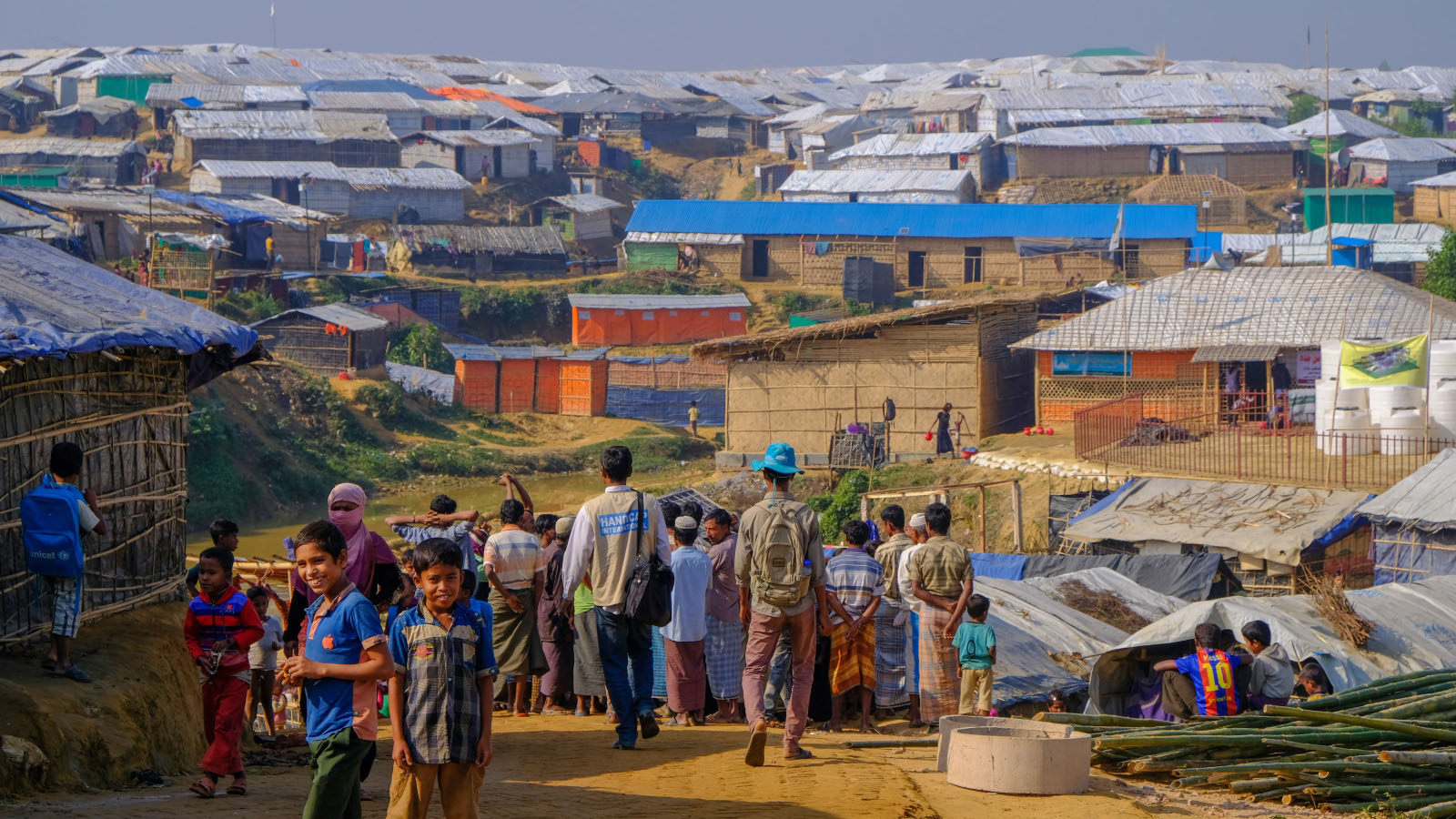
Regardless of Myanmar’s global influence, civilians are civilians. Those fleeing Ukraine were accepted in Europe in droves. Those who have crossed into northern Thailand from Myanmar have been met with raids and deportation. The Rohingya essentially live in one of the world’s largest open air prisons in Bangladesh. Even the treatment of those fleeing conflict has differed.
Of course, there remain obvious differences between Myanmar and Ukraine. As stated, one is a civil war with a hostile government, the latter was attacked by another state. One holds implications for an entire continent and beyond, the other impacts only a limited geographical area. When it comes to disparate treatment, the same could be said when comparing any current conflicts, but it is not about who has it worse. Spadaro is correct in saying that all conflicts matter, but more importantly, all civilians matter and they deserve assistance and protection regardless of who is attacking them.
Across this series, Dreaming of Justice has traced the many meanings and mechanisms of justice and the challenges in pursuing accountability for the people of Myanmar. While the road to justice remains long, each effort — from survivors’ voices to international court cases — brings the dream of justice closer to reality. True justice for Myanmar will depend not only on laws and courts, but on the world’s willingness to listen, act, and stand with those still dreaming of justice.


 Justice in Conflict