
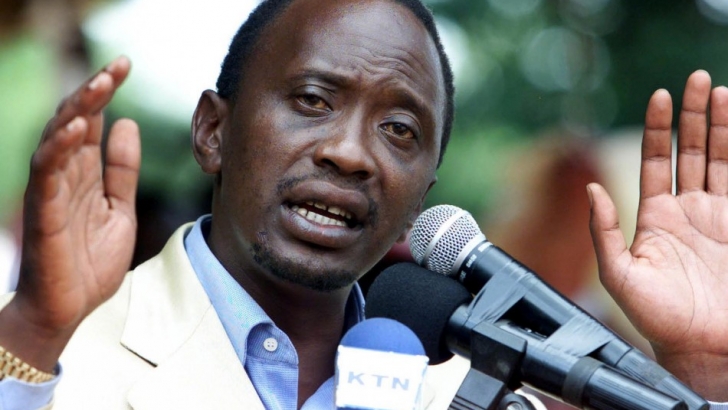
Kenyan President Uhuru Kenyatta (Photo: TV/C)
Dear readers,
I recently had the pleasure and honour to write a brief article for the UNA-UK’s publication New World on what the election of Kenyatta and Ruto in Kenya means for the ICC. For anyone interested, the full article can be found here. Here’s a glimpse:
There is no denying that the recent election of Uhuru Kenyatta and William Ruto as President and Vice President of Kenya respectively, came as a significant blow to the International Criminal Court (ICC). The ICC had identified Kenyatta and Ruto as bearing responsibility for crimes committed during the 2007/2008 post-election violence in Kenya. Their election has left the belief that the ICC could isolate and marginalise its targets battered. Some have even suggested that the ICC indictments could have helped Kenyatta and Uhuru achieve electoral victory, in a country where it’s reported that just 35% of the population now support the Court.
The situation has elevated criticisms of the ICC as a ‘neo-colonialist’ institution biased against African states to a new level and put the relationship between Africa and the ICC under the microscope once again. Ugandan President Yoweri Museveni praised Kenyans for rejecting “blackmail by the International Criminal Court and those who seek to abuse this institution for their own agenda”. And Ethiopian Prime Minister Hailemariam Desalegn proclaimed that the Court was “race hunting”. The African Union subsequently passed a resolution insisting that the Court was unfairly targeting African states. Had it not been for the lone dissenting voice of Botswana, the resolution would have passed unanimously.
There have also been numerous calls to dismiss the cases against Ruto and Kenyatta. The trials for both have been repeatedly delayed. Dozens of witnesses have withdrawn their testimonies amidst reports of witness tampering and, in some cases, disappearances. Despite stating that there would be “consequences” if Kenyatta was elected, many ICC member-states have since congratulated Kenyatta on his victory. Given this laundry list of controversies, it is hard not to wonder whether Kenya is the hill the Court’s relationship with Africa will die on.
So what is the Court to do?


 Justice in Conflict