
The Trump administration’s Executive Order issuing sanctions against staff of the International Criminal Court (ICC) have been called many things: vindictive, disgraceful, as well as an act “that puts the United States on the side of war criminals at the expense of victims of grave crimes seeking justice.” As severe as they may be, these descriptions are nonetheless accurate. But who is targeted by theses sanctions, why were they issued, what impact might they have, and where do they leave the ICC? In what follows, I endeavour to answer these questions.
American sanctions against the ICC did not come as a surprise. It has been understood for months now that the Trump administration is infected by rapidly anti-ICC sentiments. Since the 2024 presidential election, it was accepted by the Court and states alike that the U.S. would resume its efforts to cripple the Court, initiated at the end of Trump’s first presidency. It is easy to forget the attacks on the ICC by the likes of National Security Advisor John Bolton – who called the Court “dead”, and Trump’s former Secretary of State Mike Pompeo – who called it a “Kangaroo court”. The most recent sanctions are a continuance on a theme, not an aberration.
In January, Republicans tried to pass a bill authorizing sanctions through Congress, but were blocked by Democrats in the U.S. Senate. As a result, the latest sanctions come via Executive Order. The greatest fear in recent weeks among proponents of the ICC was that the U.S. would issue sanctions not just against ICC staff, but against the Court itself. That would pose a potentially existential threat to the institution and its ability to function. Reflecting those fears, it was reported that staff at the Court were backing up data and evidence in case they would not be able to access the Microsoft platforms that the institution had become dependent on in recent years.
For now, however, the White House has decided not to sanction the Court as a whole but rather focus on a list of individuals to be targeted. As this moment, only one person, ICC Prosecutor Karim Khan, has been listed. If the U.S. continues to target only individual ICC officials, the sanctions will neither paralyze nor destroy the Court. They may interfere with certain actions and will certainly be figured into decision-making. For example, will Khan be permitted to speak at the United Nations Security Council, which he does twice a year, or to attend the Assembly of States Parties of the ICC conference when it takes place at the UN in New York? Regardless of the answers to these questions, sanctions targeting individuals are manageable, especially if the European Union invokes its Blocking Statute to insulate sanctioned ICC staff and ensuring they can access financial and banking institutions.
Nevertheless, this is not a time to be complacent. As I have explained before and unlike the last round of U.S. sanctions, the White House has four years to hurt the Court. If ICC investigators, prosecutors and judges continue their work in contexts like Palestine unabated and undeterred by American bullying, then the Trump administration can escalate; the Trump regime has a lot of runway left to issue new sanctions, target the ICC as a whole with punitive sanctions and perhaps even tariff countries that support the institution. Nothing is beyond the pale for this government. Avoiding a cycle of escalation while maintaining the integrity and independence of the Court will be a delicate balancing act.
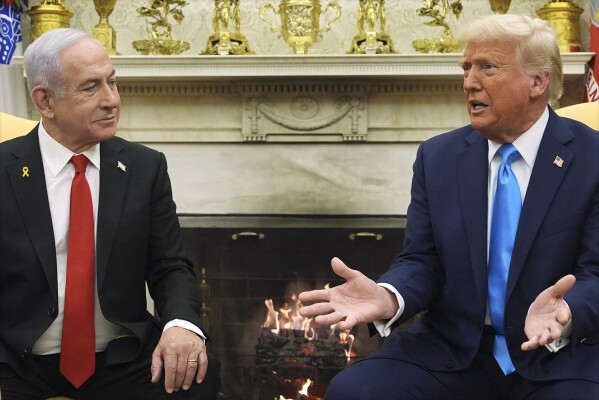
In navigating American hostility, it is important for the ICC and its supporters to be clear-eyed about the source of Washington’s antipathy towards the Court. The easy answer is that U.S. lawmakers are seeking retribution over the ICC’s decision to issue a warrant for Israeli Prime Minister Benjamin Netanyahu and the possibility that the Court may do likewise for American servicemembers. That is undoubtedly part of the equation, but American reactions to ICC investigations in specific contexts are just a symptom of a deeper cause driving Washington’s antipathy towards the Court: a lack of control over the institution.
From the negotiations of the Rome Statute of the International Criminal Court in 1998 to the present day, no White House administration – Republican or Democratic – has never accepted that the ICC could act independently. Successive presidencies have wanted to exert control of the institution: Republicans via coercive measures like sanctions or the American Servicemembers’ Protection Act (pejoratively known as “The Hague Invasion Act”), and Democrats via a drip-feed of cooperation and evidence sharing that the ICC needs. Both have sought to influence and control the ICC’s agenda. Neither accept the Court’s ability to make decisions misaligned with U.S. interests; they simply manifest their antipathy differently. Understanding these dynamics is key to framing how the ICC responds to the sanctions, and its relationship with the U.S. more generally, going forward.
The ICC cannot respond to U.S. attacks on the institution alone. It needs its member-states to stand up and support the Court and its mandate. There are numerous ways in which they can do so, although supporters should not expect states to always express support out loud. It is clear that, for many states, especially those facing their own threats from the Trump administration, any support that is offered will take place behind the scenes rather than via open proclamations. If pushed to make pronouncements on the ICC, some states will choose public statements that do not unequivocally support the Court and its mandate.
There are clear signs that member-states are divided not only on how to support the ICC, but whether to do so at all. A statement supporting the Court was signed by seventy-nine ICC member-states. The Court has 125 members in total, meaning forty-six did not sign the statement. Australia and New Zealand declined to express support for the ICC; so too did Serbia and Italy, which is facing scrutiny over its decision to send a Libyan national suspected of raping and murdering migrants back to Libya on a secret service jet rather than surrendering him to the ICC.
The path forward for the ICC will not be easy. It is incumbent on the Court and its supporters – both states and in civil society – to identify ways that the institution can navigate an increasingly fraught political landscape. Thoughtful commentators have offered suggestions such as targeting Trump with the ICC’s version of obstructing justice or getting member-states to impose travel sanctions on those who sanction the Court. These are worth thinking through but may risk locking the ICC in an escalating battle that it cannot win. It is therefore critical that strategies are identified that avoid the Court entering a cycle of escalation with the White House, on the one hand, and normalizing a White House that not only opposes the ICC but is openly planning on committing international crimes. Some ways to do this include strengthening existing relationships with member-states, democratizing support for the Court in regions like Africa and South America, and proactively weaning the ICC off any dependence on Washington or U.S. companies.
There are many wanted perpetrators of international crimes that would love to destroy the only international court trying to hold them to account. Russia’s Vladimir Putin and Sudan’s Omar al-Bashir come to mind, but there are many others. Trump’s sanctions mean America is doing their bidding. But the sanctions also expose what has long been clear: the foreign policy status quo in America cannot fathom an institution that acts independently of narrow U.S. political interests; indeed, it would rather commit and defend perpetrators of international crimes than accept the independence of the ICC. That longstanding reality should guide how the Court and its supporters respond to the threats coming from Washington now, and into the future.
A version of this article first appeared at Balkan Insight.


 Justice in Conflict