
This post is Alette Smeulers‘ introduction to JiC’s symposium on her book, Perpetrators of Mass Atrocities Terribly and Terrifyingly Normal?. Smeulers is a professor at the University of Groningen in the Netherlands. Her research takes an inter- and multidisciplinary approach, focuses on on the causes and perpetrators of international crimes and terrorism, as well as the international criminal justice systems dealing with these crimes. Other contributions to the symposium can be found here.
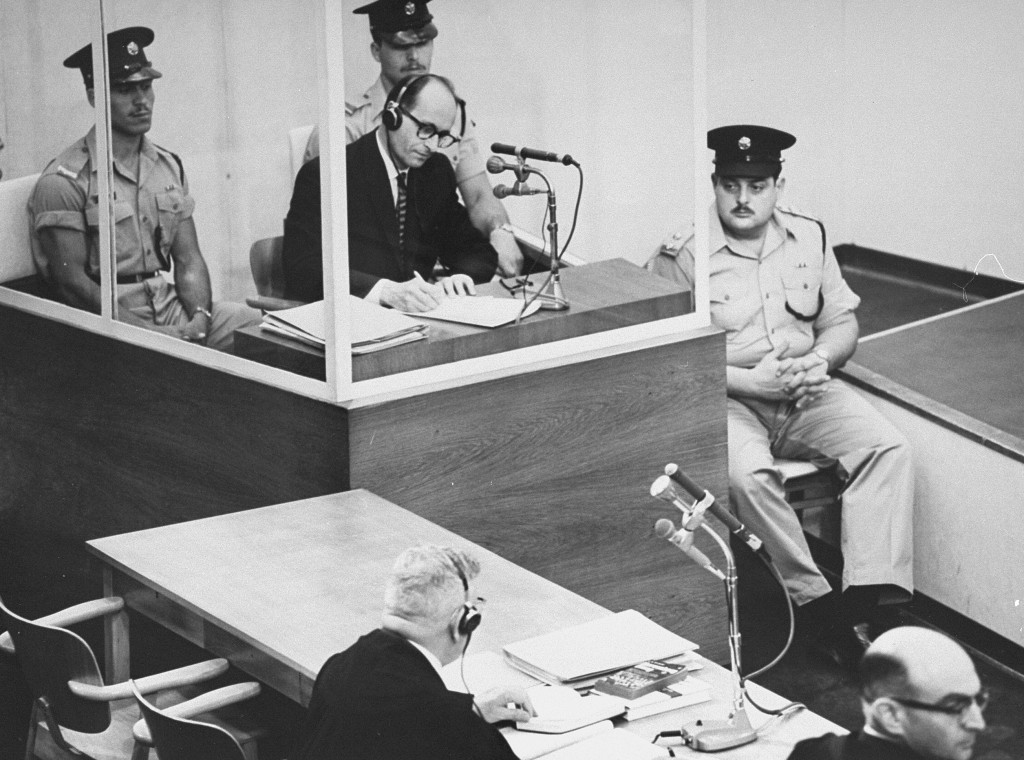
Discussions of mass atrocities usually involve questions on whether the perpetrators are mentally disturbed sadists or ordinary people, as well as on what drives their actions: ideology, obedience, sadism, material gain, or fear. The typology in my new book, Perpetrators of Mass Atrocities Terribly and Terrifyingly Normal? (which will soon by published in Dutch under the title Angstaanjagend normal) seeks to end that debate. Most (but not all) perpetrators are ordinary people and motives play a role but in different ways for all different types of perpetrators.
Ideology and obedience are present for all perpetrators but in different ways. For some, ideology (or hatred) is a motivational factor. For others, it is a means to rationalize and justify their crimes after the fact. The same is true for obedience: some perpetrators commit their crimes out of obedience, others take advantage of the fact that atrocities are ordered, accepted or condoned or rely on obedience as an excuse.
The typology put forward in my book aims to show that people, including perpetrators, are different and are driven by different motives. No one is born a perpetrator; people become perpetrators. Admittingly, this transition is easier for some than it is for others but we all can become perpetrators, although not everyone can become just any type of perpetrator.
The type of perpetrator we can become depends on situational factors, as well as our genes, upbringing, character traits and the choices we make. Only a few ambitious, power hungry, and ruthless people with leadership skills will become Criminal Masterminds. Those who are extremely ambitious can become Careerists. Those who have strong ideological rootings can become Fanatics. Those who are driven by their own material or personal gain can become Profiteers. And, those who are obedient and conformist can become Followers.
The typology consists of 14 types of perpetrators . At the top of the chain of command is the Criminal Mastermind. These are the destructive leaders like Adolf Hitler, Joseph Stalin, Saddam Hussein, Mao and Pol Pot. They are often narcissists, psychopaths, and Machiavellians. They can only rise to power when there is a fertile breeding ground, but they then set the scene and create the conditions and context in which others commit their crimes. Criminal Mastermindsare usually supported by a few ambitious and power-hungry Careerists and ideologically-driven Fanatics as their close associates. These are two very different types: ideology matters to the Fanatics but usually not at all for the Careeristwho merely pretend and who are just in for the power, glory, and fame.
In the middle cadre we usually see Devoted Warriors: perpetrators who subdue themselves to a leader, ideology, or party. They are obedient, conformist, and loyal. They will go beyond the call of duty to show they are the best for the job. They become almost obsessively subservient and at some point, internalize the ideology. However, they mainly gain pride in doing their jobs well. Perpetrators like Adolf Eichmann, Kaing Guek Eav (better known as Duch) and Alfredo Astiz are examples of Devoted Warriors. They would be good employees in just any company, but they are also the perfect candidates for evil and destructive systems. They are authoritarian and do as they are told; convinced they are doing the right thing.
Then we have the Professionals: the ones forcefully trained to become torturers or killers. The training at KESA during the Greek military regime from 1967-1974 is the probably the best-known example. Low ranking perpetrators can be driven by ideology (True Believers and Holy Warriors), material gain or personal profit (Profiteers or Criminals), revenge (Avengers), or just go along (Followers). This book is filled with examples of different types of perpetrators like Josef Mengele (Nazi doctor Auschwitz), Timothy McVeigh (Oklahoma bombing), William Calley (My Lai), and Victor Bout (arms dealer) to name a few.
Most perpetrators are ordinary people who transformed into perpetrators, but some are less ordinary, such as the Predators and the Deranged. They are driven by sadism, an extreme lust for power or control. They may also differ from ordinary people because they have mental health illnesses, which in combination with other factors, lead them to commit mass atrocities. The perpetrators discussed in this section are Anders Breivik (Utoya), Ted Kaczynski (the Unabomber), Klaus Barbie (sadistic Nazi in WWII), as well as several terrorists such as Mohamed Merah (attack on Toulouse), Mehdi Nemmouche (Jewish Museum Brussels) and Mohammed Emwazi better known as Jihadi John (beheading of James Foley and others).
The last and saddest type discussed in the book are the Compromised perpetrators who for some reason are weak, vulnerable, or belong to the targeted victim group and are forced or manipulated into working with the other perpetrators in the destruction of their own people. During WWII the Nazis became specialized in forcing the Jewish people to work for them. Ans van Dijk, a Jewish woman who was captured in the Netherlands during WWII, was given the choice of being sent to Auschwitz or save her life by betraying other Jewish people. She decided on the latter and unfortunately became good at it. Her experience is illustrative of the reality that an individual can be a perpetrator and a victim at the same time.
Although the book is filled with case studies, the typology is not meant to be an individual assessment tool. Rather, it is meant to be a theoretical framework showing how situational factors are crucial but then interact with disposition factors. It furthermore shows that each one of us can be transformed into a perpetrator; not just any type but the type that matches our genes and character traits. Not everyone will become a sadistic perpetrator, but everyone can somehow get to play a role in mass atrocities.
This begs the question: how and why is the typology important and what is the added value? The typology aims to add more nuance to the debate on perpetrators of mass atrocities; show the several pathways to perpetration, the various forms and means of perpetration, and the different motives individuals may have for committing mass atrocities.
The typology also shows that the world is not divided between good and bad people. Rather, we all have the potential to be both good and bad, and under certain circumstances we can get involved in mass atrocities. Awareness of this transformation is important because it is gradual and hard to detect, especially when in the middle of a transition and when everyone around is also undergoing this process. We must be alert to the signs and signals and we should not make the mistake of assuming that we will never become perpetrators. A crucial common factor of perpetrators is that they never see themselves as the perpetrators. They see themselves as the victims, the good ones who are merely trying to protect themselves, fight evil or create a better a world.
In light of this, when addressing mass atrocities we should never merely stick to bringing the perpetrators to justice, disqualifying them as human beings or labelling them as evil. We must seek to understand their behavior and use this knowledge to help prevent mass atrocities in the future.


 Justice in Conflict