
The following contribution to JiC’s ongoing symposium on Alette Smeulers’ “Perpetrators of Mass Atrocities Terribly and Terrifyingly Normal?” comes from Dr. Iva Vukušić, an Assistant Professor of International History at Utrecht University, the Netherlands. You can access all contributions to the symposium here.
The research presented in this book has been conducted over almost three decades, and across multiple disciplines: from political science and psychology to sociology and anthropology, criminology, history, to religious and legal studies. This breadth is one of its strong points. Alette Smeulers’s book is a valuable contribution to interdisciplinary scholarship and a great starting point for students and scholars trying to navigate the complexities of conducting research into perpetrators of mass violence, across time, space, and contexts.
The book’s structure follows different perpetrator types and the central claim Alette makes is that people who commit illegitimate and illegal mass violence can be understood as belonging to different categories and that those can be both defined and bounded. This does not mean there are no grey areas or that people do not switch between these types through their lives. These categories span different levels of authority and power, and often reflect different motivations: the criminal mastermind, the careerist, the profiteer, the follower, the fanatic, etc.
Typologies, Alette makes clear, are tentative and represent an effort to organize what is complex, to better understand the phenomenon of perpetration. The idea underpinning the book is to make some sense of the varied ways that people commit mass atrocities. That understanding, while valuable in its own right, is also presumed to be helpful in accountability efforts in the criminal justice arena, as it makes it easier to recognize what kind of approach the prosecution can take in constructing its narrative in the courtroom. After all, prosecutors tell stories, backed by credible evidence and couched in legal analysis in the hope that judges find them convincing.
In the spirit of a lively academic debate and advancing our collective thinking on this topic, I want to make two claims here and propose a way forward in this field, building on Alette’s important scholarship, and that of many of our esteemed colleagues. These will go beyond the critique we often hear in this context, of typologies being inherently too reductionist and static, or that whatever roles people inhabit change, and someone who is a perpetrator today can be a helper tomorrow. Tim Williams has problematized these kinds of dynamics, as has Kjell Anderson.
The first claim is that we should not lump together perpetrators of mass violence in the context of war with those individuals who perpetrate mass violence in a functioning state, and in peacetime. The former are perpetrators I’ve studied and written about (mostly in the context of the violent breakup of Yugoslavia), and the second are those many would refer to as “terrorists”.
There is something substantively different about acting within the context of a breakdown of the rule of law, or a fundamental rearrangement of social life, where lives which were previously protected are simply not so anymore. In the case of wartime abuses, one acts as part of a violent social movement which challenges, successfully, the very basis of the state and society, and the allocation of rights, and can easily become part of a paramilitary, or a mob. A perpetrator in such a context can join state structures such as the police or the military which have been coopted to advance illegal, illegitimate goals such as ethnic cleansing. They are physically in the company of many, many others, who attempt to rearrange social relations, and they have the freedom to do it because the regular guardrails, as we know them, have collapsed or have effectively ceased to be enforceable. It is simply not the same to go out and kill, torture or harm people in 1992, in Bosnia and Herzegovina, versus in France or the U.S. in the 2000s.
It is a completely different thing to be radicalized online, or act as part of a small group, perpetrating violence within the context of a functioning state where law, at least in most cases, protects human life and where punishment can be expected by the perpetrator. This second case, of violence during peacetime, is done to challenge the way society is organized – but often fails to do so. The perpetrator of terrorist acts during peacetime is typically arrested and tried, and life in society remains based on broadly the same values and structures. I am unconvinced that Anders Breivik and Radovan Karadžić, and even more so a low-level member of the Bosnian Serb Army shooting civilians from Srebrenica, can meaningfully be studied together.
This first critique leads me to the second one: focusing too much on individuals takes us only so far, and it is an absolute necessity for researchers to study context. This is not an unusual argument for a historian to make, and it remains crucial. After all, as Scott Straus observed, there are things about perpetration which are simply unknowable. None of us can enter a person’s mind and even our own motivations are often obscure and confusing, let alone another’s, whose life experiences, brain chemistry and political inclinations are inaccessible to us as researchers.
This is why I argue that what will advance our understanding is to focus more on action: what are people actually doing, and to whom? This approach echoes Christian Gudehus, and invites us to investigate context and circumstances which are conducive to different kinds of actions. Üngör, in a similar vein I believe, wants us to study processes leading to perpetration.
What are the circumstances that seem to enhance perpetration (which Alette herself discusses)? What kinds of social dynamics fuel it? What seems to constrain it? What kinds of historical resentments, real or imagined, and furthered through propaganda shape perpetrators’ actions? Here I am reminded of the work of Lee Ann Fujii, a remarkable scholar who is sadly missed, and who wrote about these kinds of questions, especially in her book Show Time.
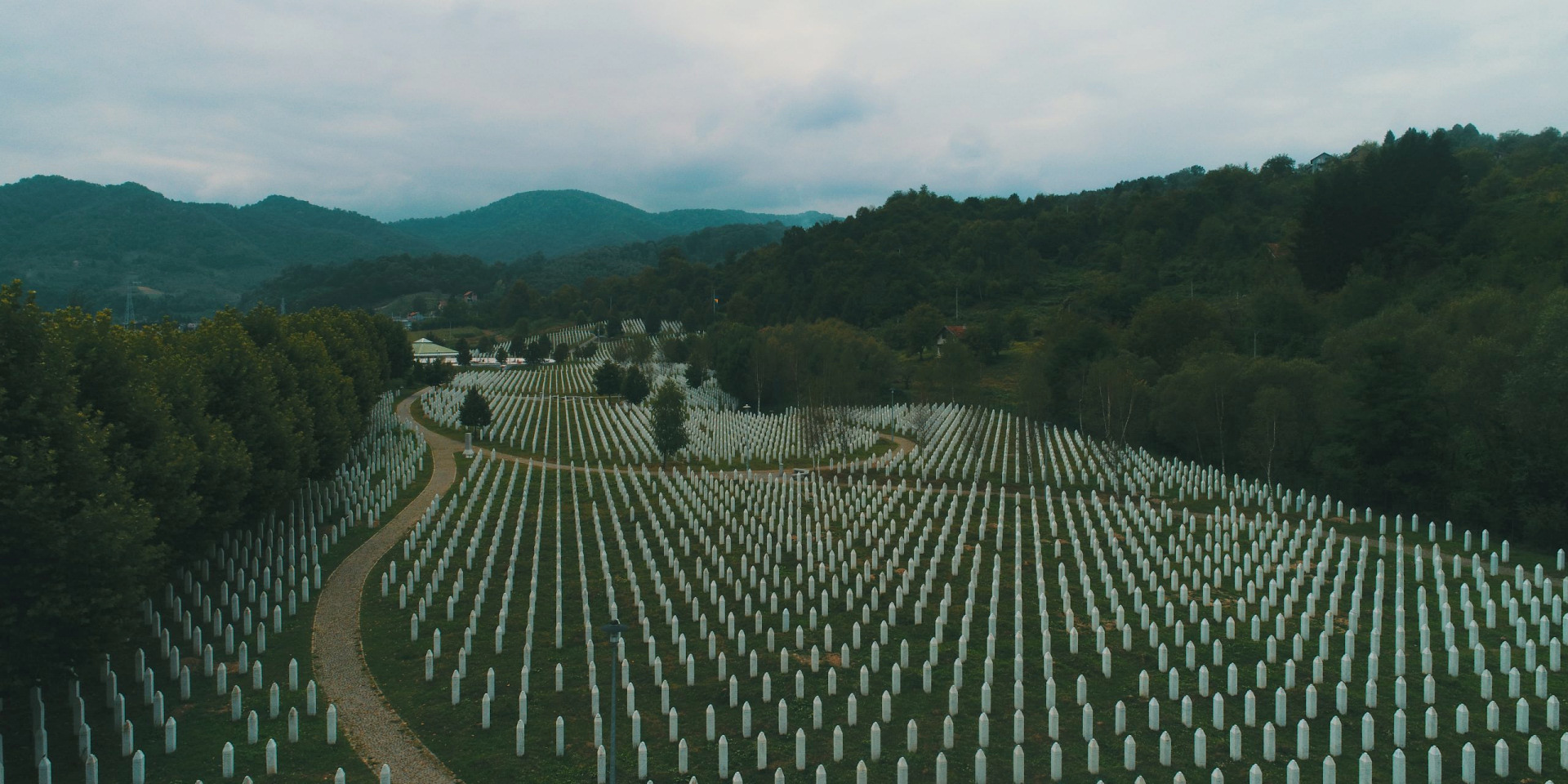
Building on that, I think there is also a fundamental difference between people who do, and people who do not physically — with their own hands — harm or kill others. It is one thing to be an ideologue, a fantasist, such a nationalist politician, imagining and selling to others a new world where one community stands above another, while enjoying riches and privileges. It is quite another to take a baseball bat to a neighbor’s door, or to be stained by blood and brain tissue day in and day out in a field during mass executions, such as in the case of the Srebrenica genocide, or the mass executions during the Holocaust in Eastern Europe. It is one thing to talk about violence or a changed society which is the consequence of violence, and to smell, hear and taste death firsthand.
It is those kinds of studies—of actions perpetrators do, and in which circumstances they do them—that I think our field should pursue going forward. With this in-depth understanding of the perpetrator’s worlds and their social ties we will come a bit closer to understanding how and why atrocities are perpetrated. Notwithstanding these points of critique and calls to reflection about how to move research forward, Alette’s book remains an important contribution, and an excellent orientation for students who want to pursue research in perpetrator studies.


 Justice in Conflict