There must be consequences: Accountability for war crimes can help stop attacks on hospitals

Dr Suleiman Qaoud at the Rantisi Specialist Hospital after Israeli attacks on the facility on 6 November 2023 (Photo: Abdelhakim Abu Riash/Al Jazeera)

The doctors assumed that a well-marked hospital would be safe, especially since the warring parties in the region were informed of its existence and its life-saving operations. But they were wrong, and the attacks came in waves. When it was over, the hospital walls were charred, the windows were shattered, and its roof had collapsed. Two dozen patients were killed, and many more were injured. The facility, its staff and the patients inside of the hospital were supposed to be protected from attack. At least that’s what international humanitarian law – the rules that govern conduct in war – says. But on that day, law offered no protection and those responsible for its violation escaped accountability. 

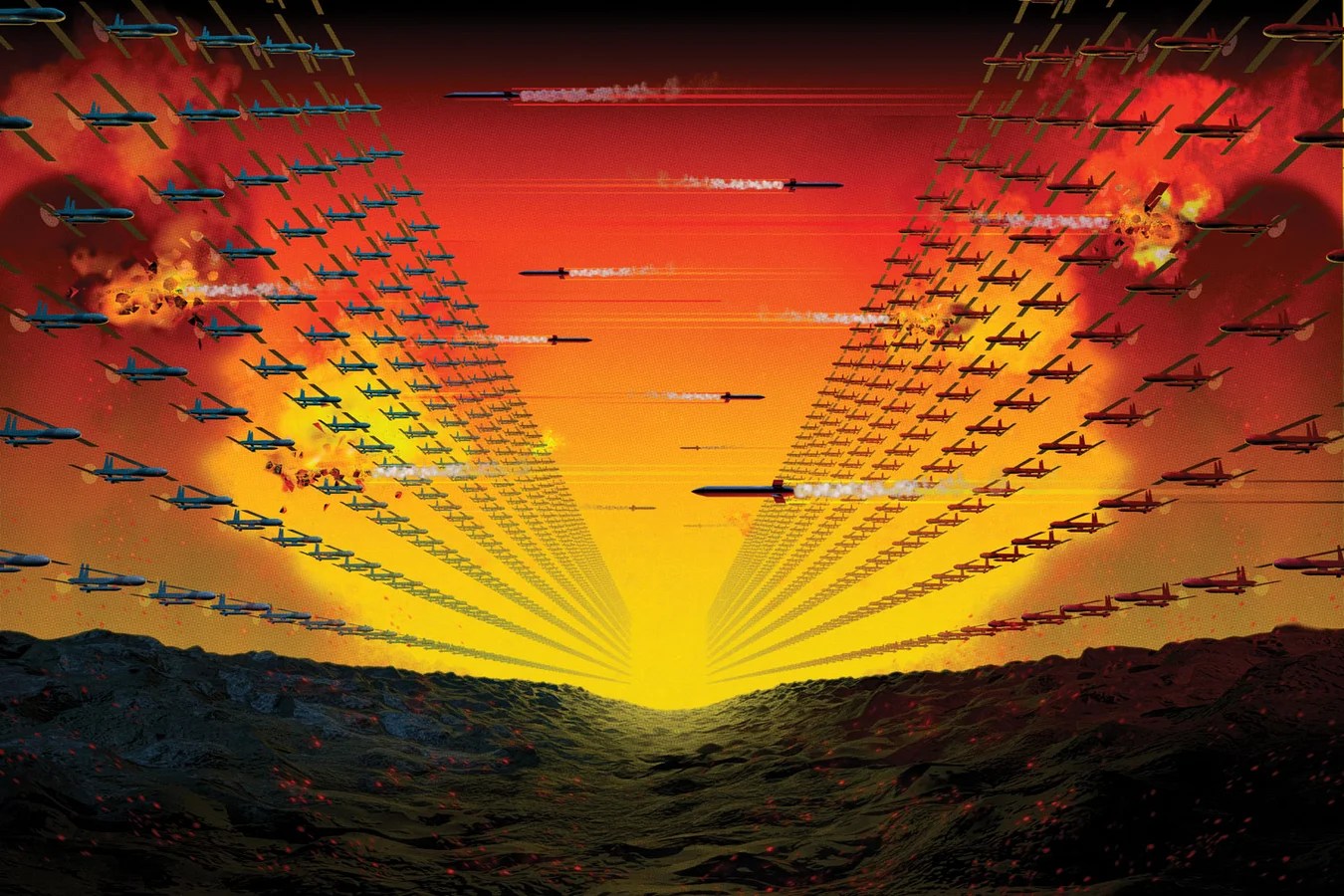
The above is not a summary of recent attacks on hospitals in GazaUkraineSudanIran, or Israel – though readers could be excused for assuming otherwise. It’s what happened in the early hours of 3 October 2015, when an American gunship attacked Kunduz hospital, in Afghanistan, run by Médecins Sans Frontières. The official U.S. military response to its bombing of the hospital was that the attack was a “mistake”. No justice followed. Instead, the events led to the “Not A Target” campaign, aimed at ending attacks on hospitals. As important as it is, that campaign has not worked. In recent years, attacks on medical facilities – by Russia, Israel, Sudanese armed forces, and Iran – have become an almost daily occurrence. That the wounded, sick, and disabled, as well as newborn babies, are increasingly the targets of deadly, indiscriminate attacks demands more than rhetorical condemnation. It demands accountability.

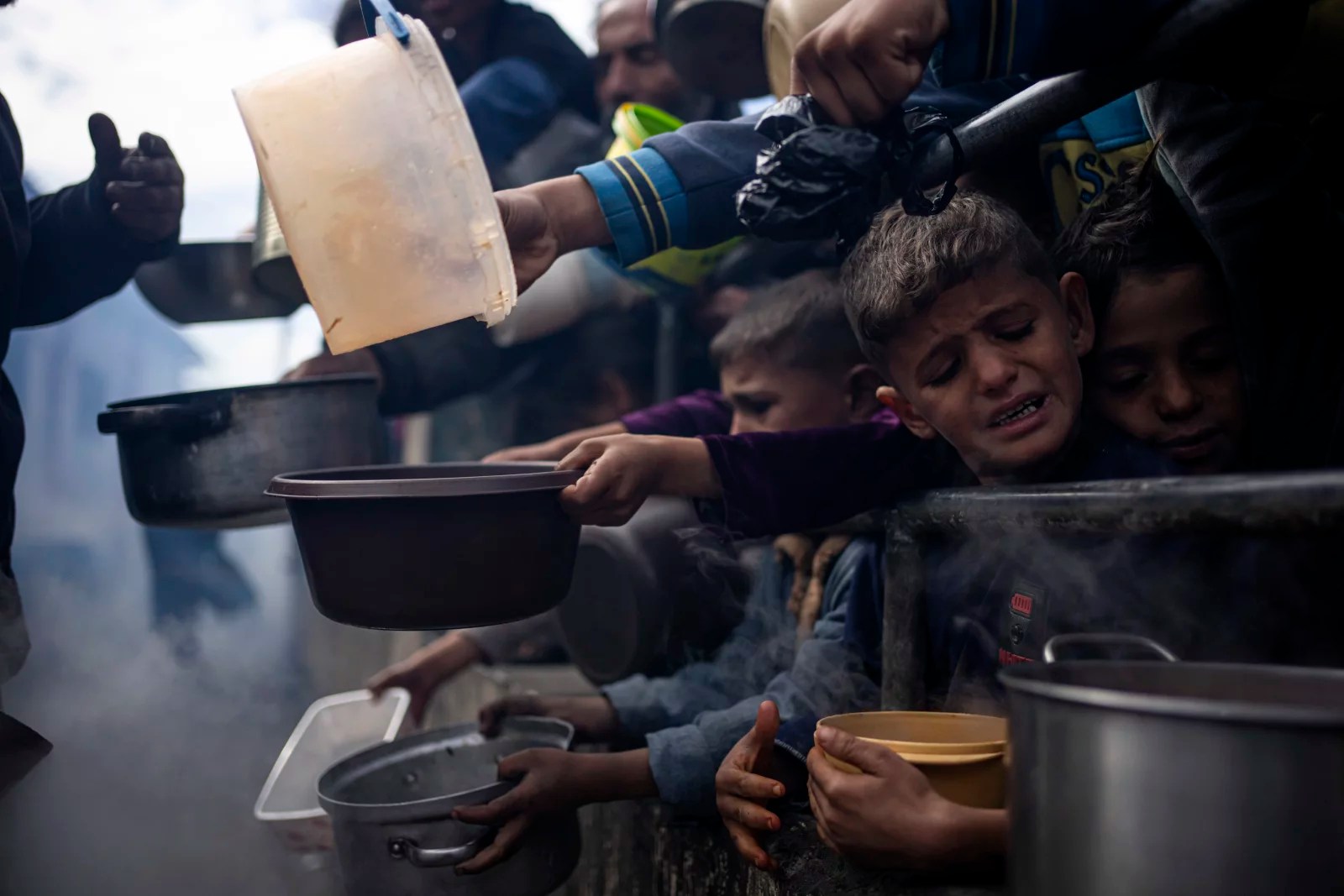
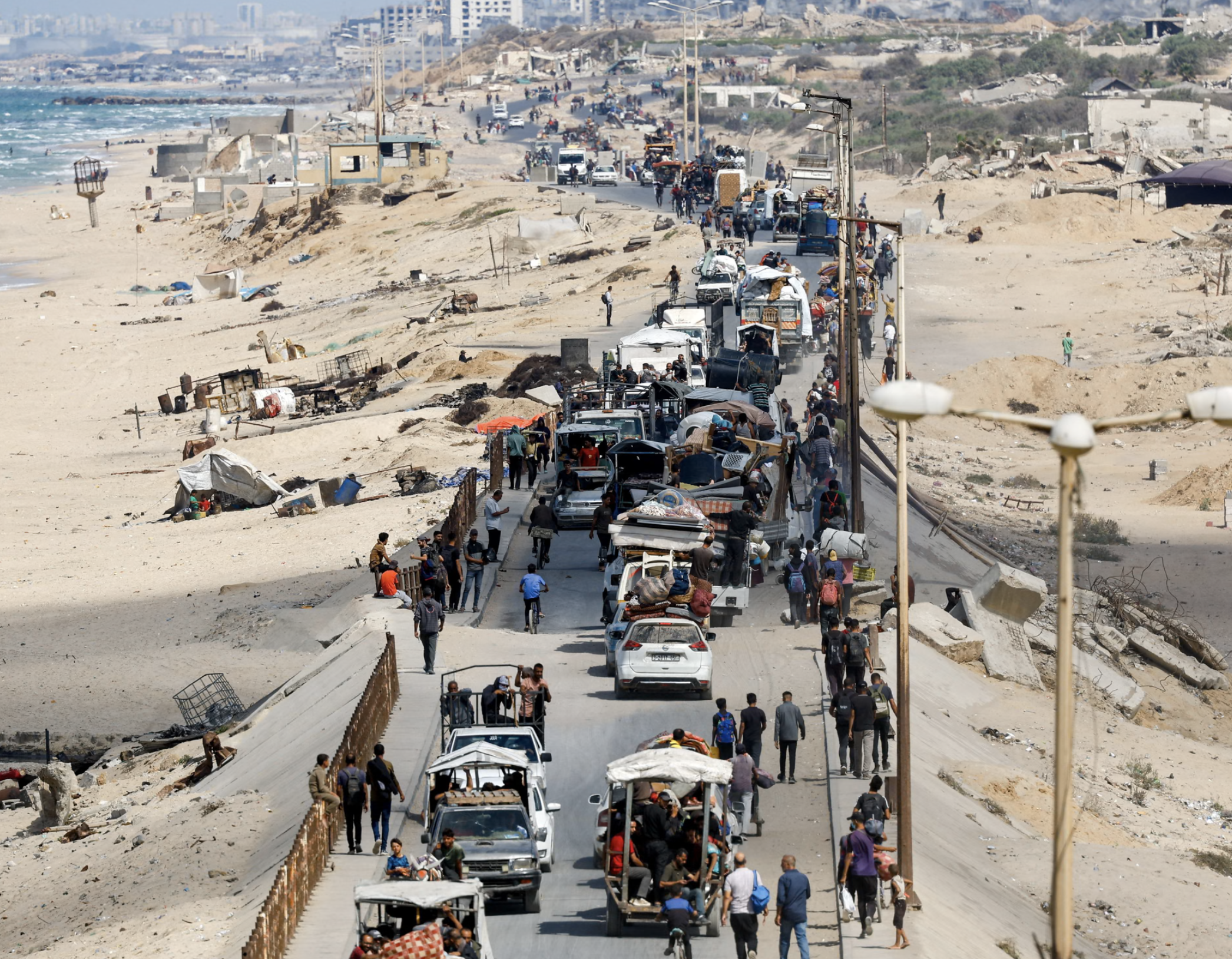
The list of hospitals and medical facilities attacked by in Sudan, Ukraine, Gaza, Israel, and Iran is disturbingly long. An accounting of each attack is beyond the scope of this article, but the numbers are staggering. In Gaza alone, it is estimated that 94% of hospitals have been damaged or destroyed by the almost 1,900 attacks waged by Israeli forces on health-care facilities.

Each attack has been met with similar shock and anger victims from victims, humanitarians, and human rights activists. Recently, the residents of Beersheeba, Israel, where Iranian missiles struck the Soroka hospital, were dismayed – and rightfully so. One doctor at the hospital said: “I never thought something like this could happen. Never.” Following military strikes on the al-Mujlad Hospital, which straddles the front lines between the Rapid Support Forces and Sudanese Armed Forces, World Health Organization chief Tedros Adhanom Ghebreyesus exclaimed: “We cannot say this louder: attacks on health must stop everywhere!”  

Continue reading
Posted in Gaza, International Criminal Court (ICC), International Criminal Justice, International Humanitarian Law, Iran, Palestine, Palestine and the ICC, Russia, Sudan, Ukraine, War crimes | Tagged , , , , | 1 Comment

The Dynamics and Moral ambiguities of Perpetration: Exploring the Intersection of Individual Agency and Structural Factors in Atrocity Crimes

The following article, by Dr. Mina Rauschenbach, is part of JiC’s ongoing symposium on Alette Smeulers’ new book “Perpetrators of Mass Atrocities Terribly and Terrifyingly Normal?”. Mina is Research Fellow at the Leuven Institute of Criminology (KU Leuven), an independent consultant, and a certified mediator.

A Survivors, Victims and Perpetrators Exhibit at the United Nations headquarters in New York (Photo: UN)

Since the publication of Alette Smeuler’s book, the debates surrounding what constitutes criminal, immoral actions or moral ones within an entrenched conflict leading to mass atrocities are taking on a new salience in an increasingly complex and rapidly changing global context. In today’s significantly fragmented geopolitical landscape, the normative legitimacy of international human rights law and principles is increasingly undermined. Impunity for atrocity crimes continues unabated around the world, with the number of conflicts at a post-World War II high. 

Even internationally recognised actors within the multilateral and NGO system are delegitimised in their moral authority to promote respect for international norms and to urge states to act in this regard. International norms also face unprecedented challenges amidst the global spread of political and social polarisation, which has reduced the space for traditional human rights advocacy and encouraged human rights violations.

In this troubled and volatile context, the main questions at the heart of this book – how can ordinary law-abiding citizens be involved as perpetrators in collective violence and can anyone become a perpetrator – take on full meaning. This publication offers a broad view of perpetration across a detailed typology of 14 categories which can be used as an analytical lens to better understand collective violence and its dynamics, its nuances and complexities. These typologies comprehensively demonstrate how different trajectories of perpetration result from the interplay of dispositional characteristics, individual life experiences, contextual factors related to an individual’s socio-political and structural environment, and perceived choices. Each type of perpetrator is characterised by a unique, or most salient, feature, driving force, motive and circumstance which contributed to their particular path and role in the commission of mass atrocities.

Continue reading
Posted in International Criminal Justice, Symposium Introduction - A JiC Symposium on Alette Smeulers'  "Perpetrators of Mass Atrocities Terribly and Terrifyingly Normal? | Tagged , , , , | Leave a comment

‘A new standard on perpetrator research’ – An Enthusiastic Encyclopaedia of Perpetrators

The following article by Carola Lingaas is the latest in JiC’s ongoing symposium on Alette Smeulers’ new book “Perpetrators of Mass Atrocities Terribly and Terrifyingly Normal?”. Carola is a full professor of law at VID Specialized University in Oslo (Norway). For all other submissions to the symposium, please see here.

Alette Smeulers and Nicola Quaedvlieg’s podcast ‘Terribly and Terrifyingly Normal?’ has utterly revolutionised my dog walks. From being rather uninspiring and duty-obligated routines, Mira is suddenly dragged onto hour-long walks that inspire and enrich her owner. Mira follows me reluctantly, signalling that she is ready to go home, while I stall until the respective podcast episode with fascinating conversations is finished. By now, Mira dreads the weekly release of a new episode. As an avid listener of the podcast, my expectations of Smeulers’ book, ‘Perpetrators of Mass Atrocities – Terribly and Terrifyingly Normal?’ were understandably high. 

The book is like a written version of the podcast. The chapters and their sections read almost like a podcast manuscript. You can nearly hear Smeulers enthusiastically discussing her decades-long research on perpetrators. Her passion and fascination for the topic are palpable throughout the book, which is probably her magnum opus. She has set a new standard on perpetrator research with an aim to “makes us better understand the causes of mass atrocities” (p. 427). 

The book provides insights into all the different aspects of perpetrators, ranging from the obvious criminological and legal sides of committing the most heinous crimes imaginable, to important historical, sociological, and psychological research that helps explain why ‘terribly and terrifyingly normal’ individuals can become perpetrators of mass violence. She shows some parallels between perpetrators from different conflicts and some not equally apparent commonalities (see e.g. pp. 27-33 or p. 40: “it is hard to find common denominators”). Nearly every chapter paints the answer to the question why everyone can become a perpetrator. Smeulers is convinced that “this is an important insight which we need to acknowledge in order to make this world a safer place” (p. 4). Given the current geopolitical earthquakes, nobody would deny that peace and safety are crucial values.

Continue reading
Posted in Genocide, International Criminal Justice, Symposium Introduction - A JiC Symposium on Alette Smeulers'  "Perpetrators of Mass Atrocities Terribly and Terrifyingly Normal?, Terrorism, War crimes | Tagged | Leave a comment

Tailoring & Categorization in Transitional Justice: The possible impact of Smeulers’ ‘Perpetrators of Mass Atrocities: Terribly and Terrifyingly Normal?’ within the holistic system of post-conflict justice

Nandor Knust joins JiC for this article, a part of JiC’s ongoing symposium on Alette Smeulers’ new book “Perpetrators of Mass Atrocities Terribly and Terrifyingly Normal?”. Nandor is an Associate Professor of Law at the Arctic University of Norway, in Tromsø. He has a rich history of practical experience during his time at international, regional, and non-governmental organisations within the field of human rights, atrocity crimes and transitional justice. All other contributions to the symposium can be found here.

(Image: Civil War Paths)

This review examines the implications of Alette Smeulers’ comprehensive typology of perpetrators of mass atrocities, as presented in her impressive work, Perpetrators of Mass Atrocities: Terribly and Terrifyingly Normal? for possible future designs and applications of transitional justice (TJ). By analysing the fourteen distinct perpetrator categories identified by Smeulers, my following little ‘thought experiment’ tries to explore how her typology can inform and enhance transitional justice mechanisms, particularly in the realms of justice, truth-seeking, and reconciliation. 

Smeulers’ work is rooted in the notion that mass atrocity crimes are inherently collective in nature, manifesting within organisational frameworks and frequently involving significant numbers of otherwise law-abiding citizens. The central question driving her theoretical framework is how so many ordinary people can come to commit or enable extraordinary evil. In answering this question, Smeulers adopts an interdisciplinary approach, drawing on criminology and social psychology to complement her legal analysis. She surveys classic explanations, including obedience to authority, conformity to peer pressure, ideological indoctrination, hatred and dehumanisation of victims, greed or opportunism, fear and duress, etc. It is evident that all these factors can play a role, albeit in different ways and to a different extent, depending on the perpetrator. To summarise, there is no single cause-and-effect relationship leading to atrocities. Rather, personal dispositions (individual traits, beliefs, pathologies) interact with situational forces (group dynamics, coercive environments, war conditions) to produce varying outcomes. This theoretical stance explicitly rejects a one-size-fits-all portrayal of the atrocity perpetrator, emphasising nuance and diversity.

The foundation of Smeulers’ framework is a typology of fourteen perpetrator types. She developed this by studying individuals involved in mass violence from World War II to contemporary conflicts. By examining biographies, diaries, interviews, trial records and prior scholarship, she groups perpetrators according to common motivators and roles. 

Continue reading
Posted in International Criminal Justice, Symposium Introduction - A JiC Symposium on Alette Smeulers'  "Perpetrators of Mass Atrocities Terribly and Terrifyingly Normal? | Tagged | Leave a comment

‘The greatest danger is in failing to recognize that societies can be structured to make atrocity normal’: From Yugoslav Atrocity Perpetrators to Intergenerational Extremism

The following is Dr. Mirza Buljubašić‘s contribution to JiC’s ongoing symposium on Alette Smeulers’ new book “Perpetrators of Mass Atrocities Terribly and Terrifyingly Normal?”. Buljubašić is a criminologist with a PhD, MA, and BA in Criminology, as well as degrees in Criminal Law and Security Studies. His research focuses on political violence, including atrocity crimes, terrorism, and extremism, as well as punishment, transitional justice, and intergenerational criminology. All other contributions to the symposium can be found here.

People flee Vukovar, Croatia in November 19, 1991. (Photo: picture alliance/dpa)

The warehouse in Srebrenica was suffocating with fear, its air thick with sweat and dust. Terrified men stood in clusters, their hands bound, pressed together as if proximity could offer protection. Outside, executioners adjusted their rifles with mechanical precision, their movements practiced, almost routine. Some among them were barely recognizable—neighbors, classmates, men who had shared streets and workplaces with their captives. Now, they were soldiers, policemen, paramilitaries, enforcers of an ideology that had hollowed them out. Some hesitated, fingers hovering over triggers, but their hesitation was fleeting. The weight of command, the collective momentum of violence, and years of dehumanization had left little room for conscience. Killing had become mechanical, detached, even necessary in their eyes. These were not mythical monsters but men shaped by war’s brutal logic. How does one become a murderer? Not in a moment, but through a slow erosion of boundaries, an incremental descent into a world where atrocity is not only permitted but expected.

What is normal? Can men who commit such acts ever be considered normal? Is war itself normal? A most haunting realization is that atrocity becomes routine, woven into daily life, its horror dulled by repetition. Normality is pliable, shaped by ideology, violence, and the silent complicity of those who look away. Alette Smeulers’ Perpetrators of Mass Atrocities: Terribly and Terrifyingly Normal? confronts this, dissecting the motivations of those who commit mass violence. Yet, can such a typology fully explain the Yugoslav Wars (1991–2001), where state and paramilitary, soldier and civilian, executioner and neighbor blurred beyond recognition? In this war, violence was not dictated solely from above but emerged in the everyday—in makeshift detention camps, in commandeered schools, in town squares where men who had once lived side by side turned on each other with chilling ease. It was not only the architects of war who bore responsibility but also the individuals who, in the right—perhaps more aptly, the wrong—circumstances, became willing executioners.

Political leaders like Slobodan Milošević, Radovan Karadžić, and Franjo Tuđman did not need to pull the trigger to be responsible for mass atrocities. Their power lay in the narratives they crafted—stories of historical victimhood, ethnic purity, and existential threat that transformed neighbors into enemies and violence into duty. They manipulated grievances, rode the waves of fear and resentment, and mobilized their own communities into war machines. Karadžić did not have to stand in Srebrenica to be complicit in genocide; his speeches, directives, and unrelenting far-right vision ensured others would carry it out. The killings were not a spontaneous explosion of hatred but a systematized project, embedded into the structures of war.

Continue reading
Posted in Bosnia and Herzegovina, Crimes against humanity, International Criminal Justice, Symposium Introduction - A JiC Symposium on Alette Smeulers'  "Perpetrators of Mass Atrocities Terribly and Terrifyingly Normal?, War crimes | Tagged , , , | Leave a comment

‘What are perpetrators actually doing, and to whom?’ A call to focus on the actions of perpetrators of mass atrocities

The following contribution to JiC’s ongoing symposium on Alette Smeulers’  “Perpetrators of Mass Atrocities Terribly and Terrifyingly Normal?” comes from Dr. Iva Vukušić, an Assistant Professor of International History at Utrecht University, the Netherlands. You can access all contributions to the symposium here.

The Srebrenica-Potočari Memorial and Cemetery (Photo: Remembering Srebrenica)

The research presented in this book has been conducted over almost three decades, and across multiple disciplines: from political science and psychology to sociology and anthropology, criminology, history, to religious and legal studies. This breadth is one of its strong points. Alette Smeulers’s book is a valuable contribution to interdisciplinary scholarship and a great starting point for students and scholars trying to navigate the complexities of conducting research into perpetrators of mass violence, across time, space, and contexts. 

The book’s structure follows different perpetrator types and the central claim Alette makes is that people who commit illegitimate and illegal mass violence can be understood as belonging to different categories and that those can be both defined and bounded. This does not mean there are no grey areas or that people do not switch between these types through their lives. These categories span different levels of authority and power, and often reflect different motivations: the criminal mastermind, the careerist, the profiteer, the follower, the fanatic, etc. 

Typologies, Alette makes clear, are tentative and represent an effort to organize what is complex, to better understand the phenomenon of perpetration. The idea underpinning the book is to make some sense of the varied ways that people commit mass atrocities. That understanding, while valuable in its own right, is also presumed to be helpful in accountability efforts in the criminal justice arena, as it makes it easier to recognize what kind of approach the prosecution can take in constructing its narrative in the courtroom. After all, prosecutors tell stories, backed by credible evidence and couched in legal analysis in the hope that judges find them convincing.   

In the spirit of a lively academic debate and advancing our collective thinking on this topic, I want to make two claims here and propose a way forward in this field, building on Alette’s important scholarship, and that of many of our esteemed colleagues. These will go beyond the critique we often hear in this context, of typologies being inherently too reductionist and static, or that whatever roles people inhabit change, and someone who is a perpetrator today can be a helper tomorrow. Tim Williams has problematized these kinds of dynamics, as has Kjell Anderson.

Continue reading
Posted in Alette Smeulers, Crimes against humanity, Genocide, War crimes | Tagged , | Leave a comment

The Traumatized Perpetrator – “I actually murdered somebody. I felt very bad about that and I just wanted to run away.”

The following contribution by Bart Nauta is part of JiC’s ongoing symposium on Alette Smeulers’ new book “Perpetrators of Mass Atrocities Terribly and Terrifyingly Normal?”. Bart is a historian and interdisciplinary researcher at ARQ National Psychotrauma Centre and a PhD candidate at Utrecht University, where his research explores the concept of perpetrator trauma. You can find all of the other contributors, here.

Varnado Simpson, a U.S. soldier who participated in the Mai Lai Massacre in Vietnam (Image: AllMarine Radio)

Attempting to comprehend the  lived experiences of perpetrators, in a world fraught with everyday atrocities, is a moral imperative not just for scholars, but for anyone concerned with the present state of the world. Alette Smeulers’ Perpetrators of Mass Atrocities: Terribly and Terrifyingly Normal? invites us to examine without prejudice the unimaginable acts of violence that have been committed by thousands of perpetrators. The book explores the various types of individuals involved in such crimes, offering a rigorously documented resource for scholars, students, and the public.

As unsettling as it may seem, stepping into the minds and moral worlds of perpetrators reveals a disquieting truth: they, too, can be traumatized by their own acts of violence. Their acts of killing or torturing unarmed civilians can develop into a trauma, a psychological wound. Their trauma manifests itself through nightmares and overwhelming feelings of guilt.

The study of ‘perpetrator trauma’ remains in its infancy, largely due to the immense challenges of empirical research, since engaging directly with perpetrators is a daunting task. Fortunately, Terribly and Terrifyingly Normal? provides several meticulously documented case-studies. In doing so, it sheds light on a possibly emerging typology: the Traumatized Perpetrator. What insights on perpetrator trauma can we gain from Smeulers’ work?

We might consider perpetrator trauma a perverse topic, since many would conceive trauma as the experience of victims who must receive recognition, attention and respect. However, Berkeley law professor Saira Mohamed stated that perpetrator trauma ‘recognizes trauma as a neutral, human trait, divorced from morality, and not incompatible with choice and agency.’

Continue reading
Posted in Argentina, Crimes against humanity, South Africa, Symposium Introduction - A JiC Symposium on Alette Smeulers'  "Perpetrators of Mass Atrocities Terribly and Terrifyingly Normal?, Vietnam, War crimes | Tagged , , , , , , , | Leave a comment

Introduction – A JiC Symposium on Alette Smeulers’  “Perpetrators of Mass Atrocities Terribly and Terrifyingly Normal?”

What forces make and shape perpetrators of mass atrocities? What makes them tick and ultimately resort to horrific violence? What explains their behaviour, and their decision to resort to the commission of international crimes? What can understanding different motivations and perpetrator types reveal about how mass political violence is waged and instigated? 

In exploring typologies of perpetrators and by troubling dichotomies all-too common to the study of mass political violence, these questions are among those Alette Smeulers seeks to answer in her new book Perpetrators of Mass Atrocities Terribly and Terrifyingly Normal?, published by Routledge in 2024.

Justice in Conflict is honoured and excited to announce that over the next few days, we will host an online symposium on Smeulers’ book, with contributions from authors and experts in the fields of international criminal law and justice, transitional justice, political violence, and history. Contributors to the symposium include Mina Rauschenbach, Iva Vukusic, Carola Lingaas, Bart Nauta, Nandor Knust, and of course, Alette herself.

The following is a description the contents of Smeulers’ book and its aims:

The 9/11 attacks, as well as the ones in Madrid, London, Paris and Brussels; the genocides in Nazi Germany, Rwanda and Cambodia; the torture in dictatorial regimes; the wars in former Yugoslavia, Syria and Iraq and currently in Ukraine; the sexual violence during periods of conflict, all make us wonder: why would anyone do something like that? Who are these people? Drawing on 30 years of research, in this book Alette Smeulers explores the perpetrators of mass atrocities such as war crimes, crimes against humanity, genocide and terrorism. Examining questions of why people kill and torture and how mass atrocities can be explained, Smeulers presents a typology of perpetrators, with different ranks, roles and motives.

Continue reading
Posted in Crimes against humanity, Genocide, International Criminal Justice, Symposium Introduction - A JiC Symposium on Alette Smeulers'  "Perpetrators of Mass Atrocities Terribly and Terrifyingly Normal?, Transitional Justice, War crimes | Tagged , , , | Leave a comment

Who commits international crimes? A typology of perpetrators

This post is Alette Smeulers‘ introduction to JiC’s symposium on her book, Perpetrators of Mass Atrocities Terribly and Terrifyingly Normal?. Smeulers is a professor at the University of Groningen in the Netherlands. Her research takes an inter- and multidisciplinary approach, focuses on on the causes and perpetrators of international crimes and terrorism, as well as the international criminal justice systems dealing with these crimes. Other contributions to the symposium can be found here.

Adolf Eichmann on trial in Jerusalem in 1961

Discussions of mass atrocities usually involve questions on whether the perpetrators are mentally disturbed sadists or ordinary people, as well as on what drives their actions: ideology, obedience, sadism, material gain, or fear. The typology in my new book, Perpetrators of Mass Atrocities Terribly and Terrifyingly Normal? (which will soon by published in Dutch under the title Angstaanjagend normal) seeks to end that debate. Most (but not all) perpetrators are ordinary people and motives play a role but in different ways for all different types of perpetrators. 

Ideology and obedience are present for all perpetrators but in different ways. For some, ideology (or hatred) is a motivational factor. For others, it is a means to rationalize and justify their crimes after the fact. The same is true for obedience: some perpetrators commit their crimes out of obedience, others take advantage of the fact that atrocities are ordered, accepted or condoned or rely on obedience as an excuse. 

The typology put forward in my book aims to show that people, including perpetrators, are different and are driven by different motives. No one is born a perpetrator; people become perpetrators. Admittingly, this transition is easier for some than it is for others but we all can become perpetrators, although not everyone can become just any type of perpetrator. 

The type of perpetrator we can become depends on situational factors, as well as our genes, upbringing, character traits and the choices we make. Only a few ambitious, power hungry, and ruthless people with leadership skills  will become Criminal Masterminds. Those who are extremely ambitious can become Careerists. Those who have strong ideological rootings can become Fanatics. Those who are driven by their own material or personal gain can become Profiteers. And,  those who are obedient and conformist can become Followers.

Continue reading
Posted in Alette Smeulers, International Criminal Justice, Symposium Introduction - A JiC Symposium on Alette Smeulers'  "Perpetrators of Mass Atrocities Terribly and Terrifyingly Normal?, War crimes | Tagged , , , , | Leave a comment

“It is time for the further concrete action that has been promised”: an Open Letter to Prime Minister Carney to take decisive action to end genocide in Gaza

(Photo: AP)

The following is an open letter to Canadian PM Mark Carney, written (in both English and French) by 412 Canadian legal, human rights, social justice, international relations, diplomatic, civil society, faith and labour leaders from across the country. The letter was written by former Amnesty International Canada Secretary General Alex Neve, UN Special Rapporteur Leilani Farha, Professor Ardi Imseis, former UN Special Rapporteur and Professor Michael Lynk, Professor Heidi Matthews, and myself,

Open Letter to Prime Minister Carney on Gaza Crisis

We write as a concerned group of 412 Canadians, including academics, lawyers, former and retired ambassadors (including to the United Nations), ministers and public servants, UN human rights experts, and civil society, labour and faith leaders, all deeply concerned with the catastrophic human rights and humanitarian crisis in Gaza, now into its twentieth month.

Israel’s actions in Gaza are broadly understood by international law experts and leading human rights organizations as constituting genocide. We write with the demand and expectation that Canada must do everything in its power to stop these atrocities and support efforts to bring those responsible to account. This is what our signatures on the 1948 Genocide Convention and the 1998 Rome Statute establishing the International Criminal Court demand.

We call for decisive action with respect to five priority recommendations:

  • Work actively towards an immediate, permanent ceasefire and the release of all Israeli and Palestinian captives
  • Insist on full humanitarian access to Gaza and demand that the Israeli ban on the UN Relief and Works Agency be completely lifted
  • Publicly support the role of and fully comply with international courts in holding to account those who violate international law
  • Pursue all possible domestic measures, including immediately withdrawing from the free trade agreement between Canada and Israel, imposing sanctions on Israeli leaders, initiating investigations under the Crimes Against Humanity and War Crimes Act, enforcing a full and comprehensive two-way arms embargo, and stripping charitable status from organizations found to be complici in crimes under international law
  • Without further delay, join the 149 states who recognize the State of Palestine and support all efforts for Palestine to be admitted as a full member of the United Nations

We write with urgency as Prime Minister Carney will host the G7 Summit from June 15-17, which presents a crucial opportunity for concerted action by seven of the world’s most influential and powerful governments that must be seized.

Link to letter in English.

Link to letter in French.

Link to list of endorsements.

The text of the letter, in English and French, and the list of endorsements, follows.

Continue reading
Posted in Canada, Gaza, ICC Prosecutor, International Court of Justice (ICJ), International Criminal Court (ICC), Israel, Palestine, Sanctions | Tagged , , , , , , , , , , , | 3 Comments