
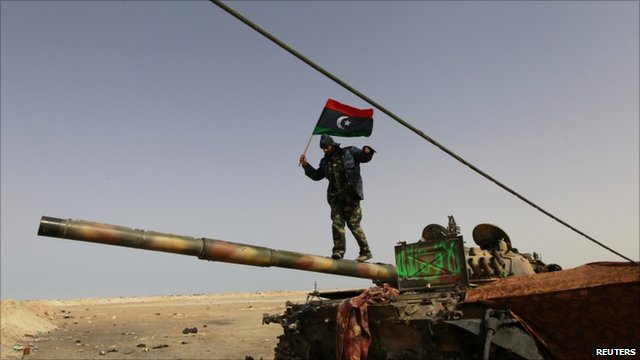
Walking a thin line (Photo: Reuters)
Pride is a tricky thing. We want to feel it but it doesn’t always manifest itself as a good trait. For this reason Alexander Pope once declared that pride is “the never-failing vice of fools”, while Saint Augustine wrote that “[i]t was pride that changed angels into devils; it is humility that makes men as angels.” Pride can blind us and can lead even those with the best of intentions astray.
Last week, when NATO chief Fogh Anders Rasmussen declared that the military organization’s mission to Libya would conclude, he stated that he was “proud of the part NATO played” in “answering the call” to save civilians under attack from Gaddafi forces.
My contention here isn’t to predict the future of NATO engagements. The aim is simple: to place NATO’s “success” in Libya into context and consider the potential dangers of a proud military organization seeking to reproduce its success beyond the remits of international law.
NATO in Libya: Success?
It is remarkable how little the ambivalence and uncertainty of the first few months of the Libyan intervention is now recalled. Who now remembers the Obama administration’s ambivalence and (poorly) expressed desire to “lead from behind” in Libya? And what of the consistent reports that Libya faced a grave danger of becoming an intractable conflict, mired in a perpetual stalemate? All but distant memories now.
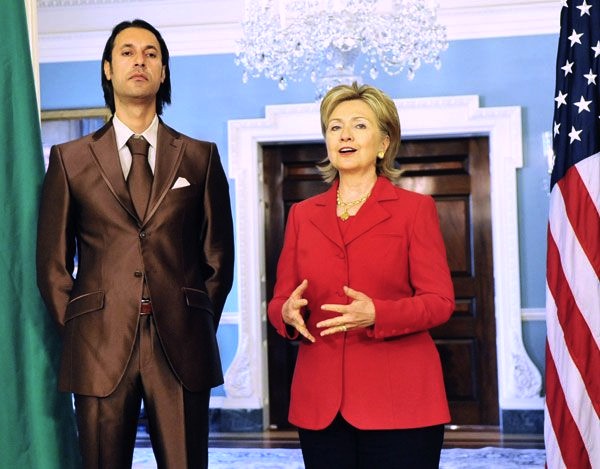
On the contrary, the rhetoric surrounding the mission in Libya has been thoroughly triumphalist. Chalk up a victory for the Obama administration, and especially its “liberal hawks” – Secretary of State Hilary Clinton, UN Ambassador Susan Rice, and senior security adviser Samantha Power. Chalk up a victory for NATO and its member states. And, before they forget, chalk up up a victory for Libyans!
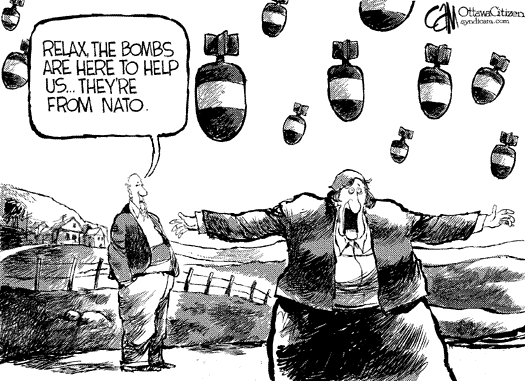
(Cartoon: Ottawa Citizen)
Libya has been framed as a success for a number of reasons. For many internationalists, Libya is a success because the Responsibility to Protect (R2P) was finally invoked by the UN Security Council. Many had thought that the emerging doctrine of R2P had become stagnant and were caught by surprise when adversaries like Russia and China allowed the words “responsibility to protect” to be articulated in Security Council Resolution 1973. Not only was R2P invoked but it appeared to work – the obvious threat to the citizens of Benghazi was averted.
For many Western states, particularly the US, the fact that there were no Western casualties was critical to any possible success. Since the events of Black Hawk Down in Somalia, it has become a pseudo-doctrine in Washington that US troops not be deployed in humanitarian crises. Indeed, the “success” of Libya in this regard may embolden a US belief that holding to the ‘Mogadishu line’ and succeeding in engaging in humanitarian disasters is feasible and desirable. While the number of humanitarian crises that the US gets involved in may increase, the use of drones and jets will almost surely contribute to the trend of removing the human from humanitarian interventions.
For better or worse, there’s only so much states are willing to pay for humanitarianism. It appears that the intervention in Libya never came close to any such threshold. While the cost of the intervention will undoubtedly grow as the damage done by the intervention is assessed, the total expenditure of the US was about $1 billion and about the same for the UK. That may seem like a lot but just put that into comparison with the following figures:
- the New York Yankees, a baseball team, are estimated to be worth 1.6 billion dollars
- estimates for the global expenditure on gift cards in 2006 was 80 billion dollars
- Americans spent 5.7 billion dollars on cosmetic surgery in 2006 alone
Now, I’ll be honest. I love baseball, I appreciate a good Hallmark card and, somewhat selfishly, I do dream of reversing the pandemic of receding hairlines. Joking aside, compared to these expenditures, the costs of the Libya intervention is astonishingly low. In contrast to Iraq and Afghanistan, Libya was peanuts. Iraq and Afghanistan have cost the US trillions of dollars alone. In 2011, monthly military operations in Afghanistan and Iraq were costed at $6.7 billion (Afghanistan) and $6.2 billion (Iraq) per month, respectively. Indeed, it was in part because of these exorbitant costs that virtually no one predicted another intervention in the region. Continue reading







 Justice in Conflict