
Shane Darcy joins Justice in Conflict for this post on the International Court of Justice and its role in Gaza. Shane is a professor of law and the Deputy Director of the Irish Centre for Human Rights in the School of Law at National University of Ireland, Galway.
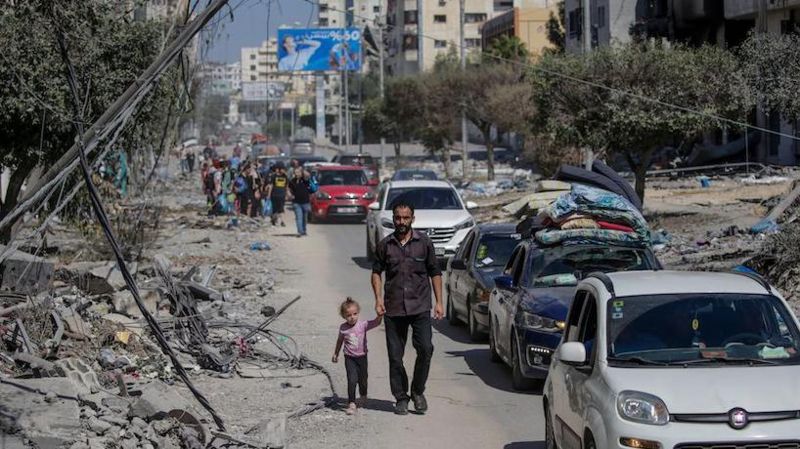
The Chief Prosecutor of the International Criminal Court (ICC) has broken his silence on the mass killing of civilians and the taking of hostages by Hamas and the indiscriminate bombing of civilians and civilian property in Gaza by Israeli forces. Karim Khan has confirmed to the media that such atrocities fall within the Court’s jurisdiction. While his mandate “applies to crimes committed in the current context”, he has not followed the approach of his predecessor, Fatou Bensouda, who issued formal statements on more than one occasion expressing her grave concern and emphasising the Court’s jurisdiction.
Successive ICC chief prosecutors have not treated the situation in Palestine with any great sense of urgency. Palestine’s entreaties to the Court began as far back as 2009, but no arrest warrants have been issued, even though Fatou Bensouda considered there was a reasonable basis to believe that international crimes have been committed. The Pre-Trial Chamber confirmed the Court’s territorial jurisdiction over Gaza and the West Bank, including East Jerusalem in 2021. And Karim Khan explained this week that crimes by Palestinians, “including on the territory of Israel”, are also within the jurisdiction of the Court, even though Israel is not a state party.
While the ICC may have jurisdiction, the Prosecutor ultimately remains the gatekeeper when it comes to taking investigations and cases forward. Judicial approval is needed at various stages of proceedings, but if the Prosecutor decides not to take a situation forward, there is little that States, civil society, victims, or even the judges can do.
The Office of the Prosecutor has acted very quickly in other situations – in Ukraine and Libya, for example – but in the context of Palestine, the slow rate of progress is at odds with the rationale of ending impunity for international crimes. It is important to emphasise that in addition to giving rise to individual criminal responsibility, acts that amount to war crimes, crimes against humanity, genocide or aggression can also lead to State responsibility. This is the domain of the International Court of Justice (ICJ).
The World Court and Genocide
Where jurisdiction exists, States can initiate contentious proceedings before the ICJ. Certain United Nations bodies can seek advisory opinions from the Court on legal questions (as the General Assembly did earlier this year on the legal status of Israel’s occupation of Palestinian territory). Unless States have accepted the ICJ’s compulsory jurisdiction, and just over a third have, jurisdiction has to be grounded in an existing international treaty.
In the context of violations of international humanitarian law and the potential commission of international crimes, States decided against having automatic jurisdiction for the Court set out in the 1949 Geneva Conventions. The proposed international Convention on Crimes Against Humanity envisages a role for the International Court of Justice, but remains some years away from becoming a binding instrument which could be used by States to initiate proceedings at the Court.
The Convention on the Prevention and Punishment of the Crime of Genocide (1948) provides an avenue to the International Court of Justice for States parties. Article IX permits disputes over “the interpretation, application or fulfilment of the present Convention, including those relating to the responsibility of a State for genocide” to be submitted to the Court. Recent cases concerning allegations of genocide before the International Court of Justice include the proceedings initiated by The Gambia in relation to the treatment of the Rohingya in Myanmar and those taken by Ukraine against Russia for the latter’s invocation of genocide to support its unlawful attack and invasion of Ukraine in February 2022.
Genocide has famously been described as the “crime of crimes”. While some of the underlying acts for genocide can also be considered as war crimes or crimes against humanity, the distinguishing feature is that where such acts are committed with the intent to destroy, in whole or in part, a national, ethnical, racial or religious group, as such, they can amount to genocide. The relevant acts set out in the Genocide Convention (and replicated in the Rome Statute) are:
- Killing members of the group;
- Causing serious bodily or mental harm to members of the group;
- Deliberately inflicting on the group conditions of life calculated to bring about its physical destruction in whole or in part;
- Imposing measures intended to prevent births within the group;
- Forcibly transferring children of the group to another group.
Raphael Lemkin, who coined the term genocide in 1944, explained that part of his motivation for pushing for the recognition of an international crime of genocide was because “it happened so many times”. Individuals have been prosecuted for genocide before the tribunals for Rwanda, the Former Yugoslavia and Cambodia. The sole arrest warrant to include a genocide allegation to be issued by the International Criminal Court – that for Omar Al Bashir of Sudan – remains outstanding. A UN commission of Inquiry on Syria considered the crimes perpetrated by ISIS against the Yazidis as genocide, while the General Assembly condemned the Sabra and Shatila massacre in 1982 as “an act of genocide”.
The spectre of genocide
In the context of what is currently unfolding in Gaza, the statements of Israeli officials and the actions of Israeli forces have prompted fears of an impending genocide. Palestinian human rights organisations have described as “genocidal language” this statement by the Israeli Defence Minister: “We are imposing a complete siege on [Gaza]. No electricity, no food, no water, no fuel – everything is closed. We are fighting human animals, and we act accordingly”. The aim of Israel’s actions, according to Defence for Children International – Palestine, “is to destroy Palestinian life in Gaza”. Academic experts have raised their concerns in recent months of the risks of genocide, and even more so in recent days, with one describing Israel’s actions in Gaza as “a textbook case of genocide”. The campaign group Jewish Voice for Peace called for “all people of conscience to stop the imminent genocide of Palestinians”.
States have also been using the language of genocide. The Palestinian envoy to the United Nations, Riyadh Mansour, described Israel’s actions towards Gaza as “nothing less than genocidal”. President Maduro of Venezuela referred to “the genocide that has begun against the Palestinian people in Gaza” and the Colombian president Gustavo Petro has threatened to suspend foreign relations with Israel as it “does not support genocides”. Government ministers in Pakistan and Spain have also used the term.
During the current debate on crimes against humanity in the United Nations Sixth Committee, Syria put it that “[w]hat is happening in Gaza is a full-fledged genocide”. Iran asserted that Israel’s actions in Gaza “aim to bring about the destruction of the Palestinian people”, while Israel’s representative referred to war crimes committed by “the genocidal jihadist Hamas terror organization” (Jens David Ohlin has written on Opinio Juris on how the Hamas attacks can be classified as war crimes, crimes against humanity or as “genocidal in nature”). The heads of the Arab League and African Union have warned that a planned ground invasion “could lead to a genocide of unprecedented proportions”.
UN bodies have thus far tended to avoid using the language of genocide in the context of Israel and Palestine. In 2009, however, the Independent Fact Finding Committee on Gaza in its report to the League of Arab States examined Israel’s actions during “Operation Cast Lead” through the lens of genocide. While it considered that the actus reus was met “in that the IDF was responsible for killing, exterminating and causing serious bodily harm to members of a group – the Palestinians of Gaza”, it could not satisfy itself that the special intent element of genocide had been satisfied:
the main reason for the operation was not to destroy a group, as required for the crime of genocide, but to engage in a vicious exercise of collective punishment designed either to compel the population to reject Hamas as the governing authority of Gaza or to subdue the population into a state of submission.
The stated rationale for Israel’s response to Hamas’ killing spree and seizure of hostages is to force the release of the hostages taken into the Gaza strip. But its actions, particularly the killing of civilians, the imposition of a strict siege that may lead to starvation and the forced displacement of over one million Gaza residents from the northern part of the Gaza strip, raise the spectre of genocide. The UN Special Rapporteur on the situation of human rights in the Palestinian Territory occupied since 1967, Francesca Albanese, has warned of “ethnic cleansing” in Gaza.
The forced displacement of a population can amount to a crime against humanity or indeed genocide, as the International Court of Justice explained in Bosnia v Serbia:
Neither the intent, as a matter of policy, to render an area “ethnically homogenous”, nor the operations that may be carried out to implement such policy, can as such be designated as genocide: the intent that characterises genocide is “to destroy, in whole or in part” a particular group, and deportation or displacement of the members of a group, even if effected by force, is not necessarily equivalent to destruction of that group, nor is such destruction an automatic consequence of the displacement. This is not to say that acts described as “ethnic cleansing” may never constitute genocide, if they are such as to be characterized as, for example, “deliberately inflicting on the group conditions of life calculated to being about its physical destruction in whole or in part” […] provided such action is carried out with the necessary specific intent (dolus specialis), that is to say with a view to the destruction of the group, as distinct from its removal from the region. […] it is clear that acts of “ethnic cleansing” may occur in parallel to acts prohibited by Article II of the Convention and may be significant as indicative of the presence of a specific intent … inspiring those acts.
A bright line between “ethnic cleansing” and genocide is not always easily drawn, particularly as atrocities are unfolding, but the duty to prevent genocide arises upon “the existence of a serious risk that genocide will be committed”, and not only at the point where crimes such as unlawful forced displacement or mass expulsion have become irrefutably genocidal. When the International Court of Justice issued its order for provisional measures in The Gambia v. Myanmar in January 2020, it stated that it was not required to show violations of obligations under the Genocide Convention, but rather that “the acts complained of … are capable of falling within the provisions of the Genocide Convention”. That threshold can be said to have been reached in Gaza.
A role for international institutions
Israel was amongst the initial signatories of the Genocide Convention in the 1940s, and ratified the instrument in March 1950. The State of Palestine acceded to the Genocide Convention in April 2014. If the latter considers that Israel’s actions raise concerns under the Genocide Convention, then it is open to it to initiate proceedings before the International Court of Justice, even as a non-member State of the United Nations. Israel’s non-recognition of Palestine as a State would be an issue to be contended with.
Judicial bodies are not always best placed to respond rapidly to unfolding atrocities. The International Court of Justice issued its order for provisional measures in The Gambia v. Myanmar over two months after the request, although in Ukraine v Russia, these came in just under three weeks. Russia was ordered to “immediately suspend the military operations that it had commenced in 24 February 2022 in the territory of Ukraine”. Although judgments on the merits have not yet been issued in these cases, the involved States are without doubt on notice that their practices and policies are being scrutinised by the Court.
The Genocide Convention, concerned as it is with both prevention and punishment, also envisages a role for the political bodies of the United Nations. According to Article VIII:
Any Contracting Party may call upon the competent organs of the United Nations to take such action under the Charter of the United Nations as they consider appropriate for the prevention and suppression of acts of genocide or any of the other acts enumerated in article III.
With the UN Security Council unlikely to act, on account of the veto power of its permanent members, the UN General Assembly could be called upon to act. Palestinian human rights organisations have issued an urgent request calling on States “to prevent acts of genocide perpetrated against the Palestinian people” through international cooperation and refraining from assisting in maintaining an illegal situation. In these dark days, it is not only the credibility of international law and its institutions that are at stake.

 Justice in Conflict
Good post Mark by Prof. Darcy.
A TIMELINE BASED ON REPORTED FACTS
In October 2004, Osama & Al-Qaeda had publicly claimed & accepted responsibility for 9/11. The SUICIDE TERRORISM ATTACKS resulted in fatalities including that of UNSC P5 Nationalities – all P5. In the same year of 2004 in September, the Al-Qaeda & Taliban connected Shamil Basayev (based on UNSC narrative summary) & his terrorist group claimed responsibility for the Beslan School Massacre among others.
In August 2021, the Taliban-AQ de facto administration rejects proof of Osama’s & AQ’s 9/11 culpability DESPITE Osama’s 9/11 October 2004 publicized video.
In May 2011, Hamas praises Osama the Al-Qaeda leader & claimant of the 9/11 Suicide Terrorism tradegy.
In October 2023, Hamas claims responsibility for Terrorist Attacks that has claimed lives including that of UNSC P5 Nationalities – Just Like Al-Qaeda’s 9/11.
http://www.memorialmapping.com/casualties-by-country
https://m.timesofindia.com/world/south-asia/no-proof-osama-bin-laden-was-involved-in-9/11-taliban/articleshow/85708404.cms
https://www.un.org/securitycouncil/sanctions/1267/aq_sanctions_list/summaries/entity/islamic-international-brigade-%28iib%29
https://www.theguardian.com/world/2011/may/02/hamas-osama-bin-laden
https://abcnews.go.com/International/timeline-surprise-rocket-attack-hamas-israel/story?id=103816006
https://www.washingtonpost.com/world/2023/10/11/israel-hamas-war-foreign-nationals/
Dear Prof Shane
I really enjoyed learning from this indicative and thoughtful paramount article which deals with several legal issues that concerns the ongoing non-armed conflict in Gaza .
I have the following concerns and comments
1- Unfortunately the UN Charter does not recognize either grant the UNGA the same binding nature of its resolutions comparing to the UNSC binding resolutions under chapter seven of the UN Charter except those are relevant to the UN budgetary .
2- The distinction of the crimes : Genocide and Ethnic Cleansing is not so controversial because the objective rational in this regard is the portion or part of the state territory on which any of the two crimes are being perpetrated . Yet , the I.C.T.Y ruled that what took place by the Serbian Militias in the UN Protected safe Heaven of the Bosnian City of Srebrenecia on the 10-11 th July 1995 was Genocide .
3- Relating to the most expeditious or let s say , the swiftest criminal investigations that had been ever commenced since 2002 ( Rome Statute Applicability ) is the case of Ukraine in March 2022 just days after the declaration to the court by the non-member State Ukraine .
4- The Chief Prosecutor might claim that he was requested to expeditiously his criminal investigations by around 42 ICC member states . While Palestine the member state of the ICC was perpetually refused to get remedy , equity or even concern from the court as you have rightfully and soundly mentioned .
5- It took years from the Court Chief Prosecutor to end his preliminary examination on the alleged Israeli crimes of illegal settlements under article 7 of the court statute in addition to the alleged war crimes committed in 1014 in Gaza from both of the belligerent parties .
6- So far , 3 years passed and no fruits and this probably send a wrong message from the courts to the Palestinians that they had been countered with double standardization not only from realpolitik but also from international justice .
Pingback: The World Court and the Spectre of Genocide: The ICC is not the only Hague court with jurisdiction over Gaza by Shane Darcy – Israel Genocide?
Important post these days.
Just worth noting:
It is not only up to the court or the prosecutor as been stated in the post. Victims have also standing (generally speaking). I quote for example, article 15 (3) to the Rome Statute:
” If the Prosecutor concludes that there is a reasonable basis to proceed with an investigation, he or she shall submit to the Pre-Trial Chamber a request for authorization of an investigation, together with any supporting material collected. Victims may make representations to the Pre-Trial Chamber, in accordance with the Rules of Procedure and Evidence.”
Victims on both sides by the way.
Thanks
Nuremberg Principles cited by Justice R H Jackson;
Crimes against Humanity. (committed by Israeli Government)
Article 3. “Murder, extermination, enslavement, deportation and other inhuman acts done against any civilian population, or persecutions on political, racial or religious grounds, when such acts are done or such persecutions are carried on in execution of or in connection with any crime against peace or any war crime.”
Pingback: The World Court and the Spectre of Genocide: The ICC is not the only Hague court with jurisdiction over Gaza – Irish Centre for Human Rights