
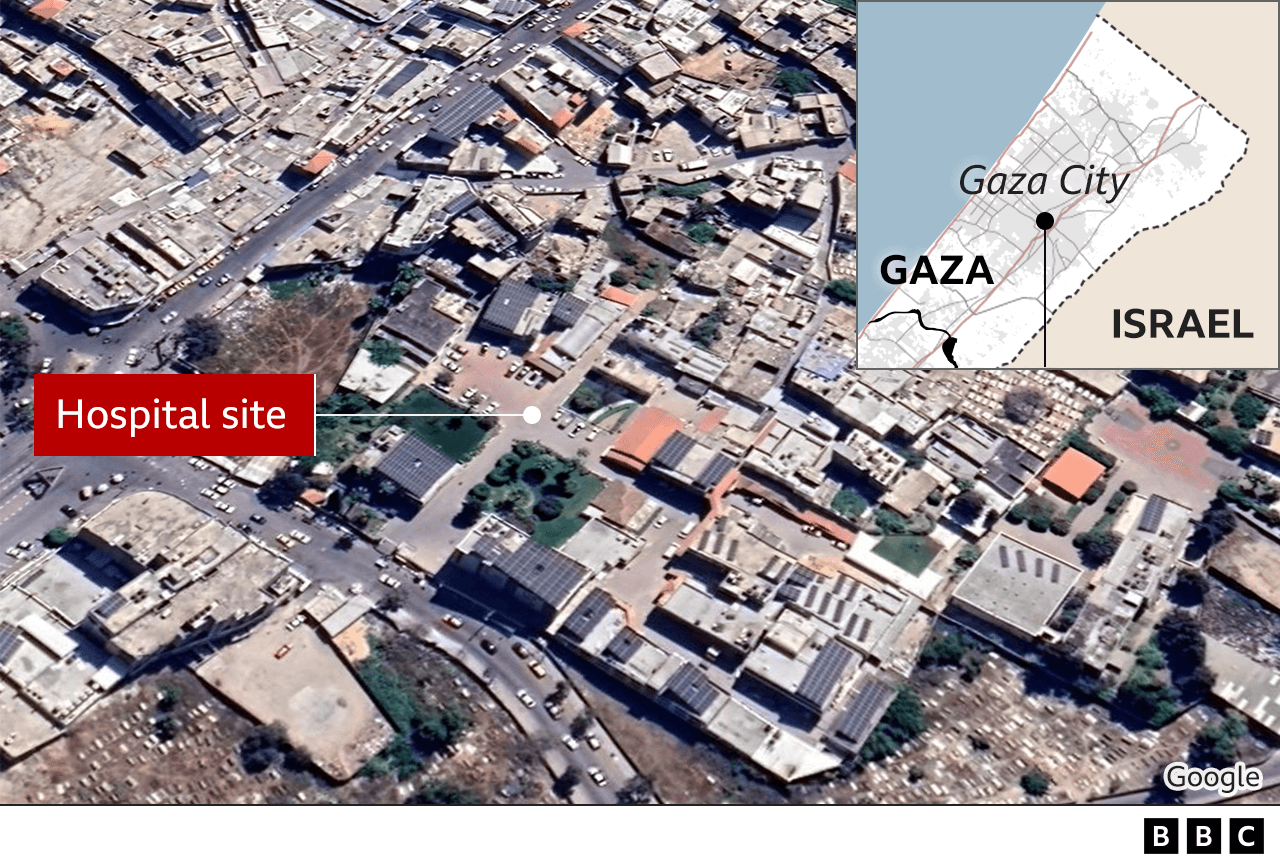
International investigations play a critical role in establishing responsibility for war crimes. Amidst contradictory and competing claims over wrongdoing that characterize conflicts, international investigations can help us see through the fog of war and pinpoint not just what happened, but who is responsible. The current conflict between Israel and Hamas calls for such an effort.
Since the explosion at the al-Ahli Arab hospital, a panoply of media, civil society, and state examinations have concluded who they believe was responsible for the tragedy. There is no doubt some rushed to conclusions too quickly. But without a proper, well-supported international investigation into the alleged crimes committed in Israel and Palestine, people will be left with conflicting and contradictory findings. That serves exactly no one, not Israel, not Palestine, and certainly not victims or survivors.
The war between Israel and Hamas has already seen a heartbreaking amount of human suffering. Reacting to the hostage taking, murders, shelling of civilian areas, siege warfare, and denial of humanitarian aid (all of which may be violations of international law), states have called for adherence of international humanitarian law and for accountability.
The leaders of the United States, United Kingdom, Canada, Italy, and Germany collectively chimed in with a statement reiterating “their support for Israel and its right to defend itself against terrorism and called for adherence to international humanitarian law, including the protection of civilians.” Yet not one of those states supports an international investigation into violations of international humanitarian law.
Following the devastating loss of life at the al-Ahli Arab hospital, Canadian Prime Minister Justin Trudeau announced: “It is imperative that innocent civilians be protected and international law upheld. Together, we must determine what happened. There must be accountability. There must be accountability.”
But accountability is not just a word. It requires a commitment to impartial investigations and to supporting institutions able to hold responsible perpetrators of international crimes. Most Western states have never made that commitment to victims and survivors in Israel or Palestine. They should change course and do so.
Under international humanitarian law – also referred to as the laws of armed conflict – states involved in wars have an obligation to investigate alleged war crimes, including those committed by their own forces. The problem is, they are notoriously bad at it. States at war have an incentive to minimize their own responsibility for atrocities, especially when popular support for a war is at stake. This is true even of democracies.
The United States notoriously evaded holding its soldiers and policy-makers accountable for torture following 9/11. When the former government of Canadian Prime Minister Stephen Harper was confronted with allegations that Canadian forces in Afghanistan transferred detainees into Afghan custody where they were tortured, Parliament was prorogued. When Al Jazeera journalist Shireen Abu Akleh was shot in the back of the head and killed by an Israeli sniper in 2022, the Israeli government initially said Palestinians had likely killed her. They later backtracked and apologized for her death. Targeting journalists in times of armed conflict is a war crime. No one has ever been held accountable for her murder.
Such contexts show why independent and impartial international investigations are needed. Three institutions that are investigating atrocities in Israel and Palestine already exist. But most Western states currently refuse to support any of them. Consider the position of Canada, for example.
In 2021, the United Nations Human Rights Council set up a Commission of Inquiry to examine alleged international crimes committed in the Occupied Palestinian Territory and the Gaza Strip. The Commission is headed by former UN High Commissioner for Human Rights Navi Pillay, an anti-apartheid lawyer who represented Black South Africans jailed on Robben Island alongside Nelson Mandela. The Commission has collected evidence of war crimes committed since the 7 October attacks by Hamas in Israel. Canada typically supports such Commissions of Inquiry, but not this one. Echoing the United States’ position, Canada’s UN Ambassador Bob Rae has called the Commission a “never ending Inquisition”.
Since 2021, the International Criminal Court (ICC) has had an ongoing investigation into the situation in Palestine. The ICC’s jurisdiction covers atrocities committed by Hamas inside Israel and any international crimes – war crimes, crimes against humanity, and genocide – committed in Gaza and the West Bank, including East Jerusalem. It has already determined that “war crimes have been or are being committed” in Gaza. Unlike the Commission of Inquiry, the ICC can hold individuals responsible for war crimes to account.
The United States’ opposition ICC investigation into the situation in Palestine is well-documented. So too is that of the United Kingdom. Germany has been less brazen in its opposition, but continues to object to an ICC investigation. Canada has been a long-time supporter of the ICC, a fact that was on full display when it joined 40 other states in referring Ukraine to the Court and supported the ICC with millions in extra funding and officers to help investigate war crimes in the country. But Canada is among a minority of states that “does not recognize a Palestinian state” and therefore argues that the ICC cannot investigate crimes committed there – by Hamas, Israeli forces or any party. In Parliament, the Canadian government recently again declined to support an investigation by the ICC or any international court.
In addition to the Commission and ICC, Canada joined the United States and others to opposes proceedings at the International Court of Justice (ICJ) regarding the “legal consequences arising from the policies and practices of Israel in the Occupied Palestinian Territory, including East Jerusalem”. Canada typically supports the ICJ. Alongside The Netherlands, Canada is rightly engaged in an ICJ case against Syria over torture allegations. But with respect to Palestine, Canada is among those who have actively rejected proceedings at the ICJ, arguing that Israel does not consent to the Court.
Where does this leave us? Those states calling for accountability and adherence to international humanitarian law won’t support any independent international investigations into atrocities committed in Israel and Palestine. So, where and how do they believe accountability for violations of international law should be pursued?
Wherever they take place, states, including Israel’s closest allies should support an independent and impartial investigation into atrocities committed in Israel and Palestine. Doing so won’t stop end the war, but it could bend the arc of history a bit further towards justice.


 Justice in Conflict
I was watching US Secretary of State Blinken JD (Columbia) [1988] stating that the world has a duty to prevent terrorism - most likely resulting from Chapter VII UNSC Resolutions on terrorism etc.
I find the statement rather SOPHOMORIC. I am very sure Ambassador Mo Sacirbey, Citizen of the USA and formerly Foreign Minister of Bosnia & Herzegovina who was the Agent or Co-Agent in Cases reported in ICJ Rep 1993 p3 and 325 will agree that Acts of Terrorism committed upon the Population of a UN Member-State, a party to the 1948 Genocide Convention by state-supported actors and/or non-state actors from a territory of an UN non-member state, had in accordance of Art. 2 of the said 1948 Convention had deliberately committed with intent to destroy, in whole or in part, a national, ethnic, racial or religious group, as such:
(a) Killing members of the group;
(b) Causing serious bodily or mental harm to members of the group;
The above are mere examples. OCHA of the UN has reported that more than 1,400 fatalities were caused by the Acts of Terrorism on the UN Member-State’s territory upon its population etc. This particularly goes against the Jus Cogens norm - the Prohibition Against Genocide. Thus, referring to ICJ Rep 1993 p3 and 325, NO Provisional Measures nor Measures could have been taken by the UN Non-Member-State to prevent the commission of the crime of Genocide on the UN member-State’s population. The UN OCHA has proven and reported that.
Thus, with all due respect, I do find Secretary Blinken’s rather short and imprecise statement at the UNSC meeting as Sophomoric. I would have stated that the World pursuant to binding Chapter VII UNSC Resolutions and the Jus Cogens Prohibition against Genocide emplaces A Duty to Prevent Terrorism and the Crime of Genocide. I am sure Ambassador Mo Sacirbey and the Yazidi community, Amal Clooney and Nadia Murad will agree verbatim.
https://www.unocha.org/publications/report/occupied-palestinian-territory/hostilities-gaza-strip-and-israel-flash-update-15
Prof. Björn Schiffbauer’s seminal research on “The Duty to Prevent Genocide under International Law: Naming and Shaming as a Measure of Prevention (2018) has provided cogent content on the “international jus cogens” as he puts it, binds the World and not only emplaces the Responsibility on States to protect its own population.
Pingback: ICC harus segera menyelidiki apa yang terjadi di Rumah Sakit al-Ahli Arab - Dimensi Aktual
Pingback: The ICC should urgently investigate what happened at al-Ahli Arab Hospital | Opinions - 3Ch9.Com | عشق.كوم
Pingback: The ICC should urgently investigate what happened at al-Ahli Arab Hospital | Opinions – World's News Feed & Publisher
Pingback: The ICC should urgently investigate what happened at al-Ahli Arab Hospital | Opinions – Latest News Site
Pingback: The ICC should urgently investigate what happened at al-Ahli Arab Hospital | Opinions - FV MESSENGER
Pingback: The ICC should urgently investigate what happened at al-Ahli Arab Hospital – Israel Hamas
Pingback: The ICC should urgently investigate what happened at al-Ahli Arab Hospital | Opinions - UponTask
Pingback: The ICC should urgently investigate what happened at al-Ahli Arab Hospital - Hunting Headline
Pingback: The ICC should urgently investigate what happened at al-Ahli Arab Hospital | Opinions – DailyFinanceBank
Pingback: O TPI deve investigar urgentemente o que aconteceu no Hospital Al-Ahli Arab - Jornal Txopela
Pingback: The ICC should urgently investigate what happened at al-Ahli Arab Hospital | Opinions - News of Pakistan
Pingback: The ICC should urgently investigate what happened at al-Ahli Arab Hospital - Techverdant
Pingback: The ICC should urgently investigate what happened at al-Ahli Arab Hospital | Opinions - First Eye News
Pingback: The ICC should urgently investigate what happened at al-Ahli Arab Hospital - Newspostalk
Pingback: ICC harus segera menyelidiki apa yang terjadi di Rumah Sakit al-Ahli Arab - Progres News
Pingback: SKT būtu steidzami jāizmeklē Al-Ahli arābu slimnīcā notikušais - ewrestling
Pingback: The ICC Should Urgently Investigate What Happened At Al-Ahli Arab Hospital | Opinions
Pingback: The ICC should urgently investigate what happened at al-Ahli Arab Hospital | Opinions - World Latest News
Pingback: The ICC must instantly examine what took place at Al-Ahli Arab Sanatorium - KnowledgeFactory
Pingback: The ICC should urgently investigate what happened at al-Ahli Arab Hospital | Opinions - Sports404
Pingback: The ICC should urgently investigate what happened at al-Ahli Arab Hospital – Stock Market Advice
Pingback: The ICC should urgently investigate what happened at al-Ahli Arab Hospital | Opinions - Top Celebrity News