
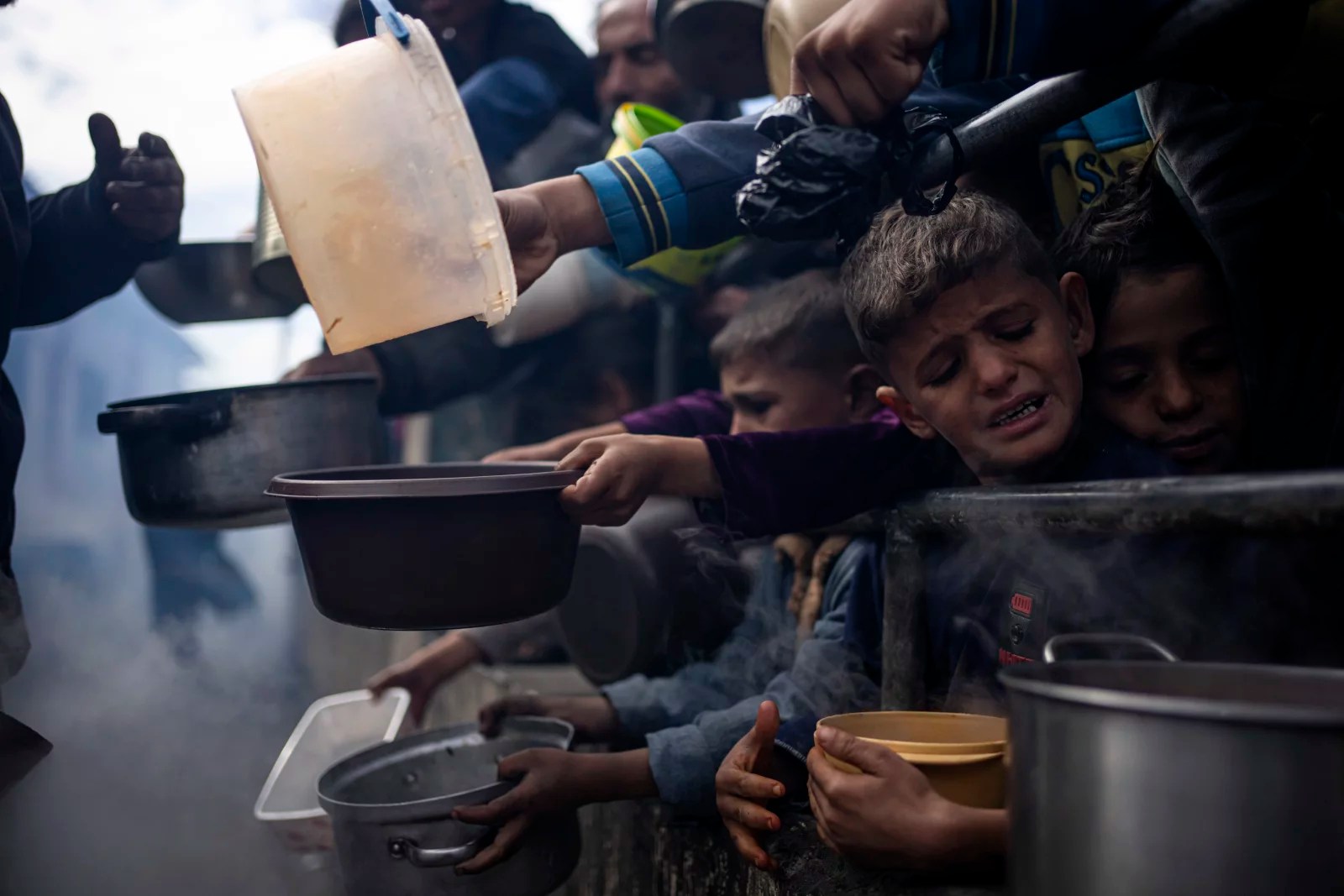
A growing consensus of international and Israeli human rights organizations, editorial boards, Israeli Holocaust historians and former Attorney Generals, as well as figures like Romeo Dallaire, have all come to the same conclusion: What is happening in Gaza is a genocide. But it is clear there remains confusion about what genocide is and how it is perpetrated, which breeds misinformation and polarization. Given the atrocities being perpetrated in Ukraine, Sudan, Myanmar and Palestine, it has never been more important to understand the nature of genocide precisely.
If I could impart one piece of knowledge from my decade-plus of researching and teaching about the topic, it would be this: Genocide is a process, not an event. That insight is critical to understand if we hope to prevent genocides and hold their perpetrators to account.
Genocide is not perpetrated instantaneously. It does not ‘just happen’. Rather, those who seek to commit genocide must prepare their population to either support violence or to turn a blind eye to it. They do so through a process of dehumanizing their target group, often through apartheid-type discrimination. They foster a narrative that the well-being of one group cannot bear the continued existence of the other, whose killing is justified by collectively reducing them to “cockroaches”, “savages”, or “terrorists”.
No genocide has ever been committed – whether it be the Holocaust, Rwanda, Srebrenica, or Gaza – without powerful actors investing tremendous political, economic and social resources into dehumanizing the people targeted by genocidal violence. The 1948 Genocide Convention’s answer to this is to explicitly oblige states to prevent genocide, not merely react to it, a fact too often overlooked.
In part because human beings have an innate aversion to harming others and participating in atrocities, genocide also takes on insidious forms, what some call “slow violence”. While images of mass murder at extermination camps like Auschwitz or pyramids of the skulls of Tutsi victims during the 1994 Rwandan Genocide dominate collective memory, less immediate but no less lethal forms of violence are endemic to genocide. This lack of instant violence – often accompanied by continued births and parts of the population surviving – is often used to deny genocidal violence, despite the fact that the Genocide Convention makes clear that genocide means the intentional destruction of a group, in whole or in part.
Perhaps no method of extermination is more prevalent across genocides than starvation. Sometimes, as with the intentional famine unleashed on Ukrainians by the Soviets during the 1932-33 Holodomor, starvation is the primary method by which populations are destroyed. In other instances, starvation accompanies direct forms of killing. In the Jewish Ghettos, the Nazis ensured that people would receive calories below what was required to sustain life. In Darfur, Sudanese forces not only bombed and raised villages but engaged in “genocide by attrition”: destroying communities by intentionally preventing civilians from accessing food or aid. That such violence also prevents women from giving birth to healthy children may likewise be genocidal.
While mass murder dominates our attention, the slow violence of genocide was captured in the Genocide Convention, which prohibits “deliberately inflicting on the group conditions of life calculated to bring about its physical destruction in whole or in part”.
It is this pernicious violence that also characterizes the genocide committed by Canada against Indigenous peoples – through the forcible displacement of Indigenous communities onto reserves (via threats of starvation), the Indian Residential School System (via its lack of sufficient food and exposure to disease), and the Sixties Scoop (via the transfer of Indigenous children to non-Indigenous families).
The Canadian example also teaches that genocide is not time-bound. It may be committed over several months (Rwanda), years (the Holocaust), or decades (Canada). The law of genocide is rightly silent on the requisite duration of genocide.
Returning to the point that people are generally averse to committing or witnessing mass atrocities, those who engage in genocidal violence try to create distance between the perpetration of genocide and their own citizens in order to create the comforting allusion that genocide is not happening: ‘if I can’t see it, how do we know it’s taking place?’
During the Holocaust, the aversion of Germans to slaughter inspired a move away from killing Jews and others with bullets (which traumatized the killers) to doing so systematically in extermination camps where camp prisoners were themselves used in the operations of Auschwitz, Dachau, and Treblinka.
Notoriously, media like the New York Times barely covered the Holocaust despite its editors being aware of the slaughter. Today, Israel refuses to allow any independent journalists into Gaza. Preventing coverage is an atrocity denial strategy.
A final observation: under international law, there is no hierarchy of international crimes. Neither war crimes nor crimes against humanity are ‘worse’ than genocide. One can believe, as independent investigators (and a Holocaust Survivor) at the International Criminal Court do, that a litany of war crimes and crimes against humanity have been committed in Gaza. Or one can believe it is also genocide. But the focus must be on ending the atrocities and holding those responsible to account.
Mass atrocity prevention scholar Adrian Gallagher recently offered the following analogy: “Imagine Gaza was a forest. The world might get angry if you burn all the trees down at once. So, instead you just chip away at it. The first day you might kill ten trees, the second day 90 trees, the next day six trees. Meanwhile, you don’t water the rest of the trees, and you do what you can to drip feed as little water as possible. And if nobody stops you from chipping away… one day, all the trees are gone.”
Genocide or not, what will states do to stop Israel from chipping away at life in Gaza?
******************************
A version of this article was first published in the Globe and Mail.


 Justice in Conflict
Pingback: Genocide Links – Ministry Of Woke
Pingback: Genocide Links – Freedom Advocacy Network