
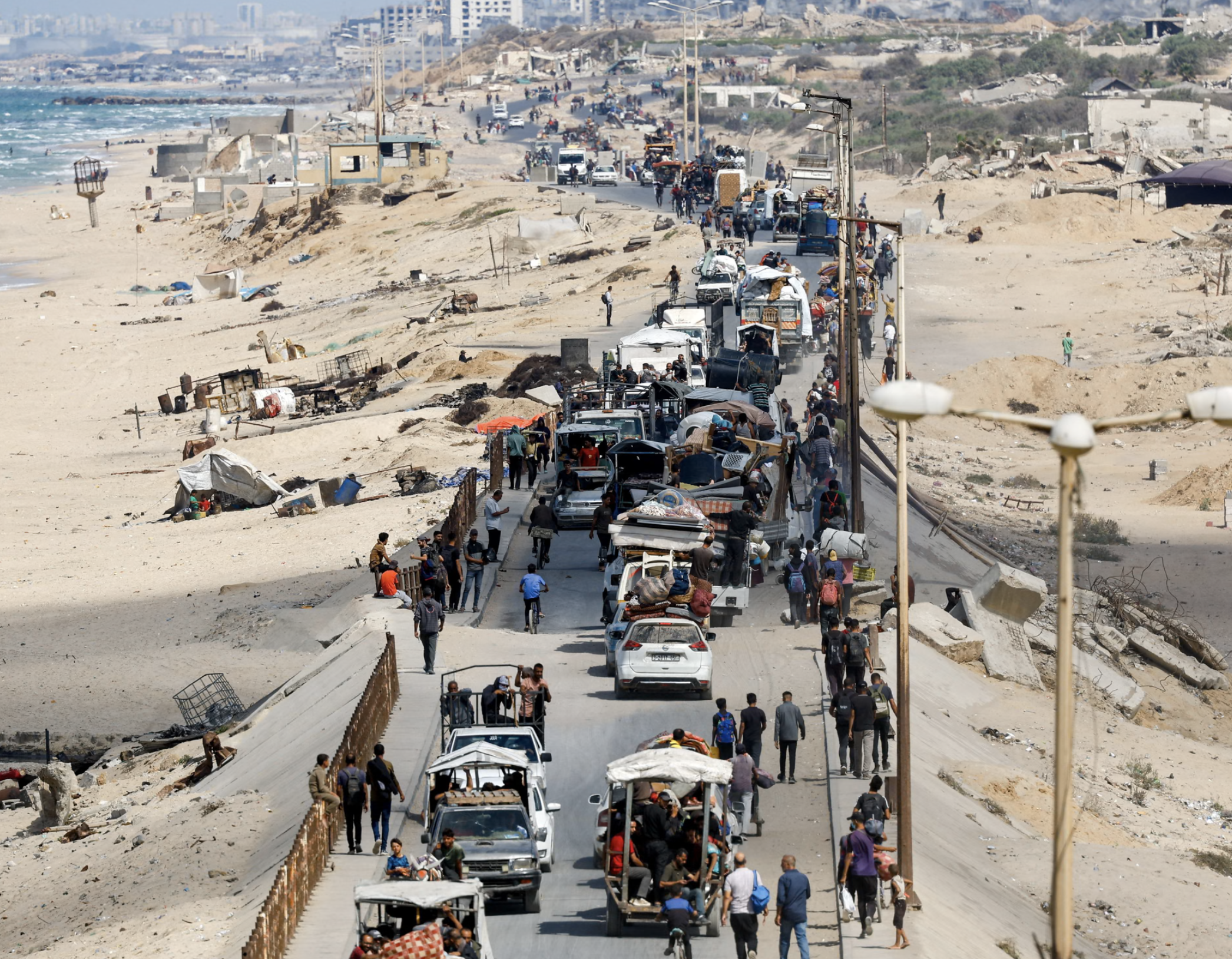
As the first stage of the peace plan for Gaza takes shape amidst reported breaches of the fragile agreement between Hamas and Israel, a critical question remains: will military forces be used to secure Gaza?
While Canada announced its recognition of Palestine at last month’s United Nations General Assembly, Prime Minister Mark Carney made a potentially far more consequential announcement. During an event in New York, Carney shared that Canada was willing to participate in a multilateral mission to “enforce peace” in Gaza. Is Canada preparing to send military forces to stabilize the enclave and prevent atrocities? If so, is it a good idea?
This is not mere talk: leaders don’t raise the prospect of military interventions unless there are concrete plans in the making. Carney’s announcement follows the New York Declaration, which calls for “the deployment of a temporary international stabilization mission” to protect Palestinian civilians, dismantle Hamas, and offer security guarantees for Palestine and Israel, “including monitoring of the ceasefire and of a future peace agreement.” Point 15 of the Trump administration’s peace plan likewise calls for an “International Stabilization Force” that would be Arab-led and offer a “long-term internal security solution” for Gaza.
This is unprecedented territory: while Canada was involved in fighting ISIS, never before has it contemplated participating in a multilateral force to protect civilians from a terrorist group and an ostensible ally waging an increasingly acknowledged genocide of Palestinians. If it goes ahead, would intervention protect peace and Palestinians?
Many Canadians are proud of the country’s role in crafting the Responsibility to Protect (R2P), a doctrine that says that where a state fails to protect its people from genocide, war crimes, crimes against humanity, and ethnic cleansing, the international community must act. Those who support intervention may not like militarism but see it as a last resort when the lives of civilians are in imminent danger – as they are in Gaza. They are also compelled to act by past failures to protect populations – the 1994 Rwandan Genocide, the 1995 genocide of Bosnian Muslim men and boys in Srebrenica, and, of course, the Holocaust.
Others will observe, quite rightly, that R2P has always had a blind spot when it comes to Palestine. While a noble concept, humanitarian intervention also hasn’t worked in practice. Intervention may save some lives, but it costs many others. It likewise has a penchant of getting states mired in poorly considered nation-building projects which look more like occupation than liberation.
Afghanistan stands out as an example of what many view as a well-intentioned but costly and failed intervention. Canada may have sent troops to free Afghans from the Taliban and secure the rights of Afghan women and girls. But today the Taliban is back in power, Canada is suing Afghanistan over gender discrimination and gender apartheid, and some point out that “cats have more freedom than women in Afghanistan.”
Would an intervention in Gaza look any different?
Carney has reportedly left the door open to contributing “funds, material or personnel” to a force “if a demilitarized settlement between Israel and Palestine was ever reached”. Could that include troops? Canada’s UN peacekeeper contributions are dismal, but Ottawa has provided personnel for previous humanitarian interventions. In 2011, the Security Council authorized an intervention into Libya, where Muammar Gaddafi threatened to slaughter civilians. The ensuing NATO mission was led by a Canadian and included multiple Canadian Air Force contributions, though no troops in Libya itself.
Washington has said none of its troops will enter Gaza, and Israel is apprehensive, suggesting it will soon return to military operations in Gaza while simultaneously sealing off and annexing West Bank territory.
Other states are making pledges. On the same day that it signed a defence pact with Canada, Indonesia announced that it “is prepared to deploy 20,000 or even more of our sons and daughters to help secure peace in Gaza.”
Note those words: “secure the peace”; not “keep the peace”. Carney also did not use the word “peacekeeping”; he described the possibility of enforcing peace. The former assumes there exists a peace to keep; the latter implies troops could use force when confronted by actors who pose a threat to civilians. They won’t just keep the peace, they’ll impose it. Given Hamas’ penchant to commit atrocities and Israel’s record of attacking peacekeepers, determining the precise mandate of the stabilization force is critical.
Many questions need to be answered. How far must Israel withdraw from Gaza before a force is installed? Which Palestinian factions will a mission partner with given that the Palestinian Authority does not control Gaza? Will the mission be mandated to use lethal force against actors harming civilians? What will its role be in securing food and humanitarian aid? How will the force foster Palestinian self-determination rather than continued occupation? And how long will the mission operate?
Crucially, military intervention should only be available as a last resort when all other means of stopping atrocities are exhausted. In Gaza, they haven’t been. States can do much more, now, before any forces are deployed: suspending trade relations with Israel, issuing sanctions, and pursuing accountability for perpetrators of atrocities in Gaza.
Slovenia’s President was right when she told world leaders at the General Assembly: “We did not stop the Holocaust, we did not stop the genocide in Rwanda, we did not stop the genocide in Srebrenica. We must stop the genocide in Gaza.” Canada needs a national conversation to know whether a military intervention is needed to stop atrocities in Gaza.
**********************************
A version of this post first appeared in the Toronto Star newspaper.


 Justice in Conflict