Making the Invisible Visible: The Case for Truth Commission on Poverty in Canada

(Photo: Peter Power)

Poverty remains as a human rights violation remains an under-explored subject, particularly in Western states like Canada. Within the field of transitional justice, the issue has likewise received less attention than violations of civil and political rights. In a new (draft) paper entitled “Making the Invisible Visible The Case for Truth Commission on Poverty in Canada“, I tackle this topic and ask what role transitional justice and, specifically, a truth commission, could play in helping to address the systemic and structural violence of poverty in Canada. For those interested, here is the abstract:

Socio-economic conditions have received greater attention in recent years but remain a blindspot in transitional justice. So too do settler colonial contexts. A case in point is Canada. To wed the law and politics of poverty eradication and place victims of poverty at the center of this effort, this paper proposes the creation of a Truth Commission on Poverty (TCP). It proposes the creation of a truth commission to examine to the root causes of poverty, take stock of the current climate for poverty reduction, and lay the groundwork for a coherent approach to poverty eradication in Canada. Not seeking to romanticize truth commissions, the paper assesses their strengths and weaknesses in addressing human rights violations before turning to what a TCP in Canada might offer. It offers six reasons to support such an initiative: (i) to address poverty as an ongoing human rights violation; (ii) to render visible the victims and survivors of poverty’s violence; (iii) to interrogate and address the root causes of poverty in Canada; (iv) to assess the consequences of poverty in Canada; (v) to inform the language of social and economic inequalities; and (vi) to alter the political costs of addressing poverty in Canada by accepting social and economic rights as justiciable.

The full-text of the paper can be found here. I am also happy to share copies of the article with those who do not have access to Academia.edu. If you have feedback or comments, they are more than welcome.

Thank you, as always, for reading!

Posted in Canada, Social and Economic Rights, Transitional Justice, Truth and Reconciliation Commissions, Truth Commission | Leave a comment

A War Crime Coalition: Russia’s Iranian and Chinese Drones Target Ukrainian Civilians 

Paula Knack joins JiC for this guest post on Russia’s drone warfare in Ukraine. Paula was a former Legal Advisor of the Philippine Embassy and former Assistant Secretary of the Philippine Department of Environment and Natural Resources. She holds masters degrees in Advanced Studies in Public International Law (Leiden) and Science (Munich). The opinions below are her own.

A man walks near a factory bombed by Russian forces in Kyiv, Ukraine (Photo: AFP)

In the wars in Iraq, Libya, Yemen, Azerbaijan, and Syria, huge artillery platforms with varying capabilities were connected to artillery systems and air defense sub-systems to accomplish combat operations. A major concern in such contexts is the accuracy of direct fire weaponry of various ranges to execute the mission and minimize unintended casualties, such as civilians.  Russia’s aggression in Ukraine illustrates this issue. Russia’s feuding mercenaries and ill-trained army, grappling with lack of training and low morale, appear incompetent when it comes to operating weapon systems with precision. Its troops have resorted to relentless, indiscriminate, and disproportionate attacks against civilian infrastructure, often resulting in mass atrocities. 

The war in Ukraine rapidly developed into a so-called “drone war” in its first year. On the Russian side, drones compensate for a lack of competence in targeting and interoperability requirements for firing and defense. On the Ukrainian side, as weapons and ammunition supplies from the West diminished, the lack of a huge military arsenal has led to innovative approaches to prevent the onslaught and occupation of key cities by Russian tanks, including using drones as anti-tank weapons. 

Prior to the depletion of much of its vast war arsenal last year, Russia employed various weapons to attack Ukrainian territory. War monitors from the Organization for Security and Co-operation in Europe (OSCE) reported the use of unguided bombs – heavy artillery, grad multiple rockets, air dropped bombs – on urban areas. Open-source intelligence has also revealed the use of vacuum bombs, cluster munitions, as well as ballistic and cruise missiles. In Mariupol alone,87,000 civilians died after hospitals and residential buildings were targeted. After heavy artillery fire, Mariupol was reduced to ruins. 

In its attacks, Russia has repeatedly violated international humanitarian law (IHL). In Mariupol, prohibited cluster bombs and ballistic missiles were used, and mainly civilian infrastructure was targeted. Russia also used thermobaric bombs in residential buildings, violating the Convention on Certain Conventional Weapons and causing unnecessary suffering on the civilian population in violation of the principle of distinction under Additional Protocol 1 (AP1), ratified by both Russia and Ukraine. Despite the protected status of civilians and civilian infrastructure under IHL, due to poorly trained and/or inexperienced armed forces and mercenaries sent to the war, Russia’s troops are increasingly relying on drone intelligence for targeting. This must not go unnoticed by those engaged in accountability efforts.

Drones are Key to Russian Offensive

Originally meant for intelligence, surveillance, and reconnaissance purposes, drones come in various types and sizes, and can be equipped with explosives. A quadcopter with RPG-7 is typically used to block the entry of tanks in residential areas and supply routes. It is cheaper and easily transportable. It has a sustainer motor of only about 4.5 lbs. and an explosive-equipped warhead of only 1.5 lbs. Some small drones easily fit in backpacks and cost a fraction of anti-tank systems. 

Continue reading
Posted in China, Drones, International Humanitarian Law, Iran, Russia, Terrorism, Ukraine, War crimes | Tagged | 7 Comments

Without accountability in the U.S., this won’t be the last January with an insurrection

Bolsonaro supporters storm Brazil’s National Congress building (Photo: AP)

Images of supporters of former President Jair Bolsonaro storming the Congress buildings and Supreme Court in Brasília early this month were disturbing yet unsurprising. Many saw this coming. Numerous acolytes of Donald Trump encouraged and helped plan the attacks on Brazil’s democratic institutions. But blaming the Trump administration is too easy. The more difficult lesson is the failure of accountability. This is what happens when states like the U.S. fail to bring to justice those most responsible for insurrection and domestic terrorism. 

As mobs began their attack in Brasília, observers immediately made the connection to the 6 January 2021 riots in Washington. For example, Democratic Congresswoman Alexandria Ocasio-Cortes stated: “Nearly 2 years to the day the US Capitol was attacked by fascists, we see fascist movements abroad attempt to do the same in Brazil.” 

Right-wing America’s fingerprints were all over the events in Brazil. Trump sycophants like Steve Bannon and Stephen Miller moonlight as Bolsonaro advisors, strategizing with the former leader on how to contest Bolsonaro’s October 2022 presidential election loss to Luiz Inácio Lula da Silva. They didn’t look far for their master plan, effectively lending Bolsonaro their own playbook. 

Bolsonaro has put his own spin on Trump’s “Stop the Steal” strategy, whereby the erstwhile Brazilian leader’s supporters reject the election results, spread disinformation about the integrity of the 2022 polls, and instigate an insurgence against democratic state institutions. Neither Bolsonaro nor his American friends tried to hide their nefarious scheming. According to Human Rights Watch, the assault on Brazil’s Congress and Supreme Court was the result of a “years-long campaign by former president Jair Bolsonaro and his allies”. As mayhem in Brasília unfolded, Bannon was ready; he called the mob in Brasília “freedom fighters”.

Two of the most important democracies in their regions and in the world – the U.S. and Brazil – have both now witnessed disenchanted former presidents incite mobs to undermine the rule of law. This won’t be the last January of insurrection unless ringleaders are held accountable.

Continue reading
Posted in Brazil, United States | 2 Comments

Fair Labelling the Crime of Starvation: Why Ratifying the War Crime of Starvation Matters

Cloé Dubuc joins JiC for this guest-post on the war crime of starvation. Cloé is an L.L.M candidate at Laval University and assistant director of the International Criminal and Humanitarian Law Clinic.

A Rohingya refugee carries a bag of rice near Balukhali refugee camp, Bangladesh (Photo: AFP)

In the midst of the war in Ukraine, allegations of Russia’s use of starvation tactics are mounting. Several sources have reported obstruction of humanitarian access and shelling of food storage facilities. Ukraine’s Foreign Minister has described these tactics as “hunger games” played by Russia.

Similarly, recent investigations have found widespread destruction and looting of food, agricultural products, livestockmarkets, and crops in several counties of South Sudan. These deliberate starvation tactics have forced hundreds of thousands of civilians to flee, exacerbating food insecurity and famine in the country. The World Food Program now estimates that 8.3 million South Sudanese – 75% of the population – are suffering from severe food insecurity.

While the situations in Ukraine and South Sudan shadow the same phenomenon and are leading to similar consequences for those targeted, victims are not provided with the same recourse to justice. As of today, a critical gap remains in the fight against impunity for these so-called starvation tactics. Indeed, the International Criminal Court (ICC) currently lacks the legal capacity to prosecute perpetrators in South Sudan for destroying livestock and crops. The reason? The use of starvation as a method of warfare is only criminalized as a war crime in international armed conflicts (IACs) under the Rome Statute (see Article 8(2)(b)(xxv)).

As conflicts today increasingly take the form of civil wars, rebel insurgencies, or other types of internal violence, the urge to close the Rome Statute’s gap is even greater. This pressing call for action was partially answered in 2019, when Switzerland proposed an amendment to the Rome Statute to criminalize the use of starvation as a method of warfare in non-international armed conflicts (NIACs). The proposal was unanimously adopted by the ICC’s state parties and subsequently ratified by 11 countries

This ongoing development was welcomed during the 21st session of the Assembly of State Parties of the ICC at the side event titled “Strengthening the Protection of Civilians: Why Ratifying the War Crime of Starvation Matters”. The panelists called for broader ratification of the Starvation Amendment (see here for an explanation of the Rome Statute’samendment regime). This event was organized, among others, by the Global Rights Compliance Foundation (GRC) and was aimed at launching the GRC Ratification Guidebook.

Continue reading
Posted in Crimes against humanity, International Criminal Court (ICC), International Humanitarian Law, Rome Statute, Rome Statute ratifications, Starvation, War crimes | Tagged , | 3 Comments

Disappeared Justice: ICC Action in Mexico should not be postponed any longer 

Roberto Ochoa joins JiC for this blog post on the potential preliminary examination of the situation in Mexico by the International Criminal Court. Roberto is a Mexican lawyer and political philosopher who has been working for more than 10 years with victims of the war on drugs in his country.

Forensic scientists search a grave of a disappeared person in Mexico (Photo: AP)

Since 2012, the International Federation for Human Rights (FIDH) in collaboration with Mexican organisations has repeatedly sent communications to de Office of the Prosecutor (OTP) at the International Criminal Court (ICC), asking them to open a preliminary examination into the situation in Mexico. A preliminary examination is the phase conducted by the ICC prior to deciding whether to open an official investigation. Mexico is a party to the Rome Statute since 2006. The only publicly available official response provided by the OTP to date shows that no material analysis has been undertaken. The OTP has expressed, in summary, that the gross human rights violations in the country cannot be legally considered as crimes against humanity because they are the result of a broader context with different elements, such as the structural weakness of the administration of justice, a high level of impunity, and increases in organized crime. The costs of looking away from this crisis are growing every day and there is the risk of the situation becoming unmanageable very soon.

For decades, academics and observers have insisted quite rightly that Mexico must stop merely being the United States of America’s backyard, the place where what is not wanted is hidden or cast aside. In 1994, Mexico, the U.S. and Canada signed the North American Free Trade Agreement, transforming the region into the largest and most active economic zone in the world. However, unlike with the European Union, the possibility of a more comprehensive integration (e.g., in terms of labour and migration) was immediately ruled out. Neoliberalism, the fantasy of the self-regulating market that economist Karl Polanyi warned about 40 years earlier, was on the rise. Based on that belief, allowing the free passage of all goods through international borders and boosting trade and thereby economic prosperity was the perfect way to generate value for society. There were warnings regarding the blind spots that threatened to undermine such aims (e.g., José Angel Conchello on one side of the political spectrum and the EZLN on the other). Nonetheless, governments at the time decided to ignore such warnings. The consequences for Mexico have been devastating.

Not a day goes by in which Mexicans are not exposed to gross human rights violations. Thousands of mothers have dug the earth with their bare hands in search of their children’s remains. They are not looking for the culprits and yet, they are regularly threatened and some even murdered. Fifteen such cases have been documented, including 5 of them in 2022.  Over the past few decades, the country has broken down to such degree that crime has become a principal occurrence in the country. The rationale behind these horrors continues to escape us. We have certain figures (more than 109,000missing persons) and certain stories (for example, the justification given by President Felipe Calderon to the militarization of public security because the government must fight organized crime), but what we know about the violence in Mexico is only the tip of the iceberg of a very complex phenomenon that is continually getting worse.

It is time for international justice institutions to intervene. We do not need more documentation, theories, or interpretative accounts of what is happening in the country. As long as judicial proceedings are not properly carried out, we will remain in the dark. Between 94 and 96 percent of the serious crimes committed in Mexico go unpunished, while impunity for enforced disappearance cases is above 99 percent

Continue reading
Posted in Enforced Disappearance, ICC Prosecutor, International Criminal Court (ICC), Mexico, Preliminary Examinations | Tagged | 4 Comments

The View from Ukraine: Why a New International Criminal Tribunal to Prosecute Russian Aggression is Needed

The following guest-post arguing for a special tribunal to prosecute Russian aggression in Ukraine was written by Volodymyr Pylypenko. Volodymyr holds a PhD in Law and is an Associate Professor in the International Relations Department of Lviv University of Business and Law, Ukraine.

(Photo: AP)

Since the beginning of the armed aggression unleashed by the Russian Federation against Ukraine, tens of thousands of Ukrainians have died or been deemed missing. Many towns and villages have been destroyed, and the state and civilians have suffered enormous material losses. Millions of Ukrainians have been forced to leave their homes. The consequences of Russian aggression, in all their cruelty and cynicism, are comparable to the horrors of the Second World War.

Russia’s aggressive war against Ukraine has been one of the most flagrant violations of Article 2(4) of the Charter of the United Nations (UN) since it entered into force. Shortly after the aggression started, the UN General Assembly voted in favour of a resolution demanding that Russian immediately stop offensive behaviour and withdraw its troops from Ukrainian territory. Ukraine and “most of the world’s nations” condemned Russia for planning and executing aggression.

Following the invasion, millions of Ukrainians turned their eyes onto the International Criminal Court (ICC), as the only permanent body of international criminal justice with relevant powers. This court has jurisdiction over those most responsible for committing international crimes, including war crimes, crimes against humanity, genocide, and the crime of aggression.

The ICC has mechanisms to bring to justice those guilty of the crime of aggression, and it gave the global community reasons to hope that Vladimir Putin and his supporters would be condemned for launching an aggressive war against Ukraine. However, that did not happen as expected. In reality, everything has been much more complicated.

Clause 2 of Article 8 bis of the ICC Statute provides that the actions specified in the UN General Assembly resolution 3314 (XXIX) of 14 December 1974, are the acts of aggression. However, Articles 15 bis and 15 ter of the Rome Statute, define the conditions for the ICC to exercise its jurisdiction over this crime. According to the rules of Article 15 bis, the Court may proceed with an investigation on the crime of aggression if the investigation is initiated by a State that has ratified the Statute (i.e., a state referral) or proprio motu if the Prosecutor of the ICC concludes that there is a reasonable basis to proceed with such investigation.

That same article also states that the ICC shall not exercise its jurisdiction over the crime of aggression and cannot proceed with an investigation with respect to a State that is not a party to the Rome Statute when the act of aggression was committed by that State’s nationals or on its territory.

Continue reading
Posted in ICC Prosecutor, International Criminal Court (ICC), International Criminal Justice, Russia, Ukraine | 1 Comment

Ukraine can and should investigate its own military’s war crimes

(Photo: GETTY IMAGES / BBC)

While nowhere near the scale of the Russian atrocities, there is mounting evidence that Ukrainian forces have committed war crimes over the course of the Ukraine-Russia war. The allegations, and the evidence supporting them, won’t go away. What matters now is how Ukraine responds to them. Its allies have a role to play in shaping that response. Unlike Moscow, Kyiv is capable of addressing atrocities committed by its own forces in its own courts.

Since Russia’s invasion of Ukraine, allegations that Ukrainian forces have committed war crimes against Russian officers and prisoners of war (POWs) have periodically come to light. A controversial Amnesty International report asserted that Ukrainian military tactics put civilians in danger. Video footage has been published suggesting that Ukrainian troops may have executed surrendering Russian officers in the town of Makiivka. Somewhat forgotten in all of this are the findings of the International Criminal Court (ICC), which announced in 2019 its determination that Ukrainian forces committed atrocities against Russian soldiers in eastern Ukraine 

To be clear: none of these allegations draw moral or legal equivalency between the acts of Ukrainian and Russian forces. Any alleged crimes committed by Ukrainian officers pale in comparison to the historic barbarity of Russian aggression and atrocity. But all atrocities must be accounted for, not just those of one’s enemies.

In response to the videos showing potential war crimes committed by Ukrainian forces, Ukraine announced that it would investigate the alleged crimes captured on the videos. However, authorities have claimed they will open an investigation into the war crime of perfidy: the allegation that Russian soldiers were killed only after they deceived Ukrainian forces by pretending to surrender. 

The announcement of an investigation is a good first step. But Ukraine must avoid drawing conclusions before any investigation has taken place. It is important to avoid tunnel vision and allow an impartial probe to speak for itself. As former Human Rights Watch Director Kenneth Roth notes: “An investigation is needed… One Russian fired on his Ukrainian captors — possible perfidy — but that doesn’t justify executing other soldiers if they posed no immediate threat.”

With respect to alleged crimes committed by Ukrainian forces, Kyiv’s allies have a role to play. Rather than condemning Ukraine, they should encourage it to take responsibility and launch independent investigations. This encouragement can take multiple forms.

First and foremost, Kyiv’s international partners should clearly and unequivocally state that international criminal law and international humanitarian law applies to all parties of a conflict, not just some. This holds true even in severely asymmetrical contexts like that in Ukraine. 

Continue reading
Posted in International Criminal Justice, Prisoners of War, Rome Statute, Russia, Ukraine, War crimes | Tagged , , , , | 2 Comments

Should the International Criminal Court Meet with alleged War Criminals?

ICC Prosecutor Karim Khan meeting with Libyan warlord Khalifa Haftar

Earlier this month, ICC Prosecutor Karim Khan met with notorious warlord Khalifa Haftar, widely suspected of international crimes in Libya. The meeting raises the question: should the International Criminal Court (ICC) Prosecutor meet with perpetrators of mass atrocities?

JiC readers will be familiar with this question (see our ‘perceptions of justice debate here). The most obvious answer is no; the Prosecutor should be prosecuting rather than glad-handing perpetrators. Yet throughout its existence, the ICC Prosecutor has met and been photographed with many alleged war criminals. At play is a difficult balancing act on the part of the Prosecutor that deserves greater attention and transparency.

Every ICC Prosecutor to date has sought the cooperation of atrocity perpetrators. In the early 2000s, then ICC Prosecutor Luis Moreno-Ocampo successfully negotiated a referral of northern Uganda to the Court with Ugandan President Yoweri Museveni. In 2003, Moreno-Ocampo announced the ICC’s first-ever investigation at a glitzy press conference with Museveni. That might not have been an issue if it wasn’t for the fact that many Ugandans and rights advocates have highlighted Museveni’s complicity in mass atrocities in northern Uganda and his interest in the ICC’s singular focus on his opponents.

In 2012, Fatou Bensouda succeeded Moreno-Ocampo. She met and posed for photos with former president of the Democratic Republic of Congo (DRC) Joseph Kabila, widely alleged to be responsible for international crimes. Bensouda also met with Rwandan leader Paul Kagame who stands not only accused of serious human rights violations and fueling conflict in neighbouring DRC but has fomented anti-ICC fervour among African leaders and undermined the Court’s work.

Khan, the ICC’s third and current Prosecutor, has continued the trend, meeting with Sudanese political and military leaders, including Abdel Fattah Al-Burhan and Mohamed Hamdan Dagalo. Both are accused committing human violations against Sudanese civilians during the country’s transitional period. Dagalo is also widely understood to have engaged in atrocities in Darfur, a situation that the ICC has had under investigation since 2008.

Continue reading
Posted in ICC Prosecutor, International Criminal Court (ICC), Libya, Libya and the ICC, Libyan National Army, Transnational Criminal Law | Tagged , | 3 Comments

Quest for Liberia: Decades Long Fight for War Crimes Accountability in Liberia Reaches the ECOWAS Court of Justice

Sarah Gamble, Ela Matthews, and Nushin Sarkarati join JiC for this blog post on the ongoing fight for accountability for war crimes in Liberia. Sarah holds a J.D. from UC Davis School of Law and is a Legal Fellow at the Center for Justice and Accountability. Ela is a Senior Staff Attorney at the Center for Justice and Accountability where she works on building survivor-led accountability strategies for atrocity crimes through U.S. and international litigation and investigations. Nushin Sarkarati is a Senior Staff Attorney at the Center for Justice and Accountability, representing victims of atrocity crimes in pursuing justice through universal jurisdiction in the U.S. and before international bodies. 

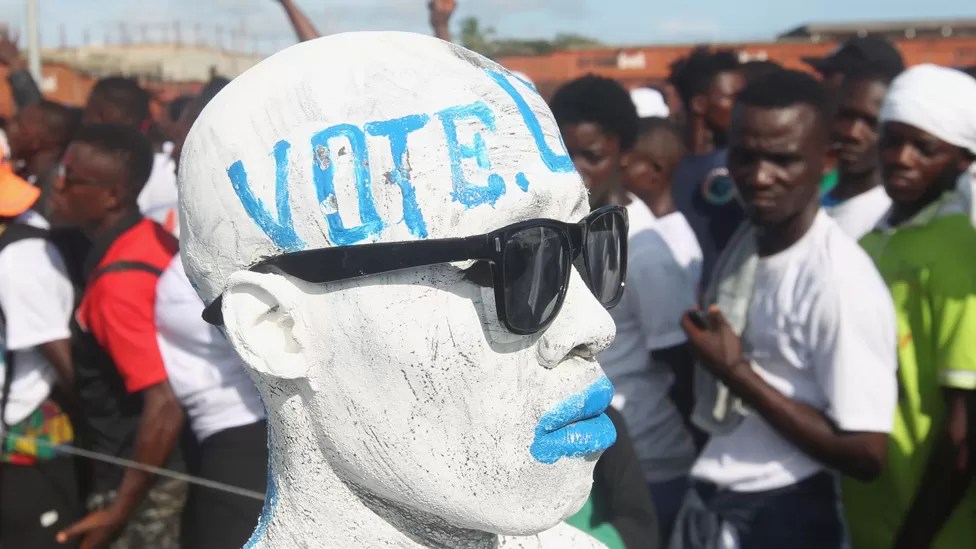
(Photo: BBC)

On July 29, 1990, Liberian government forces massacred 600 unarmed men, women, and children in a Red Cross shelter at St. Peter’s Lutheran Church in Monrovia. The Massacre occurred during the first of Liberia’s two bloody civil wars that left approximately 250,000 people dead and was one of the largest attacks against civilians in the history of the conflict. Despite widespread condemnation of the attack, and decades of survivor-led action calling for justice, the Liberian government has failed to investigate and prosecute those responsible.  

Tired of waiting for government action, survivors of the Lutheran Church Massacre recently brought a case against the Liberian government before the Economic Community of West African States (ECOWAS) Community Court of Justice, a regional court with jurisdiction over allegations of human rights violations committed by member states. The survivors argue that Liberia’s failure to ensure accountability for civil war era crimes is a breach of its international human rights and humanitarian law obligations. This will be the first time that a court will examine Liberia’s failure to investigate human rights and humanitarian law violations committed during its civil wars. These efforts could have implications on broader movements for domestic accountability for international crimes in the region. This post discusses the lead up to this historic case and why this could be a turning point in the region and in the quest for justice in Liberia.

Accountability Developments and Delays in Liberia

In 2005, Liberia’s legislature established the Truth and Reconciliation Commission (TRC) to investigate the human rights violations that occurred during Liberia’s civil wars. The TRC collected 20,000 statements and heard direct testimony from over 800 Liberians within the country and in the diaspora. Four years later, the TRC concluded in its final report that warring factions from all sides of the conflict were responsible for serious violations of international law, and that members of the government’s armed forces were responsible for the Massacre at St. Peter’s Lutheran Church. The Commissioners recommended that Liberia establish a mixed international and domestic war-crimes court – the Extraordinary Criminal Court for Liberia – to investigate and prosecute individuals accused of war crimes, crimes against humanity, and other serious violations of international humanitarian law, as well as certain domestic crimes, including economic crimes. However, despite calls from survivorscivil society, and even the UN Human Rights Committee, the Liberian government refused to implement the majority of the TRC’s recommendations and failed to implement the necessary legislation to hold perpetrators of atrocity crimes accountable. 

The new administration under President George Weah brought a resurgence of hope that the TRC recommendations would finally be enacted because President Weah was not personally involved in the civil wars. Activists renewed their calls to the government to follow through on the TRC recommendations and Liberia’s bar association prepared a draft bill establishing a war crimes court. 

This hope culminated on September 12, 2019, when President Weah requested the Liberian Legislature advise him on the process of implementing the TRC’s recommendations. Later that month, while speaking at the UN General Assembly, Weah reported that he was working with the Legislature to create a war crimes court. Despite these promising announcements, the President abruptly changed course. In October 2019, he stated: “why should we focus on the war crimes court now, when we did not focus on it twelve years ago?” Following this statement, the Speaker of the House of Representatives removed the creation of war-crimes court from House’s agenda.

Continue reading
Posted in Economic Community of West Africa (ECOWAS), International Criminal Justice, Liberia, Truth and Reconciliation Commissions, War crimes | Tagged , , , , , | 1 Comment

Event 31 October: Where do you go when a corporation violates international human rights?

Dear JiC readers,

It is with great pleasure that I share information about an online panel that I have co-organized with the ActInCourts network, taking place next Monday, 31st of October (Halloween!) at 9am PST / 12pm EST / 5pm GMT. The panel will focus on the timely subject of addressing and redressing corporate human rights violations.

The panel features a stellar cast, including Tara Van Ho, Richard Goldstone, Amanda Ghahremani, and Andrew Cleland. I will be moderating the panel. More information on the event, including on how to register to attend can be found below.

I hope to see some of our readers there!

Mark

Please join us on October 31 at 9 am PT / 12 pm ET / 4 pm UTC for a special virtual scholar-practitioner panel hosted by the ActInCourts network: Corporate Violations of International Human Rights.

There is growing interest in holding corporations to international human rights standards. But where can individuals go when a corporation violates their rights under international human rights law? We will discuss possibilities such as domestic courts (including with jurisdiction over rights violations abroad), international courts and commissions, and emerging bodies such as the International Anti-Corruption Court and the International Criminal Court. The panelists will be:

Tara Van Ho is Co-Director of the Essex Business and Human Rights Project, University of Essex Law School.

Andrew Cleland is a civil litigator at Delangie Cleland Limoges in Montreal, Quebec; board member at Canadian Lawyers for International Human Rights (CLAIHR); and counsel to overseas communities and Canadian NGOs on business and human rights, private international law, and corporate due diligence initiatives.

Hon. Richard Goldstone is a Retired Justice of the Constitutional Court of South Africa and Deputy Chair at Integrity Initiatives International.

Amanda Ghahremani is a lawyer specialising in corporate accountability, international criminal law, and universal jurisdiction cases, and currently a Research Fellow at the Human Rights Centre at UC Berkeley.

The panel will be moderated by Mark Kersten, Assistant Professor of Criminology and Criminal Justice, University of the Fraser Valley, Senior Consultant at the Wayamo Foundation, and Fellow at the Munk School of Global Affairs, University of Toronto. 

Monday, October 31

9 – 10:30 am PT / 12 – 1:30 pm ET / 4 – 5:30 pm UTC

Learn more and register

The Zoom link will be sent to all registrants.

Please join us on October 31 at 9 am PT / 12 pm ET / 4 pm UTC for a special virtual scholar-practitioner panel hosted by the ActInCourts network: Corporate Violations of International Human Rights.

Posted in Uncategorized | Leave a comment