
Maria Mabinty Kamara joins JiC for this insider account on outreach efforts by the International Criminal Court throughout the proceedings against Dominic Ongwen. The post is part of our ongoing symposium on the life and trials of Dominic Ongwen. Maria is an ICC Outreach Officer who has worked in Uganda, Kenya, and Sierra Leone.
‘’No matter how far victims might be from the Court, the ICC endeavours to reach out and engage with them and their communities. People most affected by the crimes have the right to understand, to participate in, and to have a sense of ownership of the justice process’’.
The statement above encapsulates the International Criminal Court’s goal of establishing an Outreach Programme that engages in a constructive, sustainable, and reciprocal manner with the victims, populations and different stakeholders that are affected by the crimes under investigation and on trial. Outreach promotes access, understanding and ownership of a justice process that is otherwise considered distant and foreign among the people it is designed to serve.
The Court’s Outreach activities in Uganda commenced in 2006, creating individually simple yet collectively multifaceted channels of communication that harnessed vibrant relationships with victim communities, religious and cultural leaders, the media fraternity, the academic and legal communities and the general public in northern Uganda. As the Court seeks to fulfil its mandate to investigate and prosecute persons who have committed the most serious crimes of international concern, namely genocide, war crimes, crimes against humanity and genocide, it is imperative that its role and judicial activities are understood and appreciated, particularly in communities affected by the crimes under its jurisdiction. Unlike most national and local courts, the ICC is international and it is situated in The Hague, The Netherlands, which is thousands of miles away from the populations in northern Uganda that have been affected by the crimes Dominic Ongwen is accused of.
After a long and frustrating lull of up to 10 years from 2005 when the arrest warrants against senior members of the Lord’s Resistance Army (LRA) were issued, the arrest and surrender of Ongwen to the ICC in 2015 was a welcome relief that rekindled the communities’ interest for information about the trial. Until the outbreak of COVID-19 in early 2020, that was demonstrated by the enthusiasm and large numbers of people that participate in outreach activities.
With all the proceedings being conducted in the ICC Courtroom in The Hague, the massive interest and participation of victims and affected communities in the trial proceedings expressed through numerous Outreach channels underscores the importance of a robust and inclusive outreach programme that ensures that the judicial proceedings are accessible, meaningful and relevant, promotes understanding of and support for the Court’s work, and manages the expectations of the victims and affected communities.
Notwithstanding the distance between the ICC in The Hague and the communities whose needs for justice and accountability are being served by the Court, our work connects the communities with the Courtroom, bringing understanding, ownership, and legitimacy of the work of the Court in the four major geographical areas in northern Uganda where the bulk of the victims reside.
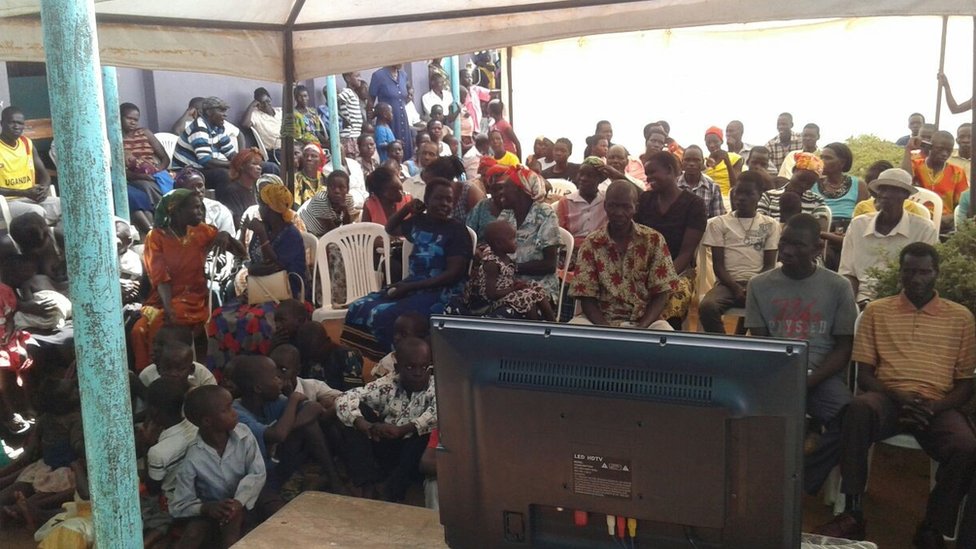
In northern Uganda, our Outreach has made it possible for people living thousands of miles away from the Court to have a meaningful experience of the proceedings. Throughout the trial, we established screening centres in the twenty-five locations that are directly linked to the case and where projections of the trial are held monthly. The monthly screenings are led by community volunteers selected from among the victims and affected communities.
During important and symbolic moments of the trial, such as the opening of the trial, the opening of the presentation of evidences, and closing statements, we organised live video and radio broadcasts of the proceedings, which enabled the victim communities and the public at large to follow the proceedings, bringing the Courtroom to the populations it matters most to. In the course of my engagements with victims and affected communities from different judicial contexts, the most compelling experience of a lifetime was witnessing first-hand with concept of an ‘’ICC Courtroom in every parish’ – an adage created to summarise the access to the Courtroom created in different distant communities across northern Uganda, through our outreach initiatives.
Continue reading




 Justice in Conflict