Companies Helped Sustain the Gaddafi Regime. They Should be Held to Account

The following was written for and initially published by the Global and Mail, in response to the ongoing scandal surrounding the Canadian government and the Canadian company, SNC-Lavalin. 

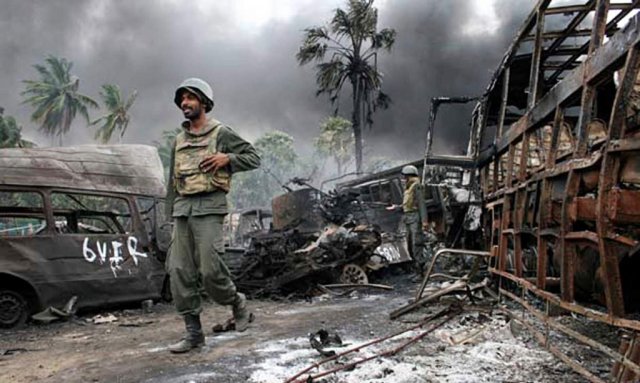
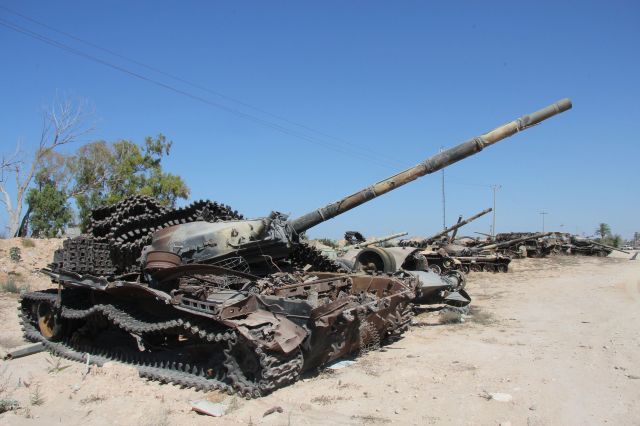
Damaged tanks outside of Misrata, Libya (Photo: joepyrek / Creative Commons)

Canadians have been battered with news about the SNC-Lavalin scandal. The Trudeau government wants to compel people to make a choice: Do we want jobs, or do we want to hold SNC-Lavalin to account for accusations of bribing officials in Libya? But this affair isn’t just about Canada, Canadians or jobs. Holding SNC-Lavalin to account represents an opportunity to challenge the status quo where states and companies can underwrite brutal dictatorships with impunity. It’s an opportunity to tell a different and all too rare kind of story about holding the enablers of autocracy to account.

I first came across SNC-Lavalin when conducting research into the 2011 civil war in Libya. The company’s name popped up in discussions about what (and who) had sustained the regime for so long. At that time, images of then Libyan leader Moammar Gadhafi sharing the stage with world leaders were still fresh. A litany of states and businesses – including Western ones – had spent a decade rehabilitating a regime and lavishing it with contracts. Those entities have never been held accountable for their role in legitimizing a regime that would ultimately exchange its accumulated wealth for the weapons and mercenaries needed to commit atrocities against its own people.

What we tend to believe is Mr. Gadhafi went berserk in response to the 2011 uprising in Libya. This isn’t the whole story.

When conflict erupted in Libya, states sought to minimize scrutiny of the previous 10 years. But that decade is crucial to understanding the conditions which sustained the regime and created fertile ground for Mr. Gadhafi’s subsequent atrocities. From about 2002, countries engaged in a concerted effort to rehabilitate the regime in exchange for vague promises of democratization (which didn’t happen), dismantling a nuclear program (which was nascent at best and which Mr. Gadhafi did not fully comply with) and withdrawing support for terrorist organizations (which he did).

A coterie of Western leaders, including former prime minister Paul Martin and former British prime minister Tony Blair, embraced Mr. Gadhafi. Mr. Martin would later say that his visit was a reward for the Libyan leader’s “fundamental shift in position” away from sponsoring terror to being a responsible member of the international community. Britain and Italy (whose former prime minister Silvio Berlusconi “went gaga for Gadhafi”) signed lucrative oil deals with the Libyan leader, who, in turn, promised to tighten controls on immigration from Africa to Europe via the Mediterranean. France, the United States, the European Union and Russia had arms deals. Canada sold Libya almost $250-million in goods in 2010 alone, while SNC-Lavalin allegedly wooed regime figures for contracts.

As I wrote in my book, which covers the Libyan conflict, countries – especially Western ones – tethered the popular notion in the 80s and 90s of Mr. Gadhafi as the “mad dog of the Middle East” to the 2011 image of a lunatic lashing out at his own people. The inconvenient middle bit – the rehabilitation of Mr. Gadhafi and the political, military and financial investment into the regime – fell out the bottom. Continue reading

Posted in Canada, International Criminal Court (ICC), International Criminal Justice, Libya, Libya and the ICC | Tagged | 2 Comments

Filling the Vacuum: Syria and the International Criminal Court

Toby Cadman and Carl Buckley join JiC for this post on their recent application requesting the Prosecutor of the International Criminal Court (ICC) to investigate the deportation of Syrians into Jordan. Carl is a Barrister with Guernica. Toby is the Co-founder of The Guernica Centre for International Justice, which submitted an amicus curiae to the ICC on Myanmar and which also submitted an Article 15 submission to the ICC Prosecutor concerning jurisdiction for Syria by way of application of the Myanmar decision.

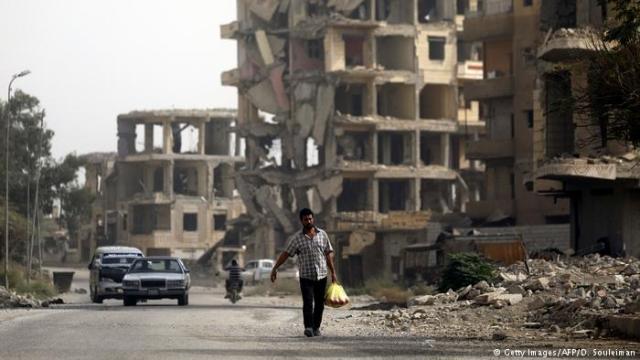
(Photo: Getty Images / D. Souleiman)

It’s your turn, Doctor’. These were the words that initiated one of the cruellest conflicts in the recent history of the Middle East.

A group of seven teenagers in the Syrian town of Daraa, inspired by the winds of freedom and democracy blowing from the Arab Spring in Tunisia, Egypt and Libya, adorned their school walls with these words in defiance of the Syrian oppressive regime. Basher-al-Assad, the Syrian dictator whose family has tyrannically ruled the country for more than four decades, is a doctor specialized in ophthalmology.

The response of the Syrian State Security Forces was brutal and prolonged. It treated with extreme violence the young authors of the graffiti. The town of Daraa in turn lit the flames of revolution, initiating with their actions a conflict which is now entering its ninth year and has no clear end in sight.

This war has witnessed unimaginable atrocities. More than half the pre-war population have been either killed, disappeared, or displaced. Most of those who were forced to flee due to the brutal conduct of the Syrian State Security Forces have not been able to return for the very same reasons that forced them to leave. Those responsible, including the Syrian President Assad, must be brought to justice and held accountable.

Spinning the Tires of Jurisdiction?

In recent years, numerous conflicts have been characterized by credible allegations of war crimes and crimes against humanity. The initial reaction to such allegations is to call for the International Criminal Court (ICC) to investigate and prosecute such atrocities.

The basis upon which the ICC can investigate a situation however, is often misunderstood; it does not, contrary to what many believe, have the mandate to investigate any and all instances of conflict-related international crimes, no matter how severe that conflict, no matter how credible the allegations, and no matter how grave the suffering of the victims. The ICC Prosecutor, can commence an inquiry into a situation in one of three circumstances: (i) where the offences are alleged to have been committed within the territory of a ‘State Party’ to the Rome Statute, in which case, jurisdiction is automatically conferred; (ii)  where a non-state party ‘self-refers’ itself and thereby grants jurisdiction; and (iii) where the UN Security Council (UNSC) refers a situation. The net result of this limited form of jurisdiction is that there are many situations that the ICC simply cannot consider, no matter how much it may want to. It is here where the issue lies concerning Syria.

Syria is not a State Party of the ICC and given that it is alleged to be directly responsible for atrocites, it is hardly likely to ‘self-refer’.  As a result, the only other option is through the UNSC.  This in itself has proven to be impossible given its overtly politicised nature and that one of the permanent members, Russia, being an ally of Syria and directly involved in the conflict, has consistently exercised its right of veto over any resolution tabled to refer the matter.  It is noted that China has also consistently sided with Russia vetoing any resolution and the United States has previously argued that it would veto any referral that included the disputed territory of the Golan Heights which borders Israel.

Here’s the catch: the position insofar as jurisdiction is concerned however is now more nuanced than previously thought. In 2018, the jurisdiction of the ICC was widened thus presenting the millions of Syrian victims a route, albeit one that is restrictively narrow in scope, to justice.

Learning from the Rohingya

Like in Syria, the world was horrified by allegations in Myanmar of horrific crimes being committed against the Rohingya in a vacuum of accountability. As a result, the ICC Prosecutor requested a ruling of the Pre-Trial Chamber, asking whether jurisdiction could be exercised for the crime of forced deportation of the Rohingya from Myanmar into Bangladesh.

Continue reading

Posted in Guest Posts, ICC Prosecutor, International Criminal Court (ICC), International Criminal Justice, Syria | 4 Comments

Acquittals and the Battleground Over the ICC’s Legitimacy

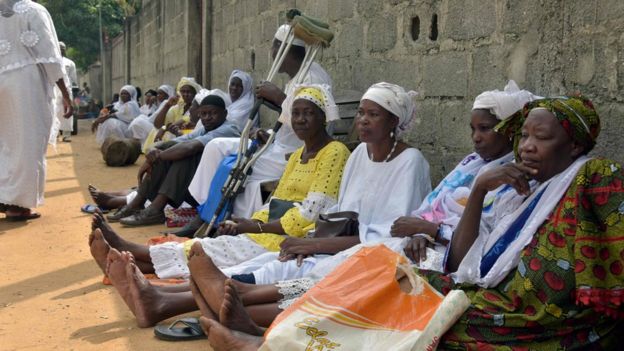
Victims, survivors and their relatives of the 2010 electoral violence in Ivory Coast gather in Abidjan (Photo: AFP)

For many, the recent acquittal of former Ivorian President Laurent Gbagbo and his political ally, Charles Blé Goudé, marked another failure for the International Criminal Court (ICC). Many close observers were undoubtedly pained to see another high-profile case collapse, leaving the Court with the dubious distinction of having yet to successfully prosecute a government official in its seventeen years of existence. But initial reactions obfuscated the invariably mixed effects that such developments have on the Court’s legitimacy.

Of course, ‘legitimacy’ is a notoriously slippery concept. For our purposes, I define legitimacy as a measure of the distance between expectations and reality. The closer reality lines up to (or exceeds) expectations, the more legitimate the institution. If reality doesn’t live up to expectations, then we have the inverse situation: a legitimacy gap. Whether acquittals bolster or blemish the ICC’s legitimacy depends on whose expectations we are considering.

The Prosecution

Many people expect the ICC to convict. This is due to at least three dynamics. First, the ICC generally focuses on those “most responsible” for war crimes, crimes against humanity, and genocide. As a result, we expect that if the Court issues an arrest warrant for someone, they must be the “most responsible” – and therefore guilty.

Second and relatedly, only a tiny fraction of perpetrators in any given situation are targeted by the ICC. In the Ivory Coast, that amounts to three figures: Gbagbo, Blé Goudé, and former First Lady Simone Gbagbo. This selectivity propels the notion that these few individuals must bear responsibility for the crimes they have been charged with.

Third, the public face of the ICC is the Prosecutor, and because she is the most visible and vocal personality in the Court, this feeds into perceptions that the institution’s primary role is to successfully prosecute – rather than put people on trial.

For many people, then, the Prosecutor’s legitimacy suffers with acquittals precisely because they expect the Prosecutor to secure convictions.

Gbagbo and his Defence

Yet, this view neglects the importance of the defence to the legitimacy of the Court. Sareta Ashpraph, for example, stated in response to the Gbagbo acquittal that we should “be thankful” and recognize the role of the defence in ensuring fair trials. From this perspective, the acquittal of Gbagbo therefore contributes, rather than detracts, from the legitimacy of the ICC because acquittals demonstrate respect for due process and a functioning criminal court.

This shows just how many strands of ‘legitimacy’ are present at any time. The ICC’s legitimacy can suffer and prosper with acquittals. On the one hand, it demonstrates that the law and due process is functioning above the political prerogative of getting convictions. On the other, it suggests that something is wrong with the way that the prosecution is building cases and prosecuting its targets. Continue reading

Posted in International Criminal Court (ICC), International Criminal Justice, Ivory Coast / Côte d'Ivoire, Ivory Coast and the ICC, Laurent Gbagbo | 4 Comments

Perceptions of Justice: Continuing the Conversation on Managing Perceptions at the ICC

Patryk Labuda joins JiC again with this response to Mark Kersten and Carrie McDougall on the Prosecutor of the International Criminal Court’s meetings with ‘unsavoury’ leaders and managing perceptions of the ICC. Patryk is a Hauser Global Fellow at New York University. His article kicking off this conversation can be found here.

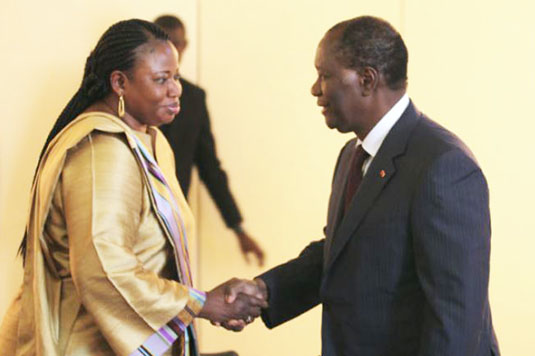
ICC Prosecutor Fatou Bensouda meets with President of the Ivory Coast, Alassane Ouattara in July 2013. (Photo: Getty Images)

I want to thank Mark Kersten and Carrie McDougall for their thoughtful responses to my post on the ICC’s meetings with ‘unsavory’ leaders. I’ll begin by underscoring that I agree with much of what Mark and Carrie say in their posts. Both make compelling points about the need to engage leaders with questionable human rights records, while drawing attention to several issues that received insufficient attention in my original post. Many people on Twitter have also weighed in (see here, here and here), adding nuance to this debate.

In this post, I would like to address three themes emerging from the various responses: how much transparency is necessary, whose perceptions matter, and where to draw the line between the good, the bad and the ugly. I hope my response will add clarity to any remaining points of disagreement, while fostering a more informed debate on what, admittedly, is likely to remain a divisive topic.

Meetings and Confidentiality

The first point that bears emphasizing is the symbiotic yet fraught relationship between the act of convening such meetings and the subsequent release of information (including images) about those meetings. I initially saw these two issues as distinct, but the longer I thought about it the more I realized that dissociating the image from the meeting is not quite so simple. In other words, the image may be the whole point of the meeting, and I think Carrie’s post does a good job of highlighting the resulting tension.

Indeed, these meetings may in some cases be less about the substance and more about the photo op. In that sense, while I sympathize with Mark’s plea for more transparency, I tend to think, per Carrie, that diplomacy often requires secrecy. I am not sure there is anything wrong with diplomatic confidentiality per se(and I include ICC diplomacy under that rubric), although I agree that we should be attuned to the risks that Mark identifies in his post, in particular: what does the ICC do if photos are leaked in bad faith? I am not sure one can craft a solution to all these dilemmas, but I do think we need to give more thought to the relationship between meetings and images. This brings me to the next question.

Whose Perceptions Matter?

It is clear that meetings between high-ranking ICC staff and governmental leaders can serve desirable ends. In addition to cooperation or universal membership, the ICC can try to improve its difficult relationship with the African Union (AU) and build support for its work among African states. Carrie praises the Prosecutor for leveraging her status as a Gambian to correct misconceptions about the ICC in Africa, while underscoring that Bensouda was only doing what the ASP had asked her to do. Intriguingly, Carrie also suggests that Bensouda was encouraging “African leaders to give more thought to African victims, rather than focusing on alleged African perpetrators.” On Twitter, Stephen Lamony echoes this argument, noting that I and others may simply be making assumptions about what victims want. Continue reading

Posted in ICC Prosecutor, International Criminal Court (ICC), International Criminal Justice | Tagged | 1 Comment

Taking Stock: An Interview with Nicholas Opiyo on Justice and the Rule of Law in Uganda

Dear readers,

I wanted to share the a recent interview that I did with Nicholas Opiyo, the renowned Ugandan human rights lawyer and founder of the Human Rights organisation Chapter Four Uganda.

Nicholas’ work is extraordinary and speaks for itself. Among many things of interest to readers will be his work as part of the defence counsel for former commander of the Lord’s Resistance Army (LRA), Thomas Kwoyelo. What makes his commitment to due process in this case all the more remarkable is that Nicholas’ family was directly affected by LRA violence (see this excellent story on this here). Nicholas is also now the lawyer for Ugandan opposition leader Bobi Wine.

In this interview, Nicholas sheds light on the ongoing trial of Kwoyelo, the impact of the International Criminal Court in Uganda, what he sees as the prevalent pursuit of victor’s justice in the country, and ongoing violence directed at minority groups in Uganda.

The interview was conducted in November 2018, during an international symposium organized by the Wayamo Foundation (where I work as Deputy Director) in Arusha, Tanzania, on the theme, “Beyond narrow interests – justice and accountability in East Africa.” For those interested, Justice Talks are a series of interviews about justice and accountability in Africa and beyond, featuring experts and leaders from the fields of human rights, international criminal law, politics and civil society.

Posted in Complementarity, International Crimes Division (Uganda), International Criminal Court (ICC), International Criminal Justice, Interview, Interviews, Kwoyelo Trial, northern Uganda, Uganda | Tagged | 2 Comments

International Justice has done little for Syria, but Syria has done a lot for International Justice

A Kurdish fighter looks over the destroyed Syrian town of Kobane on January 30, 2015. (Photo: AFP / Bulent Kilic)

Eight years after the onset of the civil war, international justice has done little for Syria, but Syria has done a lot for international justice. Strategic accountability efforts are yielding important results. Sweden, France, and especially Germany are at the forefrontof investigating and prosecuting Syrian perpetrators of international crimes. These states are flexing their ability to use universal jurisdiction, whereby perpetrators of international crimes can be prosecuted in these states irrespective of their citizenship or where their crimes were committed.

In addition to the modest number of prosecutions in Europe, there have been a handful of other important developments in the pursuit of accountability for atrocities committed in Syria. In January, a court in Washington ordered a reward of $302.5 million to the relatives of Marie Colvin, the renowned journalist who was killed in an attack by the Syrian Army in Homs in 2012. Following the European Union’s example, Congress also passed a bill that would place sanctions on firms and individuals who “knowingly, directly or indirectly, provides significant construction or engineering services to the Government of Syria.”

Of course, expectations need to be managed. What has been achieved is important but is a drop in the ocean given the scale and nature of atrocities committed in Syria. It does not mean that Syrian President Bashar al-Assad ‘is next’ or will inevitably be prosecuted. It is no secret that accountability for mass atrocities committed during the Syrian civil war has been lacking. Yet this absence of accountability has pushed proponents of global justice to design creative mechanisms when their conventional tools — international courts — are unavailable. What happens next will depend on whether states take advantage of outstanding opportunities to prosecute perpetrators of atrocities in Syria.

New international (criminal) justice tools

From the earliest days of the Syrian civil war, international criminal justice has had little to offer victims and survivors. At first, even the Obama administration, for example, refused to entertain a U.N. Security Council referral of the situation in Syria to the International Criminal Court (ICC) lest it undermine the Syrian peace process. After talks aimed at ending the war failed, the United States threw its weight behind a referral to the ICC in 2014. But Russia, by this point a lifeline for Assad’s regime, balked. Along with China, Moscow vetoed the referral. Efforts to set up an ad hoc tribunal also went nowhere.

Against this backdrop, two important initiatives were launched. The first was the creation of the Commission for International Justice and Accountability (CIJA), which uses on-the-ground Syrian investigators to collect evidence of international crimes committed by the Assad regime as well as the Islamic State. CIJA’s model reverses the conventional wisdom regarding justice for mass atrocities. Rather than waiting for a tribunal to be set up before investigating atrocities, CIJA initiated investigations and offered any prospective court — domestic or international — the evidence that it gathered. The evidence collected by them and others such as the European Center for Constitutional and Human Rights(ECCHR), is reportedly better than what was available at the trials of senior Nazis at Nuremberg.

The second initiative established was the International Impartial and Independent Mechanism (IIIM) for Syria, which works to gather, collate, and preserve existing evidence of atrocities in Syria. The hope is that evidence will be eventually used in an appropriate court. The IIIM was created by the U.N. General Assembly, therefore bypassing the deadlock of the Security Council — and making it unique among accountability mechanisms.

Illustrative of the contribution that the situation in Syria has made to international criminal justice, the work of CIJA and the IIIM will be replicated as tools of global justice. There is now an IIIM for Myanmar, also known as Burma, for example. Meanwhile, evidence of atrocities committed in Syria and collected by CIJA and the ECCHR continues to be used in war crime trials in Europe.

Taking Responsibility

It is ironic that a Syrian perpetrator of war crimes traveling to Europe is more likely to be prosecuted than a Westerner who traveled to Syria to perpetrate atrocities returning home. No Western state is eager to prosecute their own nationals who went to fight for the Islamic State and committed crimes abroad. This is due to at least two reasons. Continue reading

Posted in Commission for International Justice and Accountability (CIJA), Impartial and Independent Mechanism (IIIM), International Criminal Court (ICC), International Criminal Justice, Syria | 3 Comments

Perceptions of Justice: The ICC Shouldn’t have to Justify meetings with Government Officials Not Wanted by the Court

Carrie McDougall joins JiC for this piece on our continuing conversation regarding the publication and dissemination of photos of the Prosecutor of the ICC and state leaders  Dr. McDougall is a Senior Lecturer at Melbourne Law School and was formerly a legal specialist at the Australian Department of Foreign Affairs and Trade, in which capacity she led on Australia’s engagement with the ICC.

ICC Prosecutor Fatou Bensouda meeting with (former) DRC President Joseph Kabila in New York, in 2017 (Photo: ICC)

In a thought-provoking post last week, Patryk Labudatook exception to a photo published by the International Criminal Court (ICC) on social media of ProsecutorFatou Bensouda with the President of Rwanda, Paul Kagame.  Patryk suggested that the ICC needs a policy on non-essential contacts with what he termed ‘unsavoury personalities’, and any publicity given to such meetings.

Mark Kerstenpublished a reply in which he argued that there were probably good reasons for the meeting and that not publishing the photo would have been to the detriment of the Court.  At the same time, he argued that the ICC needs to do more to manage perceptions, suggesting that the best way of doing this would be to publish meeting read outs.

While I agree with much of what Mark wrote, in my view, there is still more to be said on the matter.

The ICC must meet with its critics

Both Partyk and Mark acknowledged that the ICC must meet with State representatives in order to bolster cooperation. In passing, Patryk also suggested that the opportunity might be used to encourage accession to the Rome Statute.  As important as they are, I suspect that neither cooperation nor accession were the main items on the agenda in the meeting with Kagame.

In the course of his post, Mark noted that the meeting might have been aimed at countering criticisms that the ICC is targeting Africa, which he kindly noted is something that I raised on Twitter in response to Patryk’s original post. This is a point that I believe deserves some elaboration.

Rwanda has been one of the ICC’s most vocal critics, and has been thedriving force behind the African Union’s hostile stance towards the Court. In this context, I suspect that the primary motivation for the meeting was to try to build a more constructive relationship. The Prosecutor has made good use of her status as a Gambian to engage in outreach on the continent, attempting to address misperceptions and encourage African leaders to give more thought to African victims, rather than focusing on alleged African perpetrators.  This is something we should commend. While others also have a role to play, the plain fact is that relations are unlikely to improve without a proactive effort on the Court’s part, regardless of the fact that, at least in my view, it is not to blame for the ire directed at it by detractors like Rwanda.

It is important to note that in engaging in such dialogue, the ICC is not off on a frolic of its own. The annual omnibus resolutionof the Assembly of States Parties (ASP) “emphasizes the need to pursue efforts aimed at intensifying dialogue with the African Union… and calls upon all relevant stakeholders to support strengthening the relationship between the Court and the African Union.”  As someone involved in the negotiation of this text, I say with some confidence that the reference to “the African Union” was not intended to be interpreted narrowly, but to encompass key members of the Union whose views impact on its relationship with the Court.  In other words, the Prosecutor did exactly what States Parties asked her to do.

I would in fact argue that such outreach should not be limited to African interlocutors. Bearing in mind the fundamental principles of both cooperation and complementarity that underpin the Rome Statute, I would argue that the ICC should aim to meet with the Heads of State and Government and relevant ministers of all States in order to promote accountability and discuss the role that the ICC can play – unless a specific individual is wanted by the Court, for reasons outlined below. Continue reading

Posted in Guest Posts, ICC Prosecutor, International Criminal Court (ICC), International Criminal Justice, Outreach | Tagged | 3 Comments

Perceptions of Justice: When and How the ICC Should Meet with ‘Bad’ Leaders

Nigerian President Muhammadu Buhari (middle) with the ICC Registrar, President of the Assembly of States Parties, President of the Court, and the chief Prosecutor)

Yesterday, my good friend and colleague Patryk Labuda wrote an important piece on a salient subject: the publication and dissemination of photographs of the Prosecutor of the International Criminal Court (ICC) with figures known to be less than favourable to human rights and the international justice project. In his post, Patryk responded with frustration to a photograph published by the ICC of Prosecutor Fatou Bensouda meeting with Rwandan President Paul Kagame. Patryk describes Kagame as “no friend of the ICC… with a questionable human rights record.” In this post, I want to address some of Patryk’s concerns and hopefully add some nuance to the difficult position that ICC staff sometimes find themselves in – especially when dealing with undemocratic states.

Photos O(o)ps

Photographs of the ICC Prosecutor with “unsavoury” figures are nothing new. Most notoriously, former chief Prosecutor Luis Moreno-Ocampo was caught on camera laughing it up with Yoweri Museveni prior to Uganda’s referral of the Lord’s Resistance Army (later the “situation in northern Uganda”) to the ICC. That show of bias still haunts the Court in northern Uganda and unsurprisingly so. That photograph was an unambiguously bad idea.

Moreno-Ocampo was also caught on camera cozying up on a couch with Ivorian President Alassane Ouattara in Paris, in 2011, just a few days before Ouattara shipped out his rival, Laurent Gbagbo, to The Hague. Current ICC Prosecutor Fatou Bensouda has also appeared with Museveni (despite his rather vicious attacks on the ICC) as well as DRC President Joseph Kabila.

According to Patryk, these photo ops hurt the perceived legitimacy of the ICC in the eyes of the victims of these leaders. One might also add that it is confusing to see the chief Prosecutor pose happily with some of the harshest critics of the Court. Less than a year ago, Kagame stated that “[f]rom the time of its inception, I said there was a fraud basis on which it was set up and how it was going to be used. I told people that this would be a court to try Africans, not people from across the world. And I don’t believe I have been proven wrong.” At his swearing-in in 2016, Museveni famously called the ICC “a bunch of useless people.”

So why meet and pose for photos with such figures?

The Prosecutor and her team surely make some form of cost-benefit analysis prior to accepting or convening these meetings. What costs and benefits they measure is not clear, and more openness or a policy paper on the subject would be useful. They are, however, certainyl aware of the allegations facing these leaders and what they’ve said about the ICC. The Prosecutor’s team therefore clearly views meeting these figures as beneficial to the mandate of the Court. It could be, as pointed outastutely by Carrie McDougall, that “such photo ops help counter criticisms that the ICC is targeting Africa”. Among audiences who are exposed to photos of Kagame or Museveni engaging with the ICC Prosecutor, it becomes less tenable to believe their anti-ICC antics.

In general, such meetings will almost certainly boil down to an attempt by the Prosecutor to bolster state cooperation with the Court. As Patryk writes, “the ICC relies on states for cooperation, so the Prosecutor has no choice but to work with official state representatives… This will inevitably include unsavory personalities.” This could include cooperation in investigations, but it could also mean cooperation in witness protection programming. Continue reading

Posted in International Criminal Court (ICC), International Criminal Justice, Ivory Coast / Côte d'Ivoire, Ivory Coast and the ICC, northern Uganda, Outreach, Rwanda | 4 Comments

Perceptions of Justice: Does the ICC Need A Policy on Non-Essential Contacts with Government Officials?

Patryk I. Labuda joins JiC for this guest-post on the publication and dissemination of photos of meetings between the Prosecutor of the International Criminal Court and world leaders. Patryk is a Hauser Global Fellow at New York University.

(Photo: ICC Twitter account)

The image is troubling. On 16 February, the International Criminal Court (ICC) tweeted a photo of Prosecutor Fatou Bensouda shaking hands with the President of Rwanda, Paul Kagame. The photo was taken at the Munich Security Conference, an annual gathering whichaims“to build trust and to contribute to the peaceful resolution of conflicts”. Kagame can be seen grinning, while Bensouda sports an awkward half-smile, half-cringe.

As noted by Dov Jacobs, similarly awkward photos exist of the first ICC Prosecutor, Luis Moreno Ocampo, trading laughs with Yoweri Museveni, the President of Uganda. Here is one of the current Prosecutor shaking hands with Museveni a few years ago. And last September, the ICC tweeted a photo of Bensouda meeting with the then ‘President’ of the Democratic Republic of Congo (DRC), Joseph Kabila, at the UN General Assembly.

It is hard not to feel some discomfort looking at these images. To state the obvious: these three men are not known for their human rights credentials. At the same time, it is a fact of life that the ICC relies on states for cooperation. Sois there something inappropriate about these photos? Or is this just (an unpleasant) part of the job? In this post, I argue that the ICC should do a better job of managing public perceptions. It may also want to adopt a policy on non-essential contacts with government officials to avoid public relations mishaps in the future.

Perceptions of (In)-Justice

Why are these photos a problem? When they were announced in 2004, Uganda and Congo’s invitations to the Prosecutor to launch investigations in their territories were quite a surprise. At the time, few expected states would affirmatively encourage ICC scrutiny. Self-referrals, as these invitations came to be known, came under sharp criticism almost immediately, with academics and civil society worrying that the first Prosecutor had cut a deal with the leaders of self-referring countries in exchange for their cooperation.

That criticism has not abated since then. It does not help that fifteen years later the Prosecutor has failed to bring a single case against a sitting government official from any self-referring state (in addition to Uganda and Congo, that includes the Central African Republic (CAR), Mali and Cote d’Ivoire). Not only has there not been a single trial of a sitting government actor – there are no publicly available arrest warrants, which couldmean that the ICC has never even tried toinvestigate government crimes in these contexts. Continue reading

Posted in Guest Posts, International Criminal Court (ICC), Rwanda | Tagged | 7 Comments

Transitional Justice at Sites of ‘Dark Tourism’: The Case of Genocide Memorials in Cambodia

Cheryl Lawther, Rachel Killean, and Lauren Dempster join JiC for this post on sites of ‘dark tourism’ in Cambodia. Cheryl, Rachel, and Lauren are Lecturers at the School of Law, Queen’s University Belfast. Their post draws on a period of fieldwork in Cambodia conducted by them in January 2018, with the team carrying out over 30 interviews with survivors, members of staff at Tuol Sleng and Choeung-Ek, representatives of NGOs and other stakeholders to examine how victims and survivors are represented at these sites. In addition to Tuol Sleng and Choeung-Ek, the team visited a number of former prison sites in the provinces. Using a transitional justice lens and drawing on the interviews conducted, this blog examines how these sites can be argued to be, and be critiqued as, spaces of: truth, justice, and reparations.

A visit walks past photographs of some of those killed in Prison 21, now the Tuol Sleng Genocide Musem (Photo: Tang Chhin Sothy / AFP / Getty Images)

The practice of ‘dark tourism’, whereby members of the public visit sites associated with atrocity and violence, has received growing attention in recent years. Thousands of visitors travel to Auschwitz, Cambodia’s ‘Killing Fields,’ ports used in the global slave trade, and to other sites of mass atrocity. While these sites appeal to (some) tourists, how do those impacted by the violence perpetrated in these places view them? And what do these sites say – or not say – about those harmed there? Focussing on two sites associated with such activity in Cambodia, Tuol Sleng Genocide Museum and the ‘killing fields’ of Choeung-Ek, this blog post explores how transitional justice can provide a framework for analysing the value of these sites to survivors of the genocide, and for unpicking whose, and what, experiences are represented there.

Tuol Sleng Genocide Museum in Phnom Penh is a former site of torture and detention run by the Khmer Rouge regime between 1975 and 1979. Those detained at Tuol Sleng were transported to Choeung-Ek, a site to the south of the city, where they were executed and buried in mass graves. Both sites have become popular places for tourists to visit.

Sites of Truth

For many interviewees, Tuol Sleng and Choeung-Ek are considered to be places where the truth of past harms is acknowledged. Tuol Sleng is used as a space of truth-telling by survivors, often working with NGOs and victim support organisations. Survivors at the sites spoke of the importance of telling their stories, of theirrole as ‘living documents’ of what had happened, and in some cases of feeling a ‘duty’ to share their stories with researchers and visitors. At a more instrumental level, Tuol Sleng’s iconic photographic exhibition of former detainees has been a place where relatives of those killed in the detention centre can learn the fate of their loved ones. One survivor told us of visiting Tuol Sleng in order to ‘search for the truth.’

While playing an important truth telling function, neither site is viewed as telling the ‘full’ ‘truth’ about Cambodia’s past. For example, some interviewees drew attention to the fact that many of those tortured at Tuol Sleng and subsequently killed at Choeung-Ek were themselves former Khmer Rouge cadres subsequently detained by the regime. We found thatsuch complexities of victimhood are not fully engaged with at the sites. Increased representation of the ‘shades of grey’ of victims and perpetrators might facilitate the telling of a more comprehensive and nuanced truth. Others drew attention to the harms that are less visible within the sites, such as the widespread death caused by overwork, exhaustion and starvation during the regime. Some suggested that the development of other sites associated with the regime might help highlight these abuses. We found that the sites created a hierarchy of harm which prioritised violent death, rather than exposing a more comprehensive truth of the harms experienced during the regime. A number of interviewees expressed a desire for these stories to be amplified.

Sites of Justice

The sites are very much viewed as places of evidence, where the proof of past crimes is preserved and presented. The role of these sites as repositories of evidence was raised by interviewees in two ways. Firstly, many of our respondents emphasised the importance of these sites in authenticating the experience of those who suffered under the Khmer Rouge regime and ‘showing the world’ what happened. One interviewee described the sites as ‘the best place to show the public about the crime committed during the Khmer Rouge regime.’ Continue reading

Posted in Cambodia, Genocide, Guest Posts, Transitional Justice | Tagged , , , , , | 1 Comment