Stephen Lamony joins JiC for this article on Gabon’s self-referral to the International Criminal Court (ICC) and the threat of African Union states to withdraw from the Court. Stephen is the Head of Advocacy and Policy, Coalition for the International Criminal Court (CICC). The views expressed here are his own and do not reflect the CICC.

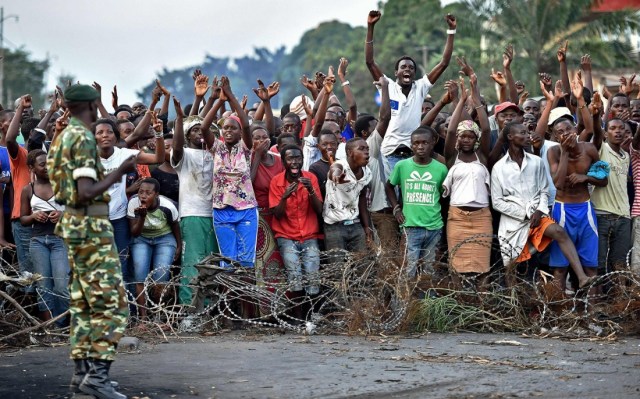
Police patrol the streets in Libreville, Gabon, earlier this year (Photo: AFP)
As the African Union considers its next action plan for mass withdrawal from the Rome Statute of the ICC, the Minister of State, Minister of Justice and Human Rights, and Keeper of Seals of the Gabonese Republic voluntarily referred a situation to the prosecutor of the ICC. The referral, currently being examined by the Office of the Prosecutor, will no doubt attract academic debates and criticism from African leaders who believe that the ICC is targeting Africa, as most ICC investigations are African. However, most of these situations were referred to the court by African leaders.
The referral by Gabon is a particularly surprising turn of events. Jean Ping, a Gabonese politician and a former AU Commission person, was a staunch critic of the ICC for allegedly targeting Africa. His support for ICC investigations in Gabon contradicts his previous opinion, as he now states that “We ask Amnesty International and the ICC Prosecutor to go to Gabon to bring to light the events that occurred.” It seems that some states will criticize the court when it suits them, but utilize its investigations when it is in need of assistance to hurt their enemies.
This essay seeks to address arguments of African bias which may have contributed to threats from African states to withdraw from the ICC.
Counting Down Africa’s Threats of Withdrawal from the Rome Statute
Negative perceptions about the ICC have culminated in repeated pressure by a small group of African leaders to press for African member withdrawal from the Rome Statute of the ICC. To date, those efforts have failed, with at least four failed attempts.
The first call for withdrawal was made in 2009 when Libya’s state minister for African Affairs, Abdul Salam Al-Tereyk, tried to mobilize African states who are parties to the Rome Statute to withdraw from the ICC. However, withdrawal did not take place. This is because African states parties such as the Botswana and the Democratic Republic of Congo (DRC) opposed it. Some states reaffirmed their support for the Court, either because they simply preferred suspension of the case for a year or didn’t like the fact that the agenda for withdrawal was driven by non-state parties like Libya and Sudan. At the same time, the AU Assembly also called on African states to not cooperate with the ICC in arresting and surrendering Sudanese president Omar Al-Bashir to the ICC, which has challenged the court’s ability to function effectively.
Two years later, the vice president of Kenya, Kalonzo Musyoka, traveled to South Africa and Uganda to garner diplomatic support for withdrawal ahead of the January 2011 AU Summit in Ethiopia. The Kenyan parliament accused the ICC of “Western Imperialism” and “anti-African bias.”
The Kenyan government was unperturbed by the lack of enthusiasm for ICC withdrawal. In October 2013, they again called for a withdrawal over the trial of Kenyan Deputy President William Ruto. The Kenyan government was successful in obtaining an extraordinary AU summit on the ICC. But again, no African State withdrew from the ICC. Nevertheless, these major setbacks in the attempt for withdrawal from the ICC did not lessen Kenya’s determination to undermine the ICC. In fact, these setbacks have seemed to embolden them to continue their campaign. Continue reading