
The following guest post was written by Velia Marquez Rojas and Henry Off. Velia is a constitutional lawyer at the Centre for Constitutional Studies in Mexico City and has worked in various roles in the Supreme Court of Mexico since 2019. Henry is Board Member at the Canadian Lawyers for International Human Rights and a lawyer currently working as an independent consultant at the International Criminal Court. The views in the blogpost are those of the authors.
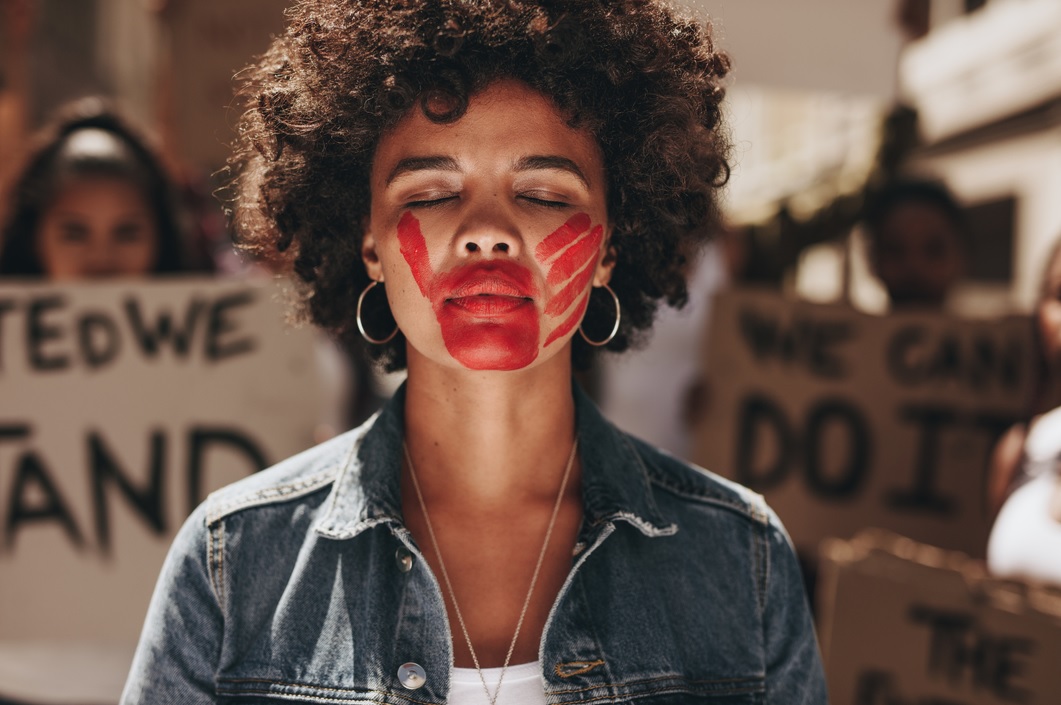
This summer, Canada ratified its first major inter-American human rights treaty, the Inter-American Convention on the Prevention, Punishment, and Eradication of Violence against Women, better known as the Belém do Pará Convention. It was a significant moment. Until June, Canada was, alongside Cuba and the United States, one of only three members of the Organization of American States that had not ratified the Convention.
The Convention is the only binding regional treaty specifically dedicated to addressing violence against women. Its ratification was long overdue given Canada’s longstanding, and often deeply flawed, efforts to address gender equality and the crisis of missing and murdered Indigenous women and girls (MMIWG).
Canada’s ratification of Belém do Pará is not just symbolic. The experience of countries like Mexico shows how ratifying and implementing the Convention, together with relying on the substantive body of jurisprudence developed by the Inter-American Court of Human Rights (IACtHR), can lead to significant changes in domestic laws and practices addressing violence against women. Canada can, and should, look to Mexico’s experience for lessons about how the Convention and this jurisprudence can inform its own legal framework and response to violence against women.
What now?
Canada’s ratification brings it within a regional framework of legal obligations concerning violence against women, including a specific obligation to exercise due diligence to prevent, investigate and punish such violence. There is no standalone cause of action under the Convention in Canadian courts, nor is Canada subject to the contentious jurisdiction of the IACtHR, as the country has repeatedly declined to sign the American Convention on Human Rights. Still, the Belém do Pará Convention has significant interpretive value. The Supreme Court of Canada has recognized that international human rights law, including the decisions of international courts, are relevant and persuasive in interpreting the country’s primary human rights law, the Charter of Rights and Freedoms. While such jurisprudence is not binding on Canadian courts, it can help give greater specificity to the scope and content of Charter rights. The jurisprudence developed under Belém do Pará therefore provides Canadian courts, lawyers and advocates with an additional source for considering what Canada’s obligations to prevent, investigate and respond to violence against women require in practice.
Canada is not starting from nothing of course. The Canadian Charter of Rights and Freedoms has provided a basis for extensive jurisprudence concerning equality, life, liberty, and security of the person. Canada has also been a party to the Convention on the Elimination of All Forms of Discrimination against Women (CEDAW) since 1981, and the CEDAW Committee has interpreted the Convention to require states to exercise due diligence in preventing, investigating, prosecuting, and punishing gender-based violence.
Belém do Pará, however, offers something more specific. Whereas CEDAW approaches violence against women principally through the broader framework of discrimination and women’s equality, Belém do Pará is devoted specifically to violence against women. It defines this violence, recognizes its occurrence in both public and private spheres, and sets out detailed obligations concerning its prevention, investigation, punishment, and eradication. Its interpretation by the Inter-American human rights system has consequently produced a substantial body of jurisprudence on what due diligence requires in practice.
Lessons from Mexico
Mexico’s experience is informative in this regard. The country became a party to the Belém do Pará Convention in 1998. Since then, the Convention has significantly shaped Mexican laws and policies addressing violence against women. The National Institute for Women (now the Secretaría de las Mujeres) was created in 2001 to promote gender equality and women’s rights. The General Law for Women’s Access to a Life Free of Violence was enacted in 2007, explicitly to align the national legal framework with the international standards established by the Convention. Among other measures, the law introduced a Gender Alert for Violence Against Women as a mechanism to respond to security emergencies arising from heightened gender-based violence.
The Inter-American Court’s jurisprudence has been an important part of these developments. One of the Court’s most relevant decisions is González et al. v. Mexico, commonly known as the Campo Algodonero case. The judgment, and its subsequent influence on Mexican law, provides an extremely useful lens through which to consider what Canada’s due diligence obligations might require in the MMIWG context.
The Campo Algodonero case arose from a string of homicides committed against women in the northern state of Chihuahua during the 1990s and early 2000s. The Commission argued that Mexico was internationally responsible for the disappearance and subsequent death of Claudia Ivette González, Esmeralda Herrera Monreal, and Laura Berenice Ramos Monárrez, whose bodies were found in a cotton field outside Ciudad Juárez in November 2001. Two of the victims were minors.
In its 2009 judgment, the IACtHR recognized that the victims’ disappearances and murders were gender-based and occurred in a known context of violence against women. Thus, under the State’s due diligence obligation to prevent, investigate, and punish gender-based violence in accordance with Articles 5 and 7 of the American Convention on Human Rights and Articles 1(1) and 7 of the Belém do Pará Convention, Mexico had failed to take “adequate steps to prevent the disappearance, abuses and death suffered by the three victims” and to investigate these facts with due diligence. The Court found that, despite knowing, since at least 1998, about the extensive pattern of violence against women in Ciudad Juárez, Chihuahua, the State failed to adopt adequate policies to prevent it.
Even after the disappearances were reported, authorities failed to take reasonable measures to find the victims alive. Given the context, they knew there was a real and imminent risk that the women would be sexually abused, subjected to ill-treatment, and killed. Furthermore, the Court found severe irregularities in the conduct of the investigations. In addition to Mexico failing to adopt and implement the necessary norms and measures to allow the authorities to conduct their investigations with due diligence, the Court held that this “judicial ineffectiveness” when dealing with cases of violence against women encouraged “an environment of impunity that facilitates and promotes the repetition of acts of violence in general and sends a message that violence against women is tolerated and accepted”.
The importance of Campo Algodonero therefore extends beyond the three victims or even the individual proceedings against Mexico. The judgment helped turn the relatively general obligation of due diligence into more concrete requirements concerning prevention, investigation, and institutional response. It also recognized, for the first time, that the state’s failures in this context amounted to gender discrimination. The reparations awarded included databases on gender-based disappearances in Chihuahua, a monument honouring the victims, and compensation for their families. Other remedies, including effective investigations, relevant criminal proceedings, and disciplinary actions against the authorities involved, have yet to be implemented.
Subsequent decisions have continued to build on Campo Algodonero and give further substance to the Convention, including by addressing the intersectional vulnerabilities faced by Indigenous women. In Rosendo Cantú et al. v. Mexico, for example, the IACtHR considered the rape of Valentina Rosendo Cantú, an Indigenous Me’phaa woman, by Mexican soldiers, as well as the state’s failure to properly investigate the crime. The Court recognized that the violence occurred in the context of multiple and intersecting forms of discrimination and found violations of both the American Convention and Belém do Pará Convention.
These decisions almost immediately shaped laws and policies regarding violence against women in Mexico. Shortly after Campo Algodonero, the term feminicidio (femicide) was adopted at the federal level in 2012, and the Mexican Supreme Court has subsequently applied standards developed in Campo Algodonero to domestic cases. For example, in Mariana Lima Buendía, the Supreme Court found that in cases where there is evidence that a woman suffered domestic violence, authorities must investigate her death with a gender perspective, due diligence, and by applying specialized protocols. This was based on Campo Algodonero, which established that states have a duty to investigate violence against women with due diligence and from a gender-based perspective, including by determining whether discrimination may have contributed to the death.
Mexico’s experience is not a model that Canada can simply replicate. The two countries have different constitutional systems and different approaches to the domestic application of international law. Most importantly, Canada is not subject to the contentious jurisdiction of the IACtHR. But this does not make the Mexican experience irrelevant. Quite the opposite. While Mexico’s policies with respect to gender-based violence are far from perfect, its implementation of the Convention provides Canada with an example of how a treaty specifically addressing violence against women can develop through jurisprudence and then substantially influence domestic legislation, investigative practices, and judicial decision-making.
Canada should now draw on the Convention’s jurisprudence. It can help Canadian courts interpret existing Charter protections and can provide lawyers, legislators, and policymakers with a clearer picture of what an effective state response to intersectional violence against women should require. For a country still grappling with the ongoing crisis of MMIWG, that is a significant opportunity for the coming years.
****************************
The Canadian Feminist Alliance for International Action (FAFIA) and Canadian Lawyers for International Human Rights (CLAIHR) have organized a webinar on 15 October 2026 on Canada’s ratification of the Belém do Pará Convention, focusing on how how women in Canada and human rights advocates can use the Convention and its follow-up mechanisms to advance the rights of women in Canada through the Inter-American regional human rights system. You can register for the event here: https://us06web.zoom.us/webinar/register/WN_nacN72wCRbqhoMyct9ODSA#/registration


