
 Dear readers,
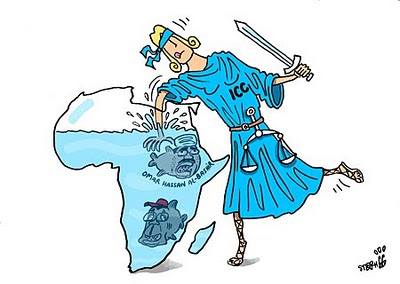
I am very happy to announce that I have had a new article published in the Canadian Foreign Policy Journal, entitled “Targeting Justice: Targets, Non-Targets and the Prospects for Peace with Justice“. The piece explores how the decisions at the International Criminal Court (ICC) to target some perpetrators for prosecution and not others determine the ICC’s impact on conflict resolution and peace-making processes. Specifically, I seek to contradict the widespread view that it is the targets of ICC arrest warrants that are most likely to refuse to negotiate peace. Through the cases of Libya and Northern Uganda, I instead argue that it is the Court’s non-targets which tend to ‘dig their heals in’ and commit to political violence in order to win their war.
I have uploaded a copy of the article online, which you can access here. The abstract follows below. I hope it is of interest to some of you and, as always, I’d love to hear your thoughts and read your comments!
Ongoing conflicts are increasingly accompanied by calls for judicial interventions by the International Criminal Court (ICC). This has led to an impassioned debate regarding the effects that ICC interventions have on conflict dynamics and peace processes. A primary argument within this debate is that the targets of ICC arrest warrants will reject participating peace negotiations and instead commit themselves to political violence. This paper argues that it just as likely that actors not targeted by the Court may reject negotiating with their adversaries and thus commit to violence. The paper demonstrates this dynamic by examining two ICC interventions: northern Uganda and Libya. In both cases, the ICC’s intervention legitimized its non-targets – the government in Uganda and the coalition of intervening forces and opposition rebels in Libya – while bolstering their commitment to a military solution and their rejection of a political compromise to their respective conflicts. Ultimately, it is concluded, if both international justice and conflict resolution are to be pursued within the same contexts, it is critical to dispel popular assumptions in order to better understand the full spectrum of the ICC effects on conflict and peace dynamics.
The whole article can be found here.


 Justice in Conflict