
The following is Dr. Mirza Buljubašić‘s contribution to JiC’s ongoing symposium on Alette Smeulers’ new book “Perpetrators of Mass Atrocities Terribly and Terrifyingly Normal?”. Buljubašić is a criminologist with a PhD, MA, and BA in Criminology, as well as degrees in Criminal Law and Security Studies. His research focuses on political violence, including atrocity crimes, terrorism, and extremism, as well as punishment, transitional justice, and intergenerational criminology. All other contributions to the symposium can be found here.
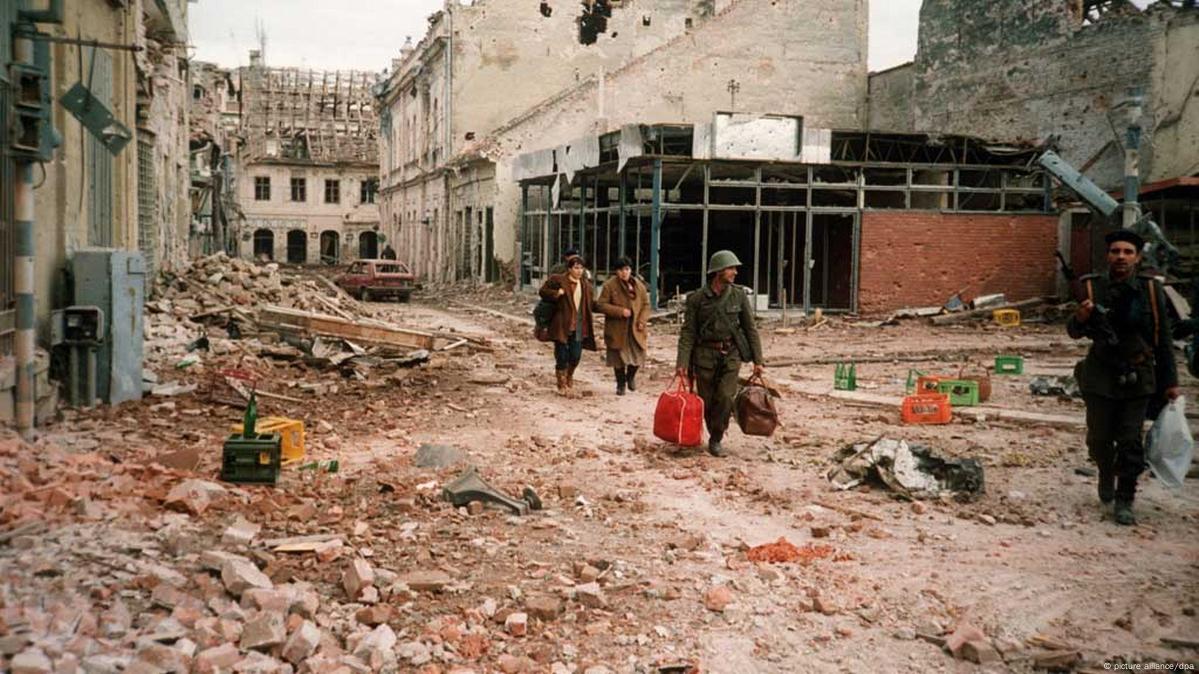
The warehouse in Srebrenica was suffocating with fear, its air thick with sweat and dust. Terrified men stood in clusters, their hands bound, pressed together as if proximity could offer protection. Outside, executioners adjusted their rifles with mechanical precision, their movements practiced, almost routine. Some among them were barely recognizable—neighbors, classmates, men who had shared streets and workplaces with their captives. Now, they were soldiers, policemen, paramilitaries, enforcers of an ideology that had hollowed them out. Some hesitated, fingers hovering over triggers, but their hesitation was fleeting. The weight of command, the collective momentum of violence, and years of dehumanization had left little room for conscience. Killing had become mechanical, detached, even necessary in their eyes. These were not mythical monsters but men shaped by war’s brutal logic. How does one become a murderer? Not in a moment, but through a slow erosion of boundaries, an incremental descent into a world where atrocity is not only permitted but expected.
What is normal? Can men who commit such acts ever be considered normal? Is war itself normal? A most haunting realization is that atrocity becomes routine, woven into daily life, its horror dulled by repetition. Normality is pliable, shaped by ideology, violence, and the silent complicity of those who look away. Alette Smeulers’ Perpetrators of Mass Atrocities: Terribly and Terrifyingly Normal? confronts this, dissecting the motivations of those who commit mass violence. Yet, can such a typology fully explain the Yugoslav Wars (1991–2001), where state and paramilitary, soldier and civilian, executioner and neighbor blurred beyond recognition? In this war, violence was not dictated solely from above but emerged in the everyday—in makeshift detention camps, in commandeered schools, in town squares where men who had once lived side by side turned on each other with chilling ease. It was not only the architects of war who bore responsibility but also the individuals who, in the right—perhaps more aptly, the wrong—circumstances, became willing executioners.
Political leaders like Slobodan Milošević, Radovan Karadžić, and Franjo Tuđman did not need to pull the trigger to be responsible for mass atrocities. Their power lay in the narratives they crafted—stories of historical victimhood, ethnic purity, and existential threat that transformed neighbors into enemies and violence into duty. They manipulated grievances, rode the waves of fear and resentment, and mobilized their own communities into war machines. Karadžić did not have to stand in Srebrenica to be complicit in genocide; his speeches, directives, and unrelenting far-right vision ensured others would carry it out. The killings were not a spontaneous explosion of hatred but a systematized project, embedded into the structures of war.
When the war ended, the bloodshed halted, but the ideological foundation remained. These leaders may have been removed, but the values they embedded—of ethnic hierarchy, division, and justified violence—continued to shape postwar generations. Left unchallenged, their narratives outlived the conflict, fostering a culture where wartime atrocities were not only justified but venerated. The consequences reached beyond the Balkans. The 2019 Christchurch terrorist, who carried out a mass shooting at mosques in New Zealand, referenced the Bosnian genocide and the ‘defenders of Europe’ in his manifesto. This was not an anomaly—it was proof that the ideological currents of the Yugoslav Wars had transcended borders, repackaged for new generations of extremists who saw themselves as inheritors of the same struggle. If mass violence is first enabled by narratives, then its survival depends on their persistence.
But who were the actual perpetrators? The men tried for atrocity crimes in Yugoslavia were not, for the most part, ideological zealots or seasoned criminals. They were not men who had spent their lives preparing for war; before being drawn into it, they were mechanics, shopkeepers, teachers, and police officers. Most had no criminal records. They were overwhelmingly low-ranking soldiers, policemen, and paramilitaries—men whose distinction from their commanders was not one of belief, but of position. They were not masterminds nor the architects of mass violence; they were its laborers, carrying out orders, operating within systems that rewarded brutality and erased personal responsibility.
They were not born killers; they were made into killers. The conditions of war, the pressure of group dynamics, and the slow erosion of moral constraints transformed them. What separated perpetrators from bystanders was not necessarily ideology, but structure—education, social mobility, and access to authority. The most chilling realization is not that these men were monsters, but that under the right (or wrong) circumstances, many others might have done the same. Violence was not an individual pathology but a collective process, one in which the extraordinary became ordinary, where the moral cost of murder was stripped away, and where, in the end, the act of killing became mundane.
Mass atrocities do not erupt spontaneously, nor are they the work of a few aberrant individuals. The crimes of the wars in Yugoslavia were not random acts of savagery; they were systemic, institutionalized, and enabled by the very structures meant to maintain order. The men who became executioners were not born into violence—they were drawn into it, molded by a war that redefined morality. For some, war was an opportunity—an avenue for revenge, a path to unchecked power, or a means to accumulate wealth in lawless conditions. Others were caught in the machinery of violence, where participation became a necessity rather than a choice. Once killing was sanctioned, even rewarded, it ceased to be an act of defiance and instead became an expectation, a grim part of the new normal.
War does not just produce brutality; it routinizes it. The transition from hesitation to acceptance, from participation to mastery, does not happen overnight. It is an erosion of moral resistance, a relentless normalization of the unthinkable. Atrocities did not feel exceptional to those who committed them; they became procedures, tasks to be completed, orders to be followed. The true horror is not just in the acts themselves but in how seamlessly they were integrated into the logic of war.
Željko Ražnatović (also known by his notorious pseudonym, Arkan) embodied the fusion of criminal opportunism and war violence. A career criminal with a history of smuggling and political assassinations, Arkan was not a rogue figure—he was a product of the Yugoslav deep state, an asset of the secret police, and a master of existing in the gray zones of power. Before the war, he led the notorious Delije, the hardcore supporters of Crvena Zvezda. As Yugoslavia collapsed, the same networks that fueled stadium violence metastasized into something far more lethal. His paramilitary Tigers were not a rogue militia but an instrument of Serbia’s intelligence services, deployed to terrorize, ethnically cleanse, and plunder under the pretense of nationalism. His men, a volatile mix of criminals and war profiteers, thrived in the war economy. They blurred the lines between far right militancy and organized crime, between soldier and looter. Violence was not just tolerated; it was professionalized.
What happens when these men return home? Many perpetrators, after serving their sentences, re-entered society with little resistance. Unlike career criminals, they were not perceived as dangerous; there was no lasting stigma attached to their crimes. Prison guards did not see them as part of the criminal underworld, nor did their communities shun them. Instead, they found quiet acceptance, their actions justified by wartime narratives that framed them as patriots, reluctant participants, or men simply following orders. Former Yugoslavian countries, such as Bosnia and Herzegovina, remain locked in pre-conflict conditions, where far right, ethnonationalist elites, manipulate grievances, and where institutions uphold not a shared civic identity but ethnic separation. If the values that justified wartime violence persist in everyday structures, what truly separates wartime from peacetime perpetration?
Smeulers’ work is not just about the past—it is a lens through which we can understand the present. The same forces that enabled mass violence then are shaping societies today. The normalization of exclusionary politics, the elevation of far-right leaders, and the insidious return of nationalist narratives all suggest that history is not behind us but repeating itself in different forms. This intergenerational extremism does not manifest only in fringe generic fascist movements and political violence, but in families, local communities, cultural narratives, everyday life, and activities that lead to the slow erosion of democratic values.
The greatest danger is not in recognizing that perpetrators are normal. It is in failing to recognize that societies can be structured to make atrocity normal. The worst crimes do not happen in isolation. They require a world that allows them, that averts its gaze, that convinces itself it could never happen here—until it does. If we are not careful, what was once wartime ideology can quietly take root in peacetime, thriving in parliaments, courtrooms, and public discourse, unnoticed until it is too late.


 Justice in Conflict