
The following is a guest post by Cristina Orsini, a Senior Programmes Advisor with Lawyers for Justice in Libya, contributing to litigation and advocacy on human rights violations and international crimes. Cristina is also a PhD Researcher in Law at the European University Institute, exploring international criminal law and colonialism.
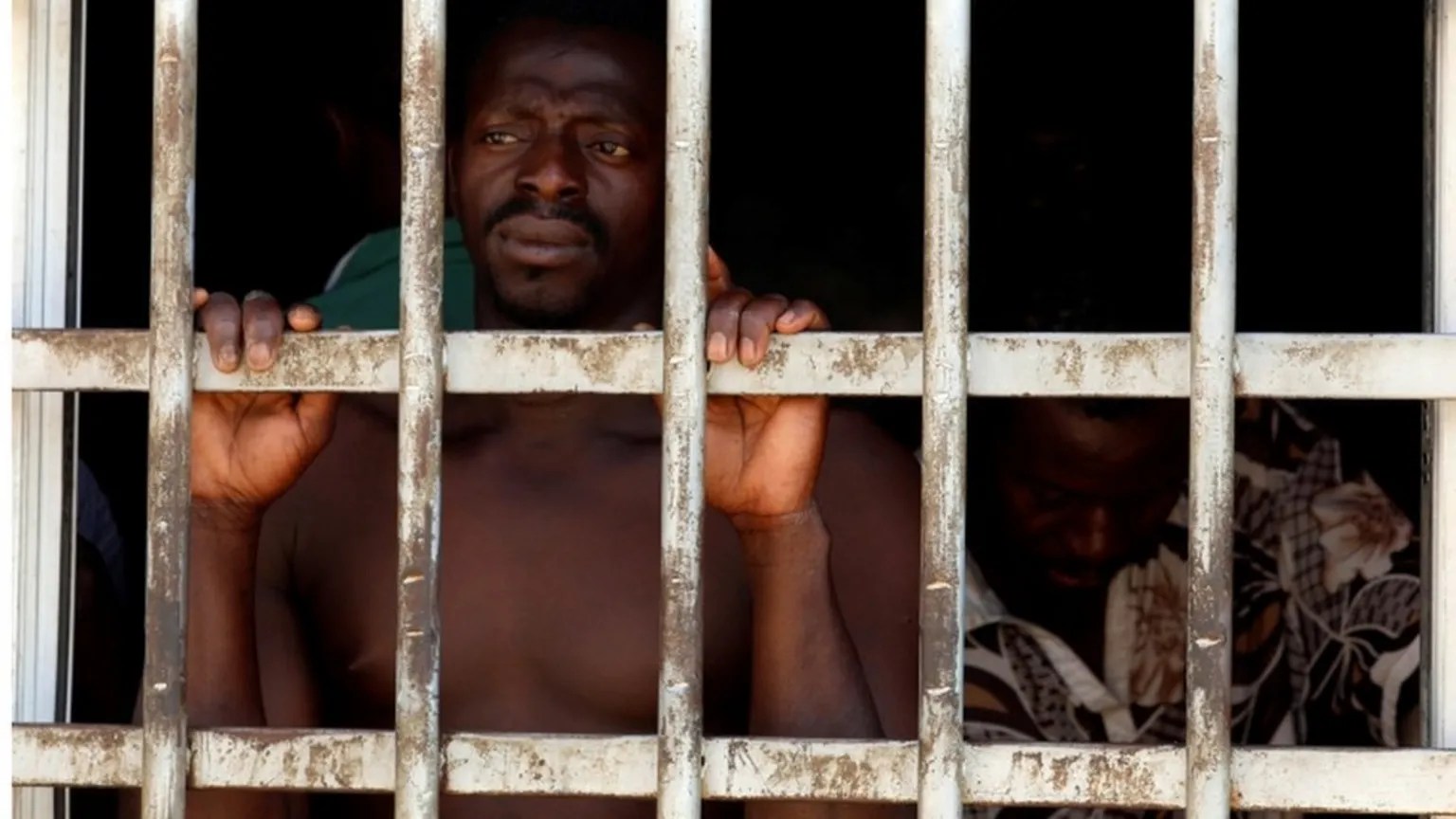
Since 3 November 2025, an Eritrean national known as ‘Walid’ has been standing trial in Zwolle, the Netherlands, for allegedly leading a criminal organisation dedicated to smuggling migrants, refugees, and asylum seekers through Libya. The case, known as ‘Pearce’, is widely seen as ‘extraordinary’ and ‘unique’, and is being followed closely in the Netherlands and beyond. Done right, this case could provide a measure of justice to many migrants, while setting a critical precedent for a broader reckoning with entrenched systems of abuse. Watching the trial unfold after years of documenting crimes against migrants in Libya with Lawyers for Justice in Libya (LFJL), however, I wonder whether Dutch authorities are letting this chance slip away.
In one sense, the trial is truly extraordinary, as it is extremely rare for migrants who have experienced horrific human rights violations in Libya to have access to any justice. If some of them can now hope for acknowledgment, accountability, and some compensation, it is because Dutch authorities proactively pursued this case in the first place, collecting hundreds of testimonies in the process. They are also providing interpretation and livestreaming of the trial in Dutch, English, and Tigrinya, making it accessible to affected communities and the wider public.
Yet, while the trial may be unique, the accused’s actions are not. The experiences recounted by Walid’s survivors are sadly commonplace in Libya, where the exploitation of migrants has become an integral part of the country’s conflict economy (with trafficking already accounting for 3.4 percent of Libya’s GDP by 2015). In this context, by focusing on human smuggling charges, Dutch prosecutors are missing the larger picture: the exploitative, systematic and widespread nature of the crimes committed against migrants in Libya.
The narrow charges in the case brought against Walid led LFJL to submit a criminal complaint to the Dutch international crimes unit in an effort to prompt additional investigations that reflect the full gravity of the crimes experienced by migrants held by Walid and his associates. The complaint details alleged conduct that may amount to human trafficking, slave trading, and crimes against humanity.
Smuggling vs Trafficking and Slave Trading
Walid, who claims not to be the person the prosecution alleges, faces multiple charges under the Dutch penal code, including participation in a criminal organisation, human smuggling, extortion, violent acts, and sexual offences. Although he is often described as a ‘trafficker’, human trafficking does not figure in the charges against him.
Smuggling is the act of helping a person cross a border irregularly with their consent. It is a crime committed against the State and its immigration regulations. Human trafficking is the act of recruiting, transporting or holding persons through coercion for their exploitation. Trafficking often (though not necessarily) involves the movement of people across borders, but, unlike smuggling, it is committed against people without their consent.
In the absence of legal alternatives, many migrants rely on smuggling networks to cross borders into Libya and then into Europe. Yet most, if not all, lose control over their fate once in Libya (with some already taken to Libya by coercion). Any consent their initially gave to be smuggled vanishes. Trapped in a cycle of violence and exploitation in which they cannot provide any meaningful consent, they become victims of trafficking.
This is clear from the testimonies of many survivors who recount being held by Walid in warehouses in the Libyan town of Beni Walid. There, he exploited them through ransom and, in some cases, sexual exploitation. He also allegedly treated migrants as commodities to be bought and resold, which “sounds like slavery”, as a Judge at the trial put it.
The Dutch National Rapporteur on Trafficking, based on 124 witness statements in the Pearce investigation, concluded that Walid’s acts meet the definition of human trafficking and the slave trade. Both crimes, defined in the Dutch Penal Code, are overlooked in Walid’ case.
While the judges in Zwolle read out survivors’ testimonies to underscore that the process is “about people”, smuggling charges – especially in the absence of trafficking – send the opposite message: that the focus of the justice processes is the protection of state borders.
Crimes Against Humanity
In addition to understating the exploitation and commodification of migrants in Libya’s conflict economy, the Dutch Prosecution is overlooking the gravity and scale of Walid’s alleged operations in Libya. According to survivors’ testimonies, he is allegedly responsible for imprisoning thousands of migrants, torturing them, reducing them to conditions of slavery, as well as raping and sexually exploiting migrant women. These were not one-off incidents. They were part of a broader, coordinated pattern of abuse. As such, we submit in our complaint that these acts constitute crimes against humanity: serious violations committed as part of a widespread or systematic attack against civilians.
The UN Fact-Finding Mission on Libya, as well as international non-governmental organisations, including LFJL, have long warned that crimes against migrants in Libya are committed at such a systematic and widespread scale that they amount to crimes against humanity. Indeed, Walid’s actions fit within a broader pattern of abuse against migrants, who are not only held captive in unofficial sites like Walid’s warehouses, but also in official detention centres. Such detention has become more pervasive since 2017, when the European Union (EU) started providing training and equipment to Libyan authorities to increase ‘migration control’. As a result, authorities and affiliated militias also systematically detain migrants to generate profit and access state power and funding. Traffickers, authorities and affiliated militias then compete and collude with each other inLibya’s migrant exploitation industry, which is characterised by both the ‘monetisation of movement’ and of ‘captivity’.
The Netherlands has strong legal and institutional frameworks for the investigation and prosecution of crimes against humanity and other international crimes. It has been at the forefront of delivering justice to victims of such crimes committed in other contexts, including Syria, Rwanda and Afghanistan. The failure to consider crimes against humanity against Walid is therefore at odds with approaches taken in other cases. This is even more surprising given the availability of evidence suggested by the high number of witness statements authorities collected. Moreover, the Netherlands is part of a joint team for combating crimes in the central Mediterranean together with the International Criminal Court, which should facilitate investigations into precisely these types of crimes.
The International Crimes Act, which incorporates crimes against humanity and other international crimes in the Dutch legal framework, allows prosecution when a suspect is present on Dutch territory. In this case, Walid is on Dutch territory following his extradition from Ethiopia. The question for the authorities is whether the suspect’s presence can be established on the basis of extradition. LFJL spoke with several experts in Dutch law, including prosecutors, who highlighted that the law is silent on this point and there is no existing jurisprudence in the Netherlands. Although jurisdiction may have ultimately posed an obstacle to prosecuting crimes against humanity, it did not make it a priori impossible. An attempt by the authorities to clarify this question at the outset of this case would, at the very least, have sent the message that the Netherlands was prepared to test the scope of its jurisdiction, and signalled that the authorities believe that crimes committed against migrants in Libya amount to crimes against humanity.
Why do charges matter?
The legal qualification of Walid’s action may seem like a mere technicality if the survivors involved in the case feel that something was finally done to acknowledge and redress their suffering. They are the judges of what justice this process does to them. Yet, ensuring that charges reflect the full scope of the harm is key for victim-centred prosecutions, as they affect the extent of legal protection granted and victims’ very right to reparation. Legal qualifications certainly matter for the victims who cannot participate in the proceedings because the narrow charges brought by the Prosecution exclude them.
Charges also matter if we hope that justice processes can not only transform peoples’ lives but also the circumstances that enabled the crimes they experienced. Prosecuting individuals can rarely do that, but a case centred on trafficking, slave trading, and crimes against humanity would at least have helped to shift the conversation on migration, from border control to migrants’ rights – and the structures that fuel systemic violence. Acknowledging that migrants in Libya face crimes against humanity also means confronting the reality that European policies designed to trap them there (like the renewed Italy-Libya Memorandum of Understanding) are not only problematic, but make the EU and member states complicit in such international crimes.
The current case against Walid is a missed opportunity. It remains to be seen whether authorities will rethink their approach— by pursuing complementary charges for the full range of crimes committed or, at a minimum, by ensuring a far more comprehensive prosecution in potential future cases.


 Justice in Conflict