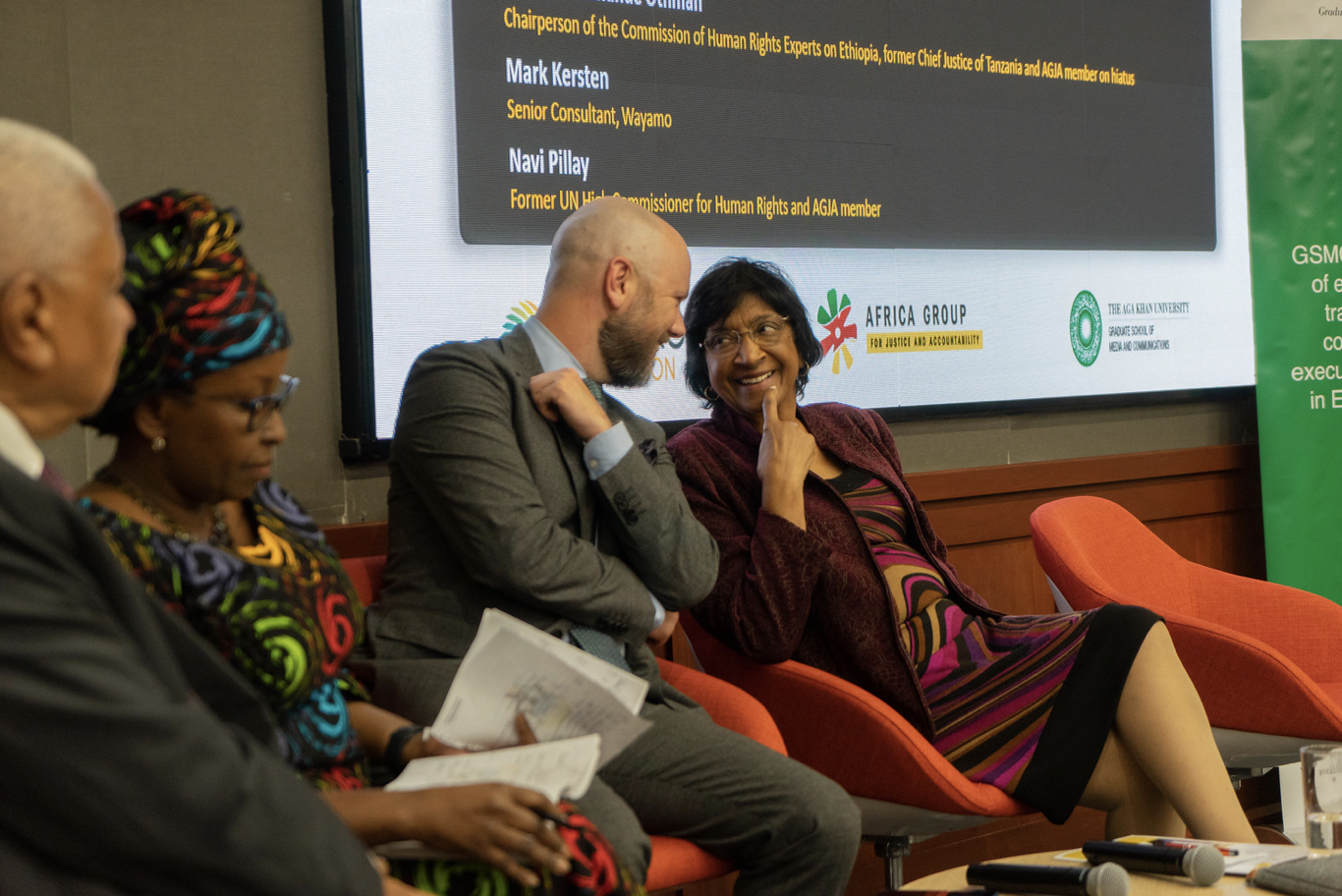
A moment of joy and affirmation during such troubling times facing the field of international criminal law and justice. Congratulations to Navi Pillay on winning the 2026 Nobel Prize for Peace, which she won “for her efforts to promote peace and international law” and commitment to universal legal principles”!
I have been honoured to work with Navi on multiple occasions over the past decade, through the Wayamo Foundation. Her commitment to international law and accountability for human rights violations and international crimes is unwavering and indiscriminate. Characteristically, Navi immediately dedicated her prize to “all of the survivors of international crimes.”
Let us hope that Navi’s deserved and inspired win galvanizes not only further interest in international law but respect for its application, not just sometimes in some places, but all times in all places.
And to those fighting in the trenches, advocating for the universal application of human rights of all, Navi’s victory is yours too. As she says: “People involved in human rights, in international law — we never get recognized. We do work quietly. So, this is huge recognition for all of us. This is not just an award to a single person, it’s for all of us.”
Congratulations, Navi, and let us all keep up the good fight!
The following guest post was written by Velia Marquez Rojas and Henry Off. Velia is a constitutional lawyer at the Centre for Constitutional Studies in Mexico City and has worked in various roles in the Supreme Court of Mexico since 2019. Henry is Board Member at the Canadian Lawyers for International Human Rights and a lawyer currently working as an independent consultant at the International Criminal Court.The views in the blogpost are those of the authors.
(Photo: OAS)
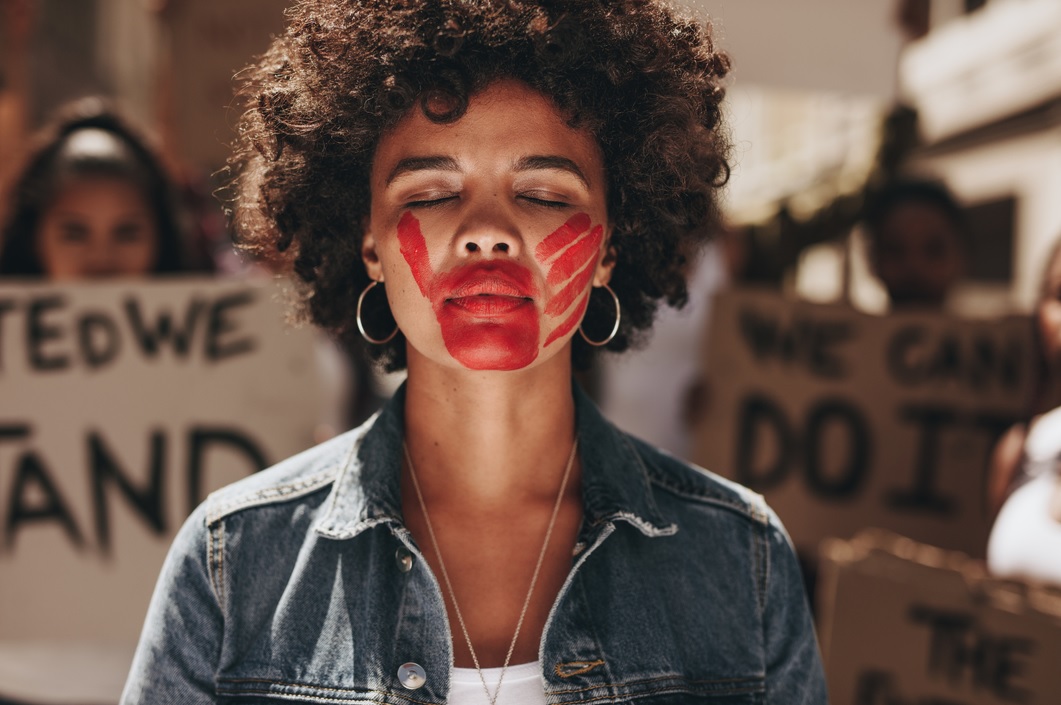
This summer, Canada ratified its first major inter-American human rights treaty, the Inter-American Convention on the Prevention, Punishment, and Eradication of Violence against Women, better known as the Belém do Pará Convention. It was a significant moment. Until June, Canada was, alongside Cuba and the United States, one of only three members of the Organization of American States that had not ratified the Convention.
The Convention is the only binding regional treaty specifically dedicated to addressing violence against women. Its ratification was long overdue given Canada’s longstanding, and often deeply flawed, efforts to address gender equality and the crisis of missing and murdered Indigenous women and girls (MMIWG).
Canada’s ratification of Belém do Pará is not just symbolic. The experience of countries like Mexico shows how ratifying and implementing the Convention, together with relying on the substantive body of jurisprudence developed by the Inter-American Court of Human Rights (IACtHR), can lead to significant changes in domestic laws and practices addressing violence against women. Canada can, and should, look to Mexico’s experience for lessons about how the Convention and this jurisprudence can inform its own legal framework and response to violence against women.
The following was written by Fatema D. Ahmadi, an Afghan human rights practitioner and researcher and a consultant for the Afghanistan ICJ-CEDAW initiative at Rawadari, and Mark Kersten the founder of JiC. A version of it first appeared in the Globe and Mail.
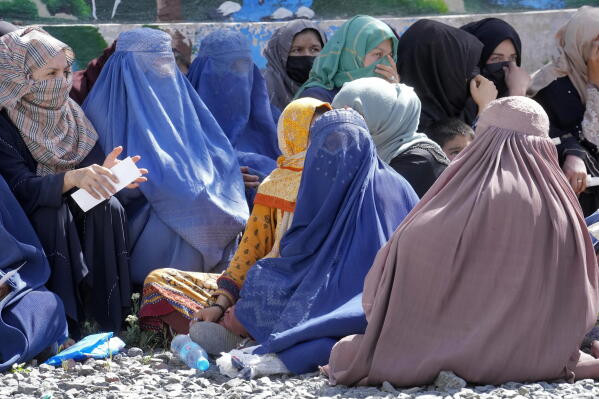
Women gather in Kabul, in 2022 (Photo: AP)
Gender persecution in Afghanistan is no secret. It is now codified in the Taliban’s 100+ edicts and decrees aimed at controlling every aspect of women’s lives. As the United Nations puts it, in 2021, an Afghan woman could run for President. Today, she would not even be allowed to speak in public.
In response to the Taliban’s embrace of systemic gender discrimination, Canada joined a multilateral effort to hold the Taliban accountable under Article 29 of the 1979 Convention on the Elimination of All Forms of Discrimination Against Women (CEDAW). But that was in two years ago. What has happened since and what can Canada do to fulfill its promises to promote the rights of Afghan women and girls?
“Life for many women and girls in Afghanistan is like life under house arrest: they are being deprived of their very dignity.” That was the message that Canada, alongside a host of other states, made on 25 September 2024, the same day that Ottawa announced it had launched a legal initiative aimed at ultimately bringing the Taliban to the International Court of Justice (ICJ) over violations of CEDAW.
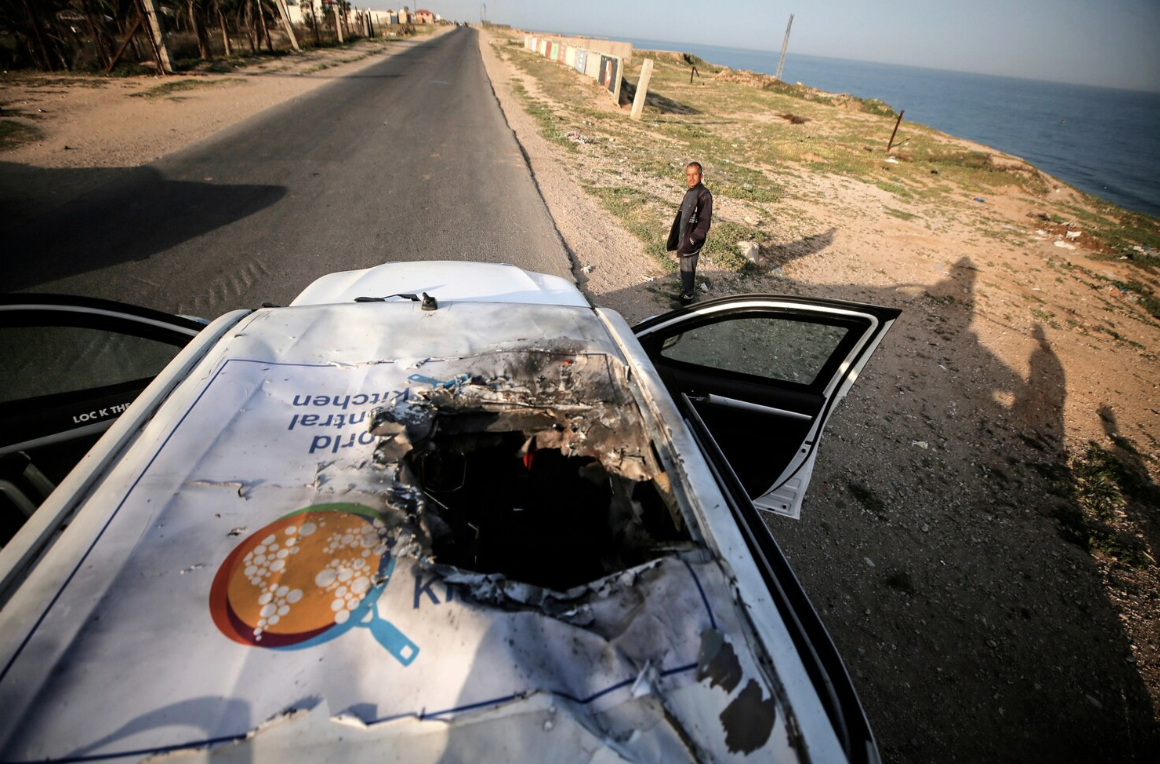
The aftermath of strikes against the World Central Kitchen Convoy in April 2024 (Photo: Majdi Fathi/Associated Press)
The Israeli army has concluded its probe into the 2024 drone strikes that killed seven humanitarian workers from the World Central Kitchen (WCK). The verdict? No criminal investigation is warranted. No explanation was provided. The decision not to pursue criminal responsibility for the attack was slammed by Western states as “shameful”. Canadian Foreign Minister Anita Anand called it “unacceptable”. The Australian government said it was “outraged”. The Polish foreign ministry declared it was “disappointed”.
If Western states are indeed dissatisfied with the outcome of the Israeli probe, then they should investigate the crime themselves. They have the institutional capacity and legal right to do so. Not pursuing an investigation would mean they accept Israeli impunity for the killing of their aid workers in Gaza.
Images taken in the wake of the drone strikes on the WCK convoy show a charred hole where Israeli missiles breached the roof of the organisation’s vehicles – right next to the organisation’s logo. The three cars in the WCK convoy were clearly marked and their movements across the Gaza strip were coordinated, in real time, with Israeli forces. Such precautions weren’t enough to protect the lives of Lalzawmi Frankcom (Australia, 43 years old), Damian Soból (Poland, 35), Saifeddin Issam Ayad Abutaha (Palestine, 25), Jacob Flickinger (dual citizen of the US and Canada, 33), or British citizens John Chapman (57), James Henderson (33) and James Kirby (47). They are among the over 1,000 humanitarian aid workers killed in Gaza since 2023.
The following post calling for the establishment of an independent investigative mechanism for Sudan was written by Abdalbasit Mohamed, Moneim Adam, Mikel Delagrange, and Mark Kersten. Mohamed is a Sudanese lawyer and Research Officer with the Wayamo Foundation. Adam is the Access to Justice Programme Director at Gisa INC. Delagrange is the senior international legal advisor at the Wayamo Foundation. And Kersten is a Senior Consultant at Wayamo and founder of the JiC blog.
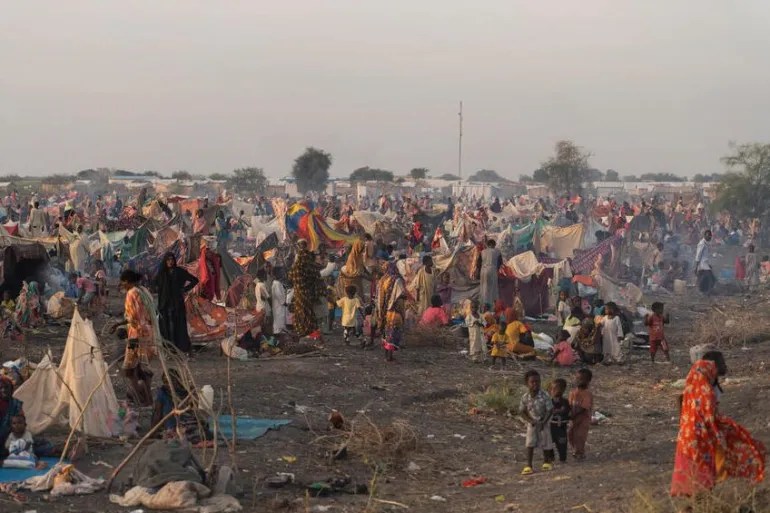
Displaced people in Darfur, Sudan (Photo: Ala Kheir/UNHCR)
As it convenes for its 63rd regular session in Geneva, the United Nations Human Rights Council should establish an independent, international investigative mechanism for Sudan: a standing body mandated to collect, consolidate, preserve and analyse evidence of international crimes to criminal law standards, and to prepare case files for the courts able to use them, now or in the future. This is the single most practical accountability step available to the international community, and the one that Sudanese civil society should now concentrate their future lobbying efforts on at the Council.
The scale of violence in Sudan in recent months has made accountability more pressing, yet also more difficult. The UN Human Rights Office has recorded multiple civilian deaths resulting from drone strikes in the first quarter of 2026. Tens of thousands of violations have been observed and documented by Sudanese civil society organizations, mostly related to forced displacement, as well as bombings, arbitrary detentions and enforced disappearances. These estimates are widely considered undercounts due to ongoing communication breakdowns and limited humanitarian access.
The following is a guest-post by Henry Off. Henry is Board Member at the Canadian Lawyers for International Human Rights and a lawyer currently working as an independent consultant at the International Criminal Court. The views in the blogpost and the article are his own. The full article, Crimes of Law: Bringing Legal Professionals to Trial for International Crimes, is available here.
(Image: Adobe)
International crimes are often committed by following the law, not by deviating from it. When the South African apartheid regime subjugated nearly every aspect of Black and coloured South African life, this totalizing system of discrimination, fragmentation, and repression “required administration, application and interpretation by judges, magistrates, prosecutors, officials of the Departments of Justice and Law and Order, and lawyers, both in the academy and the legal profession.” When Nazi Germany repressed the rights of Jews and other minorities, eventually leading to genocide and other unspeakable atrocities, it did so behind a matrix of legal decrees and judicial orders conjoined to the normative German legal system. In Iran, the judiciary, prosecutors, and defence lawyers similarly operate within and facilitate a legal system built on torture, executions, and unfair trials.
Examples of these overarching systems of atrocity crimes remain all too common. Legal professionals write legal opinions that justify torture or unlawful detention. They reinterpret constitutions in judicial decisions to entrench persecutory policies, shield perpetrators from accountability, or cloak ostensibly colonial criminal conduct in the language of legality.
Are you someone who believes, to your core, that all victims and survivors of atrocities – regardless of who they are or where they live – deserve justice and accountability?
Do you have experience in prosecuting complex cases and powerful figures? Can you withstand immense amounts of pressure and efforts by hostile regimes to thwart your work and threaten your family?
Is your conviction that all people deserve to live with dignity so strong that you are willing to be sanctioned by the United States of America on your first day of work?
If that sounds like you, this job could just be perfect: Prosecutor of the International Criminal Court.
***************
The search for a new ICC chief Prosecutor is on.
Against the backdrop of geopolitical turmoil and threats against the ICC, the risks inherent for whoever takes up the chief Prosecutor position are obvious. As Melanie O’Brien asks: “Who is now going to want to nominate for a position that has such challenges, because they know they will automatically be sanctioned by the U.S.?”
But what makes filling the position so difficult is what simultaneously makes identifying the right person so exceptionally important. It may sound trite, but never has the choice of the next Prosecutor been more important. Never before could it so reasonably be argued that if the wrong person is chosen, they could be the last chief Prosecutor of the ICC.
I do not mean to say this to be dramatic; the challenges facing the ICC are existential and the person filling the role of chief Prosecutor will have to guide their office through unprecedented political headwaters without sacrificing the independence or impartiality of the Court. As Tom Dannenbaum says: states must find someone “who is willing to pursue investigations and cases against the most powerful actors in the system, despite the extraordinary forces being deployed in the opposite direction.”
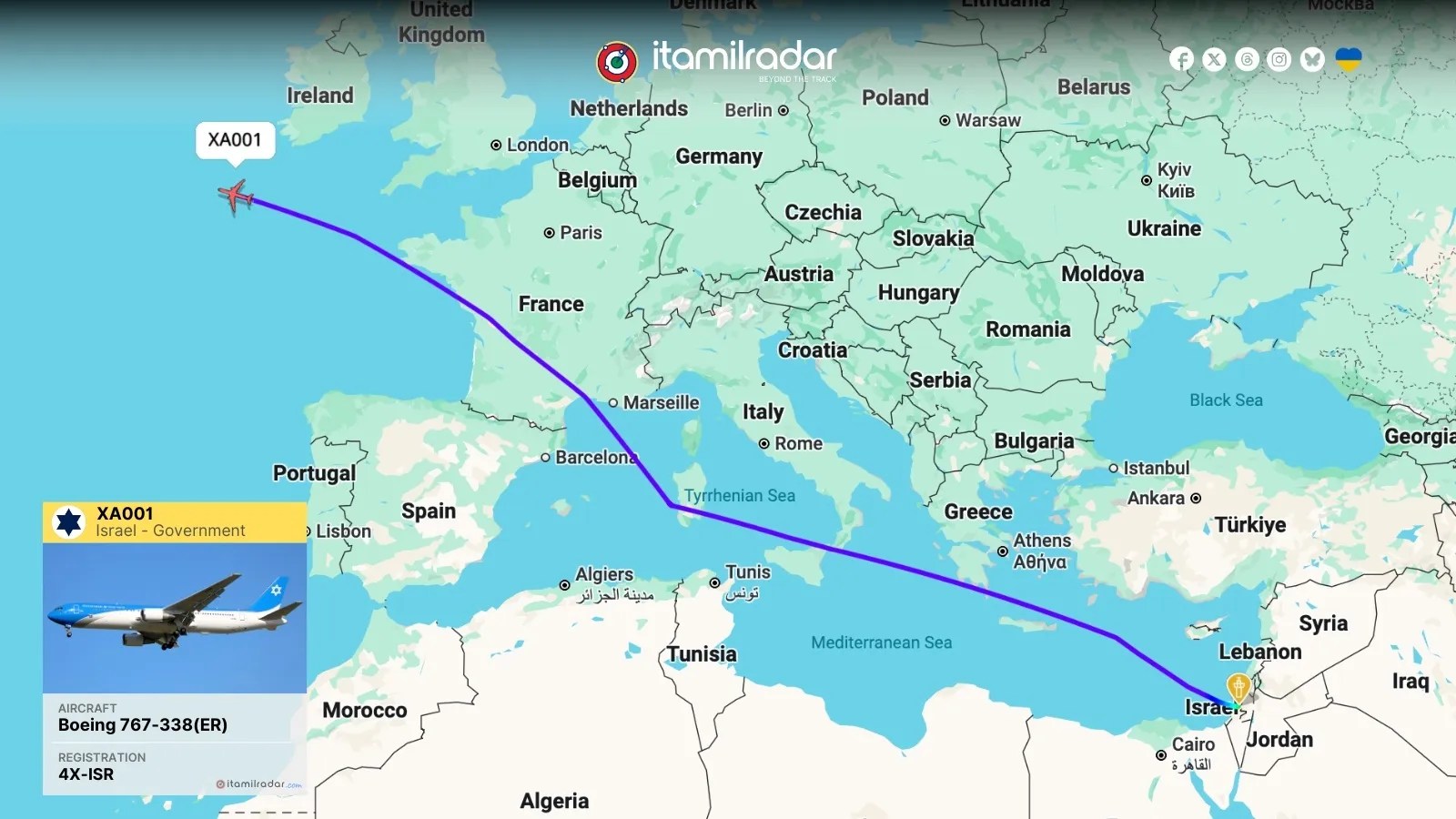
A version of the following article was originally published in the Globe and Mail, and relates to the implications of Canada‘s decision to allow ICC suspect Benjamin Netanyahu to travel through its airspace. However, Canada was not alone. As covered in some depth here, other states and ICC members – including Greece, Italy, and France – have permitted Netanyahu to fly over their territories. The argument below, therefore, is applicable to all of these states and indeed all ICC member states concerned about their own territorial integrity as well as that of their allies.
Netayahu’s flight path in December 2025, just months after avoiding European airspace (Image: itamilradar)
With its sovereignty coming under consistent threat from the United States, Ottawa should take every opportunity it gets to articulate – to Canadians and others – that we are a proud and sovereign state. That includes the way we engage with international organizations, such as the International Criminal Court (ICC). On that scale, however, the Canadian government is signalling that Canada’s sovereignty is up for negotiation. If we don’t want our sovereignty to be trampled on, we have to stand up for it.
In November 2024, the ICC issued an arrest warrant for Israeli Prime Minister Benjamin Netanyahu, charging him (as well as Defence Minister Yoav Gallant and three since-deceased Hamas leaders) with war crimes and crimes against humanity over the war in Gaza. The warrant was based on a painstakingly careful investigation, a review of the evidence against Netanyahu (including by world-renowned judge and Holocaust survivor Theodor Meron), and the approval of ICC judges. As a member-state of the Court, would Canada enforce the warrant? Then-Prime Minister Justin Trudeau saidCanada would “abide” by the Court’s decision. A year later, Prime Minister Mark Carney doubled down, telling Bloomberg journalist Mishal Husain twice that Netanyahu would be arrested if he came to Canada.
U.S. Secretary of State, Marco Rubio (Photo: Joe Raedle/Getty)
The International Criminal Court is once again under attack from the United States. The reason behind the Trump administration’s efforts to dismantle the institution is simple: an insistence that they enjoy wholesale impunity. In numerous contexts, including the Caribbean, Venezuela, Palestine, Afghanistan, and El Salvador, there are credible allegations of international crimes committed by U.S. citizens. If the U.S. wasn’t exposed to accountability for its atrocities, it wouldn’t be seeking to destroy the Court.
Now, will the ICC’s backers please stand up?
American aggression towards the ICC is nothing new. The U.S. has been seeking to subvert the work of the ICC since before the Court was even a fixture of the global arena. Since the bygone era of President George W. Bush, Republicans in particular have been obsessed with the Court and its operations. From John Bolton to Mike Pompeo to now Secretary of State Marco Rubio, Republican officials have been fixated with the ICC even though it has never actually issued a warrant for any American citizen.
Ironically, the efforts of U.S. officials to condemn the ICC have bestowed prestige and legitimacy upon the institution. To those across the globe who believe that the ICC is feckless in the name of American imperial ambitions, tantrums from successive Republican administrations is a powerful antidote. In a nutshell, the greater Washington’s hysteria over the ICC, the more powerful and persuasive the Court appears to those who believe the U.S. is not above the law.
Hoping To Survive, by painter Razieh Gholami, from Afghanistan (2019)
Dear readers,
I wanted to share a new academic article that I wrote with you, on a topic I know is close to the hearts and minds of many: the atrocities and human rights violations faced by refugees and migrants around the world. The article is entitled Crimes Against Migrants as Crimes Against All of Us: The Relevance of International Criminal Law to Migrant Control and has been published by the Canadian Journal of Human Rights.
The article draws on a great deal of literature on the topic and hopefully makes it own contribution to thinking around how atrocities against migrants should be understood and addressed as crimes against humanity. With the forthcoming, landmark case of Khaled Mohamed Ali El Hishri before the International Criminal Court, including in relation to abuses against refugees in Libya, I join others in hoping that the subject gets renewed judicial attention, that abuses against migrants (including by Western states) end, and that, ultimately, the rights of victims are vindicated.
What follows below is the introduction the article. A full copy can be found here.
Every year for the past decade, thousands of migrants have crowded onto dinghies along the Libyan shoreline. From there, they push off and attempt what thousands before them have failed to do: traverse the Mediterranean and land safely in Europe. Some make it. Many perish. Many are caught or “rescued” by the Libyan Coast Guard, herded onto ships by armed guards and returned to the North African country. There, they are dumped into squalid, makeshift warehouses-turned- detention centers where they are exposed to risks of sexual violence, persecution, human trafficking and torture.The migrants have no legal rights in Libya and they do not end up there because Libya wants them. But when collecting migrants from the sea and bringing them back to shore, Libyan authorities are not working for themselves; their masters are in Rome and Brussels. The Libyan Coast Guard acts as an extension of European border control in international waters, hundreds of kilometers from the nearest European state. The border is no longer where it seems.
Almost 8,000 kilometers away from Libya, the border between Myanmar and Bangladesh has been the flashpoint of other atrocities. Seeking to ethnically cleanse Myanmar of the minority Muslim Rohingya population, Burmese authorities forcibly displaced some 700,000 Rohingya into Bangladesh. The border was a critical feature of these atrocities: the Burmese authorities wanted to ethnically cleanse Myanmar of the minority Muslim population, believing that they belonged “elsewhere”. Pushing them across the border into Bangladesh was therefore a driving motivation of the Burmese authorities. At the same time, the border played a critical role in (ongoing) attempts to address the atrocities committed against the Rohingya by the International Criminal Court (ICC). While Myanmar is not a member-state of the ICC, Bangladesh is. In 2019, judges at the ICC accepted arguments that the forcible displacement of the Rohingya was a crime that originated in Myanmar but was completed in Bangladesh, a continuous crime that “spilled” across the border and into territory where the Court had jurisdiction. The ICC prosecutor was therefore granted jurisdiction to open an investigation into international crimes committed against the Rohingya.