Junta against junta: Guinea between transitional justice and political uncertainty

The following article is a guest-post by Marco Bocchese on the trial of former junta members in Guinea over the 2009 Conakry Stadium massacre. Marco is an Assistant Professor at Webster Vienna Private University.

(Photo: France 24)

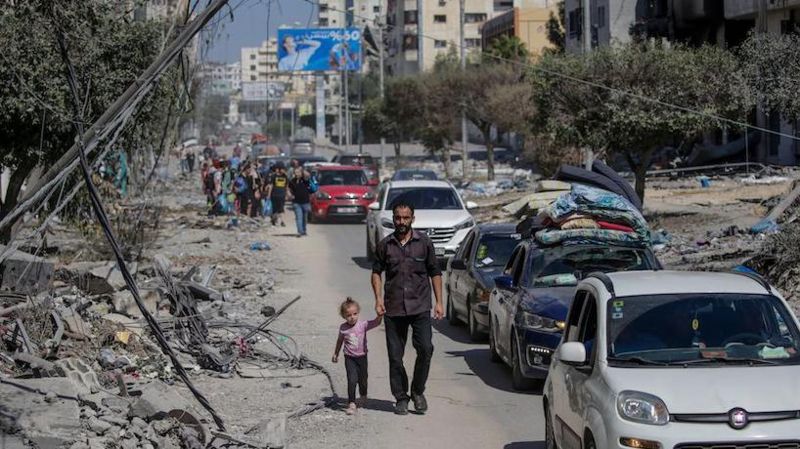
For the last year, Guinea has been mired in a bizarre political situation . Exactly thirteen years after the massacre at the Dixinn football stadium, a district in the capital Conakry, the trial against the leaders of the military junta finally began last September. The junta ruled the country from December 2008 to January 2010. The list of defendants includes Moussa Dadis Camara, better known as Dadis, captain of the presidential guard (the so-called red berets) and former head of state. What follows is the remarkable story of how one junta endorsed international criminal law to prosecute members of another and how these unprecedented proceedings may impact Guinean politics and society for years to come.  

How Guinea got here

Guinea was the first sub-Saharan Africa nation to gain independence from France in October 1958. It is known for its rich bauxite deposits, making it the second largest producing country globally. Despite its mineral wealth, however, Guinea ranks among the ten least developed countries according to the United Nations (2022 Human Development Index – HDI). The armed forces have always played a crucial role in the country’s domestic politics. They first guaranteed their support to Ahmed Sekou Touré, a nationalist leader and the first president of independent Guinea (1958-1984). Subsequently, the military staged the coup that installed career soldier Lansana Conté at the helm of the country for a quarter century (1984-2008). Military spending, which already amounted to 12.65% of the national budget in 2008, ballooned following the military’s seizure of power again in December 2008, reaching 24% in 2009 and 33.5% in 2010

The military’s grip on the country’s political and economic life did not loosen after Alpha Condé’s election in 2010. The latter’s decision to entrust two ministries (one for the fight against organized crime, the other for presidential security) to prominent members of the previous junta personally implicated in the massacre of 28 September 2009 demonstrated the army’s control. In July 2011 Condé luckily escaped an assassination attempt carried out by members of the army and the presidential guard. In the following ten years, Condé sought to consolidate his power and managed to get re-elected for a controversial third term in autumn 2020 after having the constitution amended to allow him to do so. 

In September 2021, when Colonel Doumbouya’s red berets put an end to Condé’s regime, the news was greeted with relief, if not joy, by all opposition forces who feared the establishment of a presidency for life. After months of exhausting negotiations with political and social forces, and under constant pressure from the international community, the current junta finally announced the roadmap towards areturn to the polls: presidential elections will be held in early 2025, and neither Doumbouya nor other junta members will be eligible to run for office.

Towards Trial

The following analysis is based on twenty-five interviews I conducted in Conakry with political leaders, government officials, judges, prosecutors, lawyers, and victims between the May and June 2023. These interviews shed light on the primarily political reasons which led the current junta to try Dadis alongside ten more defendants, all members of the armed forces. 

Continue reading
Posted in Conakry Stadium Massacre, Guest Posts, Guinea, International Criminal Court (ICC), International Criminal Justice | Tagged | 2 Comments

Ukraine’s allies can and should find a way to seize repurpose Russian assets to fund reparations

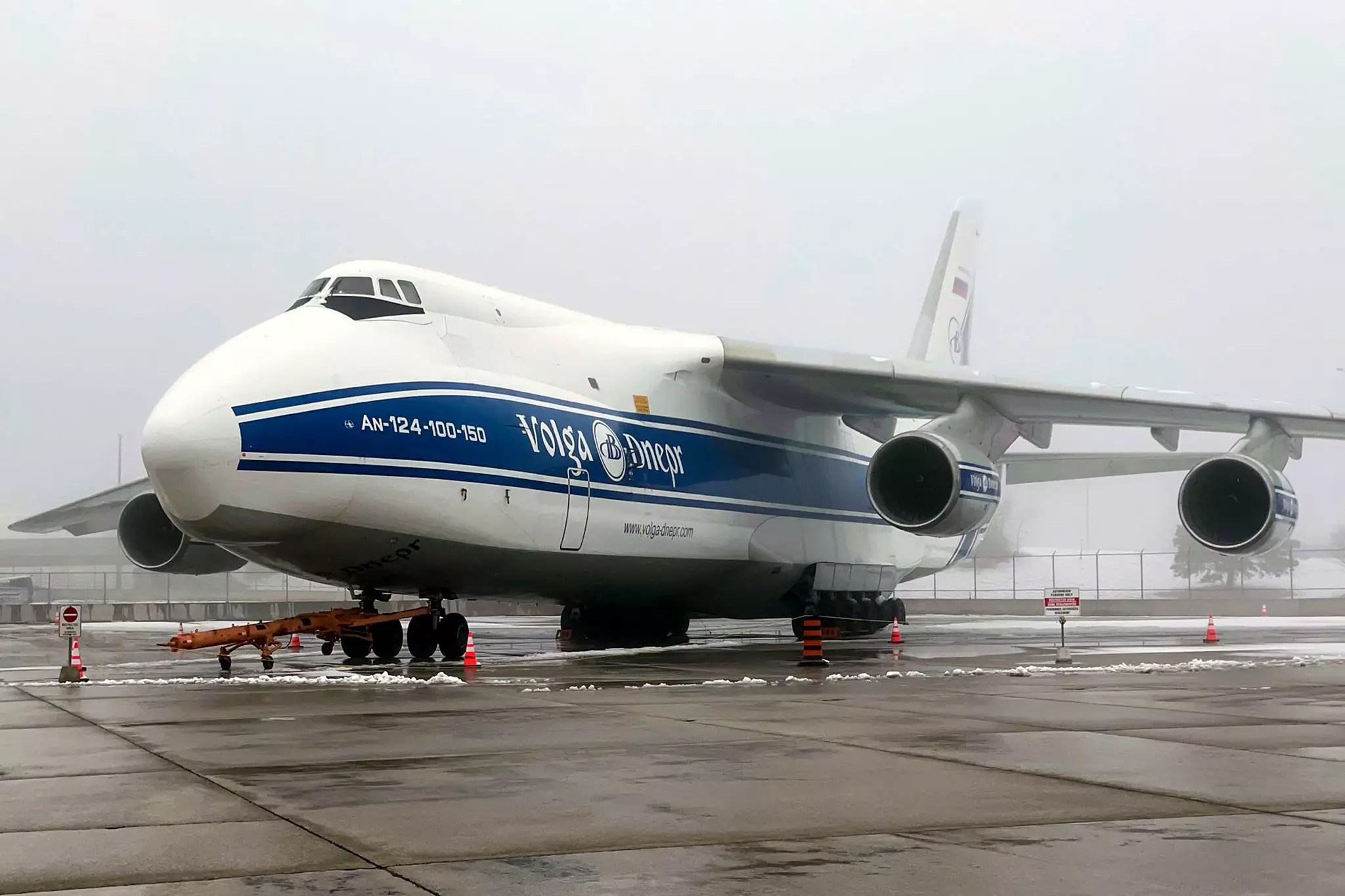
A Russian plane seized by Canada at Toronto Pearson Airport in February 2022 (Photo: BlogTO)

Pass through Toronto Pearson airport and you might spot a tired looking plane on the tarmac. No, it’s not another delayed Air Canada flight. The aircraft is the Russian-registered Volga-Dnepr, seized by Canadian authorities in February 2022. That plane is now likely to be forfeited, with the proceeds directed to Russia’s victims in Ukraine. But more is needed: Canada should lead an international effort to seize Russian assets and repurpose them as reparations for Ukraine.

Since Russia’s 2022 invasion of Ukraine, global accountability efforts have focused on prosecuting Russian war criminals. But going after their money is crucial too, for least three reasons.

First, it’s the right thing to do. World Bank estimates put the damage caused by the first year of Russia’s invasion at $410 billion – before the destruction of the Kakhovka Dam. Only Russia is responsible for those costs. As former Canadian Foreign Minister Lloyd Axworthy says, making Russia pay through the forfeiture of assets is “a Robin Hood proposition. You take from the Sheriff of Nottingham who was putting people in jail, and you give it to the people who were affected by this.”  

Second, with the onset of fatigue among some populations over spending billions of dollars on a foreign war, redirecting Russian assets is the practical thing to do. Using Russian assets to help pay for Ukraine’s recovery could reduce the political costs of using taxpayer dollars to support the war and reconstruction effort.

Third, converting Russian assets into reparations can help address Russian atrocities. International crimes – like the war crimes and crimes against humanity Russia has committed in Ukraine – are lucrative. There exists an economy of human rights violations and international crimes. As I concluded in a recent study, atrocities often create opportunities for perpetrators to make money by plundering resources and creating profitable markets for the trafficking of drugs, precious resources, and even people. 

Continue reading
Posted in Asset Seizure, Canada, Russia, Sanctions, Transnational Criminal Law, Transnational Organized Crime, Ukraine, United Nations | Tagged , , | 4 Comments

Keeping the Hope of Justice Alive: Canada and The Netherlands take Syria to the International Court of Justice over Torture Allegations

(Image: Brandan Reynold)

For the most part, Syrian President Bashar al-Assad has gotten away with it. Rather than being held to account for the countless atrocities his regime has committed against civilians, Assad has been busy reconciling with world leaders. But a Canadian-Dutch initiative might just change that.

The Syrian civil war erupted in 2011. Since then, it is likely that every single human rights violation and international crime enshrined in international law has been perpetrated – most repeatedly. There was a time when these atrocities and the desperate plight of civilians fleeing Syria earned the world’s attention. In recent years? Not so much.

It is therefore little surprise that accountability for atrocities committed in Syria has been fleeting. China, Russia and, initially, the United States, all thwarted efforts to allow the International Criminal Court (ICC), which has jurisdiction over war crimes, crimes against humanity and genocide, to investigate atrocities in Syria.

There has been a steady stream of cases in European states that exercised their legal powers to prosecute Syrian war criminals in their own courts, although these cannot hope to adequately tackle the widespread and systemic nature of atrocities committed in Syria. Canada, for its part, has pointedly refused to do the same – neglecting to prosecute even its own foreign fighters who joined the Islamic State in Syria for their alleged participation in war crimes and crimes against humanity.

In this context, the announcement that Canada and the Netherlands have begun legal proceedings against Syria at the International Court of Justice (ICJ)  – which Canada, the Netherlands and Syria are all members of – is especially noteworthy. Ottawa has said that it is seeking to hold Damascus accountable under the United Nations Convention Against Torture, “for the countless human rights violations it has inflicted on the Syrian people since 2011”. Legal hearings are likely to begin later this summer and offer some hope that the thousands of Syrians brutalised, maimed, and murdered by the Assad regime will not be forgotten.

This does not mean that Assad will find himself hauled before an international tribunal to answer for atrocity crimes. Rather, Canada and the Netherlands are going to the “world court” in an attempt to ensure that Syria complies with international law in relation to torture.

Continue reading
Posted in Canada, International Court of Justice, International Court of Justice (ICJ), Syria, The Netherlands, Torture | Leave a comment

End of the Road: Prosecuting Fulgence Kayishema for Genocide against the Tutsi in Rwanda

The following is a guest-post by Owiso Owiso and Doris Uwicyeza Picard. Owiso is an international lawyer, scholar and researcher whose primary interests and areas of specialisation include general public international law, international criminal law/justice, international arbitration and dispute settlement, law of international organisations, human rights, and transitional justice. Uwicyeza Picard is an international law scholar and researcher whose areas of research include public international law, the law of international organizations, third-party remedies in international law, international humanitarian law, peacekeeping, human rights and international criminal law. She currently serves as Chief Technical Advisor in the Ministry of Justice of the Government of Rwanda. Her views are made in her personal capacity and do not represent the views of the Government of Rwanda. 

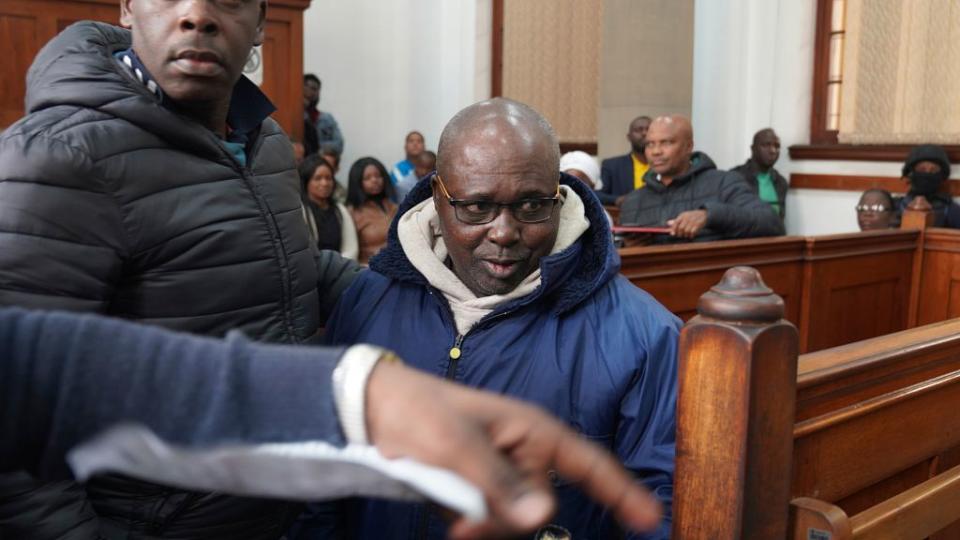
Fulgence Kayishema appears at a Cape Town court earlier this month (Photo: Yahoo)

After nearly three decades on the run, Fulgence Kayishema was arrested on 25 May 2023 in a grape farm in Paarl, South Africa where he had apparently been residing and working as a labourer. Kayishema, a former senior police officer, is suspected of playing a prominent role in the Genocide against the Tutsi in 1994, particularly in killings in Kivumu commune in Kibuye préfecture, including the particularly notorious massacre of approximately 2,000 Tutsi civilians in Nyange Catholic Church. Kayishema was indicted by the International Criminal Tribunal for Rwanda (ICTR) in 2001, charged with genocide; complicity in genocide; conspiracy to commit genocide; and crimes against humanity. In this post, we explore what his arrest tells us about South Africa’s role in harbouring genocidaires and where Kayishema should be transferred and prosecuted.

South Africa’s complicated ‘relationship’ with suspected Rwandan genocidaires 

Similar to questions that France faced in 2020 – but is yet to answer – when alleged genocide financier Félicien Kabuga was arrested in an affluent Paris suburb after nearly 26 years on the run, it is inevitable that many are wondering how Kayishema managed to live so long in South Africa unbothered by authorities. Indications are that South Africa knew of Kayishema’s presence long before his arrest on 25 May 2023. Addressing the UN Security Council in 2021, the Prosecutor of the IRMCT Serge Brammertz accused the South African government of stone-walling the search for Kayishema. The Prosecutor had earlier claimed that South Africa had initially acknowledged, as a reason for not arresting and extraditing Kayishema, that it had granted him refugee status, but later changed its position and pointed to legal difficulties in cooperating with the IRMCT. South Africa, however, changed its tune in 2022, ramping up cooperation with the IRMCT and establishing an operational task-team that eventually apprehended Kayishema. 

South Africa’s dalliance with suspected genocidaires is not new; it goes back to Apartheid South Africa, which, alongside France, is reported to have been one of the main arms suppliers to the genocidal Rwandan regime in the years leading up to the Genocide against the Tutsi. Elements of the Apartheid regime ensured that the arms flow to Rwanda continued even after the official collapse of the Apartheid in South Africa, without much interference by the newly elected democratic South African government. It is no surprise, therefore, that many Rwandans fleeing the collapse of the genocidal regime found their way to South Africa. While Kayishema’s case has been the most prominent due to his indictment by the ICTR, he is reportedly not the only fugitive known to be residing in South Africa. Kigali has claimed that at least four other persons suspected by Rwandan authorities of involvement in the genocide eventually made their way to South Africa, and reside and work there to this day. 

Where will/should Kayishema be prosecuted? 

Apart from the reputational embarrassment of having hosted a suspected genocidaire, Kayishema’s arrest now raises another uncomfortable dilemma for South Africa, that is, where Kayishema will be extradited to. While Kayishema was indicted by the ICTR in 2001, in 2012 the ICTR referred his case, among others, to Rwandan authorities. In May 2014, the ICTR issued an arrest warrant for Kayishema, requesting States to arrest and transfer him to Rwanda for trial. With this referral, it follows therefore that Kayishema ought to be transferred to Rwanda for trial. 

Continue reading
Posted in International Criminal Tribunal for Rwanda (ICTR), Rwanda, Rwandan Genocide, South Africa | Tagged , , | Leave a comment

New Article Alert: ‘Global South’ Voices Are Muted in Debates over the Crime of Aggression: What Three Books on Illegal War Tell Us About Why

(Photo: AP)

Dear readers,

I wanted to share with you a new article published at the International Journal of Transitional Justice earlier this year: “‘Global South’ Voices Are Muted in Debates over the Crime of Aggression: What Three Books on Illegal War Tell Us About Why”.

The article explores the sticky question of why it appears that so many states in the “Global South” (an utterly imperfect short-hand that I explore a bit in the article) remain ambivalent about prosecuting the crime of aggression in Ukraine. Rather than focus on more immediate debates on the subject and especially those that have taken place since Russia’s 2022 invasion of Ukraine, I reviewed books on the crime of aggression from three eminent experts – Carrie McDougall, Tom Dannenbaum, and Noah Weisbord – to try to understand where such ambivalence derived from. I therefore explore how previous debates and negotiations over the crime of aggression under the Rome Statute of the International Criminal Court as well as conversations about the purpose and goals of international criminal law more generally have contributed to a less-than-enthusiastic engagement among many States outside of Europe and North America in efforts to hold Russian authorities for the crime of aggression. A recent trip to Kenya to engage with international human rights and accountability advocates confirmed that this antipathy remains strong and is something that advocates must reckon with if we hope to convince a greater number of communities that Russian aggression must be prosecuted.

Here is an excerpt of the article:

Political and legal efforts to criminalize illegal warfare have received a tremendous amount of attention since the 2002 establishment of the International Criminal Court (ICC). At no point have discussions on the crime of aggression reached such feverish levels as they did following the 2022 invasion of Ukraine by Russian forces. Ongoing debate over how to investigate and prosecute the invasion, alongside the relatively muted response of the “Global South” to a proposed specialized tribunal to prosecute Russian leaders for the crime of aggression, is symptomatic of how diplomats have crafted the crime over the past two decades.

Those negotiations – their reasoning, political contours, historicity and consequences – have been studiously covered by Carrie McDougall, Tom Dannenbaum and Noah Weisbord in their respective books on the crime of aggression. Theirs are persuasive volumes written by thoughtful and diligent scholars of international criminal law (ICL). The books offer detailed assessments of what the crime is, its historical trajectory, its adoption and particular jurisdictional shape under the Rome Statute, as well as the role it might play in moderating international relations’ most devastating excess: war. Each author speaks to the politics of law and, to put it crudely, how the proverbial sausage – international law in this case – is made. The books articulate with laudable finesse how the crime of aggression came to be what it is today. This is, at times, a grim task, and the disappointment of the authors at the neutered version of the crime of aggression included under the Rome Statute is apparent. At the same time, these volumes, which also offer much hope, include lessons for the law student, diplomat and negotiator on how negotiations capture particular cross-sections in time and politics…

The diligent observer and academic would do well to consume all three books, even if they are left with the inevitable sense that the more they know about the crime of aggression, the more they know what they do not know. Rather than distil their findings any further, I thought it would be of greater interest to readers to use the balance of this review essay to enquire into what pertinent sections of these volumes tell us about Global South attitudes to the crime of aggression.

Continue reading
Posted in African Union (AU), Crime of Aggression, International Criminal Court (ICC), Russia, Ukraine | Leave a comment

A view from Ukraine: Models for a Future International Tribunal for Russian AggressionA view from Ukraine:

The following guest post was written by Volodymyr Pylypenko. Volodymyr holds a PhD in Law and is an Associate Professor in the International Relations Department of Lviv University of Business and Law, Ukraine. His previous post for JiC, ‘The View from Ukraine: Why a New International Criminal Tribunal to Prosecute Russian Aggression is Needed’ is available here.

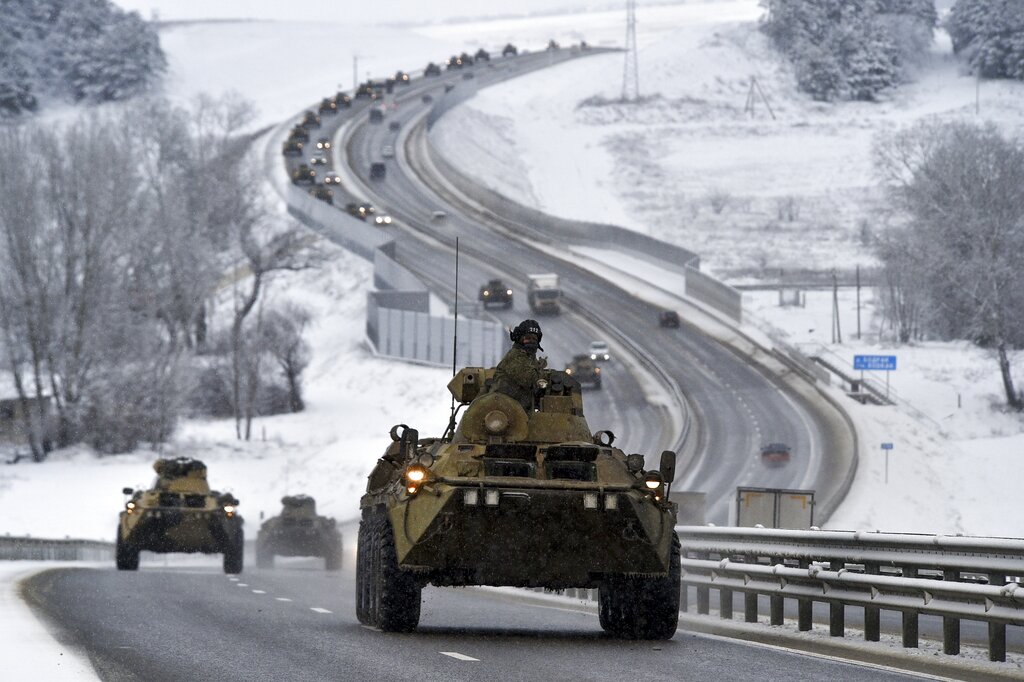
A convoy of Russian armored vehicles moves along a highway in Crimea in January 2022. (Photo: AP)

Modern international law knows several relevant precedents. International tribunals became effective tools to punish persons guilty of the most serious international crimes of the 20th century, including the crime of aggression. The International Military Tribunals in Nuremberg and Tokyo, which were established after the Second World War recognized in their verdicts the planning, preparation, initiation and/or the waging of an aggressive war as an international crime. Accordingly, an ad hoc international criminal tribunal (ICT), with the power to prosecute senior Russian officials with the planning, preparing, and waging of aggressive war in Ukraine is plausible and legitimate. That is also the view of states, including The Netherlands, Estonia, Latvia, and Lithuania, as well as some international organizations such as the European Union (EU) and the Counsel of Europe, which have discussed the need to create such a tribunal to punish Russian officials for the crime of aggression and other international crimes.

A week ago, the ICC issued an arrest warrants against Putin and Russian Commissioner of Children’s Rights, charging them for serious war crimes such as unlawful deportation of Ukrainian children. Other charges for war crimes in Ukraine are like to still appear while the  ICC Prosecutor meticulously examines Russian atrocities in Ukraine. Meanwhile, the ICC does not have a jurisdiction to accuse Putin and hold him to account for the crime of aggression he committed against Ukraine. As I mentioned in my previous blog piece, I believe the establishment of a separate, international ad hoc tribunal is the best option to prosecute Russian aggression. In this blog I discuss possible options concerning the nature and the manner of establishing such a tribunal.  

 The sooner the main stakeholders agree on a unified strategy over the organization and functioning of this ICT and define a legal basis for its creation, the sooner accountability for aggression will follow. However, there are still some ‘pitfalls’ connected to the model of the future tribunal.  In what follows, I briefly assess three possible options.

Creating a tribunal through treaty between the states

An ICT can be created on the basis of an international treaty between states. Ukraine, as the state that has directly suffered the damage caused by Russian aggression, should be a mandatory participant in such a treaty. Under the same treaty, the parties should approve the ICT’s Statute, which will determine its procedural and substantive elements. The best precedent for this mechanism is, in my view, the well-known Nuremberg Tribunal, which was established on the basis of an agreement between the USSR, the United States, Great Britain and France with 19 other countries joining afterwards.

Continue reading
Posted in Bilateral Immunity Agreements, Europe, Guest Posts, Hybrid Courts, Hybrid Tribunals, International Criminal Court (ICC), Russia, Ukraine | Tagged | 1 Comment

The National Hockey League and its Biggest Russian Star is Sports-Washing Putin’s War Crimes

Washington Capitals star Alexander Ovechkin and Russian President Vladimir Putin (Photo: The Guardian)

The National Hockey League (NHL) has a war crimes problem.

The NHL’s official Instagram account regularly highlights Alexander Ovechkin, one of hockey’s premier stars. Click on the NHL’s stories and you can access Ovechkin’s own account, where he regularly shares posts with his 1.6 million followers. At the top, smiling creepily at viewers from Ovechkin’s profile photo is none other a wanted war criminal: Vladimir Putin.

By actively minimizing acts of genocide, war crimes, and crimes against humanity, the NHL is sport-washing mass atrocities. Instead of calling out Ovechkin’s long-standing support for Putin, it celebrates his every goal and step towards Wayne Gretzky’s all-time goal-scoring record. 

When will enough be enough? With Putin now facing war crimes charges at the International Criminal Court (ICC), will the NHL and Ovechkin finally change their tune?

Not unlike other sporting bodies such as FIFA, the NHL is a laggard when it comes to basic human rights standards. It was slow on denouncing anti-Black racism following the murder of George Floyd, and it has been slow in celebrating gender diversity. On the latter, some its hockey teams appear to be following the Kremlin’s instructions. 

In late 2022, Russia expanded its anti-gay propaganda laws. Now, numerous NHL hockey teams, most recently the Chicago Blackhawks, have decided not to wear Pride-themed jerseys because of fears that Russian-born players will face unspecified “security threats”. Instead of having everyone except the Russian players celebrate the LGBTQ community – and therefore making a point in support of sexual and gender minorities – numerous NHL teams decided that no one would wear the jerseys. Somewhere, Vladimir Putin is ecstatic about the reach of his homophobic policies. 

Back to Ovechkin. A recent in-depth CBC investigation outlined how Ovechkin developed a very close relationship with Putin since at least 2014. Ovechkin endorsed Putin’s first invasion of Ukraine that year, puppeting Kremlin claims that it was necessary to protect children from “fascism”. While Russian authorities crushed domestic dissent and jailed thousands of democratic opponents of Putin, Ovechkin worked tirelessly to ensure the Russian leader was repeatedly re-elected. 

Ask the NHL about it, though, and you get half-answers or silence. In November, NHL commissioner Gary Bettman claimed ignorance: “I don’t know what Ovechkin’s relationship is with Vladimir Putin.”When asked why Ovechkin had a picture of Putin up on his Instagram profile, Ovechkin’s coach on the Washington Capitals, Peter Laviolette, stated: “I’m going to talk about hockey tonight.” Hear that, victims of Putin’s war crimes? Hockey is more important than you.

Continue reading
Posted in ICC Prosecutor, International Criminal Court (ICC), Russia, Ukraine, War crimes | Tagged , , , | 1 Comment

Why did the International Criminal Court focus on the transfer and deportation of children from Ukraine to Russia?

(A destroyed vehicle near a playground in Kharkiv, Ukraine. Photo: Joel Gunter/BBC)

In the days since the International Criminal Court (ICC) announced it was charging Vladimir Putin and Maria Alekseyevna Lvova-Belova with the war crimes of unlawfully deporting children and transferring them from Ukraine to Russia, many have asked: why did the ICC start with children? Why not other crimes?

The first thing to note is that the arrest warrants issued against Putin and Lvova-Belova represent only the first strike by ICC chief Prosecutor Karim Khan. A few days before the warrants were announced, it was reported that the Prosecutor was preparing another warrant of arrest in relation to the deliberate targeting of civilian infrastructure in Ukraine by Russian forces. There is every reason to believe that a warrant regarding, for example, Russia’s shelling of apartment buildings, maternity wards, and power plants, is in the pipeline or has already been issued but remains under seal.

Still, why start with the abduction and illegal transfer of children?

First and foremost, the scale of efforts to abduct and transfer children from Ukraine to Russia is staggering. According to reports citing official Ukrainian statistics, 16,226 children have been deported from Ukraine to Russia. 10,513 have been located, and 308 have returned. Per a recent report from Yale University on the matter, this war crime no less a systemic and wholesale atrocity than any other, and it is being perpetrated against a particularly vulnerable group of civilians: children. Sufficient evidence was there for the Prosecutor and the ICC Judges and they went for it. Whether Khan’s team of investigators push to add a warrant for the forcible transfer of children as genocide remains to be seen.

The government of Ukraine has also very clearly communicated to the ICC Prosecutor that the abduction of children is its priority. In a widely televised meeting between Khan and Volodymyr Zelensky, the Ukrainian President informed the Prosecutor of this primary concern for Ukraine, stating:

I know there are a lot of different war crimes and of course we want justice and [to] bring all of these guilty people – all of them. But I think that the priority for our people, it’s about our future generation, it’s about our children. I think that this question is for me, number one, that you can focus on the case of deportation of our children and that it is very important to bring them back.

Focusing on the war crime of illegally transferring and deportating children from Ukraine to Russia indicates that Khan has accepted and is willing to act on the wishes of the Ukrainian state. But there is more to it too.

The focus on children could help delegitimize the very reasons for Putin’s war. In an op-ed that otherwise speculates rather wildly about the consequences of the ICC targeting the Russian President, Michael Byers makes the salient argument that the Court’s “arrest warrant discredits Mr. Putin’s claim that the invasion was an act of self-defence. Abducting children, after all, has nothing to do with protecting Russia against NATO.”

Continue reading
Posted in Children, International Criminal Court (ICC), International Criminal Justice, Russia, Ukraine, Vladimir Putin | 6 Comments

Straight to the top: The International Criminal Court issues an arrest warrant for Russia’s Vladimir Putin

It happened. It actually happened. After months of speculation, the International Criminal Court has issued arrest warrants in the Ukraine situation, including for President Vladimir Putin. Here’s the announcement from the Court:

Mr Vladimir Vladimirovich Putin, born on 7 October 1952, President of the Russian Federation, is allegedly responsible for the war crime of unlawful deportation of population (children) and that of unlawful transfer of population (children) from occupied areas of Ukraine to the Russian Federation (under articles 8(2)(a)(vii) and 8(2)(b)(viii) of the Rome Statute). The crimes were allegedly committed in Ukrainian occupied territory at least from 24 February 2022. There are reasonable grounds to believe that Mr Putin bears individual criminal responsibility for the aforementioned crimes, (i) for having committed the acts directly, jointly with others and/or through others (article 25(3)(a) of the Rome Statute), and (ii) for his failure to exercise control properly over civilian and military subordinates who committed the acts, or allowed for their commission, and who were under his effective authority and control, pursuant to superior responsibility (article 28(b) of the Rome Statute).

Ms Maria Alekseyevna Lvova-Belova, born on 25 October 1984, Commissioner for Children’s Rights in the Office of the  President of the Russian Federation, is allegedly responsible for the war crime of unlawful deportation of population (children) and that of unlawful transfer of population (children) from occupied areas of Ukraine to the Russian Federation (under articles 8(2)(a)(vii) and 8(2)(b)(viii) of the Rome Statute). The crimes were allegedly committed in Ukrainian occupied territory at least from 24 February 2022. There are reasonable grounds to believe that Ms Lvova-Belova bears individual criminal responsibility for the aforementioned crimes, for having committed the acts directly, jointly with others and/or through others (article 25(3)(a) of the Rome Statute).

Some quick reflections:

More than anything this is a significant moment for victims and survivors in Ukraine, especially the children and families of children who have been illegally transferred and deported to Russia. After years of largely being neglected and ignored, an international organization has stepped up to the plate and done what it could, for now, to stand in solitary with victims and survivors of war crimes in Ukraine. If the warrant against Putin is any kind of victory, it is first and foremost a victory of the Ukrainian people.

This is a historical moment for the ICC and for global politics, no doubt among the biggest developments in the Court’s history and indeed the history of international criminal law. This is the first time that the ICC has issued an arrest warrant for any citizens of the Permanent 5 at the United Nations Security Council (the United Kingdom, France, China, Russia and the U.S.). I think (and I hope) that this development will matter to those states – including those in the ‘Global South’ – who may have little interest in the ICC but have always, and rightly, been bothered by the impunity enjoyed by the world’s most powerful states and the P5 in particular. What this development undoubtedly also means it that for the foreseeable future, perhaps even decades, there will be no Security Council referrals of situations to the ICC.

Continue reading
Posted in Uncategorized | 8 Comments

After One Year, We Can Fully See the Gendered Costs of the Ukraine War

Gwen Battis joins JiC for this guest post on the gendered costs of Russia’s invasion and the war in Ukraine. Gwen is a graduate student at the University of Denver studying International and Intercultural Communication.

In Mariupol, a woman strolls past destroyed buildings (Photo: Getty Images / BBC)

It has been one year since Russia invaded Ukraine, inciting a future of violence, war, and displacement. With billions of dollars of Western spending and foreign assistance, Ukrainians are still suffering forced migration, torture and death. But what the common discourse around the conflict is missing is a focus on how this war, like all others, is inherently gendered and disproportionately affects women. 

The Russia-Ukraine war is rooted in economic and ethno-national power relations. Yet, if we analyze how economic and national systems are built, it becomes apparent that a modern-day neoliberal state cannot be built without gender, masculinity, and patriarchy. Gender relations are just as guilty in causing conflict and militarization.

Entertain this idea: Ukraine sits in the international arena as a state on its way towards progressivism, striving for equity, freedom, and liberation, thereby moving farther and farther away from its Soviet past. Russia, on the other hand, in many ways represents traditional values, patriarchy, conservatism, and dictatorship.

If we were to categorize each state based on traditional definitions of masculinity and femininity, we can more clearly see the gendered nature of this conflict: Russia’s invasion of Ukraine is symbolic of an exertion of hypermasculinity, a forcing of obedience, and a violent response to Ukraine’s feminine opposition. For Moscow, Ukraine was supposed to play the ‘woman’ in the relationship and therefore expected to submit. 

But what of Ukrainian women? If Ukraine as an entity is deemed worthy to be dominated, what of the most vulnerable population within Ukraine? 

Ukrainian women and other female-identifying folks are shouldering a disproportionate weight of this war. They are enduring a conflict that is both exacerbating existing gender inequalities and creating new areas of insecurity. After a year of armed conflict, I hope we can take time to investigate how the cost of a dictatorship and the subsequent fight for freedom is creating a climate that inordinately exposes women to suffering and violence.

Continue reading
Posted in Crimes against humanity, Gender, Russia, Sexual and Gender Based Violence, Ukraine, War crimes | 1 Comment