
The following is a guest post by Ananya Mukherjee, a graduate of the West Bengal National University of Juridical Sciences, Kolkata who currently works with the Indian Institute for Human Settlements on higher education policy in India. Ananya is also an incoming MPA candidate at Columbia University.
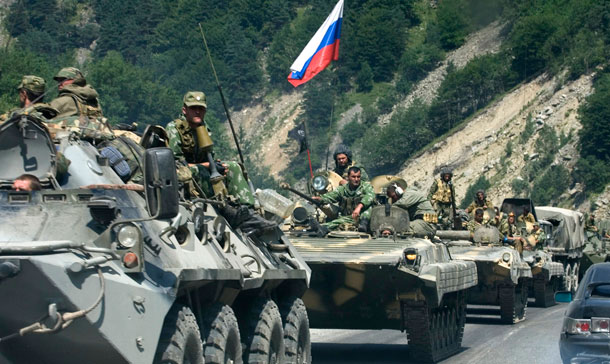
In 2016, and for the first time since its inception, the International Criminal Court (ICC) opened an investigation into activities involving non-African states. The ICC is investigating alleged crimes against humanity and war crimes committed in Georgia during an international armed conflict (IAC) between July and October 2008. In June 2022, the ICC issued three warrants of arrest for Russian-backed officials from South Ossetia on allegations of war crimes committed during the war. The 2008 Georgian War involved a combination of inter-state and intra-state conflicts. The current post deals with the conflict between the Georgian military, on one hand, and the South Ossetian and Abkhaz military units on the other.
The ICC’s mandate to prosecute and hold individuals responsible for gross humanitarian law violations may be triggered in case of war crimes committed during an IAC. For the conflict between the Georgian, and the Abkhaz and South Ossetian forces to be considered international, it is crucial to demonstrate Russian influence over such forces. Georgia contends that “Russia exercised sufficient control over the Abkhaz/South Ossetian forces”. Russia claims otherwise.
The challenge of attributing internationally wrongful acts committed by individuals to a ‘state’ is resolved through internationally recognized tests of control. This post analyses the two most widely accepted modes of attribution: theeffective control test and overall control test. In “The General Theory of Law and State”, Hans Kelsen remarked that the effective control test is conventionally adopted for determining state attribution and attracting the international legal responsibility of state(s). This stringent test was put forth by the International Court of Justice (ICJ) in the Nicaragua case. Finding it to be unpersuasive, the International Criminal Tribunal for the Former Yugoslavia (ICTY) developed the overall control test in the case of Tadic.
Distinguishing the Control Tests
The ICJ in Nicaragua examined the United States’ responsibility for acts of paramilitary groups or contras on Nicaraguan territory. To attract responsibility under this test, the state shall have, in addition to paying or financing the private actors and coordinating or supervising their activities, issued specific instructions to the individuals for the unlawful acts. The requirement of “specific instructions” for each “internationally wrongful act” is where this test often comes unstuck. For instance, the lack of evidence of America’s involvement in directing / instructing the contras led to it ultimately escaping international responsibility.
Conversely, the ICTY laid down a new method of attribution in Tadic. It relied on the case of Loizidou v Turkey, which related to Turkey’s supposed responsibility in denying a party access to private property located in Northern Cyprus, which was under Turkish rule at the time. The European Court of Human Rights (ECHR) held that it was not necessary for Turkish authorities to exercise “detailed control over specific policies and actions” over the Turkish Republic of Northern Cyrus to establish Turkey’s responsibility. In Tadic, the overall control test not only dealt with equipping, financing or training, and providing operational support to a group, but also coordinating or helping in the general planning of its military or paramilitary activities. The ICTY held that,“If it is under the overall control of a State, it must perforce engage the responsibility of that State for its activities, whether or not each of them was specifically imposed, requested or directed by the State.”
Continue reading




 Justice in Conflict