The following is the second installment of a two-part guest post on atrocities against migrants by Alessandro Pizzuti and Alice Giannini. Alessadro is the co-founder of UpRights. Alice is a lawyer and PhD student in criminal law at the Universities of Florence and Maastricht and the Head of StraLi’s Cyber Team and a member of the International Criminal Law team.
In the first part of this post, we reconstructed some of the challenges behind the International Criminal Court (ICC) Prosecutor’s conclusion that the abuses against migrants in Libya may qualify as war crimes and crimes against humanity. This second post will focus on some of the implications underlying such a conclusion in terms of responsibility and duties of states to prosecute such crimes.
Background
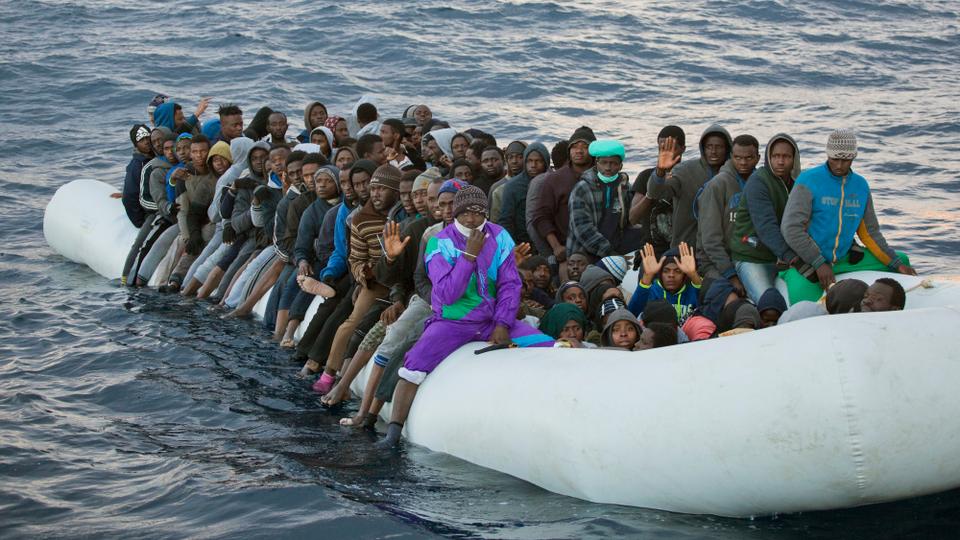
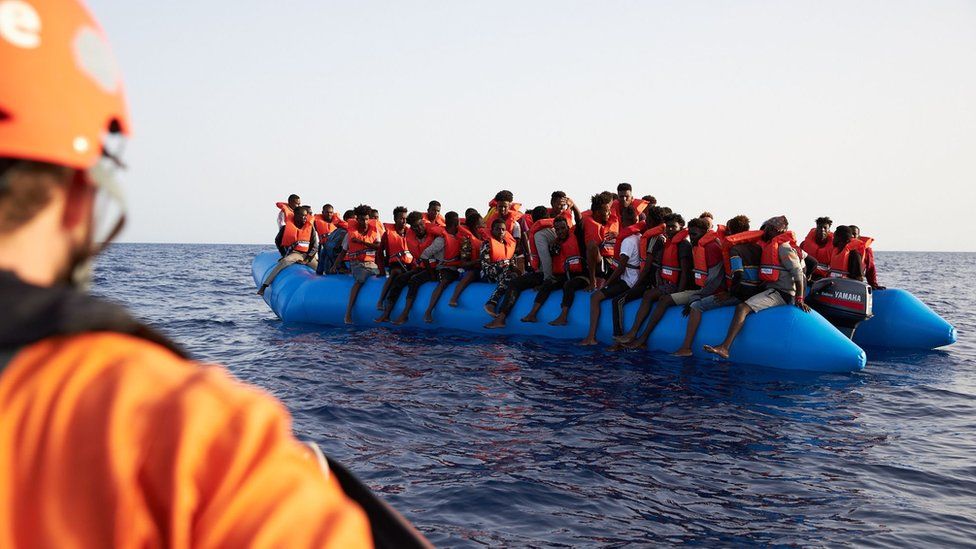
The war crimes and crimes against humanity suffered by migrants in Libya’s Department for Combating Illegal Immigration (DCIM) Detention Centres are the result of a cyclical violence. From a purely causal perspective, such crimes are predicated on the contributions of multiple actors, which include: (i) traffickers and smugglers facilitating the journey to Libya; (ii) armed groups in charge of DCIM detention centres directly responsible for abuses; (iii) staff of Libyan Coast Guard (LCG) ensuring the interception and transfer of migrants to detention centres; and (iv) European actors assisting the LCG to redirect migrants to Libya.
The contribution of European actors – including Italian and Maltese authorities – in bolstering the ability of the LCG to intercept migrants at sea through the provision of assets, equipment, maintenance, and trainings, has been attested to by multiple reports of international organisations and NGOs. These include the UN Secretary-General (here, paras.18-21, here, para.21), OHCHR (here, p.23), UNSMIL (here, pp.14-15), the COE Commissioner for Human Rights (here, pp.20-21 and here, pp.23-24), Amnesty International (here, pp.9-14 and here, pp.11-13, 22-24), and ECCHR/FIDH/LFJL (here, pp.41-46). Official documents from the Italian MFA confirmed the role of Italian officials in coordinating the LCG during rescue missions (here, p.24).
State responsibilities and duties to punish international crimes
While the qualification of the crimes committed against migrants in Libya as war crimes and crimes against humanity has symbolic value, it also carries very specific practical implications. Once these abuses are elevated – qualitatively or quantitatively – to the status international crimes, they are no longer confined within the sometimes artificial schemes of (extra)territorial jurisdiction and admissibility that govern human rights violations. This is especially important when such crimes are the result of conduct that is committed across national borders or which occur in failed States.
Since it engages personal, rather than State responsibility, international criminal law transcends state borders. It reconstructs the fragmented picture offered by the jurisdictional paradigm of human rights obligations of States into a more composite and plain dynamic. This dynamic is based on the effects of individual contributions to specific crimes, considered as whole. Under the ICC legal framework, such contributions are articulated through the modes of liability set out in Article 25(3) of the ICC Statute.
In the case of the crimes committed against migrants in Libya, specific emphasis should be put on Article 25(3)(d)(ii) of the ICC’s Rome Statute, which criminalises any form of contribution to the commission of a crime under the ICC Statute by a group with a common purpose provided in the knowledge of the group’s intention to commit the crime. Considered a residual form of accessorial responsibility, Article 25(3)(d) focuses on the assistance, either internal or external, to a group of persons acting with a common purpose. In terms of the actus reus and mens rea, the requirements of Article 25(3)(d) of the Statute are lower than the other forms of liability set forth in Article 25(3).
Continue reading