Victims and Perpetrators: Reclaiming the victim narrative from Dominic Ongwen

Anushka Sehmi joins JiC for this contribution to JiC’s symposium on the life and trials of Dominic Ongwen. Anushka is a member of the external team of lawyers led by Joseph Manoba and Francisco Cox, representing 2,564 victims participating in the case against Dominic Ongwen before the International Criminal Court. The views below are provided in a personal capacity.

Resident of Northern Uganda during an ICC outreach event in Lukodi (Photo: ICC)

Warning: This article details acts of severe violence that some may find disturbing.

An especially long and hot day comes to an end in Gulu town, in northern Uganda. The sun is just starting to set. The unceasing gusts of wind leave a fine brown film of dust on my laptop. I promise myself to clean it once I get back to the hotel. My colleagues and I have just finished interviewing several victims participating in the case of Dominic Ongwen at the International Criminal court (ICC) in order to establish whether they would be interested in presenting evidence as witnesses in the trial.

One of the people we interviewed, Peter (pseudonym) describes in detail how he was abducted from Abok IDP camp in June 2004 by Dominic Ongwen’s Sinia Brigade. At the time, he was at home sleeping in the hut that he shared with his siblings and parents when the camp was attacked by the LRA. All he remembers is being woken up to the sounds of screams and gunshots. His parents and siblings were nowhere to be seen. Laden with a large bucket of salt that had been looted from the camp, Peter was forced to march long into the night along with the other camp residents who had also been abducted. Peter was 12 years old at the time and had been attending Abok Primary School prior to the attack. 

He described how, from the moment of their conscription, the new abductees were taught to live in terror. Punishments were inflicted publicly (and sometimes collectively), as a means of terrorising other recruits. Aspart of his initiation into the LRA, Peter was beaten every day with a cane in order to “remove the civilian” from him. After enduring two weeks of these beatings, Peter and others who had been abducted commenced their formal training.

During the interview, Peter pauses and then hesitantly mentions that one of his fellow abductees tried to escape after two weeks. The boy in question was around 15 or 16 years old. The would-be escapee was found by senior commanders in the group and dragged in front of a tree, near where Peter and two other boys who had been recently abducted were standing. The choice was simple: either beat this boy to death or be killed.

“I was scared. The boy was brought to me because I was the youngest.” 

Peter and the other two boys complied with the order and, using the wooden sticks they had been given as part of their training, hit the boy on his head repeatedly, eventually killing him. All he could think of at the time was that he would be killed if he did not comply with this order. The boy’s body was dragged away by two other abductees on the orders of one of the commanders. Tragically, this was not the only time Peter was forced to kill someone in this manner; it happened several times during his two years in the Sinia Brigade. 

Continue reading
Posted in Dominic Ongwen ICC, ICC Prosecutor, International Criminal Court (ICC), International Criminal Justice, northern Uganda, The Life and Trials of Dominic Ongwen: A JiC Symposium, Uganda | Tagged | 1 Comment

The moral and legal correctness of Dominic Ongwen’s conviction

Paul Bradfield joins JiC for this post on the Ongwen verdict. Paul is an Associate Researcher at the Irish Centre for Human Rights at NUI Galway. He previously worked for the Office of the Prosecutor from 2013-2018. The views expressed here are entirely his own. The piece is part of our ongoing symposium on the life and trials of Dominic Ongwen.

Dominic Ongwen during the reading of his verdict at the International Criminal Court (Photo: ICC)

Tragic as it was, Dominic Ongwen’s conviction was correct, both morally and legally. His crimes demanded accountability. As we reflect on the complexities of this case, it’s important that we do so with full reference to the facts of the case. And to those who reject this judgement as legally deficient or morally unjust, we must also ask them to specify what is their alternative – can it really be argued that once someone reaches a certain level of victimhood, that no accountability should be permitted? 

From 2012-2013, I had the privilege to live in Gulu, northern Uganda, working on human rights and transitional justice issues. Living among the Acholi people was a defining time in my life. Their decency, humility, and kindness is unparalleled. I saw first-hand how the people of the north were grappling with the legacy of war. Debates around amnesty, accountability, traditional justice and reparations were very contentious then, and continue to be now. 

A few years later, I found myself working for the Office of the Prosecutor (OTP) when Dominic Ongwen was unexpectedly surrendered to the court. I worked on the trial for four years until the close of the Prosecution case. Watching the trial judgement was the culmination of years of dedicated work by many people. A large team of lawyers, investigators, witness support, IT staff, translators, transcribers, security, drivers and others all deserve recognition for bringing justice to thousands of participating victims.

Since Ongwen was apprehended, his own victim status has been a central feature of the case. His prosecution went against the grain of mass amnesty on the ground. Over 13,000 ex-LRA rebels have received amnesty since 2000. In Uganda, opinions are understandably mixed. My recent PhD fieldwork also bore this out, with ex-LRA rebels that I met essentially divided on whether he should be prosecuted or not. Diverging views were also evident in the communities I visited.

Ongwen’s abduction was tragic. This was readily acknowledged in the OTP’s opening statement (at p.35). However, Ongwen was on trial for things he did as an adult, with significant authority and independence as a Brigade Commander. He was no Kapo. He had the chance to walk away from the horror of his crimes, but made a conscious choice to stay in his position of power. At a notable encounter with the UPDF, religious leaders and others during peace talks, he was offered the chance to defect and allow his child soldiers their freedom, but he refused (at p.83).

I was often intrigued by some of the commentary around the case, and now the judgement. There is a certain degree of cognitive dissonance apparent within it. Philosophical or legal examination of difficult cases such as Ongwen’s should not merely be emotional, abstract exercises. It must be grounded in a full canvassing of all the relevant facts, the arguments of the parties, the applicable procedures, and most importantly of all: the evidence. 

For example, if you read academic journal articles on the Ongwen case, you will find there is a near-complete absence of detailed discussion or analysis of the actual evidence – the allegations, the crimes, the witness testimony, or what Ongwen is actually accused of doing. His actions are too easily brushed over. When interrogating the victim-perpetrator dilemma in this case, it is necessary to examine both aspects in detail. 

Continue reading
Posted in Child Soldiers, Dominic Ongwen ICC, ICC Prosecutor, International Crimes Division (Uganda), International Criminal Court (ICC), International Criminal Justice, Kwoyelo Trial, Lord's Resistance Army (LRA), northern Uganda, The Life and Trials of Dominic Ongwen: A JiC Symposium, Uganda | 1 Comment

Beyond the Ongwen Verdict: Justice for Government Atrocities in Uganda

Sarah Kihika Kasande joins JiC for this post on the need for justice for atrocities committed by Ugandan military forces in Northern Uganda. Sarah is a human rights lawyer and the Head of Office of the International Center for Transitional Justice in Uganda. The post is part of JiC’s ongoing symposium on the life and trials of Dominic Ongwen. For all of the other contributions, see here.

A Uganda solider at the destroyed palace the king of the Rwenzururu, following the massacre by UPDR forces in Kasese town in 2016. (Photo: 2016 James Akena/Reuters)

Dominic Ongwen’s conviction will provide a measure of justice to victims, but questions about atrocities committed by the Ugandan People’s Defence Forces (UPDF) remain unresolved.

The Good Justice

On February 4, 2021, the Trial Chamber of the International Criminal Court (ICC) convicted Dominic Ongwen, a former commander of the Lord’s Resistance Army (LRA), of 61 counts of War Crimes and Crimes Against Humanity including, murder, attempted murder, torture, enslavement, outrages upon personal dignity, pillaging, destruction of property and persecution; committed in the context of the attacks on the IDP camps of Pajule, Odek, Abok, and Lukodi.

Ongwen was also found guilty of all 19 counts of sexual violence, including forced marriage, torture, rape, sexual slavery, enslavement, forced pregnancy, and outrages upon personal dignity. It is the first time that the court has convicted an accused person for the crime of forced pregnancy. The judgment further advances jurisprudence on accountability for sexual offenses. Sexual violence was a defining feature of the conflict between the LRA and Uganda’s government. It is therefore significant that Ongwen has been convicted of the highest number of counts of sexual violence preferred against an accused person at the ICC. Dominic Ongwen was also found guilty of the crime of conscripting children under the age of 15 into the Siniya brigade and using them to participate actively in hostilities.

Ongwen’s verdict was delivered nearly 16 years after the ICC unsealed warrants of arrest against the top LRA commanders. It is the first time that a perpetrator from the situation of Northern Uganda has been convicted. The judgment paves the way for the victims who have waited for almost two decades to obtain a measure of justice and reparations. Unfortunately, many of the victims did not live long enough to witness the historic judgment due to the delay. Some of them succumbed to the injuries that they sustained during the war. This underscores the importance of speedy justice. 

For the first time in the court’s history, ICC Judge Bertram Schmitt thoughtfully read out the names of the known victims of the crimes committed during the attacks on the four IDP camps. By naming the victims of these crimes, the trial chamber beyond establishing whether the prosecution had met the burden of proof required for Ongwen’s conviction to centering victims and their suffering. 

The Mixed Justice

Ongwen is no ordinary convict. He was robbed of his childhood following his abduction by the LRA  at the age of nine as he was on his way to school and forcibly conscripted into the LRA as a child soldier. He rose through the ranks to become a commander of the Siniya brigade, one of the 3 LRA brigades. Some individuals believe Ongwen is a victim of the government’s failure to protect the people of northern Uganda. David Ojok, a resident of Coorom, Ongwen’s village said:

I blame the government for his abduction because they (government) failed to protect him. If the government had protected him, Kony would not have had the opportunity to abduct him and train him.

Whereas many do not deny that he committed horrific crimes, they think that Ongwen should have been pardoned and subjected to Mato Oput, an Acholi Traditional Justice Mechanism that focuses on the confession of wrongdoing, seeking forgiveness, reconciliation, and reparation. 

However, for the victims of Ongwen’s atrocities, the long-awaited verdict recognizes their suffering and the impact of the LRA’s crimes on the war-affected communities.

The Missing Justice

One commonly held view by victims and war-affected communities in Northern Uganda is that Uganda’s government did not do enough to protect them from LRA attacks and atrocities. In the Judgement, the trial chamber acknowledged the persistent failure by the UPDF to protect civilians living in Internally Displaced Peoples camps from attacks. In all the attacks against the IDP camps at Abok, Lukodi, Odek, and Pajule, UPDF soldiers fled, leaving civilians defenseless. The Chamber noted that the protection provided by the UPDF was” insufficient and illusory in many cases.”  This finding vindicates calls for an independent inquiry into the failure by the UPDF to protect displaced populations in Northern Uganda. 

Continue reading
Posted in Dominic Ongwen ICC, ICC Prosecutor, International Criminal Justice, Lord's Resistance Army (LRA), northern Uganda, Uganda | Tagged , | Leave a comment

Litany of Horrors by LRA Leader: Ongwen Was No ‘Puppet on A String’

Elise Keppler joins JiC for this reflection on the Ongwen verdict. Elise is and associate director in the intentional justice program at Human Rights Watch. The post is part of our ongoing symposium on the life and trials of Dominic Ongwen.

Dominic Ongwen listens as Judges at the International Criminal Court read out the verdict in his case (Photo: ICC/Reuters)

On February 4, Judges at the International Criminal Court described a litany of horrors as they concluded that Dominic Ongwen, a leader of the Lord’s Resistance Army, is guilty of 61 counts of war crimes and crimes against humanity committed in northern Uganda. 

Girls and women had to choose between forced marriage to Ongwen and other LRA fighters, and death. They had no option but to leave babies in the bush so they could carry LRA loads. Abductees were forced to kill other abductees or be killed themselves. They walked barefoot through the bush and “shook with fear” that they would be killed if they could no longer continue.

Ongwen planned and executed attacks on camps for displaced people as Ugandan forces fled the scene. Civilians were shot, burned, and beaten to death. Houses were set on fire and bodies were strewn across the camps.

His actions represented extraordinary brutality and unimaginable disregard for people’s lives. And yet, this was the first time any LRA leader has been held to account for these abuses. 

As a justice advocate, I find it fearfully easy some days to become lost in the jargon of international criminal law and lose sight of what war crimes and crimes against humanity actually mean. But listening to the judges read Ongwen’s verdict, it was impossible not to feel heaviness in trying to take in the terror and destruction that some people cause others, and that they can often do so with impunity. 

The verdict sends an important signal that the gravest crimes should not, and will not, always go unpunished. But it is a reminder that despite the efforts of so many people in so many places to ensure that fair and credible trials go forward before international, hybrid, and national courts, we remain in many ways in the early phases of accountability being the norm in practice for international crimes.

Ongwen’s case should be a beginning, not an end, to holding people responsible for the crimes committed in northern Uganda to account. 

Continue reading
Posted in Dominic Ongwen ICC, International Criminal Court (ICC), International Criminal Justice, northern Uganda, The Life and Trials of Dominic Ongwen: A JiC Symposium, Uganda | Tagged | Leave a comment

‘Getting’ an Unforgettable Gettable: The Trial of Dominic Ongwen

Mark A. Drumbl joins JiC for this post on the Ongwen verdict. The post is part of our ongoing symposium on the life and trials of Dominic Ongwen. Mark is the Class of 1975 Alumni Professor of Law & Director, Transnational Law Institute, Washington & Lee School of Law. 

Dominic Ongwen with members of the Uganda PEople’s Defense Forces following his surrender in 2015 (Photo: AFP)

So, what to say? First, the obvious. Judges were presented the victim-perpetrator continuum, this marriage within Dominic Ongwen of oppressed and oppressor. And they – the judges, summoning the voice of the law – rejected it. Predictably, they starkly and deliberately underscored the perpetrator side. Much was emphasized about free will, Ongwen’s choices, and how he elected to exercise his agency. Judges deflated the victim side, strikingly so. Their voice was one of certitude, not circumspection. All of which suggests what I had long thought, namely, that the International Criminal Court (ICC) is not an institution comfortable with such ambiguities, whether real or imagined. So I predicted five years ago, and so it proved to be. In a sense this is judgment as anti-climax. No surprises here.

Law spoke, loudly, and eschewed any silences or pauses. The loudness, however, does not reflect confidence. It reflects insecurity. Confidence would have suggested open engagement with the ambiguity. Herein lies a difference between the ICC, today, and the Israeli Kapo trials, back in the 1950s, and about which I have written elsewhere.  Kapos were persecuted concentration camp detainees who formed part of the administration of the camps, who lorded tremendous power of life or death over others, who were thrust into those positions, had them fall into their laps, or schemed in the moment to acquire them. The Israeli courts were prepared to acquit Kapos in some instances. These judges were prepared, not always, but at times, to own their discomfort with judging oppressed persons who oppressed those weaker and meeker than them – all adults at all points in time – and recognized, maturely, that they were being asked to assess defendants and actions that lay beyond the usual remit of penal law. They did not wish the complexities away in a binary reductionism. The results were gnarly, unsatisfying, vacillating verdicts that triggered self-reflection, contestation, and mature introspection. And ultimately it was determined that such prosecutions were futile. And so, they (were) ceased.

But the Israeli courts were ordinary courts. As such, they were a going concern. They had work to do, plenty of it, because there were plenty of fish in their sea. Such is not the case with the ICC. It demands so much attention and constant validation, but, truth be told, it struggles to find fish – whether big, small or middling – that it actually can prosecute. So, it clings on, as it did here, and makes the case suit its needs, to balm its fears, rather than the other way around. Likely the mature, confident thing to do would have been to hesitate a bit, not insist so much, perhaps not prosecute at all. 

Now we have a former child soldier convicted in the solemnity and seriousness of a vaunted and vaulted one-of-a-kind court designed to prosecute those most responsible world-wide for atrocity. Yes, this man hurt many others. No one denies it. Had the ICC wished to convict, however, a more honest track would have been to explicitly say: this man is broken, he was kidnapped at the age of ten, brutalized and beaten so he brutalized and beat others, he raped and killed so many and so cruelly, but we just don’t care about his childhood, we just don’t care about his victimization, we don’t care about his neurological development – all we care about is what he did, regardless of why, and tout comprendre c’est tout pardonner, and we refuse that for reasons that have nothing to do with him, as perpetrator, but instead with us, as judges, hungry for a role, and for the victims, achingly deserving of redress. 

Instead, the judgment leaves us with an artifice of sorts. We have a man who had no childhood, shoehorned into one box, a reductionism of sorts.

All of this, of course, means judges here departed materially from what judges posited in Lubanga. There, in Lubanga, we were solemnly told that child soldiering forever leaves scars, it mars indelibly; those children, there as witnesses, were desecrated, could never function properly, regardless of their age always remained child soldiers, and their childhood defined their adulthood. But not Ongwen. He is an exception to all that.

Continue reading
Posted in Dominic Ongwen ICC, ICC Prosecutor, International Criminal Court (ICC), International Criminal Justice, northern Uganda, The Life and Trials of Dominic Ongwen: A JiC Symposium, Uganda | Tagged , | 3 Comments

An Insider Look at Outreach efforts in bringing the proceedings closer to the Victims and Affected Populations in Northern Uganda

Maria Mabinty Kamara joins JiC for this insider account on outreach efforts by the International Criminal Court throughout the proceedings against Dominic Ongwen. The post is part of our ongoing symposium on the life and trials of Dominic Ongwen. Maria is an ICC Outreach Officer who has worked in Uganda, Kenya, and Sierra Leone.

Villagers in Lukodi, Uganda, watch the Dominic Ongwen proceedings at the ICC (Photo: ICC)

‘’No matter how far victims might be from the Court, the ICC endeavours to reach out and engage with them and their communities. People most affected by the crimes have the right to understand, to participate in, and to have a sense of ownership of the justice process’’. 

The statement above encapsulates the International Criminal Court’s goal of establishing an Outreach Programme that engages in a constructive, sustainable, and reciprocal manner with the victims, populations and different stakeholders that are affected by the crimes under investigation and on trial. Outreach promotes access, understanding and ownership of a justice process that is otherwise considered distant and foreign among the people it is designed to serve.  

The Court’s Outreach activities in Uganda commenced in 2006, creating individually simple yet collectively multifaceted channels of communication that harnessed vibrant relationships with victim communities, religious and cultural leaders, the media fraternity, the academic and legal communities and the general public in northern Uganda. As the Court seeks to fulfil its mandate to investigate and prosecute persons who have committed the most serious crimes of international concern, namely genocide, war crimes, crimes against humanity and genocide, it is imperative that its role and judicial activities are understood and appreciated, particularly in communities affected by the crimes under its jurisdiction. Unlike most national and local courts, the ICC is international and it is situated in The Hague, The Netherlands, which is thousands of miles away from the populations in northern Uganda that have been affected by the crimes Dominic Ongwen is accused of. 

After a long and frustrating lull of up to 10 years from 2005 when the arrest warrants against senior members of the Lord’s Resistance Army (LRA) were issued, the arrest and surrender of Ongwen to the ICC in 2015 was a welcome relief that rekindled the communities’ interest for information about the trial. Until the outbreak of COVID-19 in early 2020, that was demonstrated by the enthusiasm and large numbers of people that participate in outreach activities.

With all the proceedings being conducted in the ICC Courtroom in The Hague, the massive interest and participation of victims and affected communities in the trial proceedings expressed through numerous Outreach channels underscores the importance of a robust and inclusive outreach programme that ensures that the judicial proceedings are accessible, meaningful and relevant, promotes understanding of and support for the Court’s work, and manages the expectations of the victims and affected communities. 

Notwithstanding the distance between the ICC in The Hague and the communities whose needs for justice and accountability are being served by the Court, our work connects the communities with the Courtroom, bringing understanding, ownership, and legitimacy of the work of the Court in the four major geographical areas in northern Uganda where the bulk of the victims reside.  

In northern Uganda, our Outreach has made it possible for people living thousands of miles away from the Court to have a meaningful experience of the proceedings. Throughout the trial, we established screening centres in the twenty-five locations that are directly linked to the case and where projections of the trial are held monthly. The monthly screenings are led by community volunteers selected from among the victims and affected communities.

During important and symbolic moments of the trial, such as the opening of the trial, the opening of the presentation of evidences, and closing statements, we organised live video and radio broadcasts of the proceedings, which enabled the victim communities and the public at large to follow the proceedings, bringing the Courtroom to the populations it matters most to. In the course of my engagements with victims and affected communities from different judicial contexts, the most compelling experience of a lifetime was witnessing first-hand with concept of an ‘’ICC Courtroom in every parish’ – an adage created to summarise the access to the Courtroom created in different distant communities across northern Uganda, through our outreach initiatives. 

Continue reading
Posted in Dominic Ongwen ICC, International Criminal Court (ICC), International Criminal Justice, northern Uganda, Outreach, The Life and Trials of Dominic Ongwen: A JiC Symposium, Uganda | Leave a comment

The Fog of War (Crimes Trials): The Politics of Epistemology in the Dominic Ongwen trial

Kristof Titeca joins JiC for this second post in our ongoing symposium on the life and trials of Dominic Ongwen. Kristof is an Associate Professor at the Institute of Development Policy, University of Antwerp. He has written ‘Rebel Lives. Photographs from the Lord’s Resistance Army’

Dominic Ongwen, first one from left. Photo taken circa 2002-2003. (c) ‘Rebel Lives. Photographs from Inside the Lord’s Resistance Army’, Kristof Titeca

Military strategist von Clausewitz first coined the term ‘the fog of war’, as a metaphor for the ambiguities of violent conflict. As he coined it in his seminal work ‘On War’: “War is the realm of uncertainty; three quarters of the factors on which action is based are wrapped in a fog of greater or lesser uncertainty”. In other words, there never is a clear view of the battle, it is always incomplete and distorted. This fog is not only present for military strategy and battle tactics, but also in the very basic ways in which a war is understood – by both insiders and outsiders. They are murky events, involving multiple actors with often unclear and shifting motives. Particularly for those living through wars, it often is hard to make sense of them, giving rise to multiple, often vastly differing understandings – depending on the side somebody is on, or what information is available. This fog is not only present during wars, but also in their aftermath – in the ways conflicts are remembered, instrumentalized, or historicised. 

All of this is particularly relevant for war crimes trials. In order to speak justice, these trials are faced with a double challenge: they do not only need to find the ‘truth’ amidst this fog in the motives and actions of its participants; they also need to fit this truth into a judicial framework. In doing so, they are faced with a number of challenges, which I would like to discuss, by looking at the trial of former Dominic Ongwen, former commander of the Lord’s Resistance Army (LRA) at the International Criminal Court (ICC).

First, a few caveats: I am no expert on international justice, and hence on the literature on these issues. I am first and foremost an expert on the LRA, which I have been studying closely for the last 20 years. My writing has to be understood in this context, as well as by virtue of my position as an expert witness in the Ongwen trial.

The thickness of the fog of war

For the population affected by the war in Northern Uganda, the war was a murky affair. There were gruesome attacks by the LRA, but also the social torture of the IDP camps, and the abuses by individual Ugandan soldiers. There also were many rumours about the interests of Ugandan political and economic elites in continuing the war – exemplified by the ghost soldier scandals and by the rumours of Kony being informed beforehand of certain looming attacks that he then managed to escape. And, there were the various geopolitical interest in the war, such as the support of the LRA by Khartoum, largely in response to Ugandan President Yoweri Museveni’s support to the Sudan People’s Liberation Army. 

How to shed light on this fog? Before attempting to establish guilt, one has to agree on a basic understanding of the conflict. Decades of research in and on the conflict have tried to do just that and have resulted in excellent sets of books which unpack the conflict in its various dynamics and manifestations: by focussing on the conditions of the IDP camps, the impact of the ICC or Western interventions, the cosmology of the conflict, the ambiguous nature of abductees and returnees, including one of Joseph Kony’s wives, and so on. 

Academic research is one thing, speaking justice is another: how does the International Criminal Court establish ‘truth’ in these circumstances? This isn’t only a question of conducting investigations, but also of tapping into the existing debates and materials in trying to do so. As a result, much of the aforementioned research did play a role in ICC proceedings and was used by both sides of the trial to make their respective points. Similarly, a number of the authors of the above monographs (such as Tim AllenAdam Branch or Evelyn Amony) acted as expert witnesses in the trial, as did many other experts (such as psychiatrists Emilio Ovuga and myself). This didn’t mean the trial reflected a consensus about the knowledge on the LRA conflict, something which manifested itself in various ways. First, there was a clear selection bias in which debates the parties wanted to engage with, and which not. Both parties wanted to look at the conflict in a particular way. This wasn’t only done in the way experts witnesses were selected, and evidence brought in; but also in the ways questions were asked and not asked. In doing so, the defence and prosecution wanted a clear vision on some aspects of the conflict. 

Continue reading
Posted in Dominic Ongwen ICC, Guest Posts, ICC Prosecutor, International Criminal Court (ICC), International Criminal Justice, northern Uganda, The Life and Trials of Dominic Ongwen: A JiC Symposium, Uganda | Tagged | 1 Comment

Dominic Ongwen: “It is very difficult to balance all that”

Kjell Anderson joins JiC for this first post in our ongoing symposium on The Life and Trials of Dominic Ongwen. Kjell is the director of the Master of Human Rights program at the University of Manitoba, and the author of Perpetrating Genocide: A Criminological Account as well as a forthcoming book on Dominic Ongwen.

An LRA child soldier (Photo: Adam Pletts / Getty)

The story of Dominic Ongwen troubles our essentialist stereotypes of the pathological war criminal: relentless men who are either indifferent to human suffering or, more typically, actively seek it out. Of course, this image is already a gross oversimplification that fails to account for the diverse backgrounds and motives of perpetrators of international crimes. There is a burgeoning literature, including my book Perpetrating Genocide, that repudiates these misguided perspectives.

Yet Ongwen’s story is particularly troubling. In this piece, I will draw from research I have conducted for my forthcoming book on Dominic Ongwen (The Dilemma of Dominic Ongwen, Rutgers University Press, 2021). This ongoing research project has included (anonymized) interviews with approximately 90 individuals in northern Uganda in 2009 and 2018, almost all of whom have personal and direct knowledge of Dominic Ongwen. They include family members, former LRA (Lord’s Resistance Army) fighters, people working on his trial, and victims. The former LRA encompass individuals involved in his abduction, individuals he abducted, senior commanders who were his superior officers at various points in his LRA ‘career’, his ‘wives,’ and his subordinates within the LRA. I will draw from my interviews to offer an impression of Dominic Ongwen’s life before his trial.

Dominic Ongwen had a typical Acholi childhood. He was born in 1975 in Coorom – a tiny village around 40km southwest of the regional centre of Gulu. The village is one of several in the area, with clusters of mud-brick houses, set amidst packed earth compounds. Beyond the compounds, with chickens pecking in the soil, there are tall green grasses shaded by canopied trees. In this village hinterland, one finds gardens of root vegetables and leafy greens. Beyond this, one would find the lum (the Bush), the domain of spirits, and the LRA, during Dominic’s childhood. Yet, a cousin described Dominic’s childhood as “peaceful, loving, and welcoming.”

Dominic’s life was thrown into disarray one morning in 1987. He, and several of his classmates were abducted on their way to school.  His cousin described her despair on discovering that he was missing: “I had come to town to buy salt; when I returned, I found that he was already abducted. This incident really depressed me; I cried for one week, I could not eat. I did nothing for over a month.”

Ongwen suffered terribly during his first days in the LRA. Like other abductees, the LRA fighters bound his hands, forced him to carry heavy loads, and constantly threatened him. Yet, the wife of a then senior LRA commander recounted that Ongwen adjusted relatively quickly to this highly abnormal context; she warned him “If you escape from here, you will not reach home. The animals will eat you. Others don’t listen, they just escape and don’t reach home. But for him he used to listen and obey.” Ongwen’s survival instinct and dutiful nature (mentioned by numerous interview subjects encompassing all stages of his life) paradoxically contributed to his survival, as well as to his eventual identification by the Office of the Prosecutor as one of those “the most responsible” for LRA atrocities; this process of case selection at the ICC is also guided by purely pragmatic factors, and one can very well imagine other LRA personnel who were more responsible than Ongwen but not charged.

Continue reading
Posted in Dominic Ongwen ICC, Guest Posts, International Criminal Court (ICC), International Criminal Justice, northern Uganda, The Life and Trials of Dominic Ongwen: A JiC Symposium | Tagged | 16 Comments

The Life and Trials of Dominic Ongwen: A JiC Symposium

The Life and Trials of Dominic Ongwen: A JiC Symposium (Images: ICC, and BBC)


Almost fifteen years ago, the International Criminal Court (ICC) issued an arrest warrant for Dominic Ongwen. Ten years later, he became the only member of the Lord’s Resistance Army (LRA) to be surrendered to The Hague. After years of life as a rebel in the bush of northern Uganda and neighbouring states, Ongwen presented himself before judges, suited-and-booted in the pristine, glass-encased courtroom of the ICC. For the next five years, the former child soldier was prosecuted on multiple charges of war crimes and crimes against humanity, including the same crimes that were perpetrated against him when the LRA abducted and forcibly conscripted him into the rebel group. This week, as Uganda recovers from weeks of electoral violence, Judges at the ICC will issue their verdict in Ongwen trial. 

Ongwen’s life and his trial have affected numerous constituencies communities. His trial has been a testing ground for atrocity crimes never before prosecuted at the ICC. Scholars, lawyers, and journalists have pondered over the ethics of prosecuting someone who was himself a victim of atrocities. They have asked how the fact that he could not have perpetrated international crimes had they not been first perpetrated against him should be taken into consideration by the ICC and by those sitting in judgement of him. Others have repeatedly stressed that ICC justice in Uganda is deeply one-sided, focused only on the LRA and not on well-document atrocities of the Government of Uganda or its military, the Uganda People’s Defence Forces. 

For the Court itself, Ongwen’s case is tremendously important. It is the only case from northern Uganda that the Prosecutor has brought to trial, almost two decades after opening first opening an investigation into the situation there. It is also one of only a handful of ICC cases that have reached a verdict. 

Above all, Ongwen and the trial he has faced has impacted on the people and communities where he lived and where his alleged crimes were perpetrated. Those people and communities have complex views on the impact of Ongwen on their lives and sophisticated takes on the costs and benefits of an ICC trial of Ongwen, the child soldier-turned-rebel commander. 

Readers may recall that, back in 2016, JiC held an online symposium on Dominic Ongwen and the prosecution of child soldiers. The symposium explored Ongwen’s life and time as an LRA commander, how his trial fit into dominant narratives regarding the war in northern Uganda, the ways in which his trial reflected ongoing efforts to achieve justice in northern Uganda, whether Ongwen’s past was relevant to his prosecution at the ICC, Ongwen’s status as a victim and a perpetrator, the ‘shifting narratives’ about child soldiers in ICC prosecutions, and how the Prosecutor should communicate the ethical and political dilemma of prosecuting a former child soldier for international crimes. 

With the 4 February verdict looming, JiC is very excited to launch a new online blog symposium on the life and trials of Dominic Ongwen. Running over the next few days, the symposium will feature blog posts delving into untold stories about Ongwen’s life, the mysticism of the LRA and how this was addressed by the ICC, an insider account of outreach efforts by the Court in areas affected by LRA violence, and numerous posts exploring the verdict itself, including what legal novelties and issues it raises for international criminal law, what precedents it establishes, and how it will be received in northern Uganda and beyond. 

The symposium will feature a brilliant cast of writers who have intimate knowledge of the LRA, northern Uganda, and the Ongwen trial. They include, Kjell Anderson, Sarah Kasande, Kristof Titeca, Anushka Sehmi, Paul Bradfield, Maria Kamara, Mark Drumbl, Elise Keppler and Jo Becker. Should you be inspired by their contributions, get in touch; JiC is always happy to consider your voice too.

Posts so far include:

Dominic Ongwen: “It is very difficult to balance all that”, by Kjell Anderson

The Fog of War (Crimes Trials): The Politics of Epistemology in the Dominic Ongwen trial, by Kristof Titeca

An Insider Look at Outreach efforts in bringing the proceedings closer to the Victims and Affected Populations in Northern Uganda, by Maria Mabinty Kamara

‘Getting’ an Unforgettable Gettable: The Trial of Dominic Ongwen, by Mark A. Drumbl

Litany of Horrors by LRA Leader: Ongwen Was No ‘Puppet on A String’, by Elise Keppler

Beyond the Ongwen Verdict: Justice for Government Atrocities in Uganda, by Sarah Kihika Kasande

The moral and legal correctness of Dominic Ongwen’s conviction, by Paul Bradfield

As with every symposium, our goal is to create an open and honest dialogue within a forum that respects the opinions of all participants. I therefore welcome your thoughts and reflections, and thank you for tuning in! 

Posted in Dominic Ongwen ICC, International Criminal Court (ICC), International Criminal Justice, northern Uganda, The Life and Trials of Dominic Ongwen: A JiC Symposium, Uganda | Leave a comment

Sudan Buys Back Washington’s Approval – But What About Justice?

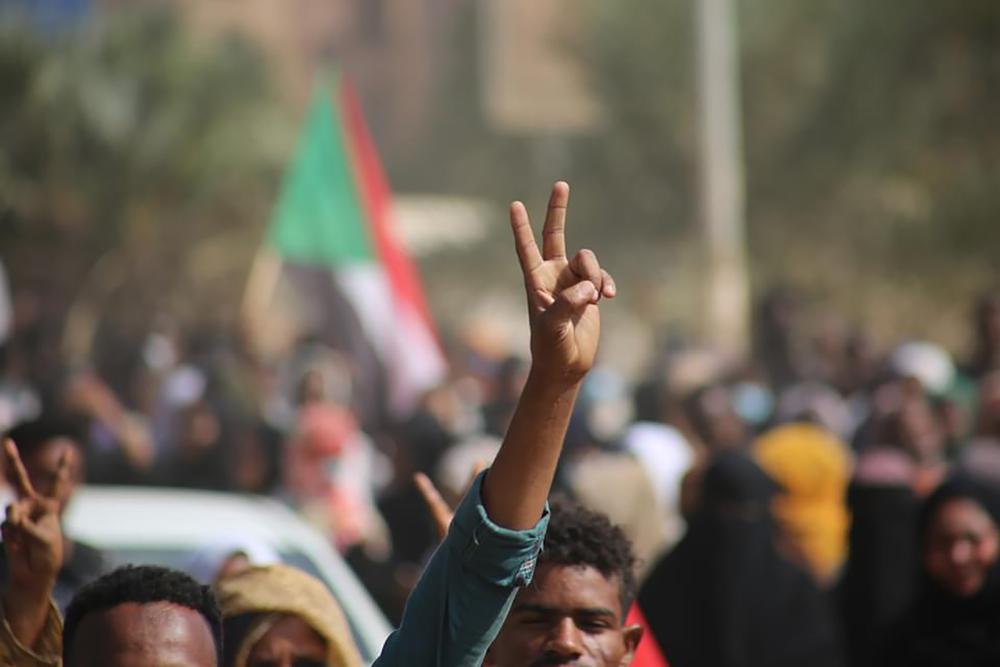
Sudanese citizens celebrate the first anniversary of Bashir’s ouster (Photo: AP)

Since the collapse of former dictator Omar al-Bashir’s regime in 2019, Sudan’s new governing authorities have eagerly sought to restore relations with the international community. A snag in those efforts was the fact that, for decades, Sudan had been designated by the United States as a state sponsor of terrorism. The reason is evident enough: Khartoum was implicated in the bombings of the American Embassies in Kenya and Tanzania and the bombing of the USS Cole in 2000. Bashir also harboured terrorists, most famously Osama bin Laden, the erstwhile leader of al Qaeda. 

Being proscribed as a state sponsor of terrorism by Washington meant that Sudan was a pariah state, one excluded from enjoying the economic benefits of American foreign direct investment. Sudan was also the target of political scorn and economic sanctions. But now Sudan has been removed from the U.S.’ state sponsors of terrorism list. The question is: at what price?

The process of listing and de-listing states for materially contributing to terrorism is a fundamentally political one, rather than one driven by factual or legal analysis. It may not be controversial to see states like Sudan (under Bashir) or Iran listed. But there are states, geopolitical allies of the country, that do not appear on Washington’s list, like Pakistan or Saudi Arabia. As one scholar points out, the “listing of states sponsors of terrorism by the executive branch is at best extraordinarily delicate and difficult, and at worst pure political manipulation.” Once on the list, it is hard to get off. It took Sudan twenty-seven years.

As part of the negotiations to rid itself of this designation, Sudan agreed to pay over $330 million in compensation to the families of victims of the aforementioned bombings on American Embassies in Nairobi and Dar es Salaam as well as the USS Cole. The deal was met with great fanfare by President Donald Trump, who declared: “Once deposited, I will lift Sudan from the State Sponsors of Terrorism list. At long last, JUSTICE for the American people and BIG step for Sudan!”

Not everyone views the deal in such glowing terms, however. Requiring legislative approval, the compensation-for-normalization pact was met with resistance by Democratic Senators and families of victims of the 11 September 2001 attacks. Their concern was that normalizing relations with Khartoum would restore Sudan’s sovereign immunity and thus jeopardize the ability of 9/11 victims to sue Sudan in U.S. courts. The wife of one victim criticized Trump’s deal with Khartoum, declaring that “[t]he White House has been working all year to trade away our rights, in an apparent effort to secure an unrelated diplomatic win.” 

Another concern is that the cost of gaining better relations with Washington is too high for a country in the midst of a precarious transition. Sudan is facing economic, environmental, and humanitarian crises on numerous fronts. Inflation soared past 200 percent last year and some have described the economy as being in “free fall”. As Michelle Gavin, a Senior Fellow for Africa Studies at the Council on Foreign Relations, writes, “for Sudanese people suffering immediate economic hardship and food insecurity, the fact that Sudan has agreed to pay $335 million to compensate victims of the 1998 embassy bombings in Kenya and Tanzania and the 2000 attack on the U.S.S. Cole in exchange for delisting can be a bitter pill.” 

Continue reading
Posted in Reparations, Sudan, Terrorism | 1 Comment