Sarah Gamble, Ela Matthews, and Nushin Sarkarati join JiC for this blog post on the ongoing fight for accountability for war crimes in Liberia. Sarah holds a J.D. from UC Davis School of Law and is a Legal Fellow at the Center for Justice and Accountability. Ela is a Senior Staff Attorney at the Center for Justice and Accountability where she works on building survivor-led accountability strategies for atrocity crimes through U.S. and international litigation and investigations. Nushin Sarkarati is a Senior Staff Attorney at the Center for Justice and Accountability, representing victims of atrocity crimes in pursuing justice through universal jurisdiction in the U.S. and before international bodies.
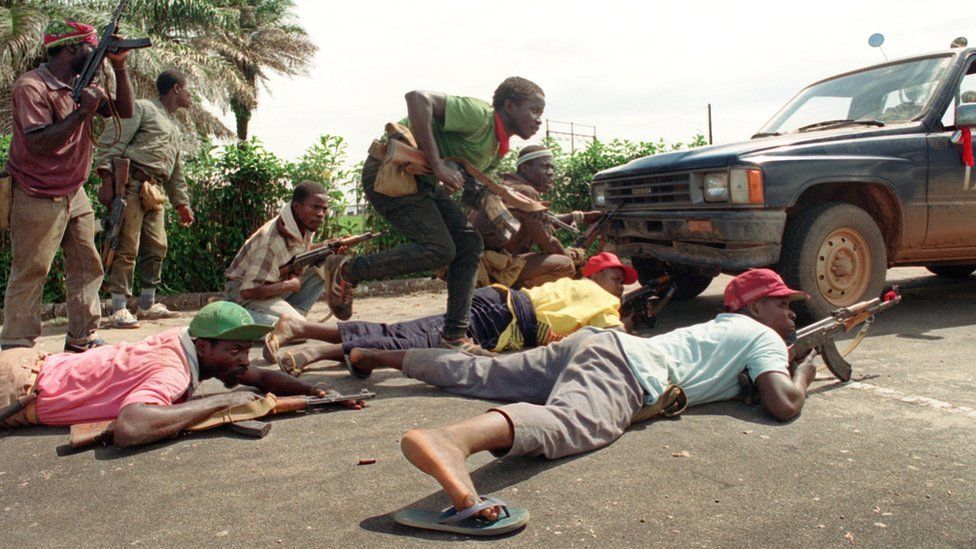
On July 29, 1990, Liberian government forces massacred 600 unarmed men, women, and children in a Red Cross shelter at St. Peter’s Lutheran Church in Monrovia. The Massacre occurred during the first of Liberia’s two bloody civil wars that left approximately 250,000 people dead and was one of the largest attacks against civilians in the history of the conflict. Despite widespread condemnation of the attack, and decades of survivor-led action calling for justice, the Liberian government has failed to investigate and prosecute those responsible.
Tired of waiting for government action, survivors of the Lutheran Church Massacre recently brought a case against the Liberian government before the Economic Community of West African States (ECOWAS) Community Court of Justice, a regional court with jurisdiction over allegations of human rights violations committed by member states. The survivors argue that Liberia’s failure to ensure accountability for civil war era crimes is a breach of its international human rights and humanitarian law obligations. This will be the first time that a court will examine Liberia’s failure to investigate human rights and humanitarian law violations committed during its civil wars. These efforts could have implications on broader movements for domestic accountability for international crimes in the region. This post discusses the lead up to this historic case and why this could be a turning point in the region and in the quest for justice in Liberia.
Accountability Developments and Delays in Liberia
In 2005, Liberia’s legislature established the Truth and Reconciliation Commission (TRC) to investigate the human rights violations that occurred during Liberia’s civil wars. The TRC collected 20,000 statements and heard direct testimony from over 800 Liberians within the country and in the diaspora. Four years later, the TRC concluded in its final report that warring factions from all sides of the conflict were responsible for serious violations of international law, and that members of the government’s armed forces were responsible for the Massacre at St. Peter’s Lutheran Church. The Commissioners recommended that Liberia establish a mixed international and domestic war-crimes court – the Extraordinary Criminal Court for Liberia – to investigate and prosecute individuals accused of war crimes, crimes against humanity, and other serious violations of international humanitarian law, as well as certain domestic crimes, including economic crimes. However, despite calls from survivors, civil society, and even the UN Human Rights Committee, the Liberian government refused to implement the majority of the TRC’s recommendations and failed to implement the necessary legislation to hold perpetrators of atrocity crimes accountable.
The new administration under President George Weah brought a resurgence of hope that the TRC recommendations would finally be enacted because President Weah was not personally involved in the civil wars. Activists renewed their calls to the government to follow through on the TRC recommendations and Liberia’s bar association prepared a draft bill establishing a war crimes court.
This hope culminated on September 12, 2019, when President Weah requested the Liberian Legislature advise him on the process of implementing the TRC’s recommendations. Later that month, while speaking at the UN General Assembly, Weah reported that he was working with the Legislature to create a war crimes court. Despite these promising announcements, the President abruptly changed course. In October 2019, he stated: “why should we focus on the war crimes court now, when we did not focus on it twelve years ago?” Following this statement, the Speaker of the House of Representatives removed the creation of war-crimes court from House’s agenda.
Continue reading