Melissa McKay joins JiC for this guest post on responses to the Residential School atrocities committed in Canada. Melissa is an international criminal lawyer, with experience at the International Criminal Tribunal for the former Yugoslavia and Extraordinary Chamber in the Courts of Cambodia. Currently, with the Center for Human Rights, Gender, and Migration, she is assisting in monitoring the Massaquoi trial. A Canadian settler, she grew up on the traditional territory of the Anishinaabe and Métis People.

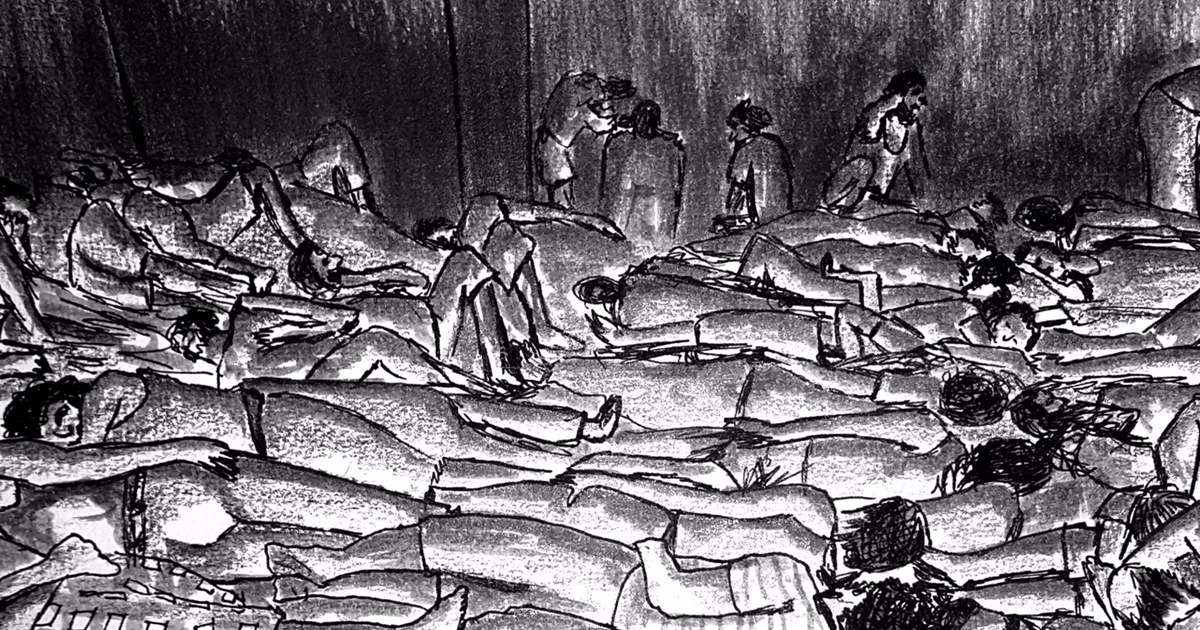
In late May, Tk’emlúps te Secwépemc First Nation announced that as many as 215 children could be buried on the site of the former Kamloops Residential School. Shortly thereafter, Sioux Valley Dakota Nation announcedthat it had identified a possible 104 graves at the former Brandon Indian Residential School. Cowessess First Nation then announced that it had discovered 751 unmarked graves near the former Marieval Residential School, and in late June, ʔaq̓am, a band from Ktunaxa Nation, announced that it had found another 182 unmarked graves near the former St. Eugene’s Mission School. Most recently, the Penalakut Tribe stated that it had identified more than 160 undocumented and unmarked graves near the former Kuper Island Industrial School.
These findings will continue. Canada’s genocidal acts through its residential school system are well known in the oral histories of Indigenous Peoples, and well-documented in Canada’s Truth and Reconciliation Report. The residential school system was implemented by the Canadian government and several different Christian churches and Catholic orders, such as the Missionary Oblates of Mary Immaculate, which operated 48 residential schools across the country, including the above-mentioned Kamloops, Marieval, St. Eugene’s, and Kuper Island. The last residential school closed in 1996, and criminal trials covering the acts that occurred within this genocidal system are too few and far between.
The discovery of these grave sites has amplified the call for intervention through formal justice mechanisms:some individuals have called for the involvement of the International Criminal Court (ICC), while the Native Women’s Association of Canada has demanded charges be laid against the federal government and the churches that operated the schools, and failing that, has indicated a desire to involve the United Nations or the ICC. Others have requested that the Canadian Justice Minister appoint an independent special prosecutor with international observers. The Indian Residential School History and Dialogue Centre has also proposed a mix of domestic and international legal and human rights elements to address the mass graves, including the appointment of a Special Rapporteur.
A crucial starting point for any accountability efforts is the disclosure of the names of the alleged perpetrators. The Truth and Reconciliation Commission had access to names, but its Mandate protected their identities, leaving them off the record and out of history, thereby denying survivors and the general public the opportunity to hold these individuals accountable. Further, in 2016, the federal government spent 1.5 million dollars on private investigators to locate more than 5,000 individuals accused of crimes at residential schools, again, without disclosing names. Nevertheless, through the efforts of Indigenous groups, human rights advocates, and journalists, former priests who took part in the residential school system have been identified, at the very least, in Belgium and France.
It is promising that the Oblates have committed to work with the National Centre for Truth and Reconciliation to expedite access to school records. However, the names of perpetrators must not remain secret. Though some potential perpetrators of these crimes will now be deceased, it is reasonable to assume that some of those that left Canada and returned to Europe are still alive, and that the church orders and the Canadian government know where to find them.
Continue reading