
David Krott joins JiC for this guest post on the nexus between international criminal law and international environmental law. David is as a research assistant at the FH Aachen (Germany) and am PhD candidate at the Vrije Universiteit Brussels, specialising in international environmental criminal law.
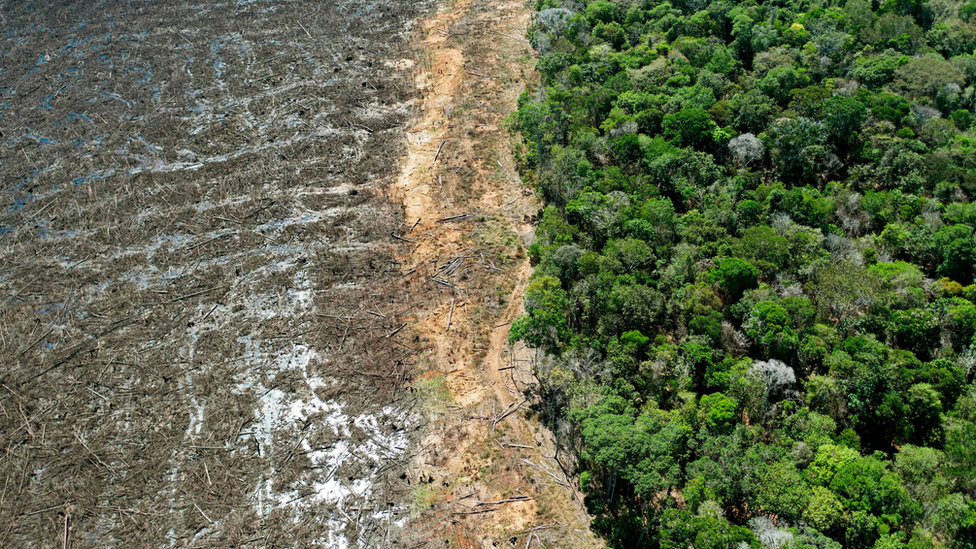
In the light of the growing threat of climate change, a rapidly burning rainforest in South America and South-East Asia, polluted rivers in the Arctic, and other environmental and ecological crises, international environmental law is searching for answers to condemn global environmental harm. Some of those answers might lie within the sphere of international criminal law.
The International Criminal Court (ICC) does not have a distinct legal mandate to look into international environmental harmful conducts. Nevertheless, the pressure to codify the connections between the environment and criminal conduct is growing. This post discusses the nexus between international criminal law and international environmental law, as well as the role that activism and institutions are playing in the developing interplay between these two regimes.
Why the relationship between international criminal law and international environmental law matters
Even though the areas of international criminal law and international environmental law are two distinct areas of international law, they do present close connections. Serious harm to the environment constituted by human action may result in “potential criminal conduct”, such as illegal logging or the illegal disposal of hazardous waste. The resulting destruction of local ecosystems can have major global consequences. This can be outlined by the deforestation of the world’s rainforests in Brazil and several countries across South-East Asia. This not only destroys one of the most vivid ecosystems on the planet but contributes to rising temperatures on a global level. Furthermore, the slash-and-burn method used causes health issues, not only for local inhabitants but also for citizens of neighbouring states.
The earth is constituted of a global net of interrelated ecosystems. Widespread environmental harm or the degradation of ecosystems is inherently transboundary/global. The most vivid example of this interconnectedness of the world’s ecosystems is climate change. The connectivity can be described with the following example: The emission of industrial CO2 in Europe leads to thawing permafrost in the Arctic. This in turn accelerates the release of climate gases into the atmosphere fuelling the melting of the polar ice caps, which results in the potential submersion of whole island nations in the Pacific. The planet’s natural systems are brought out of balance by human activity. These activities might not be criminal per se, but a number of the behaviours in question do bear the potential to be called a crime and even an international crime. An issue here is that the terms of ecocide or international environmental crimes do not have a universally agreed-upon definition. They therefore lack legal consensus. International environmental crimes are more of a collective term for transboundary environmental harm in general (e.g. illegal trade in wildlife, illegal logging, waste handling abuses, whaling or extraction of conflict minerals).
While a commonly agreed international framework governing this delicate area of international criminality remains elusive and there is no distinct “Convention on International Environmental Crime, a growing number of multilateral environmental agreements (MEAs) have come to life that are of relevance to thinking about the relationship between international criminal law and environmental law. Some of the existing MEAs refer to the connection between criminal actions and the environment. For example, the “Basel Convention on the control of transboundary movements of hazardous waste” describes in Article 9 certain transboundary movement of hazardous wastes as “illegal”. The implementation and enforcement of this and similar “criminal” provisions are thus left to the signing parties. Sufficient international oversight in this regard is missing.
Continue reading





 Justice in Conflict