Shoshana Levy is a lawyer in International Criminal Law and International Humanitarian law, expert on transitional justice and on Colombia’s transition to peace. The opinions expressed in this article are solely her own.
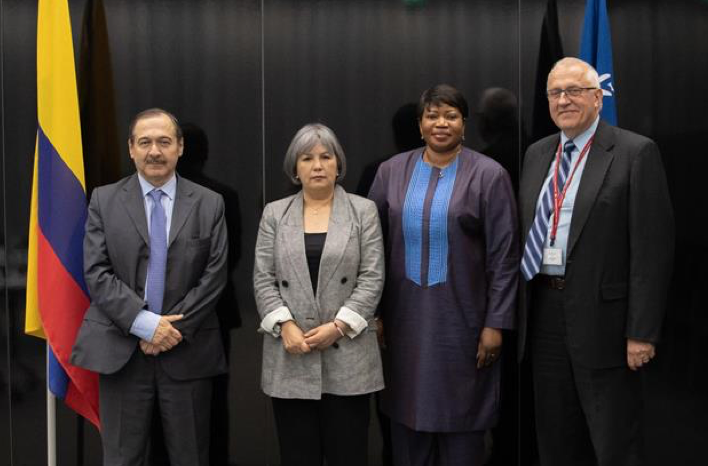
The Special Jurisdiction for Peace (SJP), Colombia’s transitional tribunal was set up to prosecute the perpetrators of crimes committed during the armed conflict between the FARC-EP guerilla and the Colombian government. Its slow pace is raising skepticism among some sectors of Colombian society. Almost three years after its official creation, the SJP has not yet handed down its first sentence. In a deeply polarized sociopolitical context, Colombian President Iván Duque has repeatedly expressed ardent criticism regarding the pace of the SJP, declaring that it “can no longer provide excuses for not acting with greater speed”. But given its mandate and the immense scope of its jurisdiction, is the SJP’s work actually slow?
The widest temporal jurisdiction for a transitional criminal tribunal
The SJP has jurisdiction over the serious Human Rights and International Humanitarian Law violations committed prior to the signing of the Peace Agreement in December 2016 and in the context of the armed conflict in Colombia. The war was one of the longest-lasting contemporary armed conflicts to date.
The outbreak of violence in Colombia was reported in 1948, while the official creation of the FARC-EP guerrilla dates back to 1964. With a temporal jurisdiction covering over half a century of internal armed conflict, this transitional tribunal has by far the most ambitious scope of all courts with similar mandates. In comparison, the International Criminal Tribunal for the Former Yugoslavia (ICTY) was set up in 1993 and covered crimes committed since 1991. As for the International Criminal Tribunal for Rwanda (ICTR), it only examined the crimes committed during the year of the genocide in 1994. Likewise, the Special Court for Sierra Leone (SCSL) had a one-year temporal jurisdiction, and the Extraordinary Chambers in the Courts of Cambodia (ECCC) covered violations committed during the two-and-a-half-year period of Democratic Kampuchea.
In addition, the Special Jurisdiction for Peace does not solely aim to establish individual criminal responsibility. Rather, it seeks to interrogate large numbers of violations and their context, in order to shed light on the patterns of behavior and internal policies of both the FARC-EP and the Colombian military and identify the circumstances that promoted or facilitated them. It is the first time that such a deep and broad analysis has been carried out by the Colombian judiciary, allowing contextual elements to be legally characterized. As a result, “crimes against humanity” and “war crimes” can be named as such, and their perpetrators prosecuted correspondingly.
The SJP has opened seven “macro cases” which, instead of focusing on one specific perpetrator, deal with reiterated patterns of conduct, including kidnappings committed by the FARC-EP (macro case 01), extrajudicial killings and forced disappearances committed by public forces (macro case 03), recruitment and use of child soldiers (macro case 07), systematic targetting of political opponents (macro case 06) and a range of violations committed in specific regions particularly affected by the armed conflict. As of January 2020, the Jurisdiction declared having examined over 60,000 criminal facts within these macro cases.
A transitional tribunal set up to deliver innovative restorative justice
All international criminal tribunals established so far have relied on retributive grounds, where victims’ participation and right to redress were minor. The Peace Agreement signed by the FARC-EP and the Colombian Government on 1 December 2016, one of the most comprehensive peace agreements worldwide, provides for the “centrality of the rights of the victims”. The SJP created by the Peace Agreement is thus fundamentally different from other international criminal tribunals and courts established thus far, as its end is primarily restorative.
Continue reading