
The latest contribution to our ongoing symposium on the next ICC Prosecutor was written by Kate Gibson. Kate has represented accused before the international criminal courts and tribunals since 2005, including as co-counsel for Radovan Karadžic and Charles Taylor, and as lead counsel for Justin Mugenzi before the ICTR. She is currently the co-counsel of Bosco Ntaganda before the ICC, where she also represented Jean-Pierre Bemba between 2009 and 2018.

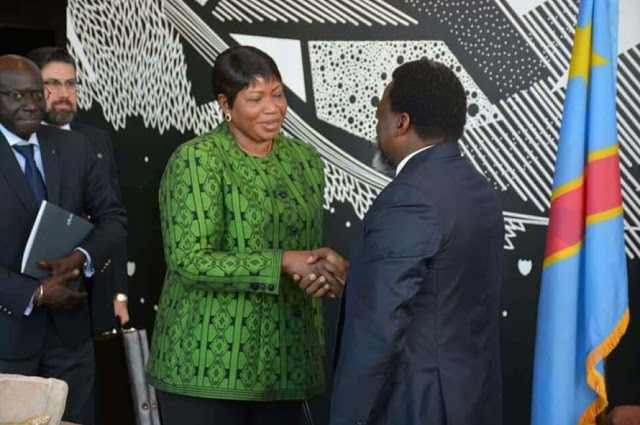
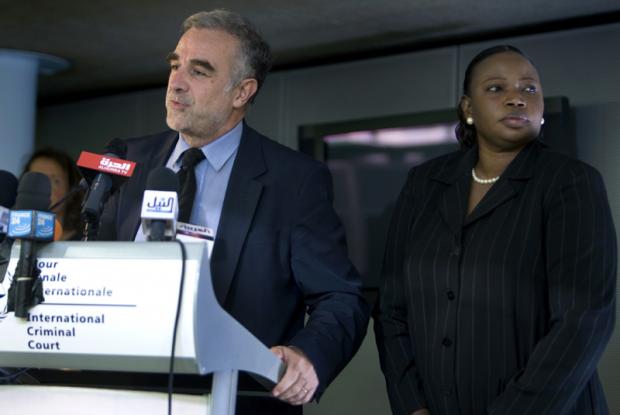
Former ICC Prosecutor Luis Moreno-Ocampo on a visit to the DRC (Photo: ICC)
The perception that the ICC Prosecutor has unfairly – or at least disproportionately – targeted accused from African states is one that Prosecutors Ocampo and Bensouda have been unable to shake. The question faced by their successor is whether she should wade into this debate. Is there anything to be gained by attempting to improve the relationship between the Court and its first (but former) champions? And, if so, how could it be done?
Certainly now in 2020, the relationship between the Court and its African States Parties is less fraught than it once was. The first huge rift appeared in 2009, when Prosecutor Moreno Ocampo failed, but then succeeded, in bringing genocide charges against a sitting head of state, President Omar Hassan Ahmad Al Bashir of Sudan. Almost outrageous in his defiance, President Bashir announced to crowds burning effigies of the Prosecutor that the ICC could “eat” his indictment. Significantly, his claims that the African Union, Arab League, and countries of the Non-Aligned Movement had lined up behind him – and against the Court – was strengthened by his unimpeded travel to Nigeria, Egypt, Ethiopia, Kenya, South Africa, Qatar and China, among others. The silence of African heads of state when the Prosecutor pursued rebel leaders and political opponents, gave way in spectacular fashion when a fellow President was put in the cross-hairs. The narrative of a “’racist” ICC targeting Africans was born, and took hold.
Tensions peaked in late 2016, when it appeared for a period of several weeks that a mass withdrawal of African States Parties was likely. On 19 October 2016, following its rebuke from the ICC for allowing President Bashir to attend the 2015 African Summit in Johannesburg, South Africa notified the UN Secretary General of its intention to withdraw from the Rome Statute. A few days earlier, the Burundian parliament had voted in favour of doing the same. The Gambia, Uganda and Namibia also announced an intention to withdraw. The complaints, which by then ran deeper than the well-worn neo-colonial critique, and the right of sovereign states to prioritise peace over justice, were consistent and virulent.
There is no question that the optics at the time were unhelpful. Nine of the first ten Prosecution investigations had been in African states: the Democratic Republic of Congo (DRC), Uganda, the Central African Republic, Libya, Kenya, Côte d’Ivoire, Mali and Sudan. Only Africans had been detained. Only Africans had been tried. Only Africans had been convicted. And only in 2016 did the Prosecutor open the first situation in a non-African state relating to alleged crimes in Georgia. The comparatively limited number of Prosecution trial attorneys and legal officers who were nationals of African states did not improve this picture. In that context, the “European Court for Africa” label was always going to be difficult to dislodge.
Even had Prosecutor Bensouda wanted to avoid addressing this controversy, it was no longer possible. In the face of direct questions, she attributed the lack of geographical spread in the ICC’s cases to the number of self-referrals from African states in the Court’s early years, and their continued cooperation with the Court to allow successful investigations and prosecutions. For her, claims of racism were “far from the reality”. This echoed, in subtler terms, Prosecutor Ocampo’s stance that allegations of racism were “propaganda” and the focus on Africa was due to the fact that “there were serious crimes there and the leaders requested our intervention”.
Should the next ICC Prosecutor continue down this path and, in particular, continue with this narrative?
Consider first, that the direct engagement by Prosecutors Ocampo and Bensouda did not silence detractors. The position that the Court was doing nothing more than engaging with African states that had engaged with it, was countered with the claim that Prosecutor Ocampo had encouraged these states to refer situations to the ICC (and arrest and produce suspects), as part of an understanding that their leadership would be immune from prosecution. The selective nature of the Prosecutor’s investigations in Uganda and the DRC, which neatly circumvented the cooperating regimes, gave support to proponents of this view. Continue reading



 Justice in Conflict