Rethinking Peace and Justice: A Balancing Act in Ukraine

Sarah Dunne joins JiC for this contribution to our ongoing symposium on ‘Rethinking Peace and Justice‘. Sarah is an independent consultant, with experience in policy and conflict. Be sure to check out the rest of the posts in this symposium here

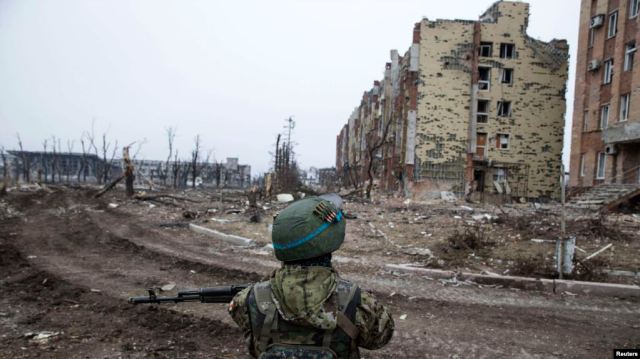
A soldier in Donetsk, Ukraine (Photo: Reuters)

In the context of Ukraine, there is certainly merit to considering flexible approaches to transitional justice (TJ) in order to balance peace and justice, as noted in the IFIT publication. On the issue of amnesty for conflict-related crimes, there has been a tendency to emphasize a punitive approach in Ukraine, which is understandable given the pain caused by conflict. However, jumping to this as a legal policy approach would miss a key step in the process, namely consulting broadly with conflict victims, ideally on both sides of the contact line, about what their needs may be and how to further their rights to truth, reparations, accountability, and guarantees of non-repetition. The agreement for the formal peace process sets out very broad parameters for amnesty, which arguably could benefit from creativity to search for acceptable modalities for the parties who diverge on how far amnesty should go. The issue of international crimes and their exclusion from amnesty, however, is one thing that arguably all conflict parties can currently agree on. This is important in a situation where agreement on any of the political aspects of conflict settlement has been exceedingly difficult to date.

The armed conflict in Ukraine continues, with the two eastern Luhansk and Donetsk oblasts (regions) both divided between territory controlled by the Ukrainian government (government controlled areas or GCA) and areas administered by the Russian-backed so-called Luhansk and Donetsk people’s republics (non-government controlled territory or NGCA). The 2014 and 2015 Minsk Agreements attempted to outline a framework for settling this conflict. Point 5 of the February 2015 Package of Measures addresses amnesty and pardon, proposing to ‘ensure pardon and amnesty by enacting the law prohibiting the prosecution and punishment of persons in connection with the events that took place in certain areas of the Donetsk and Luhansk regions of Ukraine’. Security still remains fragile in eastern Ukraine, with continuing ceasefire violations preventing substantive progress on the political elements of the Minsk Agreements, including amnesty.

Despite this, peace negotiations continue in the Minsk Trilateral Contact Group (Minsk TCG). Overseen by the OSCE, this format includes representatives from Ukraine and Russia, as well as from the NGCA, who meet fortnightly to work out the details of Minsk Agreement implementation. There have been no visible results on the question of amnesty and pardon. Not only is there a lack of full agreement between conflict parties on these issues, but consensus is also lacking within the Ukrainian population and political elite. There will be issues with acceptance if the debate on these controversial topics is only conducted behind closed doors in the formal peace process.

Within Ukrainian society, the level of public discussion has highlighted the sensitivity and controversy around key amnesty and TJ concepts. This stems in part from the fact that armed hostilities in eastern Ukraine are ongoing with continued ceasefire violations and casualties. Additionally, the recently experienced trauma and pain, which is common to any armed conflict, creates resistance to any form of leniency or exemption for those who are perceived to have committed crimes. Arguably in Ukraine, there is a need for more public understanding on the concept of amnesty and related TJ issues, and what it sets out to achieve, with some equating it purely with capitulation.

An additional challenge is that, in the past, those with a hard-line view have tended to dominate and influence the debate. For example, two draft laws registered in 2017 by MPs from the Narodniy Front faction focused on the need to punish collaborationism. One draft involved 12-15 years of criminal responsibility for those who organised and participated in rallies in favour of ‘occupying’ authorities, or for those who called for support for these authorities in public. However, both draft laws were recalled by those that had initiated them in August 2019. There was also a draft law ‘on forgiveness’, which in its latest version was entitled ‘on accountability’. This proposed that those eligible submit a written appeal for forgiveness to a local court. In return they would receive an alternative punishment that may include temporary limitation of their right to vote or right to work for state or local self-government authorities. With regard to one version of the draft law, the number of people this law would cover was estimated at approximately 500,000, applicable to both Donbas and Crimea – a significant number for Ukraine’s judicial system. The need to submit a request for ‘forgiveness’ alone could be seen as problematic to some. Continue reading

Posted in Amnesty, Peace Negotiations, Peace Processes, Rethinking Peace and Justice Symposium, Transitional Justice, Ukraine | Tagged | 1 Comment

Rethinking Peace and Justice: Lessons from the Colombian Transitional Justice Experience

Juan Carlos Botero and Mateo Merchán join JiC for this contribution to our symposium on ‘Rethinking Peace and JusticeJuan Carlos is Associate Professor at the Department of Philosophy and History of Law at the Pontificia Universidad Javeriana School of Law, Bogota, Colombia. Mateo is an Adjunct Professor at the same school.

(Photo: Luis Roboyo / AFP)

The liberal version of transitional justice assumes that the central dilemma of transition is how to transform a society that has been subjected to illiberal rule and the extent to which this shift is guided by conventional tenets of the rule of law and the responsibilities associated with established democracies (Teitel, 2006, p.3). However, “[t]here are many misunderstandings and controversies about the nature of transitional justice. Some believe it is simply a form of criminal justice diluted by the need for transaction and compromise—a kind of ‘criminal justice lite’” (Seils, 2015, p.3).  Presumably, this ‘light’ form of justice would be justified by the society’s need to ‘turn the page’ after devastating violence, as a means to achieve peace, or because of the practical impossibility of securing full accountability. At a time when the International Criminal Court (ICC) is perceived by many as a ‘walking dead’ (Thakur, 2019; Lee, 2018), it seems timely to ask whether the justice resulting from the Colombian peace process was a disappointing form of ‘light’ justice, or if is it rather a promising new model for international criminal justice in the ‘post-ICC’ era of the XXI century?

The Final Agreement for the Termination of the Conflict and Construction of a Stable and Lasting Peace (Final Agreement), signed by the Government of Colombia and the FARC-EP guerrillas in November 2016, created a transitional justice system that seeks to satisfy the rights of the victims of the armed conflict to truth, justice, reparation, and non-repetition (Art. 1. Legislative Act 01 of 2017), while striking a new balance between the conflicting interests of peace and justice (understanding Justice as accountability, retribution, and punishment for grave crimes).

This transitional justice system, called the Comprehensive System of Truth, Justice, Reparation, and Non-Repetition (SIVJRNR), encompasses three mechanisms: The Truth, Coexistence and Non-Repetition Commission (CEV); the Search Unit for Persons Presumed Disappeared in the context and because of the armed conflict (UBDP) and the Special Jurisdiction for Peace (JEP), the latter being the mechanisms to prosecute and punish those responsible for the most serious crimes committed in the context of the armed conflict (Art. 5. Legislative Act 01 of 2017).

Transitional justice systems, as the Colombian one, often face limitations stemming from the exceedingly complex contexts of violence in which mass atrocities are perpetrated (Duthie and Seils, 2017). In fact, there is no country that has made a transition where each perpetrator of human rights violations has been prosecuted (De Greiff, 2012, p. 35).  In this context, the Final Agreement proposes a new balance between the demands of justice and peace through the prosecution of the most serious and massive crimes from a restorative rather than a retributive (punitive) justice approach. Restorative justice encompasses a diverse set of values, aims, and processes that have as a common factor attempts to repair the harm caused by criminal behaviors when victims, community and offenders meet to decide how to repair the damage caused (Hoyle, 2010, p. 9).

“Both retributive and restorative theories of justice acknowledge a basic moral intuition that a balance has been thrown off by the wrongdoing. Consequently, the victim deserves something and the offender owes something. Both approaches argue that there must be a proportional relationship between the act and the response. They differ, however, on the currency that will fulfill the obligations and right the balance. Retributive theory believes that pain will vindicate, but in practice that is often counterproductive for both victim and offender. Restorative justice theory, on the other hand, argues that what truly vindicates is acknowledgment of victims’ harms and needs combined with an active effort to encourage offenders to take responsibility, make right the wrongs and address the causes of their behavior. By addressing this need for vindication in a positive way, restorative justice has the potential to affirm both victim and offender and help them transform their lives.” (Zehr and Gohar, 2003, p. 59). Continue reading

Posted in "Peace versus Justice" Debate, Colombia, Rethinking Peace and Justice Symposium | 3 Comments

Online Symposium: Rethinking Peace and Justice

Over the next week, JiC will be hosting an online symposium on ‘Rethinking Peace and Justice’. The contributions to the symposium explore the pursuit of peace and endeavours to achieve justice and accountability for atrocities and human rights violations. They also respond to a recent report, by the same title. The rolling introduction was written by Mark Freeman, of the Institute for Integrated Transitions.

(Image: Ana Taban / BBC)

The Institute for Integrated Transitions (IFIT) is pleased to partner with Justice in Conflict for this online symposium addressing the ideas covered in IFIT’s recent publication: Rethinking Peace and Justice. This publication is the first of a three-part IFIT series on contemporary challenges of transitional justice, and aims to provoke an overdue discussion in the mediation and human rights fields on the benefits of adopting a less ideological approach to balancing peace and justice.

The publication’s primary authors, Louise Mallinder and Ron Slye, demonstrate that flexible approaches to justice, particularly as part of negotiated transitions out of armed conflict, have received increased recognition in international law and policy in recent years. Drawing on state practice and policy, the publication explains how carefully designed legal leniency measures can play an important role in helping societies to move beyond violent pasts; and how negotiation techniques and process design can take advantage of the flexibility international law allows in order to balance peace and justice.

In order to promote peer discussion on the publication’s central arguments, we invited a number of international experts to write short reflection pieces of their own. These will be posted over the course of the week. Following that, Louise Mallinder and Ron Slye will offer a concluding reflection.

We sincerely hope Justice in Conflict’s readership enjoy this special symposium.

Posts include:

Rethinking Peace and Justice: Lessons from the Colombian Transitional Justice Experience, by Juan Carlos Botero and Mateo Merchán

Rethinking Peace and Justice: A Balancing Act in Ukraine, by Sarah Dunne

What Justice is to be Required before Aid to Syrian Reconstruction?, by Stephen Rapp

Balancing Peace and Justice in Negotiated Transitions from Conflict in Asia, by Galuh Wandita

Peace versus Justice, Round 10,000? Nah. Some Options for the International Criminal Court, by Mark Kersten

“Rethinking Peace and Justice” Symposium: Concluding Reflections, by Ron Slye and Louise Mallinder

Posted in "Peace versus Justice" Debate, Peace Negotiations, Peace Processes, Rethinking Peace and Justice Symposium | Tagged | 2 Comments

The Next ICC Prosecutor: A Product of Geography – A Response

The following guest-post, a response to Kevin Jon Heller’s contribution to our symposium on the Next ICC Prosecutor, is by Dhruv Sharma. Dhruv is an advocate in India and was a Chevening Cambridge Trust Scholar from 2018-19.

(Photo: ICC)

The Symposium hosted by Opinio Juris and Justice in Conflict on the next ICC Prosecutor produced some great scholarship highlighting the necessary qualifications and virtues expected of the Prosecutor while also setting the expectations of the stakeholders interested in the Court’s work, and its processes.

The present post is a critique of Professor Kevin Jon Heller’s contribution to the Symposium, where he seeks to highlight the need to appoint the next ICC Prosecutor from a P-3 State (USA, UK, or France) in order to incentivise cooperation from such powerful State(s).

The Argument

Heller’s article offers three arguments. Firstly, that appointing a Prosecutor from a P-3 State will “invest the Prosecutor’s home state in the ICC’s success, making the state more likely to support and cooperate with the Court”. At the outset, the appointment of such a Prosecutor would, at best, ensure cooperation from that particular State which may get invested in workings of the ICC. Heller places excessive reliance on the role of an individual as an international actor and seems to hope that decades of foreign policy shall potentially change based on the position and persuasion of that individual. This argument is presumptive of State behaviour as, clearly, the presence of a French and a UK Judge at the Court has not had a similar effect. However, as illustration, let us consider current US behaviour towards internationalism. The US has, in the past four years’, effectively locked down the WTO, withdrawn from the Iran Nuclear-Deal, and notified the UN of its xwithdrawal from the Paris Agreement. Against this background, Heller hopes for cooperation from such State merely on the basis that one of its nationals leads an Organ of a Court to which it is not even a party. Conversely, this incentive for a State to cooperate can be turned on its head to argue a potential bias on part of the said Prosecutor in favour of the Home State (or its Global North allies). It is perhaps helpful to reflect upon the axiom that, “while there are neutral countries, there are no neutral men”.

Secondly, Heller states that a Prosecutor from a P-3 State would improve neutrality and decrease allegations of bias. Even if the allegations of a “rogue prosecutor” let loose by the ICC decline, this argument would again prevent one scenario when the Prosecutor goes against her own State provided that the relevant State does refrain from making such allegations. In the past one year, leaders from the P-3 States have publicly gone against their own foreign representatives (here and here) and their P-3 allies (here and here). Expecting cooperation from a State owing to the appointment of a Prosecutor from an ally state is naïve at best, and deceptive at worst. Further, the symbolism constraining the powerful states faces a counter symbolism of bias and neo-colonialism. Most, if not all, discussions of bias and the ICC have been directed towards the Court’s particular gaze over Africa (hereand here), as a result of which one State has withdrawn from its Membership of the ICC, and two others almost withdrew from the Court (here and here). A Prosecutor from a P-3 State would not resolve this legitimacy crisis, and instead intensity allegations of bias against the Court, albeit from the Global South.

Thirdly, that the appointment of a Prosecutor from the P-3 would ‘obviously’ enhance the support of the Security Council. One must note that the Security Council is only as strong as its weakest link and better support depends entirely on all five States not exercising their veto power. It is worth remembering that the Council has, in the past, suffered from a deadlock over referral of even the allies of the P-5 States to the ICC, let alone the States themselves. The argument seeks heightened support from States who while setting up the world’s first international military tribunal conveniently brought only the individuals from the losing States to justice. The appointment of a Prosecutor from the P-3 would only amplify the scepticism of the remaining veto States towards the enhanced influence of one State at the ICC. Continue reading

Posted in ICC Prosecutor, International Criminal Court (ICC), International Criminal Justice, Next ICC Prosecutor, Next Prosecutor Symposium | Leave a comment

The ICC Assembly of States Parties’ Selection Process for the Third ICC Prosecutor

The following post on the Next ICC Prosecutor is by Charles C. Jalloh and Sabine Nölke. Jalloh is Professor of Law, Florida International University and Member, International Law Commission. He is Chair of the Panel of Experts on the Election of the Prosecutor. Nölke is the former Ambassador of Canada to the Kingdom of the Netherlands (currently Chargée d’affaires of Canada to Ireland) and Chair of the Committee on the Election of the Prosecutor. The views expressed by the authors are personal and not attributable to any entities with which they may be affiliated. This essay is dedicated to the memory of Felipe Michelini, Chair of the Board of Directors of the ICC’s Trust Fund for Victims, who passed away following a tragic accident as this piece was being finalized.

(Photo: Adam Mørk / ICC)

As Chairs of the ICC Assembly of States Parties Committee and Panel of Experts on the Election of the Prosecutor, we have read with interest the thoughtful articles in the recent symposium on “The Next ICC Prosecutor.” As the conveners rightly stressed in their introduction, “the choice of the next Prosecutor will have a profound effect on how well – or how poorly – the Court functions for the next eight years. Simply put: the ASP has to get this right.” We could not agree more. And, judging by the concrete actions the ASP has taken to establish a competency-based search process for the ICC’s crucial third Prosecutor, the States Parties to the Rome Statute also want to “get this right.”

There were several thoughtful contributions to the symposium. However, even though we did not agree with some of the articles, little was said about the innovative process that the ASP put in place to assist in ensuring that competence, rather than politics, guides the process of identifying the best candidate to succeed to the world’s most important prosecutorial position in June 2021. A review of what is actually being done may be of assistance to those ICC watchers outside The Hague who may not have followed the ASP-mandated process in detail.

The Establishment of the Committee on the Election of the Prosecutor and the Panel of Experts

Deliberations on the outlines of a competency-based selection process for the next prosecutor began in the ASP Bureau under President O-Gon Kwon in July 2018. Following rounds of consultations between Bureau members and States Parties, a formal decision containing the Terms of Reference for two ASP created bodies was adopted on 11 April 2019. They mandated the establishment of two bodies: 1) a Committee on the Election of the Prosecutor (“CEP”); and 2) a Panel of Experts (“PoE”).

Membership of the Committee and the Panel of Experts on the Election of the Prosecutor

The ASP, following nomination by regional groups and based on consensus, appointed the members of the two bodies early last summer. The CEP membership was agreed by the States Parties and the ASP on 6 June 2019, as follows:

  1. Ambassador Marcin Czepelak (Poland);
  2. Deputy Permanent Representative Lamin Faati (The Gambia);
  3. Ambassador Andreas Mavroyiannis (Cyprus), subsequently named Vice-Chair by the CEP;
  4. Ambassador Sabine Nölke (Canada), subsequently named Chair by the CEP;
  5. Ambassador Mario Oyarzábal (Argentina).

The agreement on the PoE followed on 19 June 2019, with the following members, again nominated by the regional groups and agreed by the Bureau:

  1. Francisco Cox Vial (Chile);
  2. Aurélia Devos (France);
  3. Charles C. Jalloh (Sierra Leone), subsequently named Chair by the POE;
  4. Motoo Noguchi (Japan);
  5. Anna Richterova (Czech Republic).

The positions are not remunerated, and although basic travel expenses are offered for in person meetings, participation in the CEP and the PoE constitute pro bono service to the ICC.

The Role of the Committee and Panel of Experts on the Election of the Prosecutor

The CEP plays the lead role. It was entrusted, under paragraph 9 of the Terms of Reference, with the responsibility to “facilitate the nomination and election of the next Prosecutor.” It is representative of the five regional groups of the ASP. Crucially, the members “serve in an individual and independent capacity,” not as representatives of their governments or other interests. Indeed, they are not allowed to “seek, or act on, instructions from any external source.” (Paragraph 4).  The CEP’s role is similar, not identical, to that of the Search Committee which the ASP created in the 2011 search for the ICC’s second prosecutor. Improvements from the last round were incorporated.

The PoE is required “to assist the Committee in carrying out its mandate.” The membership of the POE, which is comprised of independent experts with “extensive national or international criminal investigation, prosecution or judicial experience,” is also drawn from each of the five regional groups. (Paragraphs 7, 15). The creation of the POE represents the most “significant innovation”, and aims at ensuring that only the most qualified professionals are presented to States Parties for (s)election.  Members also act in their private capacity. While the PoE shall assist the CEP in an “advisory capacity” only (paragraph 10), the division of labor foreseen in the Terms of Reference essentially creates a rigorous two-level vetting system. Continue reading

Posted in Assembly of States Parties, ICC Prosecutor, International Criminal Court (ICC), International Criminal Justice, Next ICC Prosecutor, Next Prosecutor Symposium | Leave a comment

Between Continuity and Renewal: ICC Office of the Prosecutor, 3.0

Sergey Vasiliev joins JiC for this guest-post on the future of the Office of the Prosecutor of the International Criminal Court. Sergey is an Assistant Professor at the Department of Criminal Law & Amsterdam Center for International Law, University of Amsterdam. 

The International Criminal Court (Photo: ICC)

OTP transition in context

The world that the ICC will be navigating as its third Prosecutor makes a solemn undertaking in 2021 will be a less hospitable place than it was in 2012 when the current holder of the office commenced her mandate. The era of ‘global cosmopolitanism’ to which international criminal justice has owed its revival and ascent since early 1990s is a matter of nostalgic past. Even before the current pandemic crisis, the international climate was hardly conducive to multilateral projects; it will likely get even less so. As States Parties attend to more pressing matters, their commitment to the Court is pushed to the side and seemingly on the wane. The sluggishness and paucity of reactions (11 by my count) to the US Secretary of State Pompeo’s latest series of insults against the ICC and threats to OTP staff and their families may indicate as much.

Time will show whether this dynamics can be reversed. But there is no doubt that the incoming Prosecutor will be facing skyrocketing expectations and diverging demands as well as political and operational challenges of a different magnitude than nine years ago – without a commensurate growth in resources and political backing. OTP 3.0 will need to step up its investigative and prosecutorial game across situations (which are likely to multiply) while reckoning on no more than nominal or lukewarm support by States Parties at best — and having to put up with their foot-dragging and recalcitrance at worst. It will also be expected to make headway in the ‘no-go’ situations of Georgia, Afghanistan and possibly Ukraine and Palestine; all implicating major powers and their satellites from among states not party which are hostile to the Court.

To wade its course in these perilous waters, the Office will need all the resilience, courage, and creativity it can muster. It would be amiss to discard the ‘lessons learned’ over the past eighteen years, although that experience is no silver bullet to overcome the obstacles the Prosecutor will face; nor should it fetter the maneuverability that mission requires. The incoming principal should not only build upon whatever warrants preservation in the Office  but also apply surgical solutions to spearhead the necessary changes. The key task will be to strike the right balance between continuity and renewal in OTP structure, strategies, practices, and culture. The only transition in the Office so far provides limited experiential knowledge for the third Prosecutor to fall back on. In due course, the ongoing Independent Expert Review will offer some guidance as part of its work on issues within Clusters 1 and 3. The lessons that can be gleaned from the OTP’s second term will certainly prove instructive.

OTP 2.0: Continuity…

In some respects, continuity has been the OTP’s default modality during the second Prosecutor’s tenure. Consider the continuity of case docket and of staff, which are interrelated variables. Before she took the helm of the Office, between 2004 and 2012, Fatou Bensouda served as Prosecutor Moreno Ocampo’s Deputy in charge of prosecutions. As such, she played an important role in strategic planning and decision-making during that period. This is when some of the ‘problem cases’, which would later come to haunt her office as ‘failures’, materialized: Kenyan cases (charges withdrawn or no case to answer acquittal), Bemba (acquittal on appeal), and Gbagbo and Blé Goudé (no case to answer acquittal; appeal pending). Although it is said sometimes that Bensouda ‘inherited’ them from her predecessor, it is more accurate to see them as being as much of her own.

Other than the Katanga (controversial) conviction, much of the first half of the Bensouda term was consumed by the unraveling of the Kenyan cases and ultimately futile attempts to salvage them; the second half was marked by the high-profile acquittals of Bemba and Gbagbo and Blé Goudé. To balance this off, one should mention the convictions of Al Mahdi and Ntaganda (appeal pending), as well as the recently completed Ongwen and the ongoing Al Hassan and the Yekatom and Ngaïssona trials – the cases which with the exception of Ntaganda and Ongwen can be ascribed exclusively to Bensouda’s tenure. Otherwise, as others noted, the Office under her tenure brought only a few cases to the Court. It is not that Bensouda’s Office stuck to her predecessor’s formula positing the lack of cases at the ICC as a measure of its success. Rather, the ‘too few cases’ critique should acknowledge that this was not for the lack of trying. Several cases she initiated—e.g. Mudacumura (DRC) and Khaled and Al Werfalli (Libya)—did not progress further due to States’ failure to arrest and surrender suspects.

That said, the fact remains that OTP 2.0’s docket has consisted largely of cases arising from the first term. Concomitantly, OTP 2.0 has been characterized by a high degree of staff continuity vis-à-vis the first-term OTP. The time after Bensouda assumed office was opportune for carrying out a comprehensive internal review of the OTP strategy and evidence in the ongoing cases. A critical appraisal of the organizational structures and competence levels of the senior OTP staff should have also taken place. However, that does not appear to have happened. This personnel policy served to reinforce the OTP’s ‘path dependency’ in respect of the investigative and prosecutorial approaches which had been adopted in those cases. While it is true that new highly competent and committed staff members were recruited into all of the three Divisions, many on the senior and intermediate management level continued serving in their positions or were promoted. While being perhaps a special case, it is notable that the Head of the Investigation Division has occupied this position since 2006. Continue reading

Posted in ICC Prosecutor, International Criminal Court (ICC), International Criminal Justice, Office of the Prosecutor | Tagged | Leave a comment

Vindicating Rights and Ending Impunity: Palestine, Statehood, and the International Criminal Court

Pearce Clancy joins JiC for this guest post on the International Criminal Court and the question of Palestinian statehood. Peace is a Legal Researcher for Al-Haq, a Palestinian human rights organisation, and holds an LL.M in international law from the Irish Centre for Human Rights.

(Photo: BBC / Reuters)

On 16 March 2020, amicus curiae briefs were submitted to the International Criminal Court (ICC) arguing whether the ICC’s jurisdiction in Palestine encompasses the West Bank, including East Jerusalem, and Gaza. According to Article 12(2) of the Rome Statute, which sets out the scope of the Court’s territorial jurisdiction, statehood is established as a prerequisite:

“… the Court may exercise its jurisdiction if one or more of the following States are Parties to this Statute …:

The State on the territory of which the conduct in question occurred …”

Having acceded to the Rome Statute, Article 12(2)(a) should therefore allow for the Court to be conferred by Palestine, with the necessary jurisdiction satisfied for the Prosecutor to open an investigation into international crimes committed within Palestinian territory. But some do not consider Palestine to be a State, and thus object to the applicability of Article 12(2)(a) in the first place. While a number of amici were submitted to this effect, the brief submitted by Professor Malcolm N Shaw provides perhaps the most concise and striking representation of this position, and thus serves as a useful reference point for efforts to thwart an ICC investigation in Palestine.

Recognition and the Right of Self-Determination

Shaw contends that “[t]he determination of statehood is one of the key functions of international law.” So much so, he asserts, that a lack of “precision and certainty in this critical task” may not be excused (para 6). Seemingly in recognition of the impossibility of determining statehood in the context of Palestine with the precision of a box-ticking exercise, however, Shaw further notes that the so-called normative criteria of statehood found in Article 1 of the Montevideo Convention may be supplemented by recognition and the principle of self-determination (para 17).

In essence, Shaw argues that only two types of recognition are sufficient to supplement a lack of effective territorial control as the determining factor of statehood: United Nations (UN) membership (para 18-19), and the “widespread recognition of leading states representative of the international community” (para 18). Moreover, the right of self-determination has been recognised by the International Court of Justice (ICJ) as a fundamental norm of the international legal system, which creates obligations on all States to bring the illegal situation to an end. Shaw is aware of this, and notes that this right creates a choice as to how a subjugated people may organise politically (paras 21, 33). What is not appreciated is that this choice has been made by the Palestinian people, who have decided to organise in the form of a State of Palestine.

It is not the possibility of statehood as a result of self-determination which is contested; instead, Shaw links the attainment of statehood to recognition, either by what he deems to be “important” States, or through UN membership. This is best illustrated through his use of the examples of Bangladesh (para 19) and Guinea-Bissau (para 22), the statehood of which were only conclusively affirmed following their admission into the UN (i.e. recognition by the Security Council), and that of Kosovo, which “remains controversial” due to not attaining UN membership, nor recognition by “important States” such as Serbia, Russia, China and India (para 19). For Palestine, however, Shaw goes further, mirroring the official Israeli position, and suggests that the journey towards statehood is of a somewhat sui generis character which must be concluded through an agreement with Israel (para 34). Continue reading

Posted in Guest Posts, ICC Prosecutor, International Criminal Court (ICC), International Criminal Justice, Israel, Palestine, Palestine and the ICC | Tagged | 1 Comment

The Next ICC Prosecutor Must Embody Integrity in the #MeToo Era

This post by Danya Chaikel originally appeared at Opinio Juris as part of our symposium on the Next ICC Prosecutor. Due to the urgency and immediacy of the issues raised in it, I have decided to publish at JiC as well. Danya is an international lawyer who has worked for 15 years across several international criminal courts, tribunals, NGOs, professional bodies and the UN. She is the Secretary of the International Bar Association’s War Crimes Committee and coordinated the International Association of Prosecutor’s Forum for International Criminal Justice for nine years. She began her career in The Hague at the ICC in 2010 in the Investigation Division of the Office of the Prosecutor and later worked for the ICC Presidency and Secretariat of the Assembly of States Parties.

The ICC Prosecutor is first and foremost a leader, who needs to stimulate a work culture that empowers personnel in a safe and supportive environment – so that they can investigate and prosecute with excellence. Not only must the next ICC Prosecutor effectively tackle all forms of misconduct, they must also have a clean record.

In December, the ICC Staff Union Council called on States Parties to give full meaning to the provisions on high moral character of elected officials, including judges and the next Prosecutor, stating that unethical behaviour has “already shown to negatively affect the wellbeing and health of the staff of the Court.” I have also read a 2018 Staff Union report which details an unpublicised survey of 128 staff members – 48.4% of respondents said they had been victims of at least one of the following at the ICC: discrimination, (sexual) harassment, abuse of authority or misconduct. The results also showed low levels of reporting.

The #MeToo movement has thrust these issues into the mainstream, and we are coming to grips with how widespread harassment and mistreatment are within the legal profession and international institutions. The discussions have focussed on sexual misconduct against women who are disproportionately affected, and now the conversation is broadening to cover a range of unethical behaviour across genders, from the minor to the egregious, such as: inappropriate jokes, sexually suggestive comments, threats, abuse of authority, racism, homophobia, gaslighting, sexual assault and other forms of violence.

States Parties should conduct a thorough assessment of the final 6 candidates

Recent civil society campaigning on the upcoming election has focussed on how an assessment of the next Prosecutor’s “high moral character” must take into account past sexual (and other) misconduct. An OSJI article I was quoted in led to a woman approaching me for help with her sexual misconduct complaint, about one of the likely ICC Prosecutor applicants. Her attempt to tell her story is still unfolding, as we know how incredibly daunting it is to make such a claim against a senior member of the international criminal law field. Over the past few months, she’s written that her “stress level was super high”, she feels “stupid to be afraid” and that she will be depicted as “asking for it”. Her fear is palpable.

I mentioned the challenge of supporting this woman to an ICC staff member who warned this could play into the hands of ICC naysayers to further discredit the institution. This is part of a culture of denial – something I have witnessed numerous times in The Hague, and also when my own sexual harassment claim was silenced, as a lawyer in Canada.

The main reason this woman has not yet disclosed her name and full claim to the Committee on the Election of the ICC Prosecutor is because they do not have a comprehensive procedure to process such complaints. The uneven power dynamics in terms of gender, status, wealth and age in this claim are clear. Understandably the woman assumed there would be a procedure providing her protection from retaliation, or a potential defamation lawsuit. She has also made it clear that the due process of the applicant should be upheld so her claim is fairly considered.

The Committee takes these issues seriously and has indicated its willingness to accept credible information. While praiseworthy, this is not enough when the stakes are high, and few people have the courage to come forward. After the longlist of 16 candidates are interviewed by the Committee, States Parties still have the chance to assess the final six candidates before the election of the next Prosecutor. Even though the Committee’s mandate will come to an end, there is still time for States Parties to conduct thorough background checks and to facilitate a fair, transparent and safe procedure for complaints. Continue reading

Posted in #MeToo, ICC Prosecutor, International Criminal Court (ICC), International Criminal Justice, International Law, Justice, Next ICC Prosecutor, Next Prosecutor Symposium | Tagged | Leave a comment

What to Look for in the Next ICC Prosecutor

Alex Whiting joins us for this latest contribution in our ongoing symposium on the Next ICC Prosecutor. Alex is the Head of Investigations at the Specialist Prosecutor’s Office. He is also a Harvard Law School Professor of Practice, former ICC and ICTY prosecutor, former Assistant U.S Attorney and criminal civil rights division prosecutor. Be sure to check out Priya Pillai’s contribution to the symposium over at Opinio Juris!

(Photo: ICC)

The contributors to this symposium will likely agree that the ICC has failed to live up to expectations and that changes are required, urgently. They will also likely share the view that the primary mission of the ICC is to prosecute those most responsible for the crimes of genocide, crimes against humanity, and war crimes, consistent with due process norms and the rights of the accused. But how to achieve this goal? In selecting the next Prosecutor, the selection committee and Assembly of States Parties (ASP) will have to think about the strategy for change proposed by each candidate, as well as how his or her profile is suited to the task.

With respect to strategy, there may be differing perspectives on what constitutes success for the ICC. However, I will suggest one measure that should be fundamental to anybody’s approach. The ICC needs cases, meaning successful cases. More of them. Without more successful cases, none of the hopes for the ICC — deterrent, expressivist, symbolic — will be achieved. It is not enough to begin preliminary examinations or open investigations. It is not enough to make speeches or threats, issue reports, or embrace ambitious strategies. It is not enough to bring charges, if in the end nobody is arrested. The ICC is not a naming and shaming organization. It is a judicial institution that can only succeed if it has accused persons in the courtrooms. Empty courtrooms, and the ICC fails, by any measure.

That cases are essential to the ICC’s existence might seem like an obvious point, but in fact getting cases, let alone successful ones, has been a central challenge throughout the ICC’s existence. Since it came into force nearly 18 years ago, only four persons have been convicted of the ICC’s core crimes (Lubanga, Katanga, Al Mahdi, and Ntaganda, the last one currently on appeal). The trial of another accused (Ongwen) has just been completed, and the case against two others (Gbagbo and Ble Goude) was dismissed by the trial chamber, a result now under challenge by the prosecution. Two other cases (Al Hassan and Yekatom/Ngaissona) are awaiting trial. And that’s it. Having a nearly empty pipeline of cases threatens the relevance of the ICC. Without trials, states will see the institution as a failure and a waste of money, victims will become disillusioned, and potential accused will not take it seriously.

So how can the ICC get more cases? The selection committee and ASP should ask each prosecution candidate this question. The answer should begin by a commitment that every single activity by the Office of the Prosecutor (OTP) will be oriented to this goal. Every meeting, every trip, every investigative step, every staff person. The new Prosecutor should announce that if it’s not about getting more cases, he or she does not want to hear about it.

Second, the Prosecutor will have to take steps to improve the effectiveness and efficiency of the prosecution’s investigations by examining investigative strategies and priorities, methods, decision-making processes, organizational structures, staff profiles, and performance. Much of what affects the success of ICC investigations and prosecutions is outside of the court’s control, but the institution can and must do better. More on this point below.

Third, the Prosecutor should accept that in some cases it is more important to bring cases against mid-level commanders responsible for serious crimes who can be brought to The Hague, rather than high-level actors who are beyond the court’s reach. Sometimes this debate has been framed as a choice between an ambitious court and a modest one. But that is a false choice. The court has to be both. It should always aim to prosecute those most responsible and pursue those cases when it can. It should never abandon this ambition. But it must also be modest in assessing what is possible with the tools it has and in the environment in which it operates. It is not a super court, and it will not succeed by pretending to be one. If it focuses on investigations in situations or against persons where it cannot succeed, only the court will be blamed, and only the court will suffer the consequences (along with the victims whose interests will be left unvindicated). There will be no glory in failure. Continue reading

Posted in ICC Prosecutor, International Criminal Court (ICC), International Criminal Justice, Next ICC Prosecutor, Next Prosecutor Symposium | Tagged | 1 Comment

ICC Prosecutor Symposium: The Prosecutor’s Commitment to Ensuring Gender Equality

The latest contribution in our ongoing symposium on the Next ICC Prosecutor comes from Valerie Oosterveld. Valerie is a Professor at Western Law in London, Ontario. Her research and writing focus on gender issues within international criminal justice. In 1998, she was a member of the Canadian delegation to the UN Diplomatic Conference of Plenipotentiaries on the Establishment of an ICC. In 2010, she served on the Canadian delegation to the Review Conference of the Rome Statute of the ICC in Kampala, Uganda. Be sure to also check out Danya Chaikel’s piece on the #MeToo movement and the Next ICC Prosecutor.

Survivors of sexual and gender-based violence who received psychological rehabilitation support through the Trust Fund for Victims’ assistance programme in Bukavu, South Kivu province, eastern Democratic Republic of the Congo (Photo: ICC)

The Vacancy Announcement for the position of ICC Prosecutor indicates that candidates should have a range of experiences, skills and attributes, including a “commitment to … ensuring gender equality”. This particular aspect of the call for applications goes far deeper than a stated dedication to ensuring prosecution of sexual and gender-based violence (SGBV) crimes.

A commitment to ensuring gender equality has two crucial aspects.

First and foremost, the ICC’s Prosecutor must possess a solid understanding of the term ‘gender’ and its meaning for the substantive work of the Office of the Prosecutor (OTP). Gender is a social construct that differs from place to place, and even within cultures. Societies have overt or implicit (sometimes discriminatory) expectations of what ‘femaleness’ and ‘maleness’ means. As the OTP’s 2014 Policy Paper on Sexual and Gender-Based Crimes observes, the term ‘gender’ takes into account the “roles, behaviours, activities, and attributes assigned to women and men, and to girls and boys” in given societies. During times of heightened violence and the breakdown of the rule of law, these categories can shape who is targeted, who does the targeting, and in what manner. Those considered to fit the ‘maleness’ social construct in their society may be targeted for death, different forms of torture (including sexual torture), and particular types of physical forced labour. Those considered to fit the ‘femaleness’ social construct may be targeted for rape, sexual slavery, forced marriage, forced caregiving and forced domestic labour. Those who are viewed by perpetrators as not fitting into either social construct, such as LGBTQ+ or disabled individuals, may be targeted for specific humiliation and death. In other words, gendered assumptions by perpetrators about victims can inform almost every aspect of crimes committed during a conflict or mass atrocity.

Similarly, a society’s gender constructs can enhance, or overlook, harm done to victims. For example, a highly patriarchal society with deeply embedded discrimination against girls and women may react to sexual violence committed against its female members by rejecting survivors, further deepening the negative effects of the crimes. Perpetrators may count on these socially embedded responses to ensure the destruction of communities. At the same time, these girls and women may be narrowly categorized as ‘sexual violence victims’, even though their lived experiences are far more nuanced as survivors of a wide range of crimes directed at them, their family, and communities.

Harmful, incorrect or uninformed gendered assumptions can replicate themselves in the ICC’s investigations and prosecutions (and have done so in the past). These assumptions can, and have, unnecessarily limited investigations, prosecutions and judgments. This is why the OTP’s Policy Paper on Sexual and Gender-Based Crimes indicates that the OTP must take a “gender perspective” on investigations and prosecutions. Despite a very rocky start, the ICC’s OTP has made significant improvements since 2014, under Fatou Bensouda, in integrating gender into its working methods. The Policy Paper mentioned above was a significant step and was the first policy of its type in any international court or tribunal. The OTP’s 2019-2021 Strategic Plan recognizes the need to stay the course in implementing this policy. Strategic goal 4 indicates that the OTP will continue to refine and reinforce its approach to SGBV victims, among others, and “evaluate the implementation and effectiveness of these policies in practice”.

In other words, it is a fundamental job requirement that the ICC’s Prosecutor have a firm understanding of gender as a social construct, how gender informs and interacts with mass atrocities, and gender-sensitive justice response to those atrocities.

A second key aspect to a commitment to ensuring gender equality is that the Prosecutor must be a gender-competent leader and manager within the ICC. As a leader, the Prosecutor is not only the top prosecutor among many prosecutors; that individual is a leader who has the power to set and maintain the gender-sensitive tone and focus of the office, model appropriate behaviour, create policy and ensure that policy is practice. As a manager, the Prosecutor should ensure that s/he has in place gender-competent individuals throughout the OTP, including at the highest levels, to guide the work of the office. As indicated by the Women’s Initiatives for Gender Justice, this requires attention to gender mainstreaming, appointment of senior staff responsible for gender equality and the empowerment of female staff, support for the appointment of a Court-wide Gender Focal Point, gender balance in the OTP’s staff, ongoing training of OTP staff (including the Prosecutor) on gender issues, and an office culture in which gender analysis is standard from preliminary examinations through to appeals. Continue reading

Posted in ICC Prosecutor, International Criminal Court (ICC), International Criminal Justice, Next ICC Prosecutor, Next Prosecutor Symposium | Tagged | 2 Comments