
Lesley-Ann Daniels joins JiC for this post on the role of the International Criminal Court in the ongoing struggle for peace in Colombia. Lesley-Ann is a post-doctoral researcher at the Barcelona Institute for International Studies (IBEI). Her doctoral thesis examined the effects of amnesty on civil wars termination and her research interests are civil war and post-conflict peacebuilding. This is the fourth piece in JiC’s ongoing symposium on peace and justice in Colombia. You can find links to all of the contributions here.
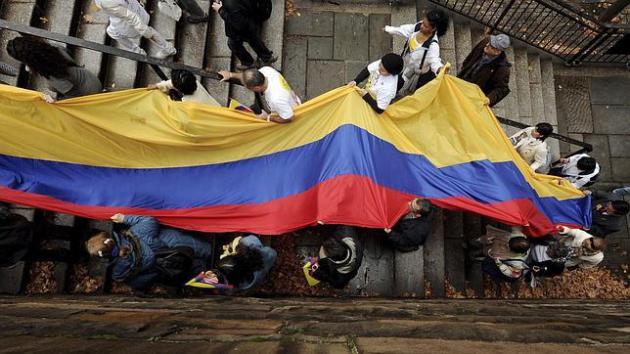
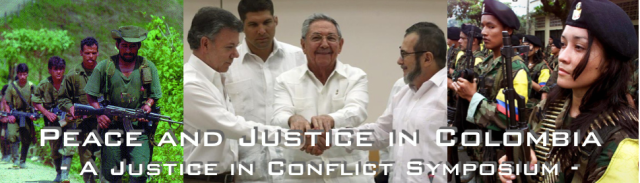
(Photo: ABC)
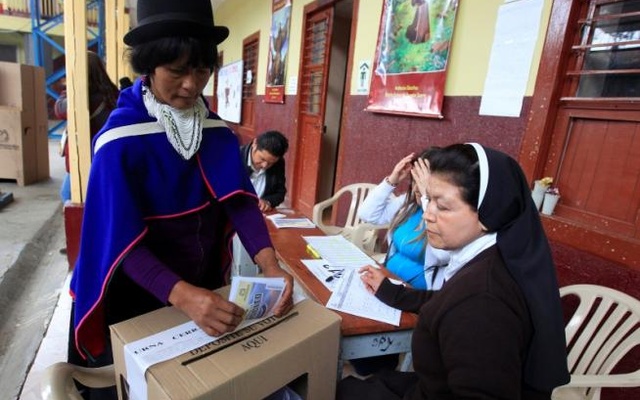
On 4 October, the people of Colombia voted on whether to support the peace agreement signed only a few weeks previously by President Santos and the FARC rebel group leader, known as Timochenko. The peace accord had the potential to end a conflict that has lasted 52 years and resulted in a quarter of a million dead and many millions displaced, and it earned President Santos the Nobel peace prize.
While a popular referendum on the accord was not necessary, Santos had been promising for many years to put any agreement to a popular vote, as a way to ensure buy-in and gain legitimacy for the agreement. In the end, it was the government who lost, with a paltry turn-out (37.41% of the voters) and a wafer-thin majority rejecting the agreement (50.2% against). In the midst of the anguish and soul-searching, some themes are emerging that try to explain the defeat. One is that old favourite of peace versus justice. Voters in Colombia did not feel that “criminals” should be rewarded with “injustice, money and political representation”.
The question that remains is why the idea that justice will be sacrificed for peace still has so much resonance in a world where the International Criminal Court (ICC) exists, and especially in a country that is a state party to the Rome Statute. Surely, with the ICC as the backstop of international criminal justice, voters should be sure that anyone guilty of war crimes, crimes against humanity or genocide will end up in court. Voters should have felt reassured that either the deal meets ICC requirements (in order to avoid a post-agreement ICC intervention) or that the deal did not meet ICC requirements, in which case they could rely on the ICC to intervene. Why was the threat of ICC action not enough to reassure voters that rebels would face justice, even if the government was prepared to make concessions?
If the ICC is going to work anywhere, it should work in Colombia. The country has a long-standing support for international norms. For example, Colombia jealously promotes its reputation for signing international treaties and following international norms – “we are not some pariah”. Also, Colombia has a strong track record of conforming with rulings against it at the Inter-American Court of Human Rights. This is important because the ICC has no independent enforcement powers and much of its effects are through moral traction.
Furthermore, the ICC has had its eye on Colombia for some time; the Office of the Prosecutor (OTP) opened a preliminary examination in 2004, which makes Colombia one of the earliest and longest-running cases at the court. A preliminary examination is the step before opening a formal investigation; however, a case need not move forward to that next stage. The OTP will not act if the crimes are being sufficiently investigated by national authorities, and the maintenance of an open preliminary examination has enabled the OTP to keep up this pressure on the Colombian government and justice system. Continue reading

 Justice in Conflict