
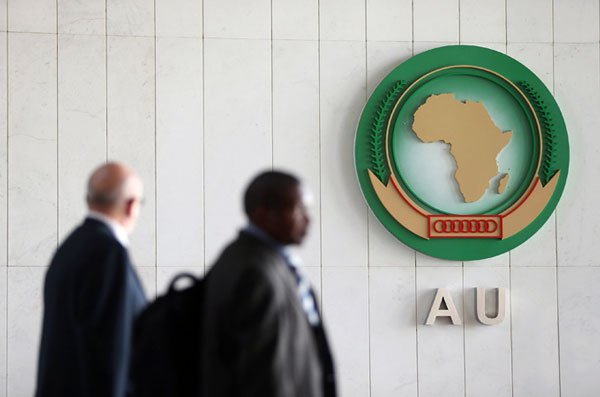
(Photo: ICFR)
The relationship between the International Criminal Court (ICC) and African states is coming under renewed scrutiny at the 27th African Union Summit, currently taking place in Kigali, Rwanda. The outcome of the summit for ICC-African relations will be determined over the coming weeks, but various civil society actors and pro-ICC advocates have been doing whatever they can to improve the relationship between the Court and continent. The Africa Group for Justice and Accountability (AGJA)* is one of those groups. Over the weekend, the AGJA published an important and balanced op-ed in The Guardian (as well as other news outlets) on its view of the ICC-Africa relationship. The op-ed acknowledges the leadership of African states on matters of justice for mass atrocities and insists that all sides can do a better job and need to take responsibility for accountability on the continent. Moreover, it calls those African states who insist they support the ICC to stand up and speak up. For those interested, here’s a snippet:
In popular accounts, Africa and the international criminal court are pitted against each other. The ICC is derided as being “biased” against Africa, ignorant of the attitudes and desires of Africans, even neocolonial.
In reality, the relationship suffers from misinformation and misunderstandings. Many parties share responsibility for this. Some African leaders have, on occasion, decried the ICC in order to protect themselves from the court’s scrutiny.
Equally, the ICC has not been able to communicate its message effectively on the continent, leaving it susceptible to misrepresentation by those who seek to undermine the institution.
Some insist that the ICC has no place in Africa and that African states must withdraw from the court because the institution has intervened primarily in African conflicts, while situations outside the continent are not investigated. However, it makes little sense to suggest that because justice cannot be served everywhere, justice should not be served anywhere. Such an attitude insults victims and survivors alike.
Why has the ICC focused its investigations almost exclusively on Africa? Well, can anyone argue that the situations in Africa where the court has opened official investigations – northern Uganda, the Democratic Republic of the Congo, Central African Republic, Darfur, Sudan, Kenya,Libya, Ivory Coast and Mali – are not deserving of an ICC intervention?
…
Never before has so much been done on the African continent to achieve accountability for international crimes. We welcome the trial of Hissène Habré in Senegal, Central African Republic’s plan to set up a special criminal court, South Sudan’s proposed hybrid tribunal, and the expansion of the jurisdiction of the African Court on Human and Peoples’ Rights to include international crimes.
While none is perfect in itself, these and other recent developments point to a continent with the potential to take a leadership role in international criminal justice, if its leaders keep their pledges.
…
The ICC must do a better job of responding to overt attempts to politicise its mandate. It must not only do justice, but be seen to be doing justice by being more effective, robust and responsive.
African states are friends of the ICC. African states have continued to refer situations to the ICC. Africans hold the most senior positions in the court. African states fund the institution.
Many African officials and diplomats say they have no intention of leaving the Rome statute system. We call on these governments to speak loudly and courageously in the fight against impunity – both in Africa and beyond.
You can read the whole op-ed, here.
* Full Disclosure: I am the Research Director of the Wayamo Foundation, which acts as the secretariat for the AGJA.



 Justice in Conflict
Luis Moreno-Ocampo (Photo: Jerry Lampen / Reuters)
One of the most rewarding aspects of writing in the public domain is the feedback and commentary it generates — even, perhaps especially, when it’s critical. In response to my earlier post on former chief Prosecutor Luis Moreno-Ocampo’s record at the International Criminal Court (ICC), a few commentators have replied that there is far more that needs to be included for any accurate judgement to be made of the first decade of the Court’s existence than Moreno-Ocampo’s role alone.
Errol Mendes, a professor of law at the University of Ottawa, for example, commented that “while I agree with much of what you say, the failures of the ICC [are] also due to lack of co-op[eration] by states, UN etc.” I completely agree and should have clarified that the original post was not intended to produce an authoritative account of all of the reasons that explain the troubles the ICC faced in its first decade, but rather to assess one part of that record: the role and responsibility of the chief Prosecutor. There are no doubt structural constraints and limitations that the ICC confronts — and JiC posts raise them regularly, certainly far more often than commentary on Moreno-Ocampo — but the ICC is the type of institution that is deeply affected by the personalities at its helm. Moreno-Ocampo’s tenure is a case in point.
The initial blog post also generated an important and insightful comment from Wanda Boker, who worked as Moreno-Ocampo’s outreach advisor at the ICC from 2003-2004, in defence of Moreno-Ocampo’s tenure. Like Mendes, Boker is absolutely correct in her argument that any authoritative account of the failings (and, I would add, successes) of the ICC must look beyond attempts to discredit Moreno-Ocampo. Her comment deals with the alleged failures of ICC investigators and other staff to understand the situations they were working as well as the wider context in which the Court functions. Boker’s response is important and should be highlighted. So here it is, in full and without edit: