Impunity for Crimes against Migrants: How and why Italy ruined the best chance to bring accountability for atrocities committed against refugees on the Mediterranean

Refugees on a boat crossing the Mediterranean sea in 2016 (Photo: Wiki Commons)

The biggest concern for advocates of international law and justice this week was supposed to be the Trump administration’s incoming sanctions against the International Criminal Court (ICC). But then came the bombshell news that Italian authorities had arrested an ICC suspect only to release him and send him back to Libya on board an Italian secret services aircraft. With this appalling decision, Italy has just scuppered the best chance to address atrocities committed against migrants and refugees on the Mediterranean. How could this happen?

Here is what we know so far.

Libyan national and militia Osama Elmasry Njeem attended a Juventus-Milan football match in Italy last Sunday after arriving in the country by car, via France. The day before the game, the ICC issued a sealed arrest warrant for Njeem on charges of crimes against humanity and war crimes, including murder, torture, rape and sexual violence. The charges stem from Njeem’s alleged crimes committed in Libya since 2015 in the notorious Mitiga Prison, which Njeem is reportedly in charge of as part of Libya’s “Judicial Police”. According to the ICC, the crimes were committed against detainees for “religious reasons”, “immoral behaviour” as well as their support for other armed groups. Many of those imprisoned at Mitiga are migrants and refugees.

In line with Italy’s legal obligations as a member-state of the ICC, Italian anti-terrorist authorities arrested Njeem in his hotel room after the match. They asked ICC officials not to make any public pronouncements over the arrest, so the Court stayed quiet. But an Italian court decided to release Njeem, citing “procedural irregularities”. Authorities swiftly organized his transportation back to the Libyan capital of Tripoli. Media were alerted to his release twenty minutes after his flight left a Turin airport. How any irregularity could possibly require Italy to send home someone wanted on charges of war crimes and crimes against humanity has not been revealed.

Njeem arrived back in Libya where a crowd of men greeting him and celebrated his escape from justice. According to a statement by the ICC, Njeem was released “without prior notice or consultation with the Court,” and Italy has yet to explain its actions. One Italian Member of European Parliament has demanded answers: “The government must provide explanations, and they should do so especially for prisoners held in Libyan concentration camps.”

Continue reading
Posted in ICC Prosecutor, Immigration, International Criminal Court (ICC), International Criminal Justice, Libya, Libya and the ICC, Migration, Osama Elmasry Njeem, Refugees | Tagged | Leave a comment

The Time is Nigh – It’s up to states to save the International Criminal Court

The International Criminal Court (Photo: Mark Kersten)

If you listen carefully, you might be able to hear the applause of wanted war criminals, despots, and dictators around the world.

The passing of a bill imposing sanctions against the International Criminal Court (ICC) in the United States’ House of Representatives should be of concern to all countries that believe in a rules-based order. The sanctions pose a significant, perhaps even existential, threat to the world’s only permanent tribunal capable of prosecuting war crimes, crimes against humanity, and genocide. Will states stand up to support the very Court they created?

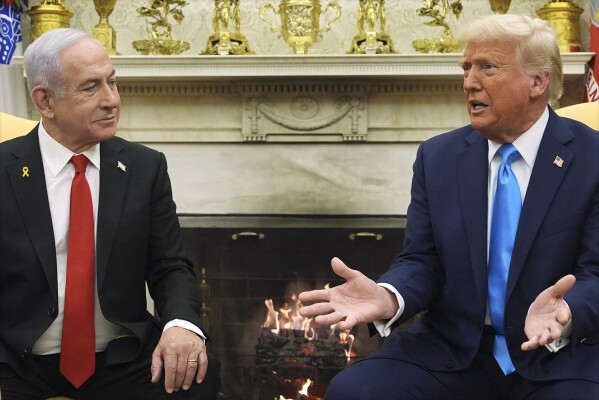
While they do not come as a surprise, America’s sanctions against the ICC will come into effect in the coming weeks. The purported reason for these coercive measures is that the Court has defied the interests of the United States, especially by investigating alleged war crimes and crimes against humanity committed by Israeli forces in Palestine as well as the Court’s decision to issue arrest warrants for Israel’s Prime Minister Benjamin Netanyahu and former Defence Minister Yoav Gallant.

But this is not the first time that Washington has sanctioned the ICC; it did so towards the end of President Donald Trump’s first term, in 2020. Indeed, the latest sanctions fit within a long-standing effort by Republican administrations to destroy the Court, beginning with the presidency of George W. Bush. What really seems to get their goat is that the ICC does not simply do America’s bidding. In that way, the incoming sanctions are something of a compliment: they indicate the independence and impartiality of the ICC, as well as its refusal to kowtow to narrow state interests that oppose accountability for mass atrocities.

The sanctions are aimed at the ICC as an institution, its staff and their family members, and those who provide material, financial, or technological support to the Court’s work in Palestine. Human rights advocates have rightly condemned the sanctions and the threats against the ICC’s independence and will continue to do so. But there is only so much they can do. The Court’s members states – including close allies of the United States – need to defend the ICC.

What does that look like? 

Continue reading
Posted in ICC Prosecutor, ICC Sanctions, International Criminal Court (ICC), Sanctions, United States | 2 Comments

A Return to Universal Jurisdiction? Canada reverses course, charges alleged ISIS fighter with War Crimes

Mr. Ahmed Eldidi and his son appear in court earlier this year (

In a major policy reversal, the Canadian government has decided to prosecute an alleged perpetrator of war crimes committed abroad in its own courts. Ahmed Eldidi has been charged by Canadian authorities with multiple war crimes, all relating to his apparent involvement in the torture and killing of an Islamic State detainee in northern Iraq. While questions still loom, this is an opportunity for Canada to do its part in achieving justice for victims of international crimes.

Mr. Eldidi was charged with the war crimes of murder, mutilation, torture, and outrages upon personal dignity under the Crimes Against Humanity and War Crimes Act of 2000. Thanks to the principle of universal jurisdiction, all of these crimes can be prosecuted in Canadian courts – even when they were committed abroad. The allegations stem from an ISIS propaganda film called “Deterring Spies”, which investigators believe shows Mr. Eldidi hacking the hands off a crucified detainee in northern Iraq.

Before the announcement that Mr. Eldidi would be prosecuted, Canada’s last universal jurisdiction case concluded in 2013. As I have explained before, the preference of Conservative and Liberal governments in Canada since then was to deport alleged war criminals out of the country while doing nothing to ensure they would subsequently be held to account. This is true despite the Department of Justice announcing in 2016 that at least 200 perpetrators of international crimes resided in Canada (the Department has since stopped publishing statistics on the topic).

So, what changed?

First, Mr. Eldidi’s alleged crimes were caught on camera. Open-source data is increasingly used in prosecuting war crimes – including by ISIS in countries like Sweden and The Netherlands. Canadian authorities were likely encouraged by the fact that they are not inventing the wheel in using open-source evidence to prosecute war crimes and, critically, that the cost of prosecution would be minimized if the video played a leading role in prosecuting Mr. Eldidi. 

Continue reading
Posted in Canada, Iraq, ISIS, Syria, Universal Jurisdiction | Leave a comment

The International Criminal Court is facing an existential challenge from the United States. How does it survive it?

(Cartoon: Bruce Petty)

The world’s only permanent international tribunal mandated to prosecute war crimes, crimes against humanity, and genocide is facing its greatest challenge to date. With the incoming Trump administration and sanctions looming over the Court and its staff, a simple question looms: can the International Criminal Court (ICC) survive the next four years?

I ask this question after attending the Assembly of States Parties of the ICC, the yearly diplomatic conference of the Court’s member states. The gathering took place as dark clouds gathered – both figuratively and literally – over The Hague, where the ICC is headquartered. Sanctions are coming, and maybe sooner than later. 

It has emerged that the U.S. may not wait for Trump to be inaugurated before sanctions are issued. Instead, Republicans may attach sanctions to the National Defense Authorization Act, the bill that lays out Washington’s yearly defence budget and expenditures.  

The hope among proponents of the Court is that the sanctions will target senior officials at the Court and not the Court itself. The ICC can withstand sanctions against a few of its staff. But if the sanctions are issued against the institution, they are likely to have a much larger – and worse – impact. How could ICC investigators and officials travel? How would the court pay its staff if the banks and financial institutions it uses fear being found uncompliant with the sanctions? Could judges even use Microsoft Word to write their judgements?

Continue reading
Posted in ICC Prosecutor, International Criminal Court (ICC), International Criminal Justice, Israel, Palestine, Palestine and the ICC, United States | Tagged | 1 Comment

A window of opportunity for justice in Syria: Tracking Assad’s fleeing torturers and preparing for prosecutions

This image has an empty alt attribute; its file name is tempimagedhthsz.jpg
A person steps on the dismantled bust of former Syrian President Hafiz Assad (Photo: Hussein Malla/AP)

The list of atrocities committed since Syria’s civil war erupted in 2011 is almost endless. Every core international crime – war crimes, crimes against humanity, and genocide – has been perpetrated in a conflict that also left one-in-five Syrians living outside of the country. Diplomats have said the evidence of crimes committed in Syria is the strongest since the trials of Nazis at Nuremberg. With President Bashar al-Assad escaping to Moscow following a “perfectly timed rebel offensive” and thousands of his supporters as well as his henchmen fleeing the country, now is the time to deliver justice – in the courts of the countries they are running to and at the International Criminal Court (ICC) in The Hague.

When regimes collapse, the first thing officials and state authorities implicated in atrocities do is pretend to be someone else. Some try to save themselves by insisting they were opposition figures all along, or officers who were just trying to challenge the regime and mitigate its brutality from the inside. 

Others know that attempting to do so is futile; there’s too much blood on their hands. They change stripes and clothes, quite literally, to present themselves as innocent civilians. They hastily marshal whatever resources and assets they have and look for a quick exit, preferably to locations with diasporas where they can blend in. As they jump ship, these officials – many of whom are also perpetrators – create opportunities to hold them to account. 

How do we find them before they slip away and manage to disguise themselves among unsuspecting communities?

Continue reading
Posted in ICC Prosecutor, International Criminal Court (ICC), open source investigations, Syria, Universal Jurisdiction | Tagged , , | Leave a comment

Hear me out: The case for Canada to refer itself to the ICC over Residential School Crimes

(Photo: Canadian Press)

It might sound bizarre to some. Canada referring itself to the International Criminal Court (ICC) for crimes against humanity? Isn’t the ICC supposed to be going after the likes of Vladimir Putin? Who would they even investigate? Is this all just a ploy for attention?

No. Hear me out. There is a case to be made that Canada should ask the ICC to investigate alleged atrocities committed by Canadian authorities in the Indian Residential School System. That case was put forward by Kimberly Murray, the Special Interlocutor for Missing Children and Unmarked Graves and Burial Sites associated with Indian Residential Schools, in her final report. It has since been endorsed by national chief of the Assembly of First Nations Cindy Woodhouse Nepinak.

As some readers will know, I was involved in writing the Special Interlocutor’s Report, working for Murray’s office from 2022-2024. The proposal for Canada to refer itself to the ICC deserves serious consideration, and not the all-too-common dismissal we see whenever Indigenous communities ask that actual, meaningful accountability be delivered for Residential School crimes and atrocities committed against Indigenous Peoples in Canada more generally.

The fact is that some crimes committed at Residential Schools may fall within the ICC’s jurisdiction.

The Court has jurisdiction over the crime against humanity of enforced disappearances. This crime occurs when a person’s liberty is deprived – via arrest, abduction or some other kind of force – by agents ordered or supported by the state. They are placed outside of the protection of the law. Whether the person survives captivity or not, they disappeared. Those responsible then conceal their fate, leaving relatives to wonder what happened to their loved ones, whether they are dead or alive, and if they will ever return. 

All of these things happened to the Indigenous children, on a widespread and systematic scale. As a matter of Canadian policy, the children were taken by state agents – often the RCMP – and forced into Residential Schools where they weren’t permitted to leave. Thousands never returned home. Thousands perished. Thousands are buried in unmarked graves. Their disappearances have still not been addressed.

This is the crime against humanity of enforced disappearances.

Still, the ICC only has jurisdiction over crimes committed after it became a functioning institution, on 1 July 2002. So, how could the Court investigate the disappearances of children if the last Residential School closed in 1997?

Continue reading
Posted in Canada, Enforced Disappearance, Enforced Disapperances, Indian Residential School System, International Criminal Court (ICC), International Criminal Justice | 2 Comments

The ICC has issued arrest warrants for Netanyahu and Gallant. What’s next?

Dear readers,

Last Thursday was a good day for justice and accountability, one that many thought would never come or believed was even possible.

I therefore thought some might be interested in this interview that I did with Al Jazeera English’s The Take on the International Criminal Court’s warrants for Israel’s Prime Minister Benjamin Netanyahu and Yoav Gallant along with Hamas’ Mohammed Diab Ibrahim Al-Masri (Deif):

While I noted in the interview that I thought that Netanyahu and Gallant would be allowed to visit the United Nations, I am also keen to hear the views of others on this subject.

Given that the United States would likely welcome both, what would happen if Netanyahu entered the premises of the UN to attend, for example, the UN General Assembly next year? Even if the UN sought to enforce the warrant, who would do so on behalf of the UN? Would it be practically possible given where the premises of the UN are located?

I also recommend this article over at Just Security, by Tom Dannenbaum, Nuts & Bolts of the International Criminal Court Arrest Warrants in the ‘Situation in Palestine’

As always, thank you for tuning in and your readership!

Posted in Benjamin Netanyahu, International Criminal Court (ICC), International Criminal Justice, Israel, Palestine, Palestine and the ICC, Yoav Gallant | Tagged , , , | 1 Comment

Seeing through the Fog of Justice in Israel and Palestine: Dispelling false claims about the ICC

A version of this article originally appeared in E-International Relations.

(Photo: EPA-EFE/REX/Shutterstock)

As is often said, the first casualty in war is the truth. Misinformation, disinformation, and propaganda are commonplace in the context of armed conflicts, as warring sides and their allies attempt to secure narratives conducive to their wartime aims. No contemporary conflict has been as rife with untruths than the conflict in the Middle East, a reality that extends to ongoing efforts to address the mass atrocities committed in Israel and Palestine. In what follows, I dispel some popular but false claims about the work of the International Criminal Court (ICC), its investigation into the situation in Palestine, and the warrants that have been requested by the Prosecutor for Israeli officials.

Firstly, there is the issue of jurisdiction. Israel, the United States, and a few other states have cast doubt on whether the ICC has jurisdiction over Israeli officials. According to them, the Court cannot exercise jurisdiction over citizens of Israel because Israel has never joined the ICC. Others, like former Canadian Justice Minister Irwin Cotler, a staunch defender of Israel, has attempted to argue that the ICC has jurisdiction over Palestinian citizens, but not Israeli ones. These claims are false.

The ICC has jurisdiction over both Israeli officials and Palestinian leaders. In 2015, Palestine became a member-state of the ICC. That same year, the Court opened a preliminary examination into the situation in Palestine. In 2021, judges determined that the ICC Prosecutor therefore has jurisdiction over Gaza and the West Bank, including East Jerusalem and an official investigation into the situation in Palestine ensued. 

Because Palestine is a state before the ICC (and a state recognized by 149 of 193 UN member states), the Court has jurisdiction to investigate any citizens of Palestine, irrespective of where their atrocities are perpetrated. The Court also has jurisdiction over any atrocities committed on Palestinian territory, irrespective of the nationality of the perpetrators. As a result, the ICC has jurisdiction over Hamas and the crimes its fighters committed in Israel even though Israel is not an ICC member-state, and the Court has jurisdiction over any Israeli perpetrators of mass atrocities committed in Gaza and the West Bank. Suggestions to the contrary are not only incorrect but represent efforts to interfere with one of the only avenues for accountability in a situation rife with credible allegations of war crimes, crimes against humanity, ethnic cleansing and genocide.

Continue reading
Posted in ICC Prosecutor, International Criminal Court (ICC), Israel, Palestine, Palestine and the ICC | Tagged , , , , | Leave a comment

Justice for the Missing and Disappeared: A landmark report on the ongoing need for accountability for the atrocities committed against Indigenous children in and by Canada

The release of the Final Report of the Office of the Independent Special Interlocutor for Missing Children and Unmarked Graves and Burial Sites associated with Indian Residential Schools

Dear JiC readers,

In late October 2024, The Office of the Independent Special Interlocutor for Missing Children and Unmarked Graves and Burial Sites associated with Indian Residential Schools released its final report and submitted it to the government of Canada.

As the title of the office suggests, the report by Special Interlocutor Kimberly Murray examines the abuses committed against Indigenous children in the Indian Residential School System, including through scientific experimentation, enforced disappearances, and other serious human rights violations and potential crimes against humanity. Among the report’s conclusions is that Canada has done more to protect perpetrators of atrocities against Indigenous children than the children themselves.

These harms will be known to many readers who have learned of the presence of thousands of unmarked burials across Canada as well as findings of genocide in Canada by the National Inquiry on Missing and Murdered Children as well as the House of Commons.

I was given the opportunity to work with the Office on this report from late 2022 until the Spring of 2024. My efforts focused on applying international human rights law and international criminal law to the abuses and horrors faced by Indigenous children. It also endeavoured to articulate how impunity in Canada is systemic and structural as the atrocities committed against Indigenous peoples, via the existence of “settler amnesty”. In the end, four chapters describe how international human rights law and international criminal law apply and help us to better understand the nature of the horrors committed through the Indian Residential School System:

  • Chapter 2: The Enforced Disappearances of Children and Crimes Against Humanity
  • Chapter 3: Unmarked Burials and Mass Graves
  • Chapter 4: Experimentation and Other Atrocities Against Indigenous Children
  • Chapter 5: Settler Amnesty and the Culture of Impunity in Canada
Continue reading
Posted in Amnesty, Canada, Crimes against humanity, Genocide, Indigenous Peoples, International Criminal Court (ICC), Torture | Tagged , , , , , , , | Leave a comment

Canada should Recognize Palestine, Now: My Speech to the House of Commons Standing Committee on Foreign Affairs

Dear JiC readers: I had the honour and opportunity to present my views to the Canadian House of Commons’ Standing Committee on Foreign Affairs and International Development on 29 October. A video of my testimony – and that of others, including Ambassador Jon Allen and law professor Ardi Imseis is available here. In case of interest, I have also shared the text of my speech below. – Mark

Thank you, Mr. Chair.

There is no reason for Canada to wait to recognize Palestine. It is time.

Palestinian statehood is a legal fact. 146 out of 193 United Nations member states currently recognize Palestine. Our allies – Sweden, Ireland, Ukraine, Norway, and Spain – all recognize Palestine.

But not Canada. Why?

Let me take this opportunity to dispel some arguments that have been put forward against immediate recognition.

First, some claim that Canada should not recognize Palestine because doing so would go against our NATO and G7 allies.

But Sweden, Norway and Spain are NATO members. So too are Poland and Czechia. All recognize Palestine. G7 countries like Japan and France have likewise moved closer to recognizing Palestinian statehood. The only G7 state to oppose the May 2024 UN General Assembly vote on Palestinian statehood was the United States.

Second, it is said that recognizing Palestine as a state is a “reward for Hamas”.

This argument is duplicitous and dangerous. It relies on an assumption that Palestinians are all Hamas, a notion that drives the collective punishment of Palestinian civilians and is used to justify mass atrocities.

Recognition is not a reward. Nor is recognition a consolation for the relentless and well-documented war crimes and crimes against humanity committed against the Palestinian people. It is a basic, inalienable human right. It is the right of Palestinians.

The International Covenants on Civil and Political Rights and on Economic, Social and Cultural Rights – treaties Canada has signed and ratified – list the right of all peoples to self-determination. Both list it in Article 1.

Third, some say that recognizing Palestine as a state would undermine the prospects of a negotiated, Two-State solution.

Continue reading
Posted in Canada, Gaza, International Law, Israel | Tagged , , , , | 2 Comments