Facebook Likes Don’t Save Lives

532911_10151563392920376_1794168927_nAs readers will know, I have regularly commented on the relationship between social media and social activism. In the wake of Invisible Children’s KONY2012 and a growing body of literature on the subject, it has been impossible for anyone interested in social justice and political change to ignore the impact of Twitter, Facebook, blogs and other social media platforms on social movements and conflicts.

Generally speaking, I have been rather skeptical of the ‘power’ of social media to affect political change. I have argued that outlets like Twitter and Facebook don’t have agency in and of themselves and should be regarded as potentially useful tools for activists. However, it is the people who sacrifice their time, create real-life networks of committed individuals and, in too many cases, sacrifice their lives, who ultimately affect social change. It is they and not Twitter or Facebook who deserve our praise and respect. Moreover, it is important to remember that social media platforms are useful not only to political activists but to authoritarian and autocratic actors who seek to stifle social and political change.

In this context it was fascinating to watch UNICEF Sweden’s bold advertisement campaign. As Al Jazeera puts it, the organization “asks ‘clicktivists’ to put their money where their mouse is.” Here’s their commercial:

With their campaign, UNICEF Sweden has taken aim at the conflation between symbolic allegiances that are built through sharing, ‘liking’ and retweeting and the potential for actual and tangible commitment to political and social activism. The fallacy of this connection was a crucial lesson (hopefully) learned from Invisible Children’s KONY2012 campaign. While millions shared and ‘liked’ the KONY2012 video, when it came to taking concerted action for the ‘Cover the Night’ campaign just weeks after the film was released, the turnout was dismal.

Of course, some may criticize UNICEF Sweden’s message that “money save lives”. There is a propensity amongst some international organizations, particularly those engaging in humanitarian aid and assistance, to ‘throw money’ at highly complex problems. Indeed, we seem to live in a world where the most difficult of challenges we face are dealt with by massive financial commitments: $100 billion for climate change! $25 billion to fight poverty! A ga-zillion dollars to repair the US economy! This belies the complexity and structural nature of many of the gravest global challenges and injustices we face. Money matters. But what matters isn’t simply how much money is raised or spent but how it is spent.

In the wake of KONY2012, many asked whether the future of international NGO activism had been forever altered. Would international organizations now do everything in their power to go viral and pile on ‘likes’ and ‘retweets’? Is that how capacity and influence would be now measured? UNICEF Sweden has made it pretty clear: not everyone in the NGO world is going the Invisible Children way.
Posted in Activism, Film, Social Media | Tagged | 5 Comments

ICC Prosecution of Kenyatta Takes a Hit

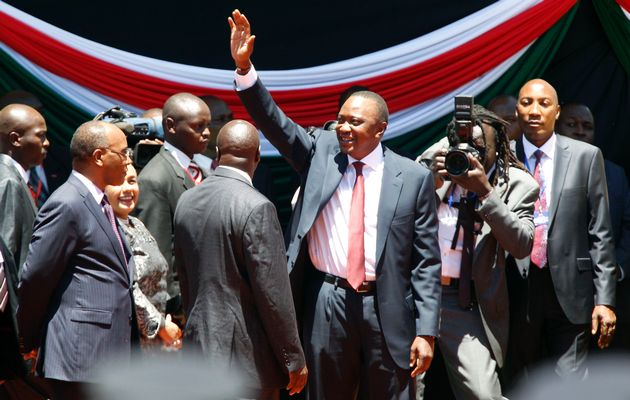
Kenyatta inauguration

(Photo: Thomas Mukoya / Reuters)

The Kenya cases were never going to be easy for the International Criminal Court (ICC) and the going only got tougher following the election of Uhuru Kenyatta and William Ruto, both of whom have been indicted by the ICC for their alleged roles in the 2008/09 post-election violence in Kenya.

The Prosecution has faced numerous obstacles in seeking to properly investigate and prosecute crimes pertaining to the post-election violence. Evidence has been withheld, witnesses have been intimidated, and Kenyatta and Ruto were elected to the positions of President and Vice President, respectively. Throughout the process, it seemed fair and feasible to assume that the biggest challenges to the prosecution of Kenyatta and Ruto would come from political developments within Kenya that were outside of the control of the ICC, and not from within the Court itself.

It thus came as a surprise (at least to those of us outside the inner-workings of the Court) when a presiding Judge in the Kenya case ripped into the Prosecution last week. Judges in the Pre-Trial Chambers rebuked the Prosecution for withholding evidence from the Defence. However, as Thomas Escritt puts it, Justice Christine van den Wyngaert “went further in her criticism of the prosecutors.” Did she ever.

It is worth reading van den Wyngaert’s entire opinion but here are some of the most stinging comments:

…there are serious questions as to whether the Prosecution conducted a full and thorough investigation of the case against the accused prior to confirmation… the Prosecution offers no cogent and sufficiently specific justification for why so many witnesses in this case were only interviewed for the first time post-confirmation…

…there can be no excuse for the Prosecution’s negligent attitude towards verifying the trustworthiness of its evidence. In particular, the incidents relating to Witness 4 are clearly indicative of a negligent attitude towards verifying the reliability of central evidence in theProsecution’s case. This negligent attitude is particularly apparent in relation to Witness 4’s evidence because, as the Prosecution concedes,’the Office as a whole was on notice, prior to the confirmation hearing,of the inconsistencies in the account Witness 4 gave during his [second]screening’. Based on the foregoing considerations, I find that the Prosecution failed to properly investigate the case against the accused prior to confirmation in accordance with its statutory obligations…

In sum, whilst the application of the principles set out in the decision to the Prosecution’s conduct in this case in my view results in a finding of a violation by the Prosecution of several of its obligations and the infringement by the Prosecution upon various rights of the accused…

Christine Van Den Wyngaert (Photo: ICC)

Christine Van Den Wyngaert (Photo: ICC)

In addition to her stinging rebuke, van den Wyngaert removed herself from the case altogether. She has explained that her decision is a result of her caseload although some, like Kevin Jon Heller, are skeptical of her justification.

So how should we understand these developments?

With every development in the Kenya cases, and perhaps for all cases at the ICC, there are (at least) two types of implications for the Court: legal implications for the case and perception implications for the Court. Continue reading →

Posted in Defense Counsel, ICC Prosecutor, International Criminal Court (ICC), Kenya, Kenya and the ICC | Tagged , | 3 Comments

Defying Gravity: Seeking Political Balance in ICC Prosecutions

Reuters

Reuters

The International Criminal Court is often accused of being “political” or “politicized” in its selection of situations and cases. What has become most problematic for the Court’s credibility and impartiality in this regard are the situations and cases that have not been selected, and the criteria and discourse used to justify such omissions and imbalanced prosecutions. Specifically, the “gravity threshold,” which the OTP uses to justify who is prosecuted and who isn’t, is politically problematic for the ICC. Prosecutorial strategies that target only one side of a conflict are frequently justified in terms of gravity – that the crimes of some individuals are graver than their opposing parties,.

I suggest there are two political problems with the gravity threshold in case selection.

1)     Assessing the gravity of one party’s or individual’s crimes relative to their opponents is ethically and politically problematic. This approach ultimately results in the ICC’s de facto support of one side of the conflict over another and perpetuates impunity gaps at the international and domestic level.

2)     While atrocity crimes can be ranked, scaled, and compared across parties and perpetrators, no victim can be considered less victimized or less deserving of justice than another.  To date, the manner in which the gravity threshold has been operationalized is an affront to victims and is likely to erode the ICC’s legitimacy among this important constituency.

Gravity, in Legal Terms Continue reading →

Posted in Admissibility, Democratic Republic of Congo, ICC Prosecutor, International Criminal Court (ICC), Ivory Coast / Côte d'Ivoire, Ivory Coast and the ICC, Uganda | Tagged , , , , | 11 Comments

Canada’s Prime Minister: A Danger to Peace?

Stephen Harper (Photo: Reuters)

Stephen Harper (Photo: Reuters)

There was no need to be particularly impressed or to defend the comments of the newly appointed leader of the Liberal Party of Canada, Justin Trudeau, in the wake of the Boston Marathon bombings. Fresh off his victory in the Liberal Party leadership election, Trudeau was  asked how he would respond to such an attack. In response Trudeau stated:

“Now, we don’t know now if it was terrorism or a single crazy or a domestic issue or a foreign issue. But there is no question that this happened because there is someone who feels completely excluded. Completely at war with innocents. At war with a society. And our approach has to be, where do those tensions come from? Yes, there’s a need for security and response. But we also need to make sure that as we go forward, that we don’t emphasize a culture of fear and mistrust. Because that ends up marginalizing even further those who already are feeling like they are enemies of society.”

Trudeau’s comments reflect common wisdom. It is elementary to anyone interested in conflict resolution and the transformation of violence to peace. Heck, it is common wisdom to the common gardener and to every medical practitioner. You don’t get rid of weeds by cutting the flowers; you need to get at the roots. You don’t just deal with the symptoms of illness; you address the root causes of disease.

In the realm of conflict resolution and conflict transformation, there has long been a recognition that peace requires addressing both the causes and dynamics of violence. Dealing only with symptoms or dynamics risks leaving the motivations for violence in place and risks creating additional grievances which subsequently act as new justifications for continued violence.

Yet in response to Trudeau’s comments, Canadian Prime Minister Stephen Harper went on a blistering and remarkably misplaced offensive. In doing so, he exposed his views on Canada’s role in dealing with terrorism and political violence. It wasn’t pretty.

While attending the funeral of Margaret Thatcher in London, Harper declared:

“When you see this kind of action, when you see this kind of violent act, you do not sit around trying to rationalize it or make excuses for it or figure out its root causes. You condemn it categorically and to the extent that you can deal with the perpetrators you deal with them as harshly as possible and that is what this government would do if it ever was faced with such actions.”

In the wake of tragic events like the bombings in Boston, there is clearly reason to categorically condemn violence , express sympathy and condolences and to support the pursuit of justice and accountability. But there is also a need to understand why such tragedies occur and why some groups resort to violence. Reacting harshly is the easy part. Identifying what can be done to prevent such violence is harder but even more important. At the same time, striving to understand the root causes of violence can and should never be conflated with a defence of violence.

(Photo: SvR Design)

(Photo: SvR Design)

Sadly, Harper’s approach is just anther example of Canada’s Conservative Government focusing on the symptoms of critical challenges facing Canadians and the international community. This has been Harper’s approach to domestic crime (fill jails and trump up the dangers of ‘unreported crime‘!) and it was the approach to Omar Khadr, the Canadian child soldier who was detained for a decade in Guantanamo Bay and repatriated, only reluctantly, to Canada last year. The policy of the Government has been to ‘act tough’ and ‘punish wherever possible’. The result, however, is irresponsible and simply dangerous. It also confounds an already incoherent and irresponsible foreign policy, one which has led to Canada’s increasingly diminished international prestige and flailing global reputation. Continue reading →

Posted in Canada | Tagged , | 1 Comment

CSI: The Hague or the ICC just got Jack Bauer-ed

We knew this day was coming. We didn’t know how or exactly when but we knew that someone would eventually make a TV show out of the International Criminal Court. There’s just too much drama, too much character, too much politics not to.

And now it appears to be reality. NBC will begin airing ten episodes of ‘Crossing Lines’ this summer. According to one source, the show

“is a cross-boarder crime drama in which a special unit of criminal investigators working with the International Criminal Court hunt down global criminals and bring them to justice.”

The show stars William Fichtner, Marc Lavoine, and Donald Sutherland in a role that appears to be loosely based on former ICC Prosecutor Luis Moreno-Ocampo. Most of the show appears to be focused on Europe (a dream for many ICC critics!) and it remains to be seen if there will be any episodes which more accurately represent the ICC’s focus on African conflicts. An episode on the hunt for Joseph Kony would be wildly popular although I imagine the walk-in surrender of Bosco Ntaganda likely wouldn’t be dramatic enough.

Crossing Lines will undoubtedly be both fun and, with all of the factual inaccuracies, painful to watch. The world of international criminal justice never ceases to amaze.

Posted in Film, Humour, International Criminal Court (ICC) | 3 Comments

Transitional Justice as Politics

(Cartoon: Gianfranco Uber / Cartoon Movement)

(Cartoon: Gianfranco Uber / Cartoon Movement)

It is widely accepted that transitional justice can and should be separated from politics. How societies and states achieve justice in the wake of mass atrocities, so it goes, is a pursuit that must be divorced from political calculations. Indeed, in the eyes of many, politics is poison to any attempt at achieving accountability and combating impunity. Justice must be above and beyond politics.

As I have written previously, the field of transitional justice suffers from a diversity of problems. It is an ever-growing conceptual minefield that has accepted so much under its mandate that it risks losing its meaning. Increasingly, transitional justice no longer refers strictly to the approaches societies take to account for the past in the wake of conflict, dictatorship or a period of mass atrocity. Instead, a broad array of issues from Security Sector Reform, forced migration, Demobilization and Reintegration Reform, amongst others, are now considered under the transitional justice umbrella.

Another problem within the field and, especially, the practice of transitional justice has been a certain denial of politics. The strength of transitional justice is that it is political and, as such, represents the possibility of building societies and peace on the basis of a good politics.

A couple of weeks ago I was fortunate enough to attend a roundtable discussion at the International Studies Association conference in San Francisco celebrating the latest work of Bronwyn Leebaw, Judging State-Sponsored Violence, Imagining Political Change. The roundtable included two stalwarts in the field of transitional justice, Ruti Teitel and Leslie Vinjamuri (follow them on Twitter here and here). During the conversation, it became clear, at least amongst those theorizing and thinking most deeply about the subject, that transitional justice cannot be separated from politics.

Unfortunately, this hasn’t always been the case. Because transitional justice has been viewed as a process divorced from ‘politics’, the very political nature of transitional justice has remained under-explored and under-theorized. As a result, there has been a failure to distinguish between different types of politics and to identify those forms of politics which can ultimately lead to good outcomes. Consequently, many proponents of transitional justice, especially those who work for advocacy groups or international organizations express a certain phobia of their work being political. This shackles those who want to do transitional justice work to “how-to” guides and “best practices” manuals rather than concerted political action. Unfortunately, this also strips transitional justice of its most important strength: the potential good politics that it represents.

(Photo: UNICEF)

(Photo: UNICEF)

Of course, there are some forms of politics that transitional justice should seek to avoid. International tribunals shouldn’t be beholden to the power politics of particular states or institutions like the UN Security Council. Truth Commissions shouldn’t work at the behest of government interests or parties seeking to legitimize themselves and delegitimize their adversaries; lustration policies shouldn’t amount to witch hunts where a powerful party cleanses the political class of its foes.

Nor can transitional justice be an apolitical box-ticking exercise where states say: ‘we’ve prosecuted some people, we’ve set up a Truth Commission, we’ve barred some people from holding office, and we’ve paid some reparations – we’ve done  transitional justice.’

Continue reading →

Posted in Transitional Justice | 2 Comments

ICC Prosecutor Enters the ‘Peace versus Justice’ Sweepstakes

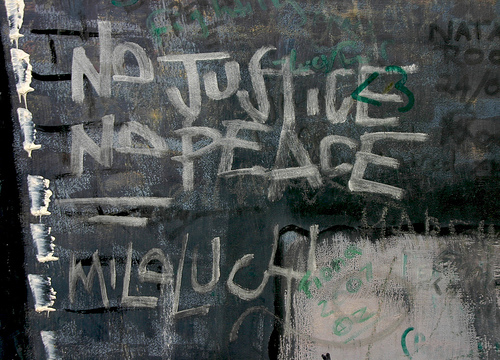
No Justice No Peace

(Photo: Still Burning)

Fatou Bensouda, Chief Prosecutor of the International Criminal Court (ICC), recently issued a ‘state of the union’ address from the ICC on the “peace versus justice” debate. The intervention, penned as a New York Times op-ed entitled ‘International Justice and Diplomacy’ introduced Bensouda’s voice into a timely debate that isn’t going away any time soon.

To readers of JiC, the “peace versus justice” debate is old-hat. On the one hand, there are those who believe that peace (in the form of stability and order) must precede and take priority over the pursuit of justice and accountability; otherwise, justice risks undermining efforts to resolve conflict peacefully. On the other, there are those who argue that peace and justice must be pursued simultaneously; there is “no peace without justice” they argue. Of course, this is an over-simplified version of a debate that is multi-layered and more sophisticated than this harsh dichotomy suggests. Nevertheless, it is important to note that it is a debate that is indelibly linked to the ICC’s work. The reason is simple: as a permanent institution, the ICC intervenes in ongoing and active conflicts where attempts to establish and maintain peace may be vulnerable to the demands of international criminal justice.

So what did Bensouda have to say about the ‘peace versus justice’ debate?

You Do Peace, We’ll Do Justice

To begin, Bensouda notes that the pursuit of justice and the pursuit of peace should be separate:

“As the I.C.C. is an independent and judicial institution, it cannot take into consideration the interests of peace, which is the mandate of other institutions, such as the United Nations Security Council.”

This is a long-standing position in the Office of the Prosecutor. In a 2007 policy paper, Bensouda’s Predecessor, Luis Moreno-Ocampo similarly argued that the interests of international justice and the interests of international peace were separate. The former, he maintained, was the prerogative of the ICC, the latter of “other institutions”, including the UN Security Council.

On the surface, this is a reasonable division of labour. Indeed, the indepedence of the ICC from the politics of institutions like the UN Security Council is vital the Court’s legitimacy. However, it is questionable whether proponents of international criminal justice actually believe in the division of the interests of peace and those of justice. Echoing sentiments commonly voiced in international justice circles, Bensouda goes on to claim that

“The debate about peace versus justice or peace over justice is a patently false choice. Peace and justice are two sides of the same coin. The road to peace should be seen as running via justice, and thus peace and justice can be pursued simultaneously.”

Therein lies the rub. If peace and justice are “two sides of the same coin” and peace can only be achieved through the pursuit of justice, then it cannot be argued that the interests of peace and the interests of justice are separable. You can’t have it both ways.

This latter position is closer to what many ICC proponents believe; the pursuits of peace and justice should be combined rather than separated. Indeed, this helps explain why human rights advocates celebrate rather than critique the increasingly close relationship between the ICC and the penultimate guardian of international peace, the UN Security Council – however problematic that may be.

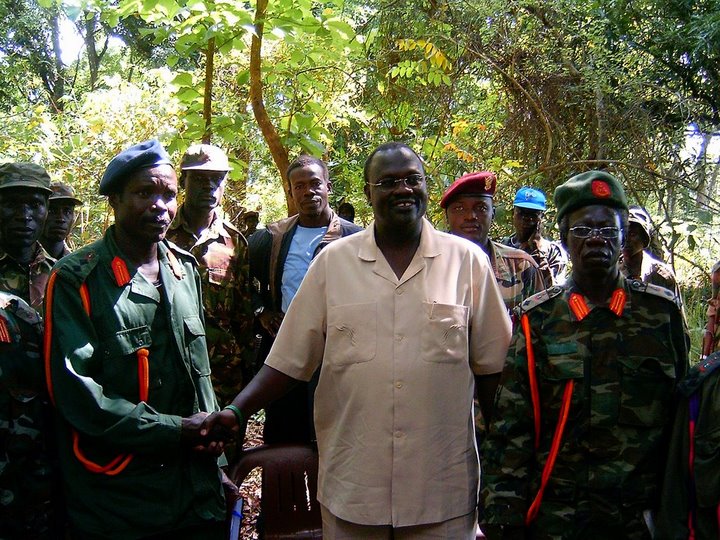
Joseph Kony (left) and his former second in command Vincent Otti (right), stand with Dr. Riek Machar, chief mediator of the Juba Peace Talks

Joseph Kony (left) and his former second in command Vincent Otti (right), stand with Dr. Riek Machar, chief mediator of the Juba Peace Talks

But We Can Do Good

Bensouda subsequently argues that, while the ICC should take a hands-off approach to questions of conflict resolution and peacemaking, the Court nevertheless can have – and has had – positive effects on peace negotiations. As she writes:

“justice can have a positive impact on peace and security…

…if anything, the “shadow of the Court” has helped to isolate individuals wanted by the I.C.C., or to kick-start negotiations. Continue reading →

Posted in Conflict Resolution, Peace Negotiations, Peace Processes | Tagged , | 2 Comments

International Justice gets a dose of HARDtalk

Last week, the current President of the International Criminal Tribunal for the former Yugoslavia (ICTY), Theodor Meron, appeared on BBC’s HARDtalk. Meron, a luminary in the world of international criminal justice who has published widely and is universally respected for his work and thinking on matters of international justice, held his own on a show that isn’t known to be particularly easy with its guests. You could tell at various moments during the interview that host Stephen Sackur holds Meron and his work in very high regard.

The interview covers various issues, including the potential deterrence effect of international justice, the weighing of international criminal justice against other transitional justice mechanisms, the legality of Israel’s settlements on Palestinian territories, and the selectivity of international tribunals. Of course, no debate would be complete without touching on the ‘peace versus justice’ debate.

Specifically, Meron was asked whether Syria’s Bashar al-Assad should be granted amnesty in order to persuade him to step down. On this, the ICTY President claimed that we need to find ways where both justice and peace-making function simultaneously. He added that the trade-off was a question 0f sequencing or timing rather than a matter of principle but that without criminal accountability, there could be no sustainable democracy or respect for the rule of law.

The argument that peace and justice can be effectively sequenced reflects much of the current thinking in the ‘peace versus justice’ debate. But it’s not without its weaknesses, as I have argued previously. The reality is that no perpetrator of mass atrocities is likely to accept an amnesty that they believe would subsequently be revoked. It is likely for this reason that premeditated sequencing has no history (as far as I can tell) in practice.

Regardless, the episode is a must-watch. It’s another opportunity to get a glimpse into the thinking of an individual who, more than almost anyone else, has shaped the world of international criminal justice.

Enjoy!

Posted in ICTY, International Law, Justice | Tagged | Leave a comment

Update: Ntaganda Headed to The Hague

(Photo: RNW)

(Photo: RNW)

In the end, the fears that Rwanda might “inhibit” the transfer of notorious rebel leader Bosco Ntaganda from the US Embassy in Kigali to the International Criminal Court (ICC) in The Hague did not materialize. “The Terminator” is on his way to the ICC.

Just days ago, a delegation from the ICC arrived in Rwanda to facilitate Ntaganda’s transfer. Today Ntaganda left the US compound in Kigali in a convoy of cars headed for the airport in Kigali. He was then loaded onto a private jet bound for The Hague. He should arrive in the Netherlands in approximately 8 hours if the flight is direct. Ntaganda will be reunited with his old ally, Thomas Lubanga, in the ICC’s prison facilities in Scheveningen.

According to a tweet by Rwanda’s Foreign Minister Louise Mushikiwabo, Ntaganda’s transfer was the result of cooperation between the United States, Rwanda and the Netherlands. While it remains to be seen, it seems likely that the Dutch provided the aircraft to transport Ntaganda and the ICC delegation to The Hague. Under anti-ICC domestic legislation (The American Service-Members Protection Act), the US is prohibited from providing any funding in cooperation with the Court.

Here is what the ICC had to say:

Today, Friday, 22 March 2013, Bosco Ntaganda, against whom the International Criminal Court (ICC) has issued two arrest warrants, surrendered himself voluntarily and is now in the ICC’s custody. Bosco Ntaganda is currently escorted by an ICC delegation that has left Kigali (Rwanda) heading to the ICC detention centre in The Hague (Netherlands).

Upon arrival, Mr Ntaganda will receive a medical visit and will appear, as soon as possible, before the Judges in the presence of a Defence Lawyer. The date of the initial appearance hearing will be announced soon. During the initial appearance hearing, the Judges of Pre-Trial Chamber II will verify the identity of the suspect and the language in which he is able to follow the proceedings. Mr Ntaganda will be informed of the charges against him. The Judges will also schedule a date for the opening of the confirmation of charges hearing, a preliminary step to decide whether the case will be referred to a trial or not.

This is the first time that a suspect has surrendered himself voluntarily to be in the ICC’s custody. The Court is grateful for the support and cooperation of the Dutch and American authorities, both in Kigali (Rwanda) and in the Netherlands. This operation would not have been possible without the support of the Rwandese authorities.

Of course many pressing questions remain: why did the US sound the alarm in declaring its concerns that Rwanda would inhibit Ntaganda’s transfer to the ICC? Did Rwanda consider prohibiting Ntaganda from leaving Kigali? Why did Ntaganda surrender himself in the first place? Will he speak to his relationship with the government of Paul Kagame?

The answers to these questions will hopefully become clear in the coming days.

Over the coming days, JiC will add further updates as they come in. For the moment, here’s a pertinent video clip of what awaits Ntaganda:

Posted in Democratic Republic of Congo, International Criminal Court (ICC), Rwanda, United States | Tagged , | 2 Comments

Barrier to Justice: Could Rwanda Prevent Ntaganda from Reaching The Hague?

(Photo: AP / Jerome Delay)

(Photo: AP / Jerome Delay)

Troubling signs have emerged that the transfer of Bosco Ntaganda to the International Criminal Court (ICC) may be “inhibited” by the Rwandan government. On Monday, Ntaganda stunned the world when he surrendered himself to the ICC via the US Embassy in Kigali, Rwanda.

The US government, which has stated that it is keen to transfer Ntaganda to the ICC as quickly as possible, is concerned that Rwanda will frustrate its efforts. According to Melanie Gouby and Mike Corder,

The United States government appears to be worried that Rwanda won’t allow a warlord from Congo now camped out in the U.S. Embassy safe passage to the airport to be flown to the International Criminal Court for prosecution.

The U.S. hopes Rwanda will help facilitate the transfer of Congolese rebel leader Bosco Ntaganda from the U.S. Embassy in Kigali to the airport for a flight to the ICC in the Netherlands, the top U.S. State Department official on Africa, Johnnie Carson, said Wednesday.

“We hope that the Rwandan government will do its part,” Carson said in a telephone press conference from Washington. “It is a small but significant part to ensure that Bosco Ntaganda is able to move freely from the American embassy compound to the airport where he will board a plane and go to The Hague.”

Carson said it’s important that Ntaganda’s movement from the embassy to the airport “in no way be inhibited.”

Carson also indicated that Rwanda hasn’t yet assured cooperation with ICC officials en route to Rwanda. He noted that Rwanda, like the United States, is not a signatory to the Rome Statue that created the ICC and is not bound by international obligations to hand Ntaganda to the ICC.

The possibility of Rwanda seeking to undermine Ntaganda’s transfer shouldn’t come as a surprise. For the moment at least, Ntaganda’s surrender means that everyone comes out a winner – except for the Rwandan government.

Bosco-Ntaganda-9The American decision to help Ntaganda get to the ICC is a public and international relations victory for the country; in this case at least, the US appears firmly on the side of international justice. As far as the ICC is concerned, it will now have custody over a long sought-after rebel and can celebrate a very significant act of cooperation with the US. The Democratic Republic of Congo (DRC) is now rid of a potential obstacle which may help it progress in its fragile peace process with rebels in the country’s Eastern provinces, including the M23. As far as Ntaganda is concerned, it is increasingly clear that his personal and physical safety was in jeopardy prior to his surrender. US State Department spokesperson Victoria Nuland stated yesterday that Ntaganda has sought “sanctuary” at the ICC. The former rebel is likely relieved to be in the protective custody of the US Embassy. Most importantly, communities in the Eastern DRC no longer have to fear “The Terminator”. As one resident of Goma, where Ntaganda had hidden in plain sight for years, put it: “The war in Congo concerns every tribe; it doesn’t matter if you are Lendu, Hema, Tutsi or Hutu. Everyone is happy he has surrendered.”

As I argued in my post yesterday, however, Rwanda is in a precarious situation. The government of Paul Kagame supported and supplied Ntaganda and the M23. The government is surely anything but keen to see its relationship to rebels in the Eastern DRC further examined and exposed in The Hague. Continue reading →

Posted in Democratic Republic of Congo, International Criminal Court (ICC), Rwanda | Tagged | 5 Comments