
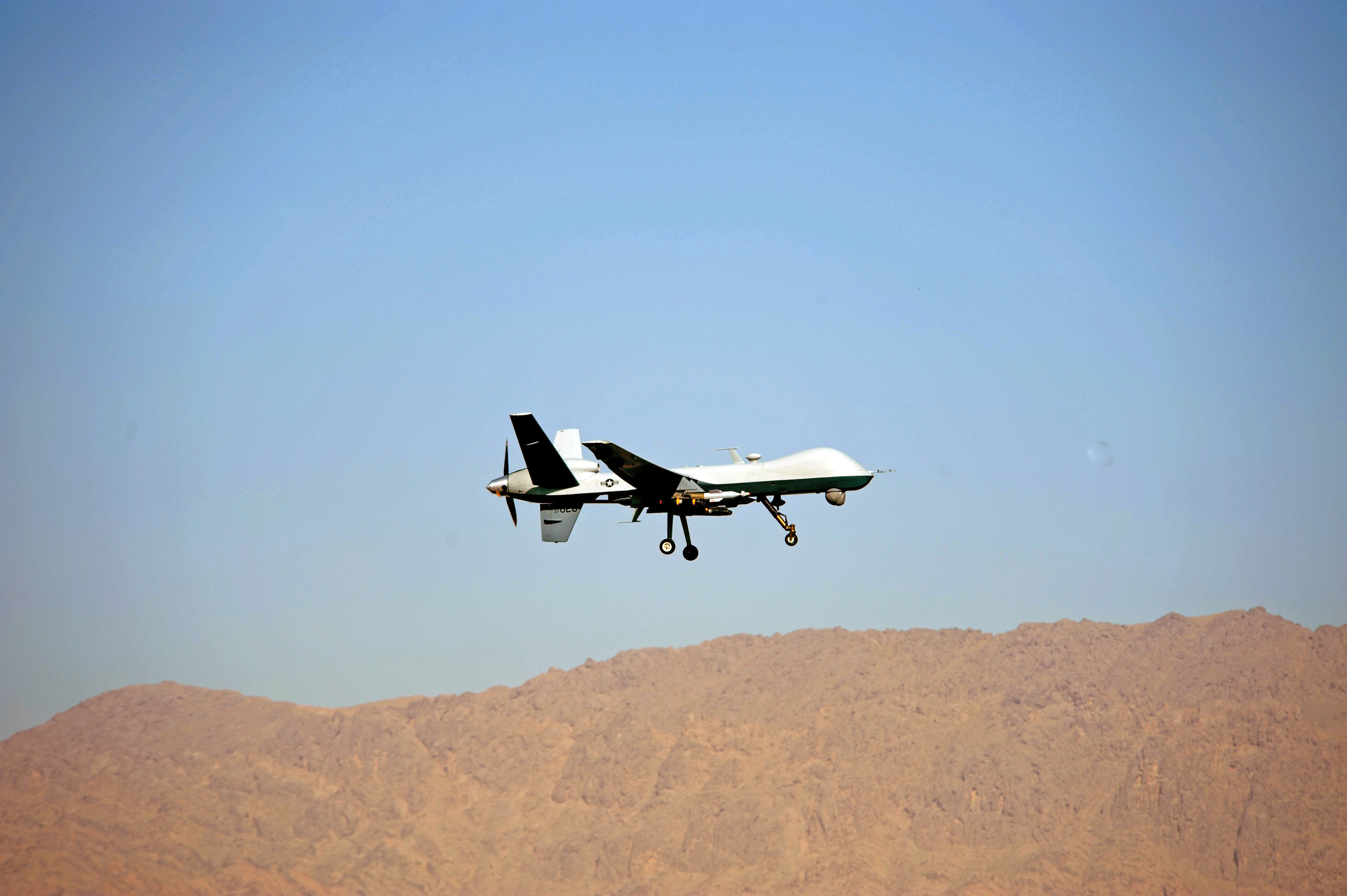
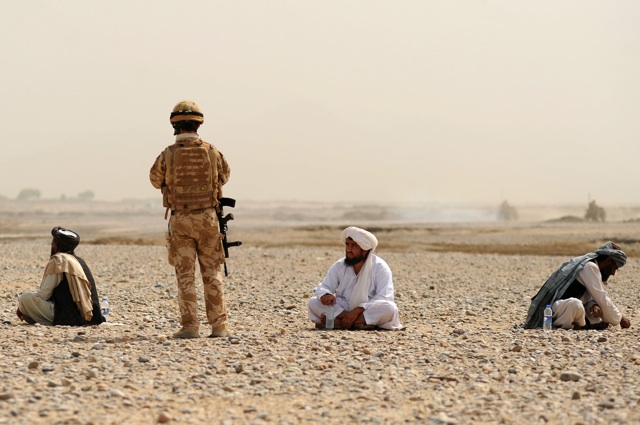
(Photo: U.S. Air Force photo by Staff Sgt. James L. Harper Jr.)
I watched Mark Hanis last night on RT defend his and Andrew Strobo Sniderman’s op-ed article in the New York Times, which I responded to yesterday. Given the salience of this debate, I thought I’d share a few more thoughts, this time on the misconception that the missing ingredient in human rights advocacy and enforcement is surveillance of human rights abuses.
Hanis and Sniderman start from a premise with which virtually every human rights advocate agrees: there remains a worrying level of inaction in the face of atrocities being committed around the world. Again, no one disagrees. They’ve got the diagnosis right. It’s their prognosis that’s wrong.
History presents a litany of sombre cases of mass atrocities that have been met with shamefully inadequate responses: we know the tragic lack of response to the Rwandan genocide and the deafening silence on the alleged counter-genocide in its wake in the Democratic Republic of Congo (DRC); Darfur is consistently decried as a situation where the international community has made a mockery of the mantra, “never again”; seemingly more people are interested in whether it is called Burma or Myanmar than responding to systemic human rights abuses there; the situation in the DRC, where violations of rights pretty much dwarf all other contexts, barely registers in public opinion; this week, international leaders hunkered down for the intense process of diluting their response to the crisis in Syria because they’re unable to do enough, but unwilling to do nothing. The list goes on; it’s not pretty.
But before you go jumping on the “humanitarian drones” bandwagon, here’s the critical question: would any of the above situations have been different if we just had more precise aerial surveillance of violence and human rights abuses? Let’s look at the record.
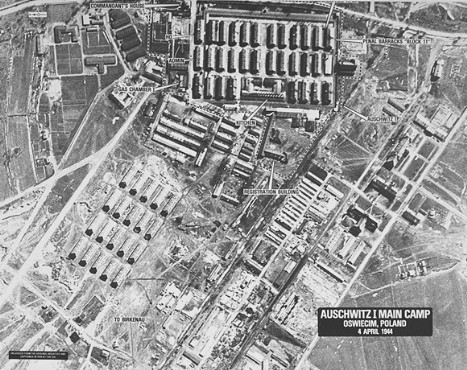
An aerial photo of Auschwitz from 1944, more than a year before the war - and the Holocaust - ended.
It is worthwhile remembering that there were aerial photographs, as well as personal testimony of Nazi concentration camps, including Auschwitz and Dachau. Winston Churchill called Auschwitz “probably the greatest and most horrible crime ever committed in the whole history of the world.” Despite having seen the evidence and having been implored by various groups to take action, Allied powers did nothing. Both the UK and the US rejected any plan to bomb either the concentration camps or the railway lines that satisfied the camp’s insatiable appetite for human slaughter. Faced with unmistakable aerial surveillance and witness-based evidence, the Allies chose not to bombard the camps. Remarkably, that was during the war, when Allied planes were already bombing other Nazi targets. Continue reading







 Justice in Conflict