Pride and the Interventionist Itch: NATO in the Wake of Libya

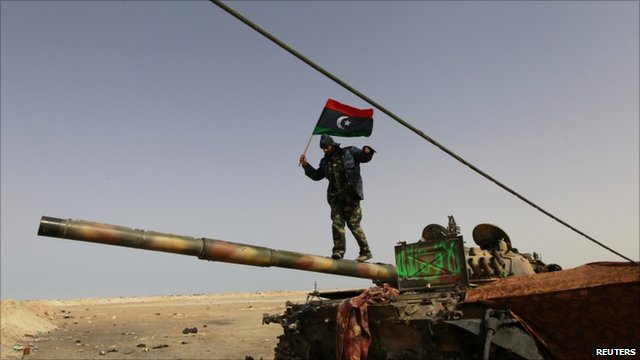
Walking a thin line (Photo: Reuters)

Pride is a tricky thing. We want to feel it but it doesn’t always manifest itself as a good trait. For this reason Alexander Pope once declared that pride is “the never-failing vice of fools”, while Saint Augustine wrote that “[i]t was pride that changed angels into devils; it is humility that makes men as angels.” Pride can blind us and can lead even those with the best of intentions astray.

Last week, when NATO chief Fogh Anders Rasmussen declared that the military organization’s mission to Libya would conclude, he stated that he was “proud of the part NATO played” in “answering the call” to save civilians under attack from Gaddafi forces.

My contention here isn’t to predict the future of NATO engagements. The aim is simple: to place NATO’s “success” in Libya into context and consider the potential dangers of a proud military organization seeking to reproduce its success beyond the remits of international law.

NATO in Libya: Success?

It is remarkable how little the ambivalence and uncertainty of the first few months of the Libyan intervention is now recalled. Who now remembers the Obama administration’s ambivalence and (poorly) expressed desire to “lead from behind” in Libya? And what of the consistent reports that Libya faced a grave danger of becoming an intractable conflict, mired in a perpetual stalemate? All but distant memories now.

On the contrary, the rhetoric surrounding the mission in Libya has been thoroughly triumphalist. Chalk up a victory for the Obama administration, and especially its “liberal hawks” – Secretary of State Hilary Clinton, UN Ambassador Susan Rice, and senior security adviser Samantha Power. Chalk up a victory for NATO and its member states. And, before they forget, chalk up up a victory for Libyans!
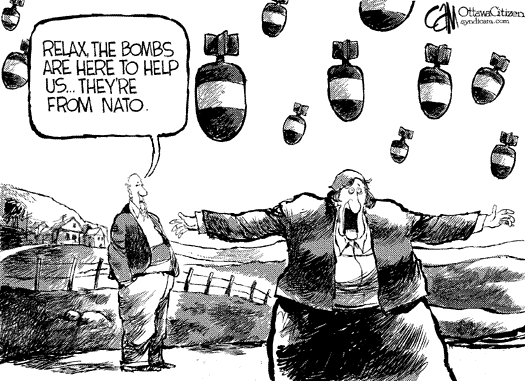
(Cartoon: Ottawa Citizen)

Libya has been framed as a success for a number of reasons. For many internationalists, Libya is a success because the Responsibility to Protect (R2P) was finally invoked by the UN Security Council. Many had thought that the emerging doctrine of R2P had become stagnant and were caught by surprise when adversaries like Russia and China allowed the words “responsibility to protect” to be articulated in Security Council Resolution 1973. Not only was R2P invoked but it appeared to work – the obvious threat to the citizens of Benghazi was averted.

For many Western states, particularly the US, the fact that there were no Western casualties was critical to any possible success. Since the events of Black Hawk Down in Somalia, it has become a pseudo-doctrine in Washington that US troops not be deployed in humanitarian crises. Indeed, the “success” of Libya in this regard may embolden a US belief that holding to the ‘Mogadishu line’ and succeeding in engaging in humanitarian disasters is feasible and desirable. While the number of humanitarian crises that the US gets involved in may increase, the use of drones and jets will almost surely contribute to the trend of removing the human from humanitarian interventions.

For better or worse, there’s only so much states are willing to pay for humanitarianism. It appears that the intervention in Libya never came close to any such threshold. While the cost of the intervention will undoubtedly grow as the damage done by the intervention is assessed, the total expenditure of the US was about $1 billion and about the same for the UK. That may seem like a lot but just put that into comparison with the following figures:

Now, I’ll be honest. I love baseball, I appreciate a good Hallmark card and, somewhat selfishly, I do dream of reversing the pandemic of receding hairlines. Joking aside, compared to these expenditures, the costs of the Libya intervention is astonishingly low. In contrast to Iraq and Afghanistan, Libya was peanuts. Iraq and Afghanistan have cost the US trillions of dollars alone. In 2011, monthly military operations in Afghanistan and Iraq were costed at $6.7 billion (Afghanistan) and $6.2 billion (Iraq) per month, respectively. Indeed, it was in part because of these exorbitant costs that virtually no one predicted another intervention in the region.  Continue reading

Posted in Afghanistan, Iran, Libya, NATO, Responsibiltiy to Protect (R2P), Syria | 1 Comment

What a Difference Actually Asking Makes: Burkina Faso, Asylum and Gaddafi

Campaore and Gaddafi (Photo: AFP)

A few months ago, amidst rampant rumours that Muammar Gaddafi was seeking asylum in Burkina Faso, I expressed my frustration at what I thought was groundless and largely unfounded speculation:

“If Gaddafi does, in fact, seek asylum he will surely be very careful which country he chooses for his refuge. Yet few analysts seem to know the slightest about Burkina Faso. Indeed, there has been zero concrete evidence that the pro-Gaddafi convoys are, in fact, heading to Burkina Faso. Most media reports suggest this could be the case because the capital of Niger is close to the border with Burkina Faso and because Burkina Faso had offered Gaddafi asylum.

Burkina Faso now denies that it had offered Gaddafi asylum and it’s interesting to look at media reports to the contrary which never quote any officials from the country.”

Alison Cole at the Open Society came to a similar conclusion. In his typically astute and thoughtful fashion, John Birchall commented on the fact that the offer of asylum could not actually be traced:

 I find it interesting to trace the origins of the widely reported “offer of asylum” from Burkina. It seems all based on the Reuters interview with the FM. Its not clear that he even used the word “exile”, which sems based on this quote:

“In the name of peace, I think we will take, with our partners in the international community, whatever steps are necessary,” Bassolet said, without giving any other details.

And exile went to asylum as fast as you can drive across the deserts of Niger.”

This week, it became even more evident that Burkina Faso never actually offered Gaddafi asylum. The President, Blaise Compaore, was remarkably unequivocal about his country’s support for the ICC’s role in Africa:

“It is our duty to sensitise Africans… We must continue to convince them that such a court is essential…Many African countries believe that the ICC was a tool from the Western world against African countries. There’s a perception to be changed.” Continue reading

Posted in Burkina Faso, International Criminal Court (ICC), Libya, Libya and the ICC, The Tripoli Three (Tripoli3) | Leave a comment

The “Injustice Cascade” – Supplanting International Justice with Targeted Killing

Dear readers – this piece was originally posted, in an edited form, at JURIST. For keen readers of JiC there may be some repetition from previous themes or pieces but I thought it was “original” enough to post here nonetheless. Enjoy!Gaddafi killing

(Credit: ssoosay)

Hilary Clinton thought it was funny. Millions rejoiced and took to the streets in celebration. Some were simply disgusted. Others worried about what it all meant, for Libya and for justice. Indeed, the reactions to the death of Muammar Gaddafi have been remarkably mixed and contradictory. In particular, there has been a vast gulf between those who see Gaddafi’s killing as having finally served justice to a man who reigned, at times brutally, over his police state and those who viewed his killing as a concerning demonstration of injustice. Perhaps even more worrying is the reality that, rather than being exceptional, Gaddafi’s killing is part of an increasingly acknowledged trend which may challenge not only international law but the nature of justice itself.

The “Justice Cascade”

Numerous scholars, diplomats, human rights activists and lawyers often proclaim that we live in a world where impunity is a thing of the past. This high rhetoric represents the belief that international criminals – including heads of states who perpetrate war crimes, crimes against humanity and genocide – have no place to hide. Even if they escape justice now, accountability will catch up with them eventually.

Kathryn Sikkink, for example, recently published The Justice Cascade, wherein she argues that we have been in the midst of a tectonic normative change in how we deal with human rights abuses and international crimes. Today, Sikkink argues, the world expects that leaders who abuse their people will be held to account. That is the conclusion we should draw, according to Sikkink, from the experiences of Argentina’s junta trials, the indictment for Pinochet, and from seeing Slobodan Milosevic in the dock. But does Sikkink’s notion of a “justice cascade” represent an accurate reflection of the way the world is or is it instead a form of talking norms into reality?

Blinded by the Light

It is worth wondering whether part of the reason so many observers were so shocked by Gaddafi’s death was because they believed in the justice cascade. Surely, a justice cascade existed, Gaddafi would have been presented alive, in front of his victims, in a cold court room, rather than dead, his corpse lying half-naked in a cold storage container.

Indeed, it seems that the belief in a settled norm where leaders who commit international crimes are held legally accountable is an expression of hope of where international politics could go, rather than a reflection of where it actually is. Continue reading

Posted in Crimes against humanity, Justice, Libya, Libya and the ICC, Middle East, NATO, Slobodan Milosevic, The Tripoli Three (Tripoli3) | Leave a comment

Propping up Tyrants: Selling to and Supporting Authoritarian Regimes

Brittany Lyons joins us as a guest-poster to discuss the mixed signals sent by states like the US when they provide military support to authoritarian regimes but decry authoritarian tactics. An aspiring professor of psychology, Brittany is currently working “to help people learn to navigate the academic lifestyle.” Enjoy the post!

(Cartoon: Steve Bell)

The international human rights organization Amnesty International has expressed concerns about the alleged willingness of Western nations, including the United States, to sell weapons to dictators and terrorist organizations. According to an Amnesty report, the U.S., Russia, and others were major sources of weapons, bullets and military-grade equipment sold to repressive regimes in the Middle East and North Africa. Even though the U.S. claims to be in opposition to dictatorships in these regions, American-made weapons and other military supplies are known to have been used against peaceful protestors in places like Tunisia, Egypt, Syria and Yemen.

The Amnesty International report examines transfers of arms since 2005, and has become the basis for a new push for legislation in the U.S. Congress to block a $53 million arms deal between the United States and Bahrain. The Bahraini government has been condemned by President Obama for its willingness to use violence against unarmed protestors, most of whom are entirely innocent, and many of whom only want rights to equal treatment and education. The weapons will almost certainly be used against those very people, and Amnesty investigators are shining a light on this inconsistency.

Additionally, before the Arab Spring uprisings, the U.S., Great Britain, Russia and other Western nations have actively supplied weaponry and munitions to Yemen, in spite of a belief that they would be used to continue the brutal crackdown on Yemeni citizens.

Amnesty contends, with some real evidence, that there is a generalized failure in arms sales legislation, and an unwillingness to create new arms sales treaty regulations. The U.S. is by no means alone in this failure. Spanish cluster munitions and Soviet-era rockets were found by Amnesty investigators in Misrata, and at least 20 nations are believed to have sold small arms and riot-control agents to Egypt (the U.S. tops the list with sales near $1.3 billion). Since 2005, the brutal regime of Libya has been the beneficiary of arms sales by countries including Belgium, France, Germany, Italy, Russia, Spain and the United Kingdom, even as those same countries were accusing the nation’s dictator Gaddafi of committing of war crimes against his own people.

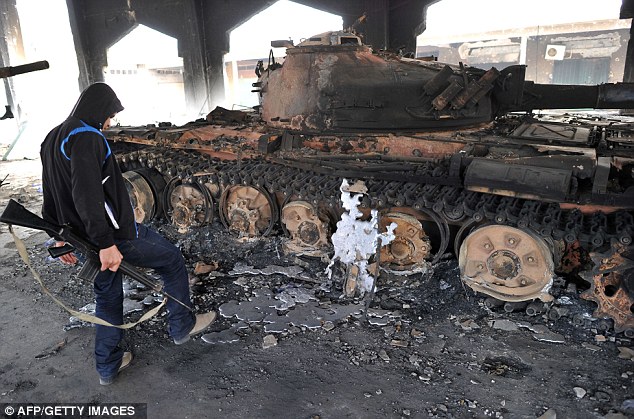
A destroyed tank used by Gaddafi forces. Does it matter if such military weapons were provided by states like the US, Germany, or Russia? (Photo: AFP)

Researchers at Amnesty International continue to argue that only a rigorous, case-by-case examination of proposed arms transfers can begin to address the problems and reduce outside military support for these atrocities. It’s a difficult and touchy situation in some cases, because U.S. allies are often the ones on the Amnesty hot seat. Israel, for example, has been identified as a regular user of U.S.-made weaponry, including hellfire missiles and white phosphorous artillery shells. The use of white phosphorous is considered a war crime when implemented against civilian populations, and although has Israel denied its use, doctors told Amnesty investigators that they had been treating severe burns consistent with white phosphorous injuries. Continue reading

Posted in al-Shabaab, Arms Deals, Arms Trade, Bahrain, Egypt, Libya, Middle East, Syria, Tunisia, United Kingdom, United States, Yemen | 1 Comment

Dancing with the Devil – Dealing With Gaddafi

Just part of the game, right?

Sometimes there are articles that simply get under my skin and that create a pesky need to address them individually. John Deverell’s op-ed in The Guardian, There’s no shame in talking to pe0ple like Gaddafi, was one of those pieces.

Deverell is a British military figure who notes, with obvious pride, that he was involved in negotiations between the UK and Gaddafi. He is frustrated with a trend of criticizing the British government and institutions over their relationship with Gaddafi:

“it has become politically expedient to decry the relationship fostered since 2003 between the last British government and Gaddafi’s regime.

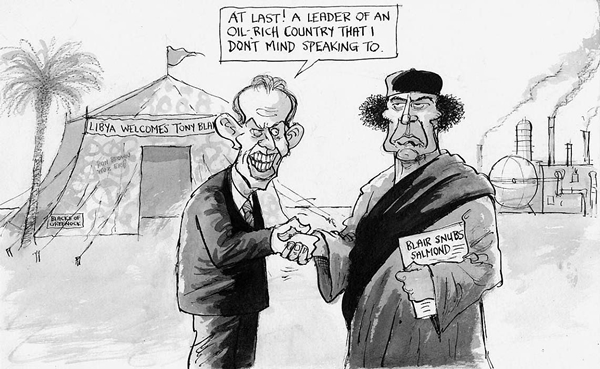
Former prime minister Tony Blair, officers from the British secret intelligence service, the London School of Economics (in the news again last week): all have been criticised for the personal relationships they built with senior Libyans, to the extent of being accused of turning a blind eye to human rights and other abuses.”

Deverell believes that none of these institutions have anything to apologize for. According to him, what they did was, quite simply, necessary. Rather than being an issue of concern, the relationship between Libya and the UK (and it could be said, for the US, France, Italy etc.),

“should remind us of the importance of communication and of building personal relationships with the other side – irrespective of the differences we hold – rather than to the contrary.”

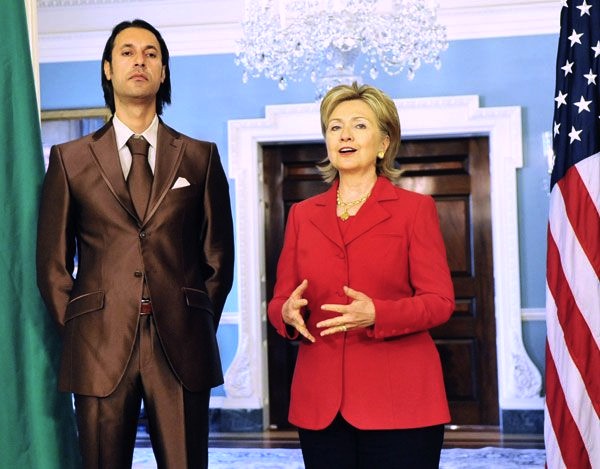
Gaddafi's son, Mutassim with Hilary Clinton during a meeting which was, at the time the highest level talks between Libya and the US in years. Many claim Mutassim was responsible for killing thousands of political prisoners and anti-Gaddafi forces.

Without “communication”, according to Deverell, Libya would still be developing weapons of mass destruction, building an arsenal of nuclear weapons and sponsoring international terrorism. British and Western institutions and governments should not be derided for “communicating” with Gaddafi but rather be praised!

Deverell adds that diplomacy must always come first and that Western treatment of Gaddafi’s Libya is demonstrative of this belief:

“Therefore communication, dialogue and the search for areas of common interest leading to a potential ‘win-win’ solution should never be disregarded as an option. As Winston Churchill noted, ‘better jaw-jaw than war-war’.”

Deverell is absolutely correct here: communication should always come before warfare. Few disagree that military intervention is an absolute last option to be exercised only in the most dire situations or when all other non-violent options have been exhausted.

But the challenge isn’t whether to “jaw-jaw” before “war-war”. It is about knowing who to “jaw-jaw” with andjust as importantly, how to “jaw-jaw”. Continue reading

Posted in Arms Deals, Human Rights, Justice, Libya, United Kingdom | Leave a comment

US Troop Deployment Revisited – The Hunt for Kony

US Troops in the field (New Vision)

US President Barack Obama’s decision to send 100 combat armed military advisors to Uganda, Central African Republic (CAR), the Democratic Republic of Congo (DRC) and Southern Sudan made worldwide headlines about three weeks ago. The controversial decision and discussions about its consequences brought the LRA conflict back into the headlines after the world had all but forgotten about the steady trickle of mutilations, killings and abductions mainly committed in the DRC and CAR by the LRA. One thing has become very clear to me in interviews with diplomats and staff of international organizations that are working in the context of the conflict: the LRA is no longer seen as a threat for regional stability. This means that the LRA conflict has ceased to matter in the big picture of geopolitics. It is another one of those low intensity conflicts that claim the lives of innocent civilians on a daily basis but are not endangering the security interests of powerful nations. What does the US troop deployment mean in this context?

Since foreign policy practitioners do not see the conflict as a risk to regional stability, President Obama’s move could be regarded as a surprise. Yet, it makes perfect sense both in a US domestic as well as in an international perspective. The US has seen constant campaigning by civil society organizations like Enough and Invisible Children who pressure the US administration to do something about the deaths of innocent civilians in Central Africa. The campaigning led to the signing of the LRA Disarmament and Northern Uganda Recovery Act by Barack Obama in May 2010. A high ranking diplomat I talked to a couple of weeks before the troop deployment told me that he expects the US to ‘do something’ in the LRA context soon, as a Congress report on the LRA Act was upcoming in late October and the administration needed to be seen doing something. His prediction proved right.

US and UPDF soldiers during a training in Jinja (US Department of Defence)

From the international perspective, Uganda is of high strategic importance in the region. The Uganda People’s Defence Forces (UPDF) is one of the strongest armies in the area. It plays a major role in the UN Mission in Somalia, provides staff for UNAMID in Darfur, and plays the leading role in regional efforts to hunt down the LRA. The fact that the UPDF is providing troops for these missions removes pressure from Western nations to deploy their own troops in the region. Finally, the recent discovery of oil has just increased Uganda’s importance. The decision can therefore also be seen as an acknowledgement of the important role Uganda is playing in the region. Continue reading

Posted in Democratic Republic of Congo, International Criminal Court (ICC), Lord's Resistance Army (LRA), Southern Sudan, Uganda, United States | 2 Comments

US troops to Uganda & Kony off to Darfur?

A UN helicopter monitors LRA held areas in DRC in 2005 (Photo: Reuters/STR)

(This article was originally posted at RNW, here.)

The decision to deploy 100 US troops to Uganda in order to contribute to efforts in the “hunt for Joseph Kony” has been, by and large, positively received. Finally, many opined after the announcement by the Obama administration last week, the US was putting into action what it had for so long said it would do: – contribute to the elimination of the brutal and oppressive Lord’s Resistance Army (LRA) in Central and East Africa. The decision to send troops or, more accurately, “military advisers,” also marked a substantial shift in White House policy. Less than a year ago, the administration signed a bill which committed the US to the fight against the LRA but guaranteed that any American commitment would refrain from “putting boots on the ground.”

It is important to view the Obama administration’s decision with some scepticism. In twenty-five years, the government of Uganda, at times with regional support from neighbouring states, has failed to defeat the LRA. Locating Kony, who has been remarkably adept at avoiding death or capture, has not and will not be an easy task in a region of Africa which has been devastated by violent political conflict, has minimal infrastructure and large swaths of which can accurately be described as lawless. The idea that all it takes is 100 US soldiers to defeat the LRA and the “crazy”, “mystical” and “bizarre” Kony is a fallacy – and a dangerous one at that.

Some of these difficulties have been captured by astute commentators. But what has yet to be adequately considered are the regional dimensions of the decision by the US to intervene. It may be that this renewed military impetus to fight the LRA and “remove Kony from the battlefield” will export the LRA to areas where US troops won’t be allowed access. There is enough evidence to suggest that Darfur could be one such area.

A cosy partnership: Khartoum and Kony

While orthodox descriptions of the war in Uganda often paint the conflict as an intra-state war between the government of Uganda and the LRA, any assertion of the war being constrained within the territorial boundaries of Uganda could not be farther from the truth. Tellingly, in the first ever prosecution against a LRA commander, the Ugandan government charged Thomas Kwoyelo with breaches of the Geneva Conventions, charges which require that the breaches were conducted in the context of an international armed conflict.

The relationship between the LRA and the Government of Sudan goes back, at the very least, to 1994. Since then, Khartoum has employed the LRA to act as a proxy in its civil war against Sudan People’s Liberation Army (SPLA) in South Sudan. LRA rebels were often protected, provided with weaponry, and supported economically by Khartoum.

The cosy relationship between Kony and Khartoum can accurately be described as an “open secret” in the region – everyone knows it but there is little official acknowledgement of the fact. In an illustrative example recounted to the author, a rebel commander, ordered to destroy a radio tower with newly acquired bombs in Gulu, northern Uganda, was told that he must both fulfil his mission and retrieve any remnants of the bombs used. Those bombs were provided by the government of Sudan.

It is widely believed that Sudan ceased its support for the LRA in the mid-2000s. This is often ascribed to pressure from the international community and a desire not to be associated with Kony, against whom the International Criminal Court (ICC) issued an arrest warrant. However, last year, evidence emerged that Kony may have been hiding in Darfur, once again acting at the behest of Khartoum. This was corroborated to the author by former senior LRA commanders in northern Uganda.

Thinking regionally, marginalising rebels and exporting conflict

Since 2006, when the Juba peace talks to end the conflict between the government of Uganda and the LRA began, the LRA has not had much, if any, presence in northern Uganda. Indeed, most northern Ugandans will tell you that there is peace in the area, often described as “a silencing of the guns.” But this sense of peace belies the reality that the conflict in northern Uganda has been “exported” to neighbouring states, particularly the DRC, South Sudan and CAR. LRA attacks on and abductions of civilians in these states have been an all too regular occurrence. Continue reading

Posted in Darfur, International Criminal Court (ICC), Lord's Resistance Army (LRA), Peace Processes, Sudan, Uganda | 2 Comments

Chasing al-Shabaab: Picking and Choosing Justice

This is the second piece by Andrew Jillions on Kenya’s decision to invade Somalia. Check out Andrew’s first post here. Enjoy!

What are the implications behind Kenya’s decision to wage a war of enforcement instead of a humanitarian war?

Mary Ellen O’Connell has suggested that the issue of targeted killings and counter-terrorism raises a straight choice between observing peacetime law or the law of armed conflict.

International law, she argues, has clear enough rules on the circumstances in which one or the other framework applies. This is important: it provides a level of protection against state subjectivity, against the possibility of states playing with the rules to suit their own political purposes. That international law can ensure states make the right choice speaks to the independent power of international law against the attempts by policy makers to turn law into a reflection of power.

In more immediate and practical terms choice matters because it determines how extensive a state’s obligations will be. Choosing to apply, say, the law of armed conflict instead of human rights law will have a dramatic effect on determining the legality of detention and fair trial practices. The flip side of this is that by presenting an action or technology (e.g. nuclear weapons, drones and cyberwar, etc.) as in some substantive way ‘new’ and ungovernable under the existing framework can potentially beg the question about which law to apply.

This, at any rate, is one way to sketch the narrative of why ‘non-state armed groups’ have caused so many headaches for international lawyers trying to reign in the powers claimed by the US in the “war on terror”. There was a background ambiguity about which rules applied, an ambiguity that the US could exploit to co-opt law to their subjective agenda.

I’d suggest that there is something similar going on in Kenya, a narrative of choice that has implications for the practice of humanitarian intervention.

Saving citizens; ignoring strangers

Instead of talking about the humanitarian crisis, Kenya has ignored it. Al-Shabaab are by turns an international criminal organization and a threat to Kenya’s internal and border security. The law on the use of force – Article 51 – is the body of law they point to, although as I’ve suggested the reference to ‘hot pursuit’ makes the counter-terrorism enforcement framework a more likely candidate.

The name they’ve chosen for the operation is Linda Nchi, which translates as ‘protect the country’ in Swahili. On listening to the way Kenyan officials talk about the intervention there is no doubt which country the action is intended to protect. You could be forgiven for thinking that the great evils al-Shabaab have perpetrated are: radicalizing Kenyan nationals, secreting themselves amongst genuine refugees, attacks on border posts and assorted military and security personnel, kidnapping Western tourists and aid workers, and endangering the tourism industry . . . as many as nine separate incidents in all!

(Photo: AFP / Tony KARUMBA)

But what about al-Shabaab’s responsibility for famine crimes, war crimes and crimes against humanity? Perhaps the Kenyan government doesn’t think it is relevant or useful, or simply doesn’t care. Alex Perry suggests that this is no great surprise; war is exciting, humanitarian crisis is depressing. More than this, Kenya’s decision lasers in on how little humanitarian concerns count for in a straight fight against a states’ perceived political and strategic imperatives. Continue reading

Posted in al-Shabaab, International Criminal Court (ICC), Justice, Kenya, Responsibiltiy to Protect (R2P), Somalia | 1 Comment

Chasing al-Shabaab: Is Kenya ‘Right to Intervene’ in Somalia?

Andrew Jillions joins us once again to consider the legality and justice of Kenya’s incursion into Somali territory last week. This post is the first of two on the subject, so keep your an eye out for the second piece tomorrow. Enjoy!


al-Shabaab troops

Nominally at least, the Kenyan incursion into Somalia was triggered by the al-Shabaab terrorist threat. As Kenya’s internal security minister put it on the eve of the intervention, this is a war of self-defence: “the government is taking robust measures to protect and preserve the integrity of the country by invoking Article 51 of the UN Charter”. The Minister for Defence went on to clarify that Article 51 grants “the right to pursue the enemy through hot pursuit and try to reach them wherever he is”.

But does this really meet the threshold for a war of self-defence? Or is it better thought of as part of an emerging law of enforcement? And where, pray tell, does the humanitarian crisis in Somalia fit into this?

Threshold Test 1: Self-defence

There are some issues with the Kenyan claim to be acting in self-defence. Namely, al-Shabaab’s incursions weren’t of sufficient seriousness to trigger the right of self-defence. Even if the spate of recent kidnappings and deaths could be decisively attributed to al-Shabaab, and even if we took into account the other 8 instances of aggression cited against al-Shabaab, it would still not be enough to justify a violation of Somali sovereignty on the basis of self-defence. In other words, the Kenyan response fails the classic tests of necessity and proportionality.

The explanation that Vidan Hadzi-Vidanovi  offers is that they’ve been reading Dinstein. Kenya was attempting to aggregate a number of ‘pin-prick’ attacks in order to reach the gravity required to trigger a war of self-defence, but haven’t quite pulled it off. Even if Kenya has been made more insecure because of al-Shabaab’s border operations, recruitment and dislocation of civilians, this not the same as being directly targeted.

Threshold Test 2: Unable or unwilling to enforce

But there is another possibility. This is that the Kenyan government had in mind the ‘unable or unwilling test’, the same test employed to justify the US violation of Pakistani sovereignty in the Bin Laden killing. In other words, they’ve been reading Ashley Deeks.

Kenyan troops entered Somalia last week (Photo: AP)

This is where the Kenyan government has been either ingenious or disingenuous, depending on how determinate you like your international law.

Where they describe the intervention as justified by a norm of ‘hot pursuit’, the growing scale of the conflict makes this a difficult justification to sustain.  More appropriate is to see this as an intervention premised on Somalia’s structural inability or unwillingness to deal with the international terrorist organisation al-Shabaab. It’s not the kidnappings that justify the intervention. It’s the evidence that Somalia is functioning as a safe-haven for a terrorist organisation.

The crucial point about the unable or unwilling test in the context of counter-terrorism is that it looks for a pattern of cross-border aggression or the existence of a transnational criminal organization; far less crucial is the threshold or seriousness of that act of aggression. The effect of this is that when we look at the basis for intervention in Somalia, we should be looking at al-Shabaab’s status as a transnational criminal organization, and at the Somali government’s inability or unwillingness to deal with this transnational threat. There’s no real need to substantiate the claim to be acting in self-defence. The essence of the claim is that multiple violations of the type that did or could have permitted a hot pursuit can trigger a more sustained intervention on the basis of the unable or unwilling test.

A worrying development?

Part of the problem with using the unable or unwilling test to ground law enforcement is that it elevates state weakness into an actionable quality. Actually we can go further than this in the Kenyan case: it elevates an admission of weakness into an actionable event. Continue reading

Posted in al-Shabaab, Famine, Justice, Kenya, Somalia | Leave a comment

Is Killing the new ‘Justice’? The Murky Morality of Target Killings

Dear readers – This marks the first post at JiC by Elke Schwarz. Elke has been JiC’s long-time and faithful editor. Because of her work, we hopefully don’t have too many spelling or grammatical errors! More importantly, Elke is a PhD student at the LSE where her work focuses on the ethics of violence, biopolitics and the work of Hannah Arendt. In this thought-provoking post, Elke addresses target killings and, in particular, the ‘justice’ of using drones. Enjoy!

Is Killing the new ‘Justice’? The Murky Morality of Target Killings

The controversy surrounding Gaddafi’s death has added fuel to the fire in the debate about the legitimacy and ‘justice’ of killing those that are considered particularly evil. Whether the killing takes place directly at the hands of Western forces, as in the case of bin Laden, or whether the grounds are laid to essentially pave the way for a revenge killing, as it appears to have been the case with Gaddafi, the debate on whether killing is the new justice in the foreign policy tool belt of the West is afoot – and rightly so.

MQ-9 Reaper drones are used in Afghanistan and Pakistan. Photo: Wired

Questions of legality, legitimacy and morality ought to be posed when considering the current narrative that shifts the practice of target killing into the space of justice. The post below is an updated and version of an article I had written in the wake of the drone killing of Anwar al-Awlaki last month, but the underlying principles of assassinations as a new norm are worth considering again in the context of Gaddafi’s demise.

The recent news of the killing of US citizen Anwar al-Awlaki by American drones sparked a much overdue flurry of criticism and questions on the ethics and legality of Obama’s death-by-drone programme in the war on terror. Awlaki, al-Qaeda’s alleged ‘chief of external operations’ in Yemen (an upgraded title he received posthumously by officials at the White House and the CIA – previously he was by reputation and status merely a radical Muslim cleric) is the first US citizen to have been assassinated in President Obama’s brand of the fight against terrorism.

The drones programme is by no means a recent tool in the American war chest, nor has it been particularly reserved in its remit of eliminating specified targets in this interminable ‘war’ effort. What is new, however, is that the US has given the green light to eliminating its own citizens, without due process, stripping said citizens of their 5th Amendment rights and rendering them essentially unworthy of living. Awlaki was not the only US citizen targeted and killed by American drones – his 17 year old son was also a recent victim of a US drone strike conducted in Yemen a fortnight after Anwar al-Awlaki’s killing.

The fact that a public outcry against the extra-judicial assassination of a human being becomes audible (aside from the controversial killing of enemy #1 bin Laden of course) only when a US citizen is concerned starkly highlights the normalised extra-judicial status of all foreign drone targets in the perception of the international public. The gloves that came off during the Bush administration are still off and killing as the new justice is beginning to supersede the norm against assassinations.

The norm against political assassinations has been in serious peril since the Bush administration first overtly conceded the strategic use of target killings, framed as a military act to weed out and eliminate high-level Al-Qaeda members, in 2002. This norm continues to deteriorate with Obama at the helm, who has stepped up the drones programme considerably since he took over from Bush junior in 2008.

Funeral for victims of drone strikes. Photo: NY Times

Today, there are roughly double the number of drone attacks per week in regions deemed terrorist hotbeds, specifically Pakistan. Since 2004, these drone strikes are reported to have killed between 1,579 and 2,490 individuals, whereby some analyses estimate the civilian casualty rate among these statistics to be as high as 20%. The vast majority of these deaths have occurred in 2010. Since June 2011, the US has expanded its drone programmes in Somalia and it has been reported that some 145 drone strikes have contributed to the capture (and, one might make the case, the killing) of Gaddafi.

While the policy originated as a programme to “capture and kill” a small number of high value terrorist leaders in the G.W. Bush years, the programme has expanded its remit considerably: up to 2,000 killings can hardly be described as a small number, no less if we accept that the total number of military leaders killed was a mere 35 since 2004.

Continue reading

Posted in Afghanistan, Drones, Justice, Libya, Osama bin Laden, Osama bin Laden and international law, Pakistan, Terrorism, The Tripoli Three (Tripoli3), United States | 2 Comments