Justice in Bangladesh: What to Expect

Dawood Ahmed joins JiC for this post to update readers on judicial proceedings at the Bangladesh War Crimes Tribunal. You can find his introductory piece on the subject here. Enjoy!

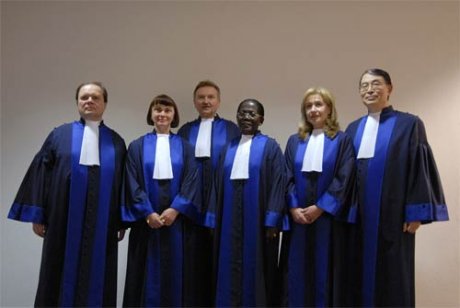
The Bangladesh War Crimes Tribunal (Photo: RNW)

Justice in Bangladesh: What to Expect 

Bangladesh appears to be powering ahead with its war crimes tribunal, established to try those who collaborated with the Pakistan army in committing war crimes during the 1971 independence war. On Nov. 20th, its first suspect, Delwar Hossain Sayedee was charged. I wrote here about the historical context in which the tribunal was established.  The Bengali government has also now upped its ante by demanding a formal apology from Pakistan, although it is not clear whether this is forthcoming.

The tribunal has been welcomed by many as a late but useful tool to “set the record straight”, so to speak. Nevertheless, though many were killed or suffered in other ways that year, the fact still remains that the tribunal is thought to be a kangaroo court.

A major criticism relates to case selection. Although the tribunal claims comprehensive jurisdiction to “try and punish any individual or group of individuals, or any member of any armed, defence or auxiliary forces, irrespective of his nationality, it is not prosecuting Pakistani soldiers or members of the Bangladesh military. It is chasing only easy targets, members of the opposition parties comprising the Bangladesh Nationalist Party and the Jamaat-e-Islami – indeed all seven defendants who are currently under investigation are elderly members of the opposition, some of whom were clearly against the creation of Bangladesh, but membership in itself does not, of course, make one necessarily guilty.

True, trying only political opponents reeks of strategic behavior, but not trying Pakistani soldiers or members of the military can hardly be said to be an unreasonable strategy. In an ideal world, it would no doubt be a good deterrent if everyone would internalize the costs of their crimes through punishment, but perhaps the government simply wants to achieve a symbolic closure and understandably not let the ‘perfect’ be the enemy of the ‘good’.

Bangladesh, like Pakistan, has seen the military overthrow the elected government a number of times in its relatively short history; the most recent coup was in 2007. Who then can blame the government for not wanting to upset the military?

(Photo: RNW)

In relation to trying Pakistani soldiers, it is wishful thinking that this was ever a possibility. Even after the war, when Bangladesh had access to Pakistani suspects and could collect fresh evidence against them (a video of the surrender is here for those interested in history), they could not succeed in doing so. So, what makes critics think that, 40 years later, Pakistan, would hand over some of its soldiers (many are dead, some are retired now) to be tried in Bangladesh for absolutely nothing in return – and frankly, what could Bangladesh offer to convince them? Continue reading

Posted in Bangladesh, Justice, Transitional Justice, United States, War crimes | 3 Comments

Fifth ICC Warrant in Darfur Case Announced – Sudanese Minister of Defence Indicted

The ICC Prosecutor seeks a warrant against the Minister of Defence of Sudan, Abdelrahim Hussein

It is a busy week for criminal justice and for Sudan in particular. On Monday, the Kenyan High Court issued a domestic arrest warrant against Sudanese President Omar al-Bashir. Today, Friday 2nd of December 2011, Luís Moreno-Ocampo requested the Pre-Trial Chamber I of the ICC to issue an arrest warrant for the Sudanese Minister of Defence, Abdelrahim Mohamed Hussein. After warrants had been issued for the then Minister of State for the Interior, Ahmad Muhammad Haroun, and Janjaweed leader Ali Kushayb in 2007 as well as for Sudanese President Omar al-Bashir in 2009 and 2010, this is the fifth arrest warrant that the Chief Prosecutor pursues in the Darfur case (three rebel commanders that were allegedly responsible for an attack on an African Union Mission in Sudan based in Haskanita all received summonses to appear). The application for a warrant of arrest for Hussein includes charges of war crimes and crimes against humanity committed in Western Darfur from August 2003 to March 2004. Hussein was Minister of the Interior during that time and was in charge of the Darfur file as Representative of the President in Darfur. Hussein in turn appointed Haroun as Head of the Darfur Security Desk. The Office of the Prosecutor (OTP) has thus now indicted the entire chain of command for atrocities allegedly committed in Darfur. It starts with the Janjaweed leaders on the ground that allegedly implemented the orders coming from the Government of Sudan, represented by Ali Kushayb. It then moves up through Haroun, who allegedly coordinated the Janjaweed attacks, and Hussein, who was in charge of Darfur in the Government of Sudan, all the way to the top until reaching President al-Bashir, who allegedly condoned and steered the whole campaign.

For those not familiar with the Darfur conflict, the Government of Sudan has been accused of orchestrating a brutal counter-insurgency campaign targeting the alleged supporters of ‘African’ rebel groups in Darfur who took up arms against the ‘Arab’ domination of Sudan and Darfur. The Government of Sudan allegedly recruited Arab militias, the so-called Janjaweed, to attack ‘African’ villages and displace their inhabitants. The Sudanese Armed Forces were either directly involved in the attacks with ground troops or supported the Janjaweed with gunships and Antonov planes bombing the villages. Hussein is accused of overseeing these government operations in Western Darfur.

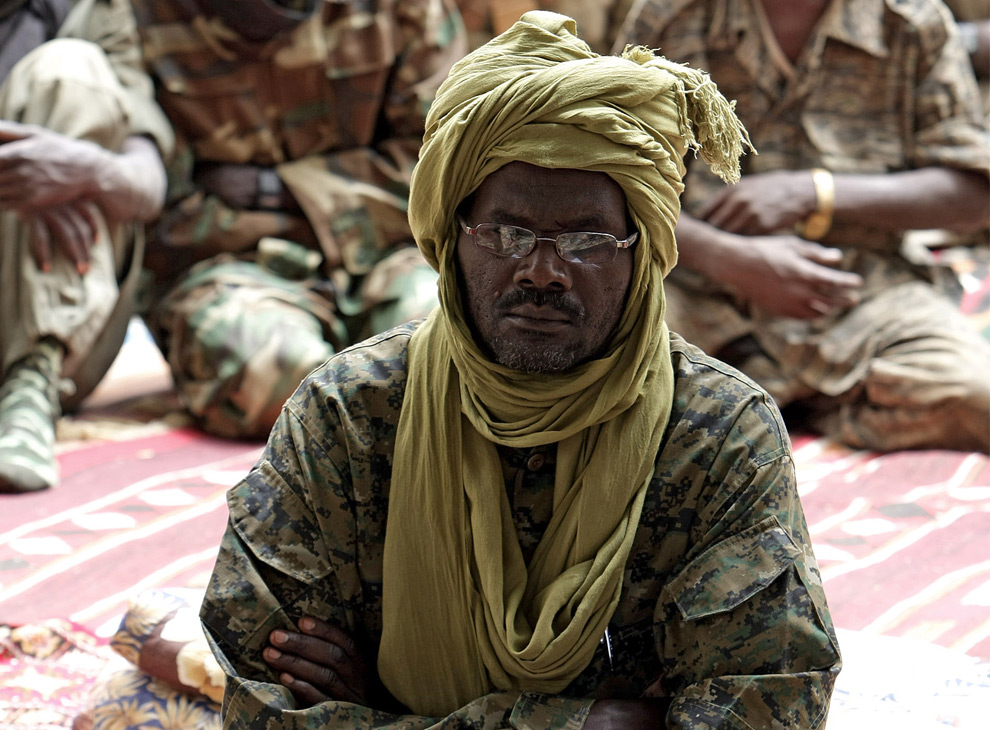
A group of Janjaweed militia fighters

The indictment of Hussein does not come as a big surprise. The OTP had already announced publicly that it was conducting a third phase of investigations in Darfur. Hussein’s role in the Sudanese counter-insurgency campaign in Darfur was also widely known before today’s application for an arrest warrant. Human Rights Watch included him on a list of national government officials responsible for atrocities in Darfur in December 2005. Indeed, many experts doubted the wisdom of directly indicting President al-Bashir instead of taking somebody further down the chain of command first. Chances are that the ICC could have received support from the African Union for an arrest warrant against the Minister of Interior if it had not rushed for the grand price by indicting al-Bashir. Instead the al-Bashir warrants caused a rift between the ICC and the African Union that complicated the Court’s work in later cases like Kenya and Libya. I doubt that the OTP was completely surprised by the strong reactions. Staff members told me that they think the international community did not react to remarks by Moreno-Ocampo that he was moving up the chain of command because nobody was expecting him to go directly for the President.

Why take the step to indict President al-Bashir if a controversial reaction was to be expected? The answer is simple: Moreno-Ocampo started pursuing a strategy of public shaming against the Government of Sudan after he failed securing the arrests of Haroun and Kushayb. In this context, going for a public arrest warrant including the crime of genocide against the head of state was an extreme but logical choice. This strategy has again been confirmed in the OTP announcement concerning the warrant for Hussein. It says: After careful consideration, the Office of the Prosecutor has decided to publicly seek a warrant against Mr. Hussein to encourage further public focus on Government of the Sudan policy and actions, and promote cooperation […].’ After the Darfur conflict had been increasingly overshadowed by developments in Libya and Syria, the Office of the Prosecutor apparently decided it was time to heighten the pressure on Sudan again. The application for a warrant notably comes shortly before Moreno Ocampo’s next briefing on the Darfur case at the UN Security Council on December 15th.

A burning village in Darfur

Moreno Ocampo’s motivations behind pursuing the new warrant are not hard to guess. First, he wants to show that the ICC has not lost the tug-of-war with al-Bashir. After visits by the President to several Member States of the ICC, the Court had started looking like a toothless institution. The warrant is an announcement that the ICC is not giving up on Darfur. Second, as shown above, indicting Hussein is the logical conclusion of the investigations so far carried out in Darfur since the warrants would now cover the whole chain of command involved. Ocampo did not want to leave unfinished business, he was also eyeing his legacy at the ICC in the Darfur case when applying for this warrant. Third, and in a similar vein, Moreno-Ocampo might be reacting to some of the criticism leveled against the Court during its Darfur investigations. Jumping directly to al-Bashir had been a controversial decision. Indeed, Human Rights Watch recently called on Moreno-Ocampo to indict senior officials below President al-Bashir in a critical report about his legacy at the OTP, again explicitly naming Hussein. In many ways the Darfur investigations during the era of Moreno-Ocampo came to their logical conclusion through this application for a warrant of arrest for the Minister of Defence.

That the warrant could change anything about the lack of cooperation of the Government of Sudan or could serve to focus international pressure on Sudan is doubtful though. The European debt crisis and the situations in Iran and Syria are currently binding most resources of the international community. Considering its history of sucessfully deceiving the international community for years, I doubt that the Government of Sudan is too worried that the new warrant could lead to some kind of coordinated action by the international community at the moment.

Posted in African Union (AU), Crimes against humanity, Darfur, ICC Prosecutor, International Criminal Court (ICC), Sudan, UN Security Council, War crimes | Tagged , , , , , , , , , | Leave a comment

A Done Deal: Bensouda is Next ICC Prosecutor

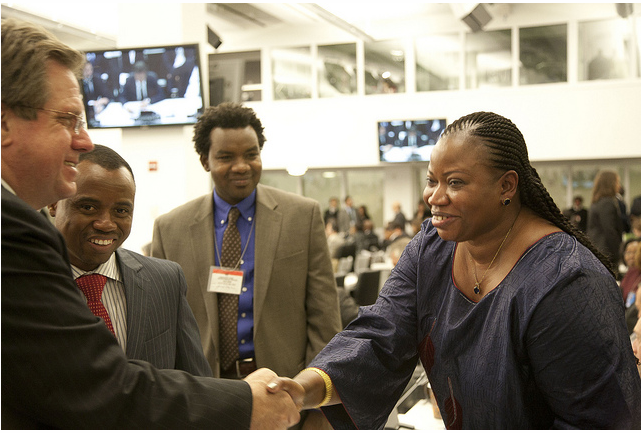
Fatou Bensouda: the ICC's next top Prosecutor.

According to Colum Lynch and a few other observers, Fatou Bensouda will become the next top Prosecutor at the International Criminal Court.

Earlier this week, the ICC announced that the four short-listed candidates (Robert Petit of Canada; Andrew Cayley of the UK; Mohamed Chande Othman of Tanzania; and Fatou Bensouda of Gambia), had been whittled down to two.

It has become apparent that the ICC’s Assembly of States Parties wanted to avoid an election by deciding on a “consensus candidate.” Kevin Jon Heller, at Opinio Juris, suggested that the ICC likely conducted informal polling which made clear that a consensus had formed around having an African Prosecutor. Othman subsequently decided to step aside, allowing Bensouda to emerge as the sole candidate for the job. In all likelihood, Othman understood his chances were slim-to-none given that the African Union – which had decided to support an African candidate for Prosecutor – endorsed  Bensouda.

Many readers of JiC will know that Bensouda has long been the favoured candidate to replace outgoing Prosecutor, Luis Moreno-Ocampo. Her name was consistently and emphatically mentioned by observers of the Court. This past September, I argued that the stars had aligned for Bensouda – she had the ICC’s top job “in the bag.” Bensouda clearly satisfied all of the political and merit-based criteria to become the ICC’s chief Prosecutor.

The selection of Bensouda as a consensus candidate is important for a number of reasons. Here are a few:

First, the selection of Bensouda, just weeks prior to the day originally set for an election, removes the possibility of a highly political election. Of course, this isn’t necessarily a good thing. An election would have created additional buzz and discussion about key issues surrounding the ICC and its first decade of work.

How will the legacy of current ICC Prosecutor, Luis Moreno-Ocampo, be judged?

Second, Bensouda becomes the first African Prosecutor at the ICC. This fact will almost surely garner the most media attention. The African Union has been adamant that an African candidate would be selected, and they got their wish. It will now be very interesting to see how the AU deals with an African Prosecutor. The AU has often expressed frustration and, at times, outright hostility towards the Court for what it, and many of its member states, see as undue bias towards African nations and leaders. Now that the AU has its chosen candidate, will its attitude and rhetoric change?

Third, Bensouda’s ascension to the top job is another remarkable feat for gender parity in international institutions and international politics. The United Nations has never had a female Secretary General. The World Bank has never had a female President.

Fourth, the ICC not only has a lot on its plate, but the number of courses being served is ever-increasing. In the past year alone, two additional situations (Ivory Coast and Libya) were added to the growing list of contexts in which the Court is conducting official investigations and prosecutions. It is not out of the question that others, like Syria, will join Libya, Ivory Coast, Kenya, the Democratic Republic of Congo, Sudan, the Central African Republic, and Uganda, in the near future. It would seem sensible to suggest that, as the Court’s current Deputy Prosecutor, continuity will serve Bensouda well. States didn’t want to mess with the AU on this one.

Fifth, and related to the last point, by all accounts Bensouda is a much more low-key prosecutor than Moreno-Ocampo. Her selection would thus appear to confirm the desire among states parties to select someone who will be more of a ‘secretary’ than a ‘general’ – a prosecutor who won’t ruffle as many feathers.

With Bensouda claiming the single most visible position in the international criminal justice firmament, attention will begin to shift back towards the tenure of the Court’s current Prosecutor. As the ICC’s first Prosecutor, Moreno-Ocampo’s time has been replete with controversy. But he also put the Court on the map and spotlight of international politics, in the face of nay-sayers, critics and a plethora of hostile forces. In the coming weeks, it will be interesting to read and hear retrospectives on a man who, arguably more than anyone else, has shaped the politics and pursuit of international criminal justice.

***********************************************

UPDATE: on the issue of “secretary or general”, there has been a bit of confusion as to what this means. It is a phrase, developed to distinguish between UN Secretary Generals, intended to describe the style of their work, not the substance. As I suggested in an earlier post, readers and diplomats should not be fooled into thinking that Bensouda will shy away from the most difficult issues and getting things done, even if that means stirring the pot.

Posted in Fatou Bensouda, ICC Prosecutor, International Criminal Court (ICC), Next ICC Prosecutor | 9 Comments

Tightening the Noose? The Kenyan Arrest Warrant against President al-Bashir

President Omar al-Bashir was indicted by the Kenyan High Court on Monday, 28th November 2011

Reuters was amongst the first to report that the Kenyan High Court had issued a domestic arrest warrant against the Sudanese President Omar al-Bashir on Monday, November 28. Bashir was the first head of state indicted by the International Criminal Court for crimes committed under his command responsibility during the Darfur conflict in the western part of Sudan. The ICC has issued two arrest warrants against him: one for war crimes and crimes against humanity, issued in March 2009, and a second for the crime of genocide, issued in July 2010.

Despite the warrants the ICC has so far not been very successful in taking steps towards ensuring the presence of al-Bashir in a courtroom. Instead, the arrest warrants have led to a cat-and-mouse game between the Court and the indicted President.

At the same time the warrants have been the initial trigger for a row that developed between the ICC and the African Union (AU), which claimed that the warrants hindered peace efforts in Darfur. In a decision – interestingly taken in Sirte and driven by Muammar al-Gaddafi – the AU decided not to cooperate with the ICC by ignoring the arrest warrant for President al-Bashir.

Against this backdrop, it is difficult to tell how successful the ICC arrest warrants were in isolating al-Bashir and increasing the pressure on Sudan to extradite him. Comparing the number of official visits Bashir conducted before and after the warrants, it is clear that his freedom of movement has been reduced. While Bashir for example regularly visited Kampala, the capital of neighboring Uganda, before the warrants were issued, he has not been to Kampala since and has skipped at least two conferences there, including the AU summit in 2010. The warrants even led to a diplomatic row between Uganda and Sudan when the Ugandan Foreign Minister stated that Bashir would be arrested if he came to Uganda in the run-up to a conference in July 2009. In the meantime, AU Member States like Botswana and South Africa have confirmed that they would stand true to their commitments arising from the Rome Statute and arrest al-Bashir despite the AU decision to the contrary.

President al-Bashir arrives in Nairobi for the celebration of the new constitution in August 2010 (Photo: Stephen Mudiari)

Other ICC Member States like Chad, Malawi and Kenya have pointed out the conflicting obligations arising from the Rome Statute and the AU decision to justify their hosting of Bashir. Some other events have shown that it has become difficult for Bashir to travel freely, even to states not party to the ICC. In June 2011 al-Bashir cancelled a trip to Malaysia after massive civil society protests that prompted a cabinet meeting of the Malaysian government, discussing the invitation.

During a trip to China in summer 2011 al-Bashir’s plane had to return to Teheran, delaying the visit by a day, because Turkmenistan and Tajikistan had apparently not conceded overflight permissions. Other sources say Bashir was afraid of a plot to intercept his plane.

Against the background of this tug-of-war between supporters and critics of the ICC arrest warrants against Bashir, the recent ruling of the Kenyan High Court is an important development. First, it shows that the rift between supporters and critics does not only run through the AU, but has also emerged between parts of civil society and some governments in the Member States themselves. Continue reading

Posted in African Union (AU), China, Crimes against humanity, Darfur, International Criminal Court (ICC), Kenya, Malaysia, Peace Processes, Southern Sudan, Sudan, Uganda, War crimes | Tagged , , , , , , , | Leave a comment

The ICC Nabs its First Head of State: Laurent Gbagbo Heading to The Hague

Laurent Gbagbo: from Head of State to ICC detainee.

To all those who have bemoaned the International Criminal Court for its inability to lure heads of state before its judges: you have about a day or so to get it out of your system. If reports are correct, the former President of Ivory Coast, Laurent Gbagbo is being transferred to the ICC.

For the ICC, Gbagbo’s transfer is a significant victory. For the Ivory Coast, it remains to be seen how this most recent turn of events will affect the country’s attempts to achieve peace, justice and reconciliation.

A Political Coup for the ICC

In a piece I wrote for International Justice Day, I articulated what many observers probably already knew, but which seems even more pertinent today:

I believe that over the next year, the ICC will put its first former head of state in the dock. Now, don’t go making travel plans to see Sudan’s Omar al-Bashir or Libya’s Muammar Gaddafi facing judges in the Hague. My prediction, rather, is that the former President of Ivory Coast, Laurent Gbagbo, will be brought to the ICC. The Court’s Pre-Trial Chamber is still deliberating on whether to open an investigation in Ivory Coast, but it would be politically irresistible for the ICC not to accept. Gbagbo has already been detained, meaning a transfer to the ICC would be relatively easy. The Office of the Prosecutor would no doubt rejoice in the ability to say: “the Court is able to Prosecutor head’s of state – just look at Gbagbo!”

Violence ripped through Ivory Coast for months following a contentious presidential election (Photo: CNN)

Whether or not the ICC or its advocates like it, much of its success has been and will be measured on the battlefield of rhetoric and politics. In this context, it cannot be understated: Laurent Gbagbo’s imminent transfer to the Court is a massive victory for the ICC. In rhetorical terms, the argument, often proclaimed by critics, that the Court is impotent because it can’t get the “big fish”, has been decimated. Now the ICC and its champions will be able to say it was just a matter of time, we always knew we’d get the big fish. Under her blind fold, lady Justice is sticking her tongue out at the ICC skeptics.

Of course, such a simple narrative belies the fact that Gbagbo was deposed, in large part because of an international intervention. Unlike in the case of Sudanese President Omar al-Bashir, for example, Gbagbo has not been in power for months but rather has been held in detention. Regardless, these details don’t stick as well in the popular imagination as “we are trying a former head of state.”

Justice in Ivory Coast: Questions Remain

How a trial of Gbagbo at the ICC will affect peace, reconciliation and justice in Ivory Coast, remains uncertain. While some reports suggest the situation on the ground has been improving, the country was ravaged by instability, chaos and brutal violence before an international intervention, led by French troops, guaranteed Alassane Ouattara was instituted as President. Continue reading

Posted in International Criminal Court (ICC), Ivory Coast / Côte d'Ivoire, Ivory Coast and the ICC | 2 Comments

Making War Illegal – The Crime of Aggression and the ICC

Over the next few days, we will be publishing three pieces on the crime of aggression. With the first post, JiC welcomes Teddy Nicholson, an MSc International Relations student at the LSE with an avid interest in the subject. In this thoughtful critique, Teddy takes aim at the lack of attention paid to the crime of aggression which, he argues, has the potential to fulfill the real Nuremberg Legacy. Enjoy!

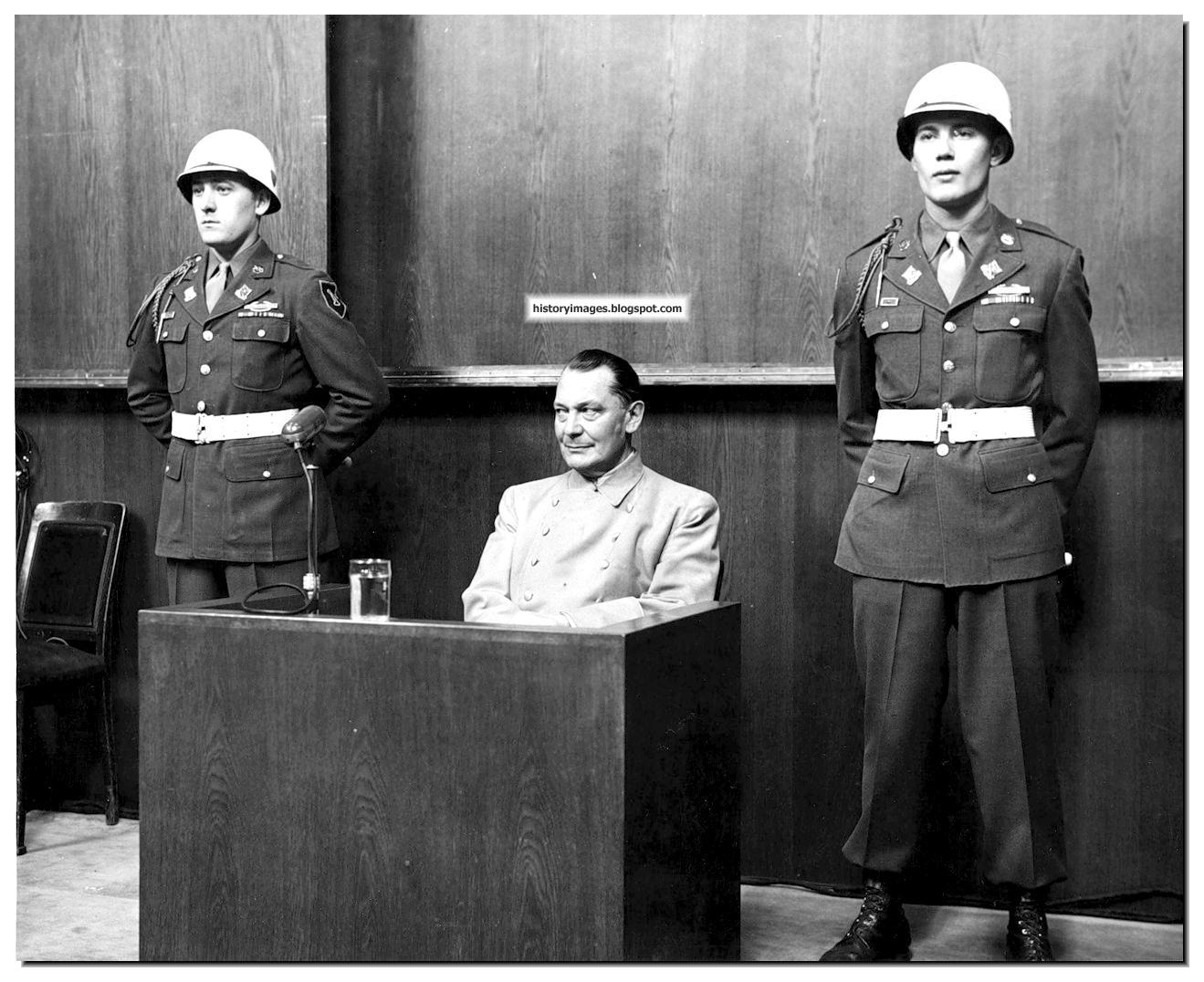
Former Nazi second in command, Herman Goering, sits in the dock during the Nuremberg Trials.

Making War Illegal – The Crime of Aggression and the ICC  

One of the less discussed but more remarkable developments in international criminal law was the agreement in June 2010 at the ICC Review Conference on the crime of aggression. The codification of laws against aggression has the potential to be one of the most profound shifts in the underlying institutional architecture of international society since the signing of the Rome Statute in 1998 and perhaps even the creation of the United Nations in 1945.

What makes the situation more remarkable is how little attention has been paid to the crime of aggression. What really brought this home to me was a discussion I had with a high level official from the Office of the Prosecutor of the ICC shortly after the review conference who told me that the OTP was paying limited attention to this new crime under the Court’s jurisdiction. This lack of interest in the subject was reinforced at a recent talk by an eminent jurist with a long career in international criminal law. When I asked him about the development of the crime of aggression, he gave a vague and generic answer which betrayed a lack of engagement with it. I have since become increasingly convinced that this is because those who work in or around the Court on a regular basis tend to see the core mission of the ICC as fitting in with a human rights agenda and don’t know how to deal with the crime of aggression.

Criminalizing Aggression: A Brief History

I have made some strong claims for the crime of aggression. In order to justify these, we need to take a look at the history of the crime.

There is a common narrative of international criminal law that treats the ICTY, ICTR and ICC as fulfilling the ‘legacy of Nuremberg’. This involves telling a story in which Nuremberg was a response to the hideous human rights violations in the Holocaust, and was followed by revolutions in human rights centered around the Universal Declaration of Human Rights, the Genocide Convention and the Geneva Conventions. International Criminal Law was then put on ice for 50 years by the Cold War until the 1990s when tribunals were established that would finally give teeth to the long-gestating international human rights movement.

Former Nuremberg Prosecutor, Ben Ferencz, dances during celebrations at the Kampala Conference where the crime of aggression was defined and enshrined in the Rome Statute (Photo: Margaret deGuzman)

The problem with this story is that it is an ahistorical account of what the Nuremberg International Military Tribunal (IMT) represents. Rather than the IMT being institutionally complementary to the human rights movement, it was designed to complement the UN Charter. It is often overlooked that the main crimes for which the Nazis were tried for were not crimes against humanity or war crimes, nor genocide (which hadn’t been codified), but crimes against peace – what we now call the crime of aggression. Continue reading

Posted in Crime of Aggression, International Criminal Court (ICC), Nuremberg Trials, UN Security Council | 2 Comments

Beyond Criminal Justice: A Truth Commission in Libya

A fascinating debate about where to try the two surviving members of theTripoli Three – Saif al-Islam Gaddafi and Abdullah al-Senussi – is currently raging (see here, here and here). It’s an important debate, and, as readers will know, I have chirped in as well.

But the preoccupation with criminal responsibility shouldn’t detract from the over-arching need for accountability, truth and reconciliation in Libya. Yes, ‘accountability’, ‘truth’ and ‘reconciliation’ are lofty and contested words; this blog post doesn’t pretend to capture the competing views or the political nature of each. The point is rather simple: after forty years of a police state engaging periodically in international terrorism and repressing the freedoms of its own people, there’s a need to pursue justice outside of the courtrooms. An empowered and independent truth commission in Libya could help do just that.

Beyond Trial-Heavy Transitional Justice

The development of international criminal justice is nothing short of remarkable. According to its President, Sang-Hyun Song, when the International Criminal Court became a reality in 2002, the Court’s first judges expressed doubt that the ICC could survive the skepticism and hostility of international politics. Today, hardly a day goes by that an international tribunal isn’t in the news. So remarkable is its reach that individuals, from Sudanese President Omar al-Bashir to former Secretary of State Henry Kissinger, not only fear international criminal justice but calibrate their day-to-day lives according to its reach.

Yet, simultaneously, the expansion of international criminal law onto the agenda of international politics has led to a myopic focus on individual criminal accountability. Indeed, transitional justice and justice in conflict are, generally, trial heavy. Thus, a handful of individuals are deemed responsible for social processes as complex as the alleged genocide in Darfur and the war in Vietnam.

Of course, the focus on individual accountability is not, in itself, a bad thing. There are some individuals who are most responsible for international crimes. However, the attention, resources and political will aimed at ensuring international criminal justice should not come at the expense of identifying the social causes of atrocities. In contexts like Libya,  justice does not end with the sounding of a gavel. There is a need to bring to account those who allow atrocities to occur but could never be brought before an international or domestic tribunal. As Kirsten Ainley explains in a forthcoming paper,

“responsibility for war crimes lies not with individual perpetrators alone but also in significant measure with collectives and with those individuals who did not commit crimes but did contribute to harm.”

Ainley rightly adds that individual accountability should not detract from addressing the “excesses of responsibility” outside of trial chambers. Truth Commissions (TCs) are in a perfect position to do just that.

Getting to the Truth through Truth Commissions

Truth commissions provide accountability primarily through the process of acknowledging that certain criminal acts were committed, and identifying individuals as responsible for those crimes. As the individuals responsible for harmful acts testify and acknowledge their behaviour, truths about the past emerge. Proponents of truth commissions argue that this process of acknowledgement is the first necessary step on the path towards closure and, possibly, forgiveness. Continue reading

Posted in International Criminal Court (ICC), Libya, Libya and the ICC, The Tripoli Three (Tripoli3), Traditional Justice Mechanisms, Transitional Justice, Truth and Reconciliation Commissions, Truth Commission | Leave a comment

The “Crown Jewel” of Justice in Libya: Senussi, not Saif

Senussi interpol

Abdullah al-Senussi (Photo: Interpol)

Since the NATO-backed rebellion in Libya began to sweep away at the four-decade rule of Muammar Gaddafi, the international attention (deficit disorder) paid to Libya has tended to only concentrate on one of the Tripoli Three at a time.

For the vast majority of the conflict, virtually all attention was paid to the enigmatic leader of the country, Colonel Gaddafi. With a few notable exceptions (his links to the LSE and his appearance in Tripoli after being reported captured), Gaddafi’s son, Saif al-Islam escaped much scrutiny.

With Colonel Gaddafi’s death, attention naturally turned to Saif al-Islam, a man who allegedly plagiarized his way to a doctorate from the LSE and manipulated his way into the West’s imagination as a potential moderate heir to his father’s blood-soaked throne. This however, has allowed the third member of the Tripoli Three – the trio of ICC-indicted Libyan officials – to fly, almost entirely, under the radar.

Unlike Colonel Gaddafi and Saif al-Islam, this third member has not had videos or photos depicting his capture or detention splayed out before eager eyes on the internet. His name is Abdullah al-Senussi and he may just be the most important key to justice and reconciliation. Indeed, at a recent lecture in London, respected human rights lawyer Geoffrey Robertson described Senussi as the “crown jewel” of justice in Libya.

Who he is?

Senussi is 61. He is a long-time Libyan official and confidant of Colonel Gaddafi. He has variously been described as “the right hand man” of Gaddafi, the “keeper of Gaddafi’s secrets”, Gaddafi’s “eyes and ears” and, I’m certain, much worse. But Senussi is not just close to the Gaddafis, but part of the family, as Colonel Gaddafi’s brother-in-law.

Curious observers will notice that there isn’t much to find when searching for images of Senussi. This is because, despite wielding an immense amount of power, he has largely kept a low-profile.

Senussi’s involvement in Col. Gaddafi’s tyrannical rule began at some point in the 1970s, although little is known about his role at the time. Regardless, as one commentator noted, “Senussi’s association with the worst excesses of the Libyan regime stretch back to the early days of Col. Gaddafi’s dictatorial rule.” His power and evil streak stem primarily from his position as both the head of the internal and external intelligence services of Libya under Gaddafi.

As a key cog in brutally suppressing the Libyan revolution, Senussi was indicted by the International Criminal Court, as an “indirect perpetrator, for two counts of crimes against humanity.” He was captured this week while hiding in his sister’s home, in the south of Libya and Libyan authorities have said he will face trial in the country and not in The Hague.

What’s he done?

The list of massacres and crimes that Senussi has allegedly been involved in reads like a Christmas list from hell: Continue reading

Posted in Justice, Libya, Libya and the ICC, The Tripoli Three (Tripoli3), Uncategorized | 1 Comment

The International Criminal Tribunal for the former Yugoslavia: Reconciling Torn Societies?

The front of the premises of the International Criminal Tribunal for the former Yugoslavia in The Hague (Wikimedia Commons)

I have always been of the opinion that we need to closely scrutinize the effects that are being attributed to international trials. There is a tendency to conflate the objectives and capabilities of international courts and tribunals by putting forward ever new and more grandiose claims as to what they can actually achieve in building up post-conflict or post-dictatorship societies. One of the classical claims brought forward is that trials can contribute to the reconciliation of torn societies by determining who is and who is not guilty of committing atrocities and by presenting a truthful historical record on which a common future can be built.

According to Audrey Chapman reconciliation in this context means both the transformation of the relationship between people living in the conflict region as well as the creation of a new relationship built on trust between the people and the government (p. 143). As reconciliation processes are more likely to gain momentum in the long run, the case of the International Criminal Tribunal for the former Yugoslavia (ICTY) is probably the most suitable for having a closer look at these claims. Indeed, the ICTY does claim that it furthers reconciliation within its jurisdiction by personalising the guilt for atrocities and thus shielding communities from being labelled as collectively responsible in the general information material available at the premises of the court.

The ICTY has been investigating crimes and trying cases in the former Yugoslavia for close to two decades now. Important international players like the US have discouraged the court from ever becoming an effective institution in its early phases by trying to withhold necessary resources and the tribunal has seen its fair share of attempts of external political meddling in later years. Still, the ICTY has been able to produce some impressive results, including the arrest of those deemed most responsible for the worst crimes committed during the Balkan wars. The tribunal has shown that those indicted will eventually end up in the dock, even if it takes decades for justice to take its course.  Former Serbian President Milosevic was arrested in April 2001, and Radovan Karadzic, accused of being involved in the Srebrenica Massacre, was arrested in July 2008, after having lived in hiding as a doctor for alternative medicine in Belgrade for years. Finally, the court was able to secure the arrest of Ratko Mladic, the last fugitive among the high profile indictees of the tribunal, in May 2011.

Ratko Mladic in his uniform during war times

Continue reading

Posted in Apologies, ICTY, Ratko Mladic, Serbia, Slobodan Milosevic, War crimes | Tagged , , , , , , , , , , , , , | Leave a comment

ICC Confirms: Trial in Libya by the Court is a Possibility!

(Photo: REUTERS/Ahmed Jadallah/Files)

So it wasn’t such a crazy idea after all. Tucked away and close to the end of a Reuters article from last night were words that sped up my heart-rate. In the context of the ongoing debate about where to try Saif al-Islam Gaddafi and Abdullah al-Senussi, a spokesperson for the International Criminal Court admitted that a possibility exists to hold an ICC trial in Libya:

There are, however, few obvious alternatives to trying Gaddafi and Senussi at The Hague, which risks angering many Libyans, and holding a trial in Libya without ICC authorization, which is likely to upset the West, violate international law, and provoke accusations of victors’ justice.

ICC spokesman Fadi El Abdallah said a third option could be for the ICC to hold trials in Libya rather than at its Dutch headquarters, though how that would work in detail was unclear

“It is possible for ICC judges to organize a trial in the country if deemed appropriate,” El Abdallah said.

Readers will know that a handful of observers, including David Kaye, Kevin Jon Heller and myself (see here and here) have spoken out in favour of such an option. Yet, to date there had been no official statement in support or against it.

Of course, with ICC chief Prosecutor Luis Moreno-Ocampo bound for Libya at some point this week, it remains to be seen whether he will attempt to negotiate such a justice-sharing agreement with Libya’s National Transitional Council. He could insist on bashing Libyan authorities over their heads with their purported procedural obligation to hand Saif al-Islam over to The Hague – but given their obvious desire to hold a trial in Libya this would seem fruitless.

I say: go for it!

*********************************************

UPDATE: it seems that the arrest of Senussi and Saif-al Islam Gaddafi has instigated more discussion of a possible ICC trial in Libya. Writing at The Guardian, Phillippe Sands adds his voice to the debate, listing four options, including “in situ” ICC proceedings:

“A second option is for the ICC and the new Libyan government to reach agreement on an ICC trial in Libya. This is not something the court has done before; it might go some way to satisfy understandable demands in Libya for a local trial, subject to international oversight and justice dispensed by international judges.”

Posted in ICC Prosecutor, International Criminal Court (ICC), Libya, Libya and the ICC, The Tripoli Three (Tripoli3), Transitional Justice | 4 Comments