
JiC is happy to welcome Dawood Ahmed as a guest-poster. Dawood is a Solicitor (non-practicing) and a research associate at the Center on Law and Globalization. In his first post at JiC, Dawood introduces some of the key challenges facing the International Crimes Tribunal of Bangladesh. Enjoy!
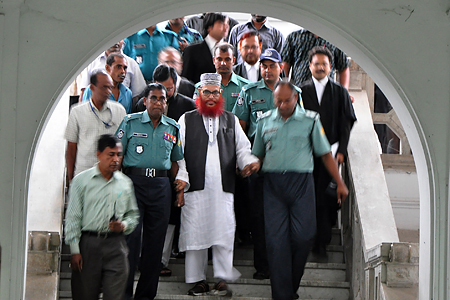
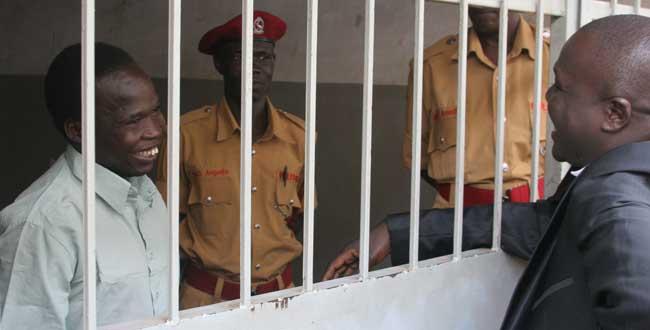
Jamaat-e-Islami leader Delwar Hossain Sayadee, center, leaves the International Criminal Tribunal for Bangladesh (Photo: AFP/Getty Images)
As the eyes of the international justice industry focused on Syria and Libya in these past few months, a rather important development in South Asia has remained under-discussed. After much delay, the aptly named International Crimes Tribunal of Bangladesh has this week charged its first suspect, Delwar Hossain Sayadee, with alleged war crimes committed during the country’s 1971 civil war, a conflict that eventually led to the secession from then West Pakistan (present day Pakistan).
For those unfamiliar with the history of Bangladesh, the country existed until 1971 as the eastern flank of Pakistan. During the independence war of that year, widespread inter-ethnic atrocities including rape, murder, arson and torture were carried out against the population of Bangladesh (or East Pakistan at the time); although in most cases, the main protagonist was the West Pakistani army and its ‘Razakar’ allies, it is true that the Mukti Bahini (Bengali liberation fighters) and their Indian supporters too carried out a significant number of atrocities against those of non-Bengali descent. While total estimates of numbers killed range between 26,000 (per Pakistani sources) and 3 million (per Bangladeshi sources), historians now generally agree that what transpired in those nine months of civil war can be labeled as genocide.
The tribunal has been established to try those who committed war crimes during that bloody conflict.
From a policy perspective, the tribunal is of particular interest because it marks a first in two important respects: it is not only the first war crimes tribunal to ever be established in a Muslim majority country but it is also the first such institution in all of South Asia, a region that is home to many under-reported but systematic human rights violations; examples being the Indian army’s suppression of the Kashmiri independence movement, Pakistan’s repression in Baluchistan and Sri Lanka’s human rights violations during its civil war against the LTTE.
Nevertheless, for all of its promise of setting a regional precedent, one must approach the issue of the court with a healthy dose of skepticism.
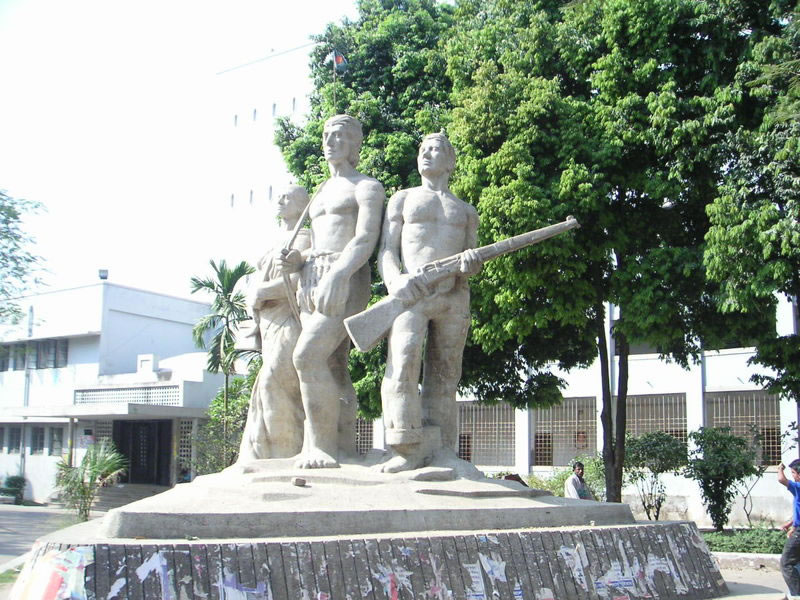 The initial criticisms leveled against the tribunal are many. First, there is the question of a less than transparent policy reversal: after the 1971 civil war, opportunities did indeed arise for trying those suspected of committing war crimes but these were deliberately forgone in the interests of achieving sovereign recognition and peace: 195 surrendered Pakistani officers were identified as suspected war criminals but were later repatriated to Pakistan without charge as part of a bilateral political compromise (Shimla Agreement) agreed between India and Pakistan. Continue reading








 Justice in Conflict