
The following post calling for the establishment of an independent investigative mechanism for Sudan was written by Abdalbasit Mohamed, Moneim Adam, Mikel Delagrange, and Mark Kersten. Mohamed is a Sudanese lawyer and Research Officer with the Wayamo Foundation. Adam is the Access to Justice Programme Director at Gisa INC. Delagrange is the senior international legal advisor at the Wayamo Foundation. And Kersten is a Senior Consultant at Wayamo and founder of the JiC blog.
As it convenes for its 63rd regular session in Geneva, the United Nations Human Rights Council should establish an independent, international investigative mechanism for Sudan: a standing body mandated to collect, consolidate, preserve and analyse evidence of international crimes to criminal law standards, and to prepare case files for the courts able to use them, now or in the future. This is the single most practical accountability step available to the international community, and the one that Sudanese civil society should now concentrate their future lobbying efforts on at the Council.
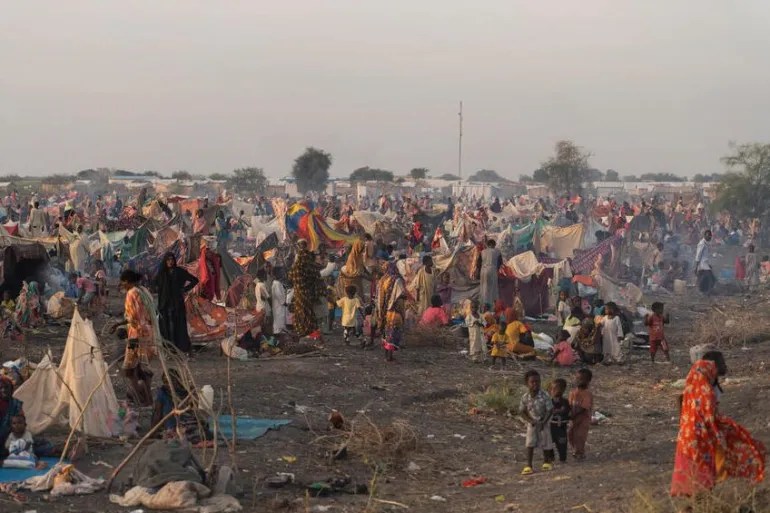
The scale of violence in Sudan in recent months has made accountability more pressing, yet also more difficult. The UN Human Rights Office has recorded multiple civilian deaths resulting from drone strikes in the first quarter of 2026. Tens of thousands of violations have been observed and documented by Sudanese civil society organizations, mostly related to forced displacement, as well as bombings, arbitrary detentions and enforced disappearances. These estimates are widely considered undercounts due to ongoing communication breakdowns and limited humanitarian access.
The fall of North Darfur’s El Fasher to the Rapid Support Forces (RSF) in October 2025 was a tragic turning point in the war. A UN Human Rights Office investigation documented thousands of killings in the first days of the RSF’s final offensive on the city, as well as massive sexual violence, ransom kidnappings, torture and enforced disappearances. UN agencies have warned that the crimes seen in El Fasher could be repeated in Darfur, Kordofan, Blue Nile and elsewhere by the Sudanese Armed Forces (SAF) and RSF.
In the wake of the siege and fall of El Fasher, the UN Human Rights Council instructed its Independent International Fact-Finding Mission (FFM) for Sudan (FFM Sudan) to investigate the atrocities that were committed in the city without delay and, where possible, identify perpetrators. This appeal is of the utmost urgency today, more than ever, especially for Sudan, and in particular for locations such as El Fashir. The work of the FFM is laudable and crucial, but its mandate is more limited than that of a potential UN Investigative Mechanism. To avert further atrocities and to foster accountability in Sudan, the Human Rights Council must take additional steps.
Sudan is the land of unfulfilled justice promises
Every justice framework created in the name of Sudanese victims has over-promised and under-delivered. The Juba Peace Agreement of October 2020 contained a catalog of transitional justice mechanisms: a Special Court for Darfur Crimes, a Truth and Reconciliation Commission, a national Transitional Justice Commission and full cooperation with the International Criminal Court (ICC). At the same time, those responsible for violence in Sudan were looking for amnesties guaranteed by new constitutions.Their emphasis, however, was on how to divide power. They are still fighting over it, as Sudanese civilians endure poverty, precarity, and atrocity.
Not one of the transitional justice bodies has ever been operationalized. Six years since the Juba Agreement, no institution promised exists in a form capable of hearing a case or remedying the harms committed during the ongoing war.
The proposals most often heard today are no more realistic. Calls to extend the ICC’s jurisdiction beyond Darfur, whether by a fresh Security Council referral or a declaration under Article 12(3) of the ICC’s Rome Statute, have no viable path in present conditions. A Chapter VII expansion cannot pass a divided Security Council. A 12(3) declaration requires the consent of authorities themselves implicated in the crimes. And the Court is under direct attack: in August 2026 the United States sanctioned the ICC’s own President and a senior lawyer of the Office of the Prosecutor, extending a campaign that already covered judges and prosecutors. Twenty years after resolution 1593, the referral of Darfur to the ICC and subsequent investigations have produced a single completed trial at the Court. Victims cannot be asked to pin their hopes on another twenty years of promises that may or may not be fulfilled.
Unrealistic promises are not harmless. They consume finite advocacy capital, fragment civil society demands, hand states a menu of aspirations to endorse rhetorically at no cost, and indefinitely defer the only operational question that matters: who is collecting the evidence, to what standard, and for which courtroom.
The events unfolding in Sudan now need dedicated attention from the international community. Civil society organizations have been doing a great job collecting evidence and this activity has to be stepped up. What they need is an institution capable of harnessing their efforts.
The Fact-Finding Mission is not an investigative mechanism
On paper, the mandate of the Fact-Finding Mission borrows the vocabulary of evidence collection. In design and in practice it is a reporting body: a small team on twelve-month mandates, organized around the Council’s reporting calendar, whose product is public findings and recommendations. That is what fact-finding missions are for. They establish the facts, sound the alarm and hand off. They are not built to construct prosecution-ready case files, to provide comprehensive witness protection and support, to manage exculpatory material, or to answer a decade-long stream of requests for assistance from prosecutors.
The FFM has done its reporting, up to and including its finding that the violence in Darfur bears the hallmarks of genocide. The facts are established and they are not seriously contested. The open question is what instrument converts findings into cases. A third, fourth or fifth rolling extension of the FFM does not answer that question; it postpones it. Worse, renewal has become the Council’s alibi: so long as a mission exists, states can say something is being done about Sudan while doing nothing that reaches a courtroom. The Mission should conclude by transferring its archive and its collection function to a body designed for the next phase. It should not be extended indefinitely as a substitute for one.
Criminal Investigations by OHCHR are not the answer
The default fallback – folding investigative work into Office of the High Commissioner for Human Rights (OCHR) – should be resisted. OHCHR is a human rights monitoring institution, and monitoring is not a criminal investigation. It does not maintain the in-house capacity to investigate to a criminal standard: chain-of-custody discipline, forensic and financial investigative expertise, witness security through to trial, and the handling of exculpatory material are prosecutorial crafts, not reporting ones. Its information-sharing practice is restrictive and slow, and it is particularly ill-suited to the actors actually moving Sudan accountability forward today: national prosecutors and non-governmental organizations building universal jurisdiction cases. After three years in which exhaustive human rights documentation has restrained neither belligerent, Sudanese victims are entitled to conclude that reporting alone does not deter. The centre of gravity must shift from the human rights paradigm to the criminal justice one.
Investigative mechanisms are imperfect, but they deliver
The mechanisms created for Syria and Myanmar are the proof of concept. The IIIM, established by the General Assembly in 2016 precisely because the Security Council was blocked, has received more than 500 requests for assistance from 17 jurisdictions, supporting some 338 distinct investigations. Its holdings have underpinned structural investigations and trials across Europe, including proceedings that produced the first convictions of Syrian state officials for crimes against humanity. When the Assad government fell, a preserved, analysed, criminal-standard archive was ready that day. The years in which justice looked impossible had been years of preparation, not years of loss.
The IIMM, created by this Council in 2018, has shared evidence with the International Court of Justice in The Gambia v. Myanmar, with the ICC in the Bangladesh/Myanmar situation, including in support of the Prosecutor’s application for an arrest warrant against Min Aung Hlaing, with the Argentine federal courts, whose universal jurisdiction proceedings issued arrest warrants against senior Myanmar officials in February 2025, and with the United Kingdom. In addition, it has initiated confidential sharing with several other national jurisdictions concerning potential domestic investigations. And the model continues to command support: the establishment by this Council in 2025 of an Independent Investigative Mechanism for Afghanistan confirms that states remain willing to create specifically mandated investigative bodies where the need is clear.
Justice often moves terribly slow. But a IIM for Sudan can offer real judicial outcomes at the ICC, the ICJ and national courts, produced by bodies that come at a fraction of the cost of a tribunal. For Sudan the demand already exists: an active ICC investigation in Darfur, universal jurisdiction investigations open in several states, and Sudanese documentation groups holding material with nowhere to send it. What is missing is the clearing house that consolidates, preserves and analyses to criminal standard and answers requests for assistance. That is exactly, and only, what an investigative mechanism does.
If anything, the ongoing ICC investigation in Darfur is an argument in favour of a mechanism. As Myanmar has shown, and as Afghanistan will soon show, an investigative mechanism complements an ICC investigation rather than duplicating it. The Court is not staffed situation by situation; it draws on a general pool of investigators and analysts, and it frequently lacks the resources and the national, linguistic, contextual and cultural expertise that a dedicated mechanism can build. A Sudan mechanism would supply exactly that expertise, and its evidence would be available to the ICC in Darfur and to every other court at the same time.
Moreover, a specialized tribunal for Sudan, if the politics ever permit one, will need then what a mechanism can produce today: a consolidated, preserved, criminal-standard evidence base and case files ready for a prosecutor. Every tribunal created without one has spent its first years building it. A mechanism established now would allow a Sudan tribunal to open and work from day one rather than exist on paper. The two efforts are sequential, not rival: the mechanism is the precondition for the tribunal, and the strongest argument that one is feasible.
Some colleagues might argue that the era of ad hoc mechanisms should end, and that what is needed instead is a standing UN investigative mechanism able to deploy rapidly to any situation. In principle they are right, and a Sudan mechanism built on the IIIM and IIMM template would strengthen that case rather than undercut it. But no standing mechanism is on any negotiating table today. It has no sponsoring core group, no draft text, and no budget line. Sudanese victims should not be asked to wait out a debate about institutional architecture. Instead the mechanism Sudan needs now should be created; if a standing body later absorbs it, nothing is lost and the precedent will have helped build it.
The window of opportunity is now
The 63rd session decides the FFM’s future, and the renewal debate is the vehicle. The choice before the Council should be framed not as extension versus termination, but as reporting versus case-building. A resolution on Sudan this session should establish the investigative mechanism and direct the orderly transfer of the FFM’s archive to it. If the arithmetic of the Council does not allow it, the General Assembly route remains open: it is how the IIIM itself was created. The core elements of the mandate are well precedented, and include:
- collect, consolidate, preserve and analyse evidence of international crimes and violations, to standards admissible in criminal proceedings;
- prepare files to facilitate fair, independent criminal proceedings in national, regional or international courts, including courts exercising universal jurisdiction and any future Sudanese jurisdiction;
- a standing capacity to receive and answer requests for assistance from competent authorities, and structured cooperation with civil society documentation efforts;
- inheritance of the FFM’s archive and records; and
- meaningful Sudanese staffing and a victim-centred, gender-competent practice.
- Sudanese workforce may provide the first step for future accountability, which could rely on local staff when it comes to considering the domestic court system rehabilitation.
Wherever it is based, the Sudan mechanism should draw on the synergies available with the existing mechanisms: to be stood up and become fully operational faster, to inherit lessons learned, and to share resources and infrastructure where it can. In the absence of a standing centralized mechanism, an ad hoc body can, for instance, share the cost of contracts for specialized evidence database and case management systems rather than procuring them from scratch.
To a mechanism a reality, Sudanese civil society groups should concentrate their lobbying at the Council on the single ask of an investigative mechanism. They need not abandon demands for a special tribunal, a hybrid court or ICC jurisdictional expansion. But none is attainable at this session, and each will need the evidence base a mechanism builds.
Members of the UN Human Rights Council gathering this week should likewise heed the calls of Sudanese lawyers and experts for justice, and establish an independent investigative mechanism for Sudan at this session. Small, achievable and practical, this is the one measure before the Council that will, by design, can yield justice today and in the future.


Thanks for that important post.
You write about divided security council ( and the impossibility to issue UN referral). I read quite often, about foreign involvement in that bloody conflict. Involvement, which significantly accelerate escalation according to too many.
For example, I quote from the CNN:
Three of the same countries involved in brokering the potential truce – the UAE, Saudi Arabia and Egypt – have, along with Russia, been accused by experts, human rights watchdogs and several Western governments of trying to influence the conflict in Sudan by various means, including by supplying weapons, financial and logistical support and by offering diplomatic backing.
So, to what extent according to you ( if at all) such division in the SC has to do with such involvement mentioned ?
Also, issuing arrest warrants, may be the most effective mean for de- escalation or for causing some deterrence here. Only the ICC can do it ( if the investigation is extended indeed). For hybrid and ad hoc tribunals, it will take much longer.
So, maybe it is the most desirable and efficient mean right now.
Here to the CNN:
https://edition.cnn.com/2025/11/07/africa/sudan-conflict-foreign-influence-intl-cmd
Thanks
Pingback: Yielding justice now, and in the future: The case for an independent investigative mechanisms for Sudan - Justice in Conflict - ImNews Africa
By the way, hereby a link to Jurist, titled:
HRW urges Germany to confront UAE over role in Sudan atrocities and domestic repression
Here:
https://www.jurist.org/news/2026/09/hrw-urges-germany-to-confront-uae-over-role-in-sudan-atrocities-and-domestic-repression/