
Mayya Chaykina join JiC for this post on the issue of immunities in the proposed Crimes Against Humanity Convention. Mayya is a master’s student in law at Sciences Po Paris. Her work focuses on international criminal law, mass atrocity prevention, and international human rights mechanisms.
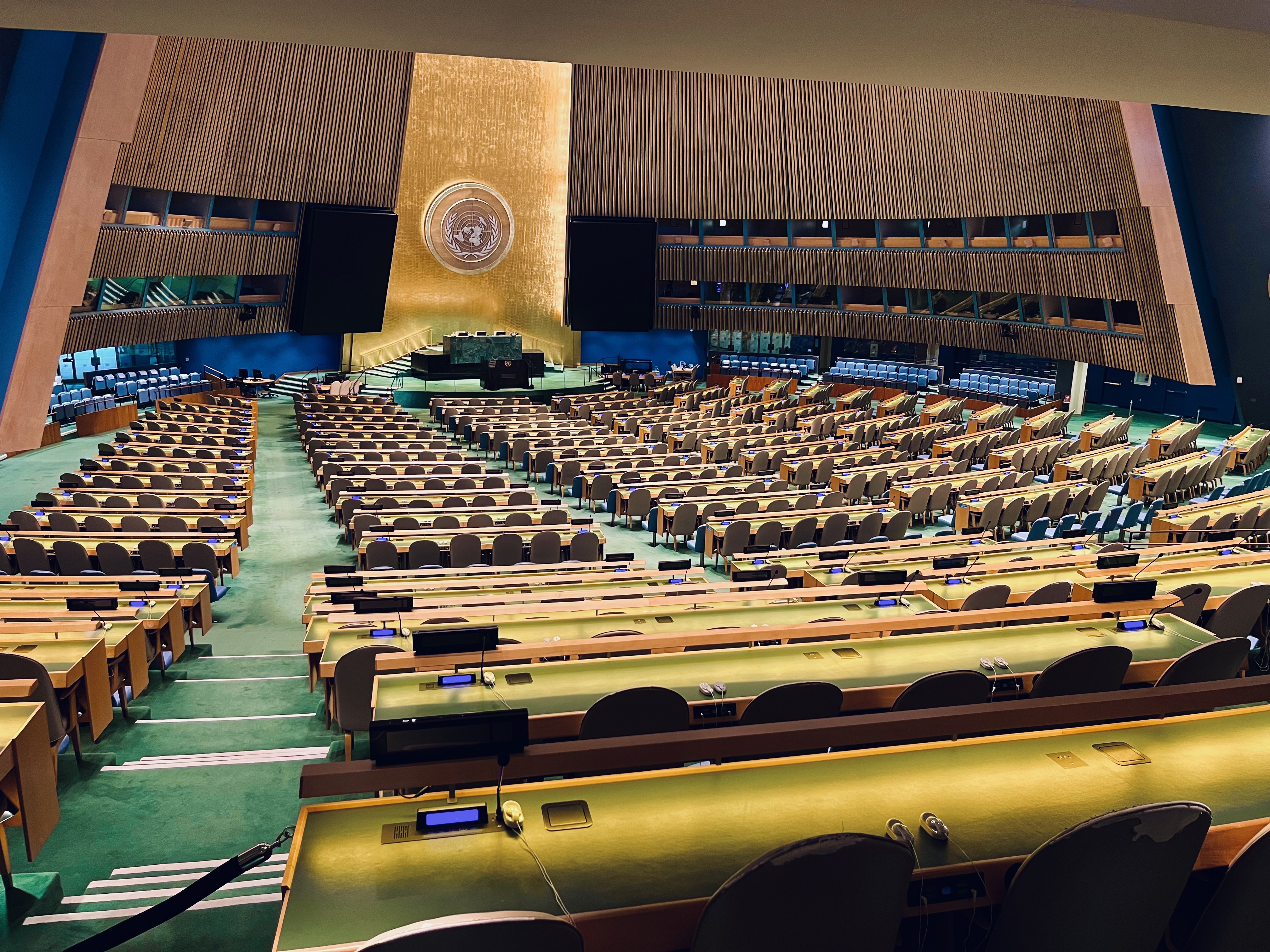
In 2024, the United Nations Sixth Committee adopted a resolution setting dates for the negotiation of an international convention on the prevention and punishment of crimes against humanity. Future negotiations will build on the current Draft Articles on Prevention and Punishment of Crimes Against Humanity, adopted by the International Law Commission (ILC) in 2019. Several modifications to the draft text have already been proposed. Among them, Amnesty International has called for the lifting of immunities to be included in the convention despite opposition from certain states.
Immunity ratione materiae – immunity granted to individuals based on their official state functions – has faced increasing scrutiny. Also known as functional immunity, it extends after the official’s term is over, preventing the individual from being subject to the criminal jurisdiction of another state. In light of the groundwork laid by the draft articles, in addition to the current understanding of immunity for state officials under international law, this article will examine the case for adopting a provision confirming the exceptional lifting of functional immunity for state officials accused of crimes against humanity in the text of the convention.
The Basis for an Exception from Immunity
The ILC has been considering the immunity of state officials from foreign criminal jurisdiction since 2007, when it first included the topic in its program at its fifty-ninth session. Draft articles on the topic have since been provisionally adopted by the Commission.
Article 7(1) enumerates several crimes in respect of which immunity ratione materiae cannot apply before foreign criminal jurisdictions. This includes genocide, war crimes, and, most notably in this context, crimes against humanity. The corresponding commentary suggests that the Commission “considers that there has been a discernible trend towards limiting the applicability of immunity from jurisdiction ratione materiae in respect of certain types of behavior that constitute crimes under international law”.
Crimes against humanity, as acknowledged in the Eichmann judgement, are considered to be “completely outside the ‘sovereign’ jurisdiction of the state that ordered or ratified their commission”, preventing any individual from using their office as a shield from prosecution. This has been reflected in various judicial decisions from national courts that have refused to recognize immunity ratione materiae when faced with international crimes. In a recent decision from France’s highest court, the judgment detailed an evolution of custom that resulted in a new balance between immunities and the fight against impunity, with significant state practice recognizing this development.
A Question of Custom
Although the ILC has discussed the issue in the Draft Articles on the Immunity of State Officials from Foreign Criminal Jurisdiction, the relevant article remains controversial and subject to disagreement between states on the customary status of lifting immunities.
The second report on the topic identifies the hesitations states have regarding the customary nature of the lifting of immunity ratione materiae. Japan questioned the existence of sufficient state practice, while Russia commented that the provision should be deleted altogether, considering it a reference to “non-existent law”. The United Arab Emirates also believed there to be no custom to be found in this regard, and supports either a revision or deletion of the relevant article.
As expressed in the report, states continue to disagree as to the applicability of immunity for officials accused of crimes against humanity. Their disagreement in turn generates confusion and difficulties in cooperation and the taking of appropriate action to fight impunity for some of the worst crimes.
A Necessary Provision for the Prevention and Punishment of Crimes Against Humanity
Should the question of lifting immunities be left up to customary law, the lacunae that the future Convention on Crimes Against Humanity aims to address will only persist. The issue thus turns to the question of whether the new convention requires functional immunity to be addressed in its text.
The inclusion of such a provision is arguably not only desirable but necessary, in order to provide the rest of the treaty’s provisions with meaningful effect. In the relevant commentary to the draft articles’ preamble, the ILC indicates that “prevention is advanced by putting an end to impunity for the perpetrators of such crimes”. In a series of observations submitted in 2019, the government of Sierra Leone considered that the absence of procedural immunities, which prevent courts from exercising their jurisdiction over the accused, is an “essential corollary of the absence of any substantive immunity or defence”.
Further comments from representatives went on to discuss the paradox of preventing an official from invoking his position to avoid criminal responsibility “only to permit him to invoke this same consideration to avoid the consequences of this responsibility”. The idea that the heinous nature of atrocity crimes should preclude both procedural and substantive immunities from being available was also suggested. Authorizing criminal proceedings against officials accused of international crimes would thus also affirm that an official position cannot be used as a substantive defense when it comes to determining the guilt or innocence of the accused.
Concerns based on the lack of a provision excluding immunities in the convention were echoed by the Committee on Enforced Disappearances in the same session, which considered that the gap in addressing immunities went against the consistency of the principles invoked in the future Convention’s preamble.
Per the preamble’s determination to “put an end to impunity for the perpetrators of these crimes”, the inclusion of a provision addressing exceptions to immunity may well contribute to the attribution of individual criminal liability through the prosecution of officials accused of international crimes. Recalling the human rights infrastructure of the proposed treaty, as well as established legal principles, thus supports the inclusion of an explicit exception to functional immunities as suggested by the comments above.
Immunity and Impunity
It is nonetheless worth noting that immunity is not the same as impunity. The distinction has also been noted in the commentary on the current draft articles. In examining article 6, the ILC notes that “an alleged offender cannot raise the fact of his or her official position as a substantive defence so as to negate any criminal responsibility”, although there is no effect on procedural immunities before national criminal jurisdictions.Procedural immunities are owed to the state, meaning criminal proceedings against an official for acts committed on behalf of that state cannot be authorized by a foreign court. In the absence of that immunity, however, the accused cannot avoid the attribution of individual criminal responsibility by excusing their conduct as an official act. As stated by the International Court of Justice (ICJ) in its Arrest Warrant judgment, jurisdictional immunity “may well bar prosecution for a certain period or for certain offences; it cannot exonerate the person to whom it applies from all criminal responsibility”.
Simply put, immunity from foreign criminal jurisdictions is a procedural question rather than one of substantive law. The invocation of immunity before a court cannot be interpreted as a judgment on the accused’s guilt or innocence, with the ICJ noting that “immunity from jurisdiction […] does not mean that [officials] enjoy impunity in respect of any crimes they might have committed, irrespective of their gravity”.
Still, the comments submitted by states to the ILC, the aims of the future convention, and the existing state of contemporary international criminal law point to the necessity of a provision lifting immunities. The preamble’s stated determination to end impunity for perpetrators of crimes against humanity necessitates the removal of procedural immunities to achieve its goals. Indeed, as asserted in the observations submitted to the ILC, the removal of procedural immunities is an essential upshot of the removal of an official position as a substantive defense.
In the absence of the ability to prosecute those accused of international crimes, the convention’s objective of preventing and punishing crimes against humanity loses its meaningful effect. Rather than leaving immunity up to the interpretation of individual governments, a future convention should implement a tool to fight impunity in all forms, addressing concerns echoed by governments and organizations alike.


 Justice in Conflict
Thank you for this incisive and timely piece. Your exploration of how a prospective treaty on Convention on the Prevention and Punishment of Crimes Against Humanity might include an explicit exception to state-official immunity speaks directly to the heart of the accountability gap. I appreciated how you drew attention to the work of the International Law Commission (ILC) and the draft articles that suggest immunity ratione materiae may not apply to genocide, war crimes, torture and crimes against humanity.