They knew the bodies were there. Hundreds of them. Yet they could not agree on whether or not to exhume them. In the end, the Polish authorities and Jewish community members compromised: there would be a quick and partial exhumation at the site of the 1941 Jedwabne massacre, where hundreds of Jews were killed — including women and children — by Poles. Any remains discovered would be placed back in the earth.
A world and six decades away, forensic experts and analysts still search for the remains of victims of the 9/11 attacks. Over 1,000 have yet to be identified. At the 9/11 Memorial & Museum in Lower Manhattan, and behind the breathtaking blue tiled wall embossed with Virgil’s line “No day shall erase you from the memory of time,” remains are still being analyzed and stored. Many of the families of victims have said that their loved ones should stay there, with the others who were killed on Sept. 11, 2001. The wife of one victim, for example, says that even if her husband is never identified, she feels “he is home. This is where he took his last breath, his last step. This is where he lost his life.”
These are just two examples where families and communities have decided not to exhume or remove the remains of victims of mass atrocities. There are many others.
I know this because I studied them, as part of my work for the Office of the Independent Special Interlocutor for Missing Children and Unmarked Graves and Burial Sites associated with residential schools, an office established by the Canadian government in June 2022, following the revelation of unmarked graves at the site of a former Residential School in Kamloops, British Columbia. My work focused on applying international human rights law and international criminal law to missing and disappeared Indigenous children, including taking a human rights approach to unmarked and mass graves.
I did this work as a settler and in line with the late Murray Sinclair’s insistence that the burden of truth and reconciliation could not fall alone on the shoulders of Indigenous Peoples.
I’m of eastern European descent, and my own great-grandfather today lies in a mass grave in Katyn, now in Russian territory. He was among the thousands murdered by the Soviets in 1940. Like the Jewish descendants of those killed in Jedwabne or those murdered on 9/11, I cannot imagine the anguish I’d feel if someone told me that unless I could find the physical remains of my grandfather, the Soviets never killed him and the Katyn massacre never happened.
I would counter with evidence: What about the reports by investigatory bodies like the International Committee of the Red Cross? What about the video evidence showing the bodies being exhumed and then reburied? What about the admission by the Russians that the massacre had been ordered by Stalin? Surely, that’s enough!
In Canada today, for those who deny the horrors of the residential school system and deny that children died and disappeared, nothing seems to be enough. Medical records aren’t enough. Government and church archives aren’t enough. The witness testimony of survivors isn’t enough. Not even the unanimous acceptance by every party and member of Parliament in 2022 that the residential school system was part of the genocide against Indigenous Peoples is enough.
For denialists of atrocities — in Canada and anywhere — nothing will ever be enough. We can literally watch live as war crimes and crimes against humanity are perpetrated by Russia in Ukraine and Israel in Gaza and the West Bank, and yet still be gaslit. Same here in Canada. We can have all the evidence we need, and yet it won’t be enough for denialists.
In Canada, it must be said, denialism is not new, nor is it a mere outgrowth of historic atrocities. Denial is a core part of the horrors committed against Indigenous children, families and communities. As made clear in the Special Interlocutor’s final report, the children didn’t just go missing — they were disappeared. The perpetration of enforced disappearances — which is both a human rights violation and crime against humanity under international law — is intimately woven with denialism, as a key part of this particular kind of atrocity is the denial of information about the fate and whereabouts of the disappeared person.
The denialists’ gatherings on Canadian campuses, especially in British Columbia, are not just an affront to the truth, but an indication that the truth is working — the more that the horrors of the residential school system are accepted and understood, the louder the small group of denialists get.
But they cannot simply be ignored.
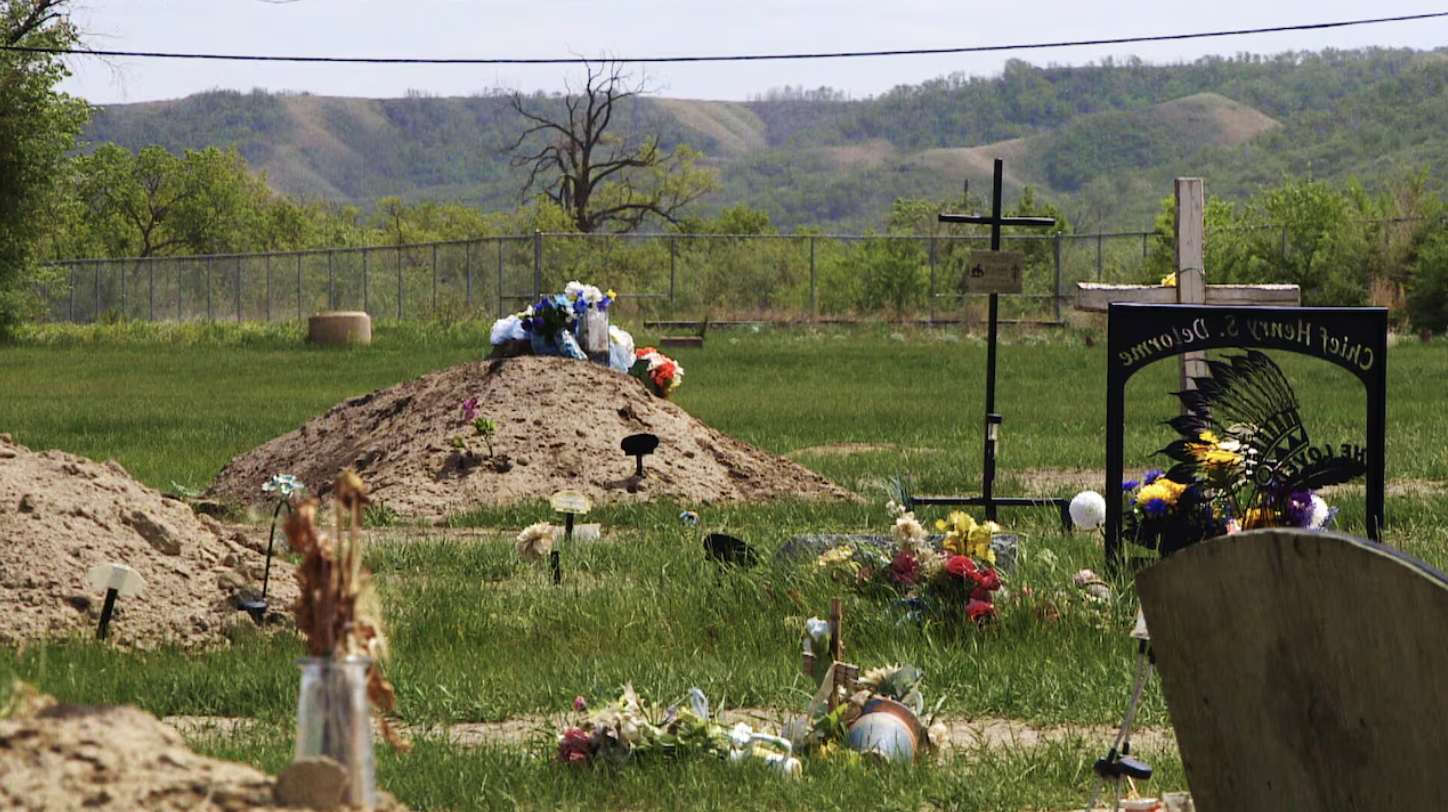
Their message that Indigenous communities must dig in order to prove the atrocities committed against them must be actively resisted. It is only affected communities who should decide whether to exhume. They must be afforded all of the time they need to make that decision for themselves and be fully supported regardless of what conclusion they come to.
It may be that some want the children to remain where they are, undisturbed and with the other children they were buried with. Others may desire to verify that remains are present through various scientific and forensic techniques, but not disturb the sacred grounds where the children lie. Still others may be unsure. And that uncertainty is not only fine; it is a natural part of reckoning with difficult history. If some communities decide not to dig now but change their minds later, they should be supported in doing so.
Any effort to force upon communities what they do not choose for themselves, and any insistence that they dig and identify remains just to prove deniers wrong, is nothing but another form of colonial violence. And let’s be clear: no one needs to dig to know that the children died and disappeared. Those who can follow the evidence already know.
The trouble with atrocity deniers is that they’ll never be convinced. The truth is not what motivates them. So, it is not to them that governments, universities and allies must speak, but to the “mushy middle” — those Canadians trying to make sense of this country’s history and who might be vulnerable to the narratives of denialism, but who might also embrace the truth of what happened to the children in residential schools.
A key part of this is to insist, without qualification, that it is up to the affected communities and only the affected communities to decide whether to exhume the remains of their loved ones.
****************************
A version of this article was first published at The Tyee.


 Justice in Conflict