
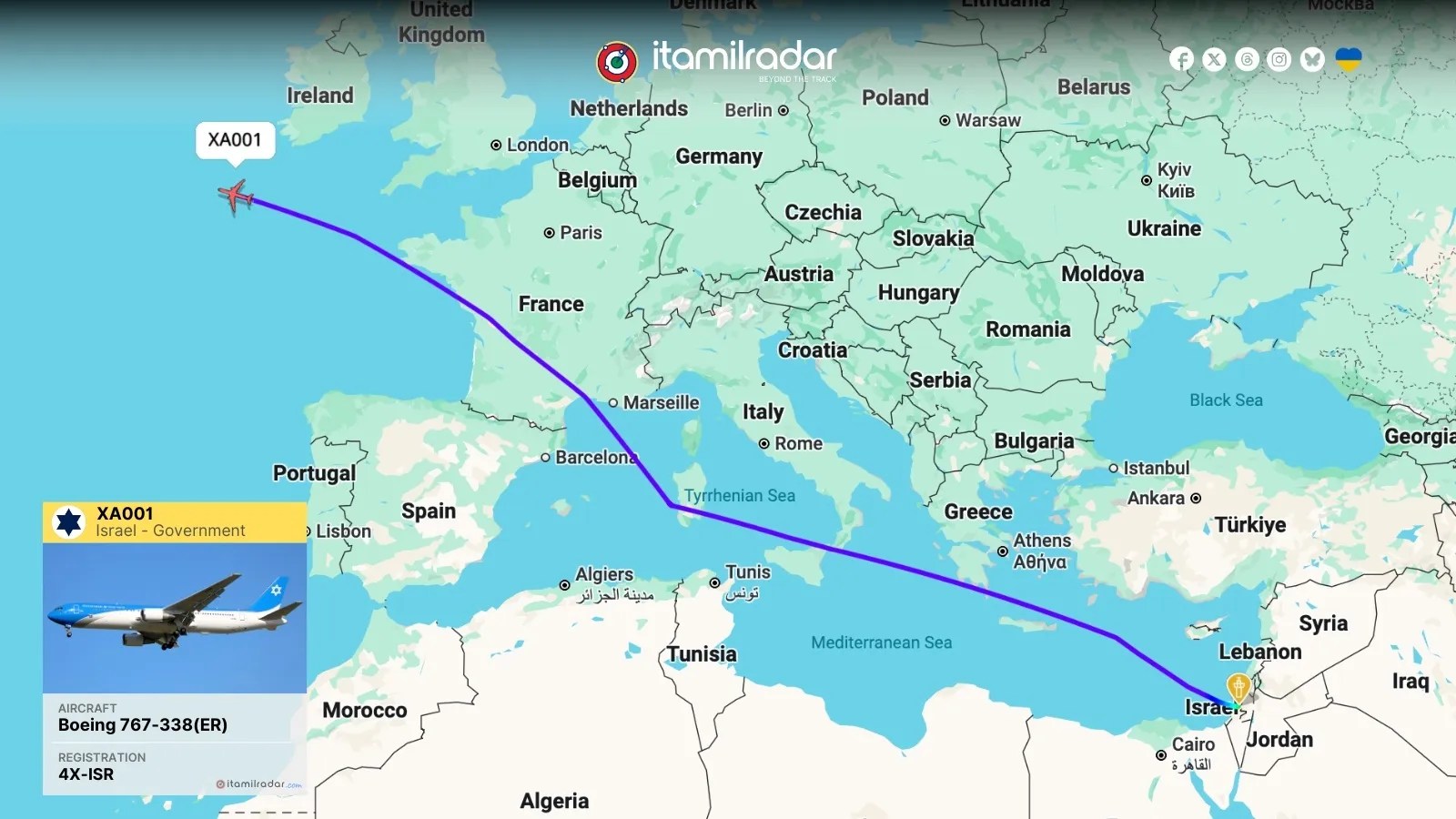
A version of the following article was originally published in the Globe and Mail, and relates to the implications of Canada‘s decision to allow ICC suspect Benjamin Netanyahu to travel through its airspace. However, Canada was not alone. As covered in some depth here, other states and ICC members – including Greece, Italy, and France – have permitted Netanyahu to fly over their territories. The argument below, therefore, is applicable to all of these states and indeed all ICC member states concerned about their own territorial integrity as well as that of their allies.
With its sovereignty coming under consistent threat from the United States, Ottawa should take every opportunity it gets to articulate – to Canadians and others – that we are a proud and sovereign state. That includes the way we engage with international organizations, such as the International Criminal Court (ICC). On that scale, however, the Canadian government is signalling that Canada’s sovereignty is up for negotiation. If we don’t want our sovereignty to be trampled on, we have to stand up for it.
In November 2024, the ICC issued an arrest warrant for Israeli Prime Minister Benjamin Netanyahu, charging him (as well as Defence Minister Yoav Gallant and three since-deceased Hamas leaders) with war crimes and crimes against humanity over the war in Gaza. The warrant was based on a painstakingly careful investigation, a review of the evidence against Netanyahu (including by world-renowned judge and Holocaust survivor Theodor Meron), and the approval of ICC judges. As a member-state of the Court, would Canada enforce the warrant? Then-Prime Minister Justin Trudeau saidCanada would “abide” by the Court’s decision. A year later, Prime Minister Mark Carney doubled down, telling Bloomberg journalist Mishal Husain twice that Netanyahu would be arrested if he came to Canada.
That September, the Israeli leader travelled to the United Nations General Assembly in New York. The U.S. is not a member-state of the ICC and so had no legal obligation to arrest or surrender Netanyahu to the Court. But something curious happened along the way. The aircraft carrying Netanyahu, the Wings of Zion, did not take the most direct route from Tel Aviv to New York City. Instead, the plane weaved to evade numerous European states as well as Canada – presumably out of fear that the aircraft might be forced to land and Netanyahu would be sent to The Hague.
The diverted travel path was a small but important victory for justice and accountability. Netanyahu made it to New York, but his world had changed. He could not do whatever he wanted. If nothing else, the ICC warrant against him meant that his world had shrunk.
Since then, Netanyahu has travelled to the U.S. on three separate occasions. On each, he entered Canadian airspace, travelling over Canada’s Atlantic provinces. The Canadian government has been mum on why it allowed this to happen, whether the Israeli government was expressly permitted to travel through Canadian airspace, or how it believes that letting the Israeli leader travel over Canada aligns with its obligations to detain and surrender ICC suspects to the Court.
This really isn’t just a story about Canada’s attitude towards the ICC. It’s a story about sovereignty.
Under international law, states exercise sovereignty over their territory, which extends to their landmass, coastal waters and the airspace above them (up to the edge of outer space). Canada has previously – and rightfully – excluded foreign actors from entering the skies above the country. After Russia’s full-scale invasion and war of aggression on Ukraine in February 2022, Canada immediately closed its airspace to any Russian nationals. This was a defiant act of sovereign prerogative in solidarity with the people of Ukraine.
The question thus arises: why would Canada allow a suspected war criminal to enter its airspace? A Global Affairs Spokesperson suggested to CBC journalist Evan Dyer that it was up to Israel, and not Canada, to decide whether to fly through Canadian airspace, adding that “Global Affairs Canada does not comment on which route a foreign state chooses to take.”
This is nonsense. Sovereignty means that is up to Canada, and Canada alone, to decide who enters Canadian territory.
All of this comes at a time when the Trump administration has been actively seeking to undermine Canada’s sovereignty, relentlessly saying that the U.S. should make us a “51st state”. It also comes at a time when Washington has launched an unprecedented assault on the ICC, a key prong of which is sanctioning the Court’s judges, including Canada’s Kimberly Prost.
This should lead Ottawa to a simple conclusion: defending the ICC today is defending Canadian sovereignty. Ensuring that Canadian airspace is not breached by suspected atrocity perpetrators – regardless of where they are from – is about protecting Canada’s territorial integrity as much as international justice. Standing firm in our conviction that a Court that Canada helped build as well as its judges should be protected against unwarranted attack is not just about international law: it speaks to who we are, what we value, and whether we take our sovereignty seriously. Doing so might not stop bullies, but pulling our punches will only invite more threats to our integrity as a country.
If Canada does not stand up for the ICC, it will fail to stand up for itself and instead continue, as Prime Minister Carney says, to perform “sovereignty while accepting subordination.”


