
The following is a guest-post by Henry Off. Henry is Board Member at the Canadian Lawyers for International Human Rights and a lawyer currently working as an independent consultant at the International Criminal Court. The views in the blogpost and the article are his own. The full article, Crimes of Law: Bringing Legal Professionals to Trial for International Crimes, is available here.
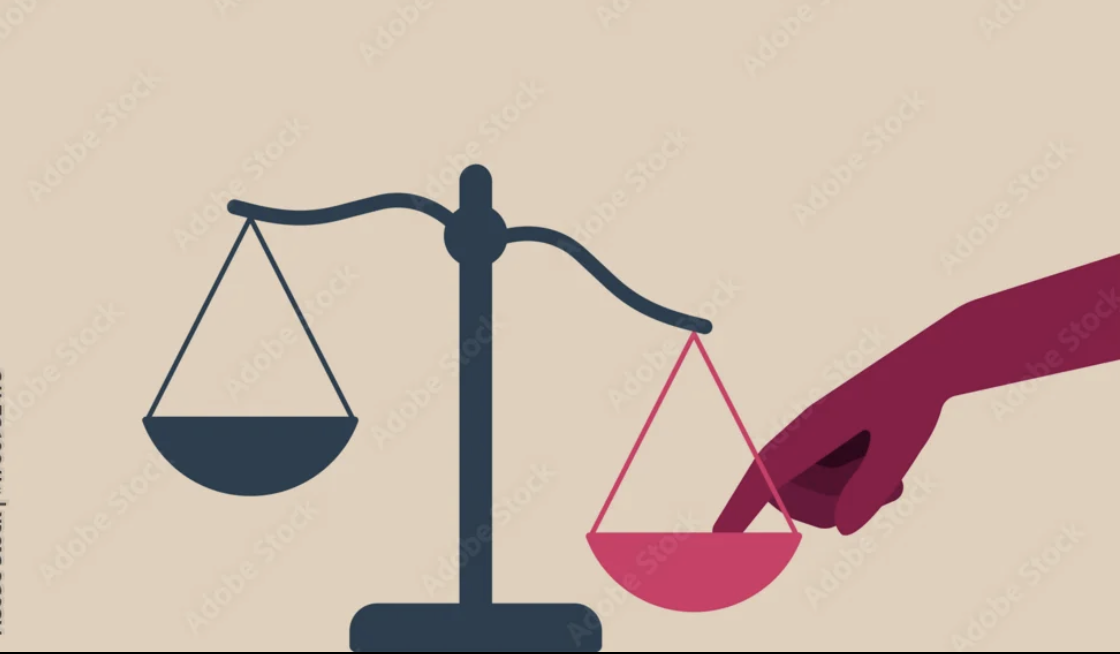
International crimes are often committed by following the law, not by deviating from it. When the South African apartheid regime subjugated nearly every aspect of Black and coloured South African life, this totalizing system of discrimination, fragmentation, and repression “required administration, application and interpretation by judges, magistrates, prosecutors, officials of the Departments of Justice and Law and Order, and lawyers, both in the academy and the legal profession.” When Nazi Germany repressed the rights of Jews and other minorities, eventually leading to genocide and other unspeakable atrocities, it did so behind a matrix of legal decrees and judicial orders conjoined to the normative German legal system. In Iran, the judiciary, prosecutors, and defence lawyers similarly operate within and facilitate a legal system built on torture, executions, and unfair trials.
Examples of these overarching systems of atrocity crimes remain all too common. Legal professionals write legal opinions that justify torture or unlawful detention. They reinterpret constitutions in judicial decisions to entrench persecutory policies, shield perpetrators from accountability, or cloak ostensibly colonial criminal conduct in the language of legality.
Yet despite the central role that legal professionals have played in the perpetration atrocity crimes, they have rarely featured in discussions of international criminal responsibility and are seldom held accountable. Since the 1947-1949 “Justice Case” at Nuremberg, in which sixteen Nazi jurists were prosecuted and which exposed the role of law in the perpetration of international crimes, prosecutions of legal professionals for systemic crimes rooted in legal institutions have been strikingly rare.
Why?
Part of the reason is that international criminal law mechanisms tend to treat law as background or context rather than treating it as a necessary element of the commission of atrocity crimes. This makes it difficult to recognize crimes that are rooted not simply in individual acts, but in the structures and institutions of a legal system. As a result, accountability efforts often focus on the immediate expression and consequences of violence, such as torture, executions, or sentencing without due process, while overlooking the broader legal authority that made that permitted and granted that violence under the cover of the law.
The ways in which law can be used in order to authorize and further the commission of atrocities can be described as “crimes of law”: international crimes for which the conduct of the individual is criminalized by virtue of their relationship to a legal structure whose norms or mechanisms are unjust. What normally constitutes the conduct of a crime of law is not the actions of a lawyer gone rogue, but of a lawyer doing what they are meant to do under the rules of a legal system that is simultaneously aimed at destroying or persecuting certain groups of people.
My new article, Crimes of Law: Bringing Legal Professionals to Trial for International Crimes, recently published in the Harvard International Law Journal, examines the accountability gap for crimes of law. It argues that the gap is neither inevitable nor legally justified.
None of this means that lawyers should face criminal liability for simply advancing contentious legal arguments or being a member of an unjust legal system. Instead, there is a moment when their legal authority shifts from doing law in an unjust system to doing law in furtherance of that unjust system. But when is the line crossed?
To answer this question, the starting point is analyzing the dynamics of legal system itself, and more importantly, the nuanced role that the legal professional plays within it. International criminal law frameworks have long been shaped around military commanders, political leaders, and militia members. Even when legal professionals are prosecuted, caselaw demonstrates that they have generally been treated as military or political actors rather than as legal actors per se. Their conduct is often reduced to discreet individual acts, without adequately considering the particular role they played within the legal institution itself.
This creates an accountability gap. Lawyers, judges, prosecutors, and other legal professionals can play very different roles in the commission of international crimes, and their responsibility cannot always be understood in the same way as that of a person carrying out the immediate violence.
The law also protects them. Just as law may be wielded as a sword in justifying and committing international crimes, it may also be used as a shield to protect legal professionals from criminal responsibility. The particular nature and obligations of the legal profession, and its relationship to legal institutions, create a series of questions that international criminal law cannot simply ignore.
When exactly does a legal order become criminal? What is a legal professional expected to do in an unjust legal system? How should legal positivism, judicial independence, professional regulation, complementarity, and the feasibility of prosecutions affect individual responsibility?
These questions do not have simple answers. But they are questions that international criminal law mechanisms must engage with if they are to stop treating law as merely the backdrop to atrocities and instead recognize its role in producing them.
In response to this quandary and blind spot in international criminal law, my article makes two interconnected arguments. First, crimes of law are rooted in legal institutions, and international criminal law mechanisms should place those institutions and the law itself at the centre of trials instead as background context. Certain crimes against humanity, including apartheid and persecution, can provide a framework for addressing the systemic and structural nature of these crimes within existing international criminal law. Second, when individual criminal responsibility is considered, international criminal law mechanisms must recognize legal professionals as a particular class of perpetrator. Their roles, responsibilities, and potential defenses cannot simply be treated as those of military or political actors.
The implications extend well beyond legal theory. If international criminal law overlooks the people who design, interpret, administer, and maintain the legal architecture of atrocities and justifies them to people as ‘lawful’, it risks holding accountable only those who carry out the violence while ignoring those who played a key role in making it possible.
There is also a broader reason to take these cases seriously. Trials can do more than punish individuals. They can expose how an unjust legal order operated, establish a record of what happened, express condemnation of the wrongs committed, and help rebuild trust in legal institutions.
Behind many atrocities, there is a bill, a memo, and a gavel. International criminal law has always sought to hold accountable those most responsible for the gravest crimes. If law itself can be used and weaponized in the commission of international crimes, then the lawyers who deliberately wield it as a weapon must not be beyond its reach.


