International Law and the Stories We Tell: Reflections on International Law(yers), Narratives and the Situation in Israel-Palestine, Part 2

Barrie Sander joins JiC for this second article in a four-part series on what the situation in Israel and Palestine tell us about how we understand, construct, and tell stories about international law. Barrie is Assistant Professor of International Justice at Leiden University – Faculty of Governance and Global Affairs. The first part of the series, can be found here.

(Photo: Banksy)

Part Two – Analogies and Comparisons

When confronted with situations of ongoing mass violence, what stories can international lawyers usefully tell? I want to begin reflecting on this question in the context of the situation in Israel-Palestine by considering analogies and comparisons. 

It was cultural thinker John Berger who famously remarked, ‘The past is never there waiting to be discovered, to be recognised for exactly what it is. History always constitutes the relation between a present and its past’. One way in which international lawyers may try to make sense of moments of crisis is to situate such events within the wider trajectory of the field – identifying continuities, contrasts, and ruptures with past situations, as well as silences, absences, and stories untold. Drawing on traditions such as the critical race theory (CRT) tactic of counter-storytelling, the Third World Approaches to International Law (TWAIL) tactic of counter-narration, and the feminist method of searching for silences, international lawyers often call particular analogies and comparisons in the field into question and create space for alternative understandings of the relationship between the past and the present.

Recent commentary on the situation in Israel-Palestine has been marked by frequent recourse to historical analogies and comparisons. Consider, for example, references made to the Allied bombing of Dresden during the Second World War seemingly in an effort to justify the proportionality of Israel’s current military campaign in Gaza. The analogy is not only highly selective but also flawed. The Allied bombing of civilian population centres was of questionable legality even at the time, with several commentators characterising such acts as a war crime. And whatever legal ambiguities may have remained during that period, the illegality of so-called ‘morale bombing’ campaigns became incontestable soon afterwards with the adoption of the 1949 Geneva Conventions. These campaigns also proved unsuccessful in their military aims, with one commentator noting how their brutality ‘far from shattering the enemy’s morale, may have even encouraged a spirit of resistance which prolonged the war’.

A counter-reading of the relevance of Dresden to the current crisis in Israel-Palestine would be to reflect on how the city may be viewed as a symbol of the tendency for the field of international criminal justice to be subservient to the balance of power between States beyond the courtroom. In the aftermath of the Second World War, not only was there a failure to investigate or prosecute the Allied bombing of Dresden, but charges concerning mass bombing campaigns of civilian population centres conducted by the Axis powers were also omitted from the indictments of Axis personnel in the criminal trials conducted in the aftermath of the Second World War. In this way, those trials were not only one-sided in solely prosecuting Axis personnel, but also selective in their substantive orientation in ways that sought to protect Allied interests and avoid embarrassment. 

Indeed, beyond these charging decisions, at times the very drafting of legal categories was structured to guard against allegations being directed towards the Allied powers. As Robert Cryer explained, when drafting the provision on crimes against humanity in the Nuremberg Charter at the London Conference, US representative Robert Jackson was aware that if the category was not restricted to circumstances connected to illegal war, ‘not only could colonialism (embarrassing for France and the United Kingdom), or the Gulags (still a secret in the USSR) be evaluated with reference to the law, but so could the segregationist policies in the United States’.

Continue reading
Posted in Gaza, ICC Prosecutor, International Court of Justice, International Court of Justice (ICJ), International Criminal Court (ICC), International Law, Israel, Karim Khan, Palestine | Tagged | Leave a comment

International Law and the Stories We Tell: Reflections on International Law(yers), Narratives and the Situation in Israel-Palestine, Part One

Barrie Sander joins JiC for this four-part series on what the situation in Israel and Palestine tell us about how we understand, construct, and tell stories about international law. Barrie is Assistant Professor of International Justice at Leiden University – Faculty of Governance and Global Affairs.

(Photo: Getty Images)

Part One – Introduction

International law, like life, is awash with stories. Yet, what stories can we – international lawyers – usefully tell when confronted with ongoing scenes of mass violence and devastation? This is a question I’ve been struggling with recently and I confess I’m yet to arrive at a fully satisfying answer.

International law is more than a set of rules; it is a language through which people try to make sense of the world around them. Moments of crisis often trigger periods of self-reflection amongst international lawyers about whether and in what ways the language of international law matters. In the immediate aftermath of Russia’s invasion of Ukraine in 2022, the field was captivated with the question of what the crisis signalled for a so-called ‘rules-based international order’. This question has arisen once more with the devastating escalation of violence and atrocities in Israel and Palestine in recent months. For some, international law is already dead; for others, the language of international law has reached a moment of reckoning that may signal either a new dawn or its oblivion; still others, rely on images rather than words to convey their despair.

Yet, what unites these reactions is that each tells a story – a particular narrative about international law and its role in the world around us. When we encounter a crisis situation and try to understand it, what we often search for is not merely consistent and reliable facts but a compelling story. Importantly, storytelling involves more than the mere sequencing of events, but encompasses a process of narrative construction through which events are given shape and meaning. As Thomas Skouteris explains, any intellectual process of narration is always ‘positioned’, entailing ‘assumptions and choices (e.g. which facts to mention, how to tell the story, whose common knowledge to use, etc.) that are far from natural, mechanical, or neutral’. And while stories can help cement the status quo, in international law narratives can also be invoked to resist dominant structures of power. It is perhaps for this reason that storytelling can become so fraught with tension.

Within the field of international law, there has been extensive interest in the relationship between law and narrative. Understanding this relationship is important for moving beyond treating international law as a response to societal problems and to instead ‘position law itself as constructing the very problems it seeks to solve’. In this series of four posts, I reflect on different dimensions of the relationship between international law and narration in the context of the situation in Israel-Palestine.

Why do I offer these reflections? To answer this, I need to tell you a little about my own story. Although the Netherlands is where I currently call home, I’m originally from the UK where I grew up in London. I’m also Jewish and was initially drawn to the field of international law by an interest in learning more about mass atrocities, including those perpetrated against the Jewish community during the Second World War. I wanted to understand how and why these types of atrocities occur, and what avenues for justice, if any, might be possible in response. 

Continue reading
Posted in Gaza, International Court of Justice, International Court of Justice (ICJ), International Criminal Court (ICC), International Criminal Justice, International Law, Israel, Palestine | Tagged , , , , , | 2 Comments

Let the International Court of Justice Decide: It is Law, not History, that holds the Promise of Protecting Life in Gaza 

The following article was written by Amanda Ghahremani and Mark Kersten and originally appeared in the Toronto Star. Amanda is an international lawyer, research fellow at the Human Rights Center, UC Berkeley, and at the Simone de Beauvoir Institute, Concordia University. Mark is the founder of Justice in Conflict, and an assistant professor of criminology and criminal justice at the University of the Fraser Valley.

The Peace Palace, home to the International Court of Justice (Photo: Mark Kersten)

South Africa has accused Israel of committing genocide in Gaza. The world is listening. As advocates of international law, we are profoundly disappointed by the recent discourse in Canadian media, which has distorted what is at stake here: not politics, nor history, but human life.

Last month, South Africa instituted proceedings at the International Court of Justice (ICJ) over allegations that Israel is committing a genocide in Gaza. The ICJ is an impartial and independent international court that adjudicates disputes between states. Canada has often been involved in cases before the court. It is currently supporting The Gambia’s case against Myanmar for genocide against the Rohingya people and has brought Syria to the ICJ over alleged breaches of the Convention Against Torture.

Some critics have suggested that South Africa is disqualified from bringing a case to the ICJ in relation to Gaza, because its previous government refused to surrender former President of Sudan, Omar al-Bashir, to the International Criminal Court (ICC) to face charges of genocide. This argument is nonsensical.

It is, of course, deplorable that South Africa refused to surrender al-Bashir to the ICC in 2015. But if there was a rule barring states that have failed to meet their obligations under international law from bringing cases to the ICJ, then no state would ever have standing before the court. We need look no further than Canada. This country has admitted that it has committed genocide against Indigenous peoples. Rightly, no one suggests that this disqualifies Canada from bringing Syria to the ICJ over state-sponsored torture. Similarly, should Israel be barred from participating in ICJ cases because it offered to sell Apartheid South Africa nuclear weapons? Of course not.

Critics have also implied that Israel’s claim of self-defense against the horrific October 7 attacks absolves it from committing genocide in Gaza. Again, this is wrong.

Continue reading
Posted in Canada, Gaza, Genocide, International Court of Justice (ICJ), International Law, Israel, Palestine, South Africa | Tagged | 2 Comments

Genocide doesn’t “just happen” – Israel, Gaza and Genocide as a Process, not an Event

“Law, not war”, a bench dedicated to the memory of former Nuremberg prosecutor Benjamin Ferencz, outside of the International Court of Justice in The Hague

Israel has now responded to South Africa’s allegations of genocide in Gaza. In its submissions at the International Court of Justice (ICJ), Israel’s lawyers relied on a combination of legal and political arguments insisting that is not committing genocide.

This is not a post about whether or not the genocide threshold has been met or will be met. The ICJ’s judges are competent and capable of coming to their own conclusions on these allegations. Instead, this article responds to four issues regarding the alleged genocide in Gaza and Israel’s response at the ICJ.

Genocides don’t just happen

Genocide is a process, not an event.

States don’t commit atrocities by mistake. Genocide requires careful cultivation. The population in whose name a genocide is committed must be conditioned, desensitized, made to feel superior, as well as cognitively and physically distanced from the suffering of those singled out for genocidal violence. 

Genocide is likewise not a failure of institutions or politics, but the result of the successful capture of those institutions, the application of discriminatory laws, atrocity denialism, and the manipulation of public opinion combined with the dehumanization of the group targeted with extermination. It is not bloodthirsty monsters that commit genocide. Instead, as both Hannah Arendt and Zygmunt Bauman taught the world in relation the Holocaust, genocide is organized and orchestrated by bureaucrats.

Why does this matter? Because if Israeli authorities and the international courts had addressed widespread allegations of war crimes, crimes against humanity, and apartheid committed against Palestinians, the very grounds of South Africa’s case against Israel would almost certainly not exist. 

To be sure, Hamas might still be the genocidal entity that it is, but it would almost certainly have little popular support, let alone power, if the basic rights of Palestinians had respected, protected, and promoted as opposed to systematically violated over decades. And again, the grounds that South Africa put forward in its application to the ICJ to claim that genocide has been taking place in Gaza would likely not exist.

Had the illegal blockade on Gaza not been imposed for the last seventeen years, Gazans might not be starving to death and have enough medical care to survive this war. If those Israeli officials who incite the ethnic cleansing and apartheid were in jail rather than normalizing ethnic cleansing on TV and in cabinet, there would be no grounds to suggest they incited genocide. If settlers were prohibited from stealing land in the West Bank and sanctioned or punished for doing so, it would be much harder to connect any risk of genocide in Gaza to the mistreatment of Palestinians in the West Bank. The theft of land, after all, is a central, motivating feature of all genocides.

Impunity defines this conflict. South Africa’s case is a symptom of the failure to meet the demands of justice. Had Palestinians and Israelis had the opportunity to plead their cases and seek and secure meaningful accountability, perhaps there’d be no reason for the ICJ proceedings.

The key point is the obligation to prevent genocide 

The full name of the Genocide Convention is the Convention on the Prevention and Punishment of the Crime of Genocide. As International Law Professor Rob Howse writes: “the genocide convention is concerned above all with prevention, and thus should be applied long before a situation metastasizes into full-blown and possibly unstoppable annihilation.”

In 2007, the ICJ decided that all parties to the Convention are under the obligation to prevent genocide wherever there is a serious risk of it being committed, and that this obligation exists even in the absence of a legal determination that genocide has been committed. 

What constitutes a serious risk of genocide? The very same facts laid out above: systematic impunity for and denial of atrocities; the capturing of institutions and government bureaucracies by those who endorse collective punishment and ethnic cleansing; and the dispossession of resources, theft of land, and placation of those do both.

Continue reading
Posted in Gaza, International Court of Justice, International Court of Justice (ICJ), International Criminal Court (ICC), International Criminal Justice, Israel, Palestine, Palestine and the ICC, South Africa | Tagged , , , , , | 4 Comments

“Let’s stop being fooled about Israel’s intentions in Gaza” – The Lasting Disaster of Ethnic Cleansing and the Risk of Complicity

The following is a guest post by Thomas Obel Hansen and Felix Vacas Fernández. Felix is an Assistant Professor in Public International Law and International Relations at the Universidad Carlos III de Madrid (Spain). Thomas is the Maria Zambrano 2023-24 Distinguished Researcher with the Universidad Carlos III de Madrid (Spain) and a Senior Lecturer in Law with Ulster University Law School/ Transitional Justice Institute (UK).

A woman sits among the rubble in Gaza (Photo: EPA)

Three months into Israel’s military campaign in Gaza, public debate remains mainly focused on the daily disaster that this campaign has brought with it. In a way, that’s understandable because of the large-scale and systematic targeting of civilians and civilian infrastructure associated with a military campaign unparalleled in contemporary times both in intensity and level of disregard for international law. 

However, focusing primarily on the immediate violations and the suffering that comes with Israel’s actions runs the risk of distracting from lasting disaster of the potential ethnic cleansing of the Palestinian population in Gaza. In other words, the daily indiscriminate killing and pulverization of Gaza, as awful as it is, risks being the very means of achieving a more lasting objective consisting in ethnic cleansing, which in its own nature could amount to the crime against humanity of forcible transfer of the population, a crime set out in Article 7(1)(d) of the Rome Statute of the International Criminal Court (ICC).

The general failure of many to ‘see’ this crime unfolding before our eyes and understanding its full implications arguably has to do with how Western governments and media have generally sought to portray Israel’s campaign as ‘a hunt for Hamas’, a type of anti-terror campaign all too familiar in Western capitals. As countries in the West are now strongly encouraging Israel to take a more measured approach, public attention in the West is mainly focused on the methods – not the broader aims – of Israel’s military campaign in Gaza. When criticism has been levied by Western governments, it is on the manner in which Israel is conducting its military operations, not why it is doing so.

But one only needs to listen to what a litany of Israeli leaders say to understand that the overarching objective of the action taken is to fully destroy and empty Gaza of Palestinian citizens. What is being pursued involves the de-population of Gaza, and by extension an expansion of Israeli territory – or at least the areas under its control. 

Together with the ongoing expansion of settlements and the massive increase in settler violence in the West Bank, the ethnic cleansing ongoing in Gaza could amount to the completion of the Nakba involving the permanent displacement of the Palestine population out of Palestinian territories. If that happens, countries with the power to do so who failed to stop Israel would be liable, at least in moral and political terms and possibly also in legal terms through notions of complicity.

Continue reading
Posted in Ethnic Cleansing, Guest Posts, Israel, Palestine, Palestine and the ICC | Tagged , | Leave a comment

Double standards on accountability must be called out and resisted, no matter who pushes them

A Palestinian child walks past burned out cars in Hawara, West Bank (Photo: Reuters)

Victims and survivors of Hamas’ atrocities deserve justice. Victims and survivors of Israel’s atrocities deserve justice.

They deserve more than just rhetoric or pleas to stop the violence. They deserve accountability for the litany of well-documented crimes already committed.

These statements should not be controversial. But for some states and even some fair-weather international law and human rights advocates, any suggestion that alleged war crimes and crimes against humanity committed by Israel deserve independent and impartial investigation appears to be a bridge too far. 

Double standards must be resisted, no matter who or what claims them. International crimes do not warrant investigation because of where they perpetrated or who committed them. They warrant investigation because they were committed, because victims and survivors deserve accountability, and because siding with justice over impunity for mass atrocities is always – always – the right thing to do.

This is not about supporting one side or the other. Victims on both sides of the current conflict between Israel and Hamas want the ICC to investigate. Israeli families of the victims taken hostage by Hamas have requested an investigation by the Court over allegations that Hamas has committed genocide. Lawyers representing families in Gaza have also filed a request at the ICC asking it to investigate alleged genocidal acts by Israeli forces. On behalf of Palestinian groups and individuals, a widely respected human rights organization has launched a lawsuit against President Joe Biden for failing to act to prevent alleged genocide in Gaza.

Pressure on the ICC is growing. On 17 November, five states – South Africa, Bangladesh, Bolivia, Comoros, and Djibouti – officially referred the situation in Palestine to the ICC. It should be noted that the ICC Prosecutor already has jurisdiction in Palestine and opened an investigation into the situation there in 2021. As a result, the Prosecutor can investigate any alleged international crimes committed on Palestinian territory, including the West Bank and Gaza, and by any Palestinian factions, including Hamas, in Israel. Still, the referral of these five states indicates an expanding interest in supporting the Court’s work in the situation in Palestine, something that had not been nearly as apparent in recent years.

Continue reading
Posted in Uncategorized | 1 Comment

The Currency of Diplomacy: A Speech Canada’s Commitment to International Law and Prosecuting International Crimes

This week, I had the opportunity to speak before the House of Commons’ Standing Committee on Foreign Affairs and International Development in Ottawa. I spoke Canada’s piecemeal commitment to international law and to the prosecution of international crimes. I appeared alongside Professor Jennifer Welsh and Professor Adam Chapnik. The full video of the speech and the questions and answer period can be found here.

My remarks focused on Canada’s refusal to exercise universal jurisdiction over international crimes and its troubling position on accountability for atrocity crimes committed in Israel and Palestine. In case the speech of interest to readers, I have published it below.

—————————–

Thank you, Mr. Chair.

I want to speak to Canada’s commitment to a rules-based system in relation to the very currency of diplomacy: international law.

In particular, I will focus on Canada’s approach to prosecuting international crimes – war crimes, crimes against humanity, genocide, and the crime of aggression.

Canada has done a great deal to support accountability efforts in recent years.

Since 2022, Canada has consistently supported the prosecution of international crimes in Ukraine. With The Netherlands, Canada has taken Syria to the International Court of Justice over torture.

But many question why there are so many inconsistencies in Canada’s support for international law and accountability efforts.

I want to explore two questions I believe are instructive in relation to Canada’s position on prosecuting international crimes and Canada’s standing in the world.

First, what would Canada do if a mid-level Russian or Syrian war criminal, or a member of the Wagner Group entered Canada? 

As a signatory to the Geneva Conventions, Canada is obligated to investigate war crimes and prosecute them in its own courts. Canada’s diplomatic partners would expect it to prosecute, and not become a safe haven for war criminals.

Yet all too often Canada does nothing or only attempts to deport the alleged war criminal instead of prosecuting them. And if Canada did deport that person, it would seek zero guarantees that they would be held accountable in the country they were deported to.

In 2016, the Department of Justice released a report that stated over 200 perpetrators of international crimes reside in Canada. It has not prosecuted any of them. Canada has the laws to do it, the resources to do it, but it won’t do it.Unlike its allies, since the early 2010s, Canada has abandoned the use of universal jurisdiction.

My second question is: what would Canada do if the International Criminal Court issued arrest warrants for senior Hamas leaders and those responsible for the atrocities committed on 7 October? There is a real prospect that this will happen in the coming weeks. What would Canada say to the Israeli families of hostages who have asked the ICC to investigate Hamas’ war crimes? What would it tell Palestinians victims and survivors?

Continue reading
Posted in Canada, Corruption, Gaza, Hybrid Courts, Hybrid Tribunals, International Criminal Court (ICC), International Criminal Justice, Israel, Palestine, Transnational Organized Crime | Leave a comment

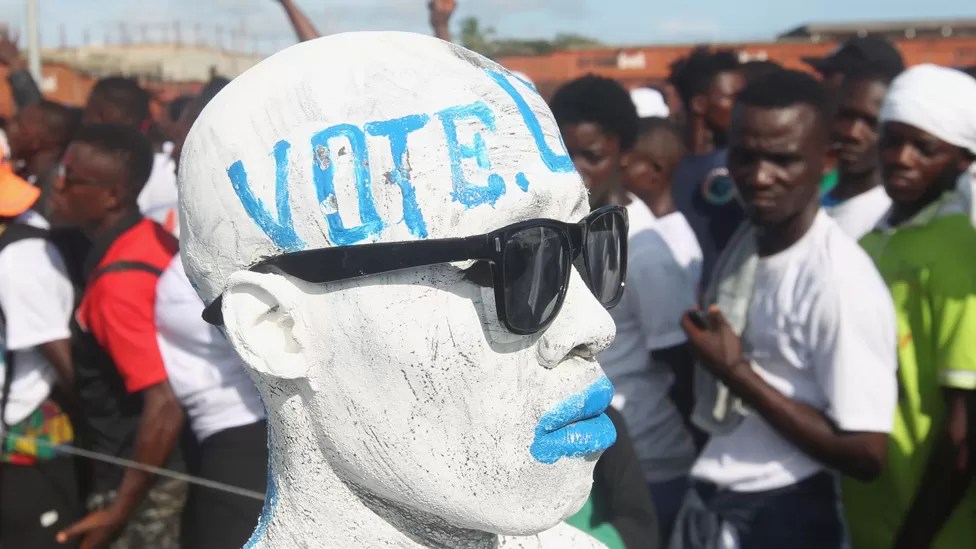
Will justice ever be realized? Uncertainties for survivors of conflict-related gender-based violence as Liberia awaits the results of runoff presidential elections

The following is a guest-post by Kelsey Rhude and Yah Vallah Parwon. Kelsey is final year PhD candidate at the Irish Centre for Human Rights in the University of Galway, conducting research on transitional justice and peacebuilding in post-conflict Liberia. Yah is an African Feminist. She currently serves as the Country Director for medica Liberia with a longstanding career as a women’s human rights professional and attorney addressing issues related to social work, gender, conflict, and human rights. The views and opinions expressed in this publication are solely those of the authors and do not reflect the official position or stance of medica Liberia. This piece is a product of personal reflections and represents the authors’ individual perspectives on the issues of justice and accountability in Liberia. The authors assume full responsibility for the content, and the organization disclaims any liability or endorsement of the views presented herein. Furthermore, the authors do not express support for any political candidate, and this publication should not be construed as an endorsement of any political figure or party.

(Photo: EPA)

The year 2023 marks a crucial milestone in Liberia’s postwar journey towards justice and accountability. Firstly, it marks the 20-year anniversary since the end of the Liberian civil war. And secondly, Liberia is conducting its fourth post-war general and presidential elections this year.

With runoff elections having concluded on Tuesday between incumbent President George Weah and former Vice President Joseph Boakai, vexing questions on the country’s direction for justice remain at the forefront. Against the backdrop of lingering impunity, Liberia stands at a crossroads: in the absence of reparations for survivors of conflict-related violence, accountability for war crimes and crimes against humanity, and consolidated efforts towards reconciliation, will justice ever be realized?

From 1989-2003, Liberia experienced a brutal period of armed conflict and instability, resulting in widespread violence against civilians and destruction of infrastructure. Gender-based violence (GBV) was especially pervasive throughout the Liberian armed conflict. The World Health Organization estimates that ‘between 61% and 77% of women and girls in Liberia were raped during the war’, in addition to reports of other forms of direct GBV, including sexual violence, sexual slavery, abductions, forced pregnancies, and forced terminations.

In 2003, warring factions signed the Accra Comprehensive Peace Agreement (CPA) which ended armed conflict and set the parameters for Liberia’s transition from war to peace. The CPA led to the establishment of a Truth and Reconciliation Commission(TRC), mandated to determine the root causes of conflict, to establish a platform for truth and reconciliation, and to provide highly anticipated recommendations for justice and accountability.

After collecting statements from more than 20,000 Liberians, the TRC released its Consolidated Final Report in June 2009. Among its many recommendations, the Commission comprehensively addressed issues relating to GBV, despite its failure to provide a robust definition of GBV that goes beyond the perfunctory conflation of gender and women.  

The TRC report highlights experiences of both direct and indirect GBV perpetrated against women and girls, as well as men and boys (though the experiences of men and boys are only marginally captured). The Commission produced a dedicated appendix on‘Women and the Conflict’ where it addressed rooted gender inequalities, direct experiences of GBV, and issues relating to the economic, social and cultural impact of conflict on women in Liberia. These contributions are important because they broaden the criteria for what qualifies as GBV in armed conflict. 

Continue reading
Posted in Liberia, Truth and Reconciliation Commissions, Truth Commission, War crimes | Tagged , | Leave a comment

A Lifeline for Gaza: Lifting the Blockade and Securing a Humanitarian Sea Corridor

Since 2007, Israel has enforced a blockade on Gaza, which human rights groups have repeatedly found to breach international law (Photo: Gaza)

Food is running out. Surgeries and births are taking place without anaesthesia. Fuel shortages mean the only cancer hospital has closed. Without the basics needed to survive, the majority of Gazans are stuck while Israeli bombs fall and Hamas missiles are launched around them.

Tens of thousands of Gazan civilians have so far moved into Southern Gaza. But Israel bombs those areas too. Some civilians choose to stay home or in the hospitals where might still get some care. Some are unable to leave. Others surely think: Why leave if the bombs might fall on them no matter where they go?

Those under siege in Gaza cannot enter Israel, which refuses to allow them into the country. Egypt has only permitted a tiny number of mostly foreign nationals into the country through a border point that has also been bombed.

But take a look at the map. The Gaza Strip includes some 40km of coastline. Could it be a lifeline for aid to coming into Gaza and way for civilians to escape the continuous bombing by the Israeli Defence Forces? 

The answer is yes, but only if it is organized and implemented by a coalition of states and humanitarian agencies not directly involved in the war in Gaza.

As luck would have it, the government of Cyprus – the European country closest to Gaza – is currently negotiating with European and Arab states to create a “humanitarian sea corridor”. The idea, in a nutshell, is for ships carrying aid to sail from the Cypriot port of Limassol directly to the shores of Gaza. There, United Nations personnel would receive and distribute the aid to civilians, hospitals, clinics, and so on. 

If you are wondering how this plan not already in place, the answer is simple, if devastating: since 2007, Israel has enforced an air, sea, and land blockade on the Gaza Strip in an attempt to control everything and everyone that comes in and out of Gaza. On 9 October, the blockade was ‘upgraded’ into a “total blockade” and “complete siege” of Gaza. At the time, Israel’s Defence Minister Yoav Gallant notoriously announced: “No electricity, no food, no water, no gas – it’s all closed.”

Continue reading
Posted in Cyprus, Gaza, ICC Prosecutor, International Criminal Court (ICC), Israel, Palestine, Palestine and the ICC | Tagged , , | Leave a comment

A Missing Pillar: Witness Protection and Transitional Justice in Africa

Emmanuel Ayoola joins JiC for this guest-post on the importance of witnesses protection n the field of transitional justice, and how to bolster its use in African contexts. Emmanuel is a human rights lawyer and a transitional justice practitioner. He was previously an Activism Officer with Amnesty International. He currently works with the Africa Transitional Justice Legacy Fund as a Grant and Programs Officer.

A witness testifies during proceedings at the International Criminal Court (Photo: ICC / CPI)

Witnesses are critical to justice-seeking mechanisms under transitional justice processes. What happens then if those witnesses are not protected? Needless to say, justice suffers. Justice continues to suffer in Africa as a result of weak or non-existent witness protection systems. To ensure justice for victims of conflict and mass atrocities, Africa must first safeguard the protection of witnesses. 

The development of transitional justice processes can be likened to the process of building a house – a house with several structural columns. Just like a house, transitional justice has pillars. The United Nations identifies the pillars as truth, justice, reparation, memorialization, and guarantees of non-recurrence. These pillars which are interrelated, work together for the sustainability of transitional justice processes. 

Just as a house cannot stand without pillars or other forms of structural support, in the same vein, it is impossible for transitional justice to thrive without all of its pillars; if one is absent or weak, the others are weakened as a result. However, for a long time, several attempts have been made to build transitional justice processes in Africa without all of its pillars. The results have been predictable – collapsing disappointments. 

Effective witness protection has often been a missing link. Truth and justice are key for transitional justice that cannot be built without robust witness protection systems. At the very core of truth-seeking processes and justice-seeking mechanisms lies the indispensable ingredient of witness testimony. The judicial mechanisms of transitional justice processes require witness testimony in the pursuit of justice. Witnesses provide evidence that will assist in holding perpetrators of human rights violations and atrocities accountable. In fact, survivors’ testimonies have been referred to as the backbone of transitional justice processes. It is essential and arguably indispensable even where other forms of evidence are available. Therefore where witnesses are not protected, they may be discouraged from giving evidence and thereby justice becomes far-fetched.

Continue reading
Posted in Africa, Kenya, Transitional Justice, Witnesses | Tagged | Leave a comment