
Chantal Meloni joins JiC for the blog post on the situation in Israel and Gaza and the need for international law to be applied. Chantal Meloni is International criminal law professor at the University of Milan and Senior legal advisor for international crimes accountability with the European Center for Constitutional and Human Rights of Berlin (ECCHR). She also consults with the Palestinian Centre for Human Rights (PCHR) and represents victims in the Situation Palestine before the International Criminal Court.

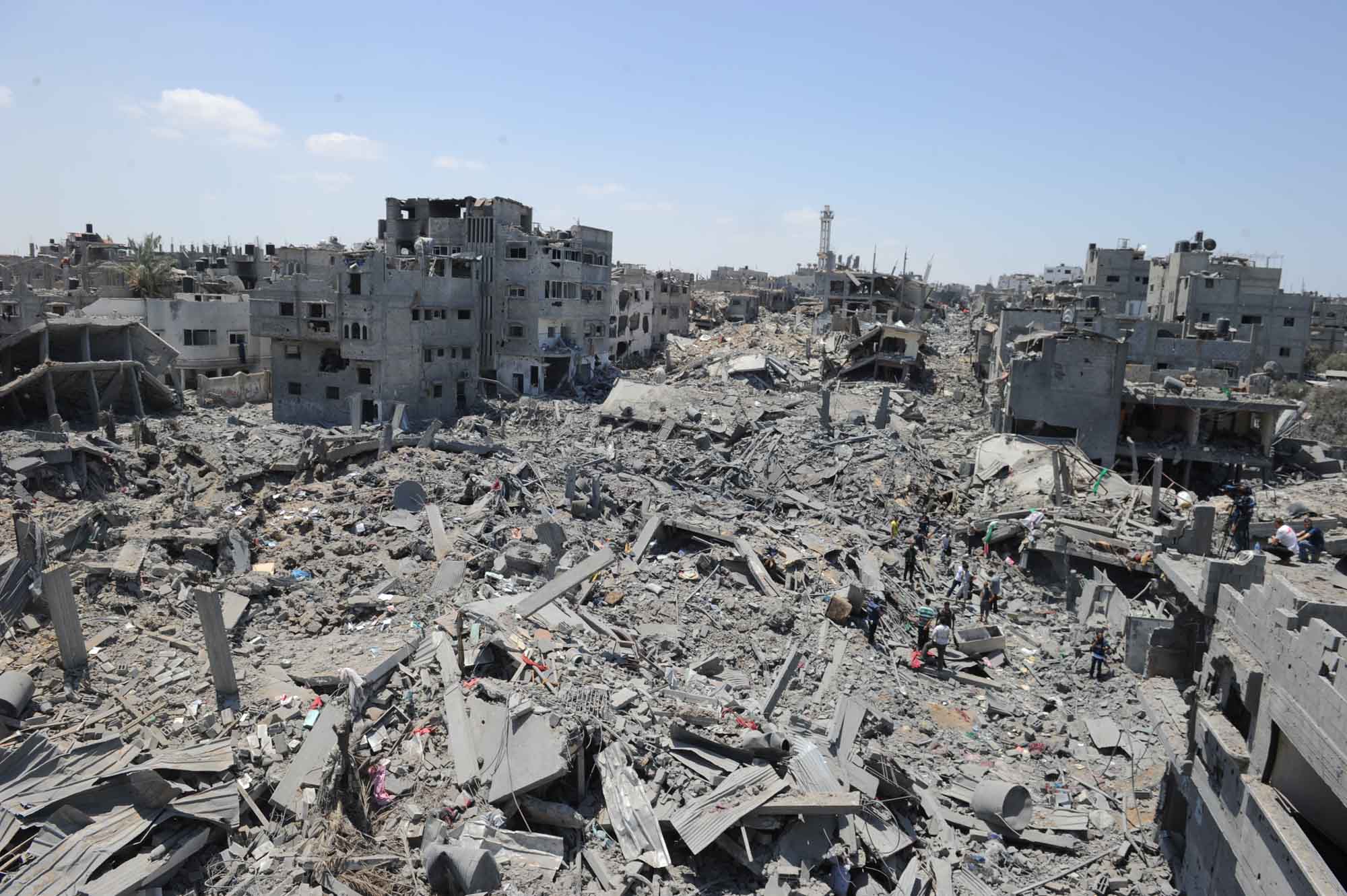
With the unprecedented attention dedicated to international criminal law over the Russian aggression in Ukraine, many activists, scholars and lawyers have concluded that international law is a living instrument. Its principles are still valid even at times of war and collapse of politics and diplomacy. In light of the unspeakable horrors committed by Hamas on 7 October and the ensuing response by Israel, international law’s mechanisms must be reactivated once again. Civilians are paying the price of atrocities while the basic principles of international humanitarian law – distinction, proportionality, and necessity – are being blatantly violated.
International law is nothing if it is not applied. Courts must be able to address its violations. The international community has witnessed the support that both the International Court of Justice (ICJ) and the International Criminal Court (ICC) rightly received in the Ukraine situation from states not involved in the conflict there. Forty-three State Parties referred the situation to the ICC, and deployed funds and resources on an ad hoc basis to support the Court. The issuance of arrest warrants in relation to war crimes, including one for President Vladimir Putin, came relatively quickly.
Why is the same not happening with respect to the situation in Israel/Palestine? For those who follow the issue closely, the answer may not be surprising. But it is helpful to consider this question in detail in light of past and recent events.
As early as twenty years ago, several States opposed the very possibility of the ICJ delivering an advisory opinion regarding the consequences of Israel’s construction of a wall requested by the General Assembly. Some European governments declared that they “firmly believe[d] that the Court should refuse to answer the question posed by the General Assembly resolution of December 8, 2003, concerning the consequences arising from the construction of the wall by Israel, the Occupying Power, in the Occupied Palestinian Territories, including East Jerusalem and its surroundings.”
Continue reading





 Justice in Conflict