
A Message to the Canadian Government: Stop dithering, and Support the ICC’s work in Israel and Palestine Now.

The following is an open letter that I had the pleasure and honour of drafting alongside Canadian justice and accountability leaders Alex Neve, Heidi Mathews, Ardi Imseis, Kjell Anderson, Leilani Farha, and Michael Lynk. As can be seen below, it has been endorsed by a remarkable number of Canadian civil society leaders, former diplomats and parliamentarians, and others. Our message is clear: Canada must end its dithering and support the ICC’s work in Israel and Palestine. As we write: “To assert that there is something objectionable about holding Israeli officials to the same standards of international criminal justice as Hamas officials is to promote a double standard and to suggest that the rights of Palestinians matter less than those of Israelis. That is a racist, dehumanizing and discriminatory approach to international justice which Canada cannot countenance in any way.” I hope the letter is of interest to readers, in Canada and beyond.
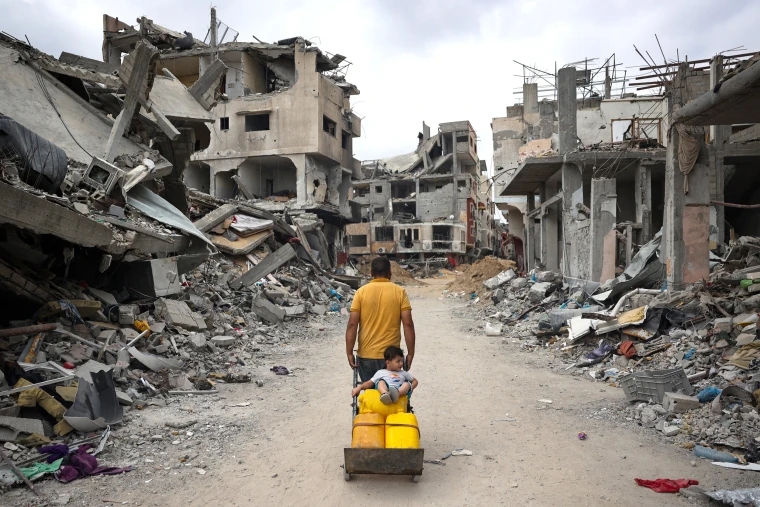
(Photo: AFP / Getty Images)

Dear Prime Minister,

We write this Open Letter to you as Canadian law professors, lawyers, legal scholars, academics, civil society, faith and labour movement leaders, and former diplomats and parliamentarians representing an extensive breadth of experience relevant to the imperative of upholding the rule of law, international human rights and justice, including through the International Criminal Court (ICC).  We write in particular to urge your government to issue a public statement unequivocally affirming the prosecutorial and judicial independence of the Court as the investigations and proceedings advance in the situation in Palestine. In line with its unambiguous obligations of cooperation as a member-state of the ICC, this should include a clear statement that any arrest warrants issued by the Court against leaders of the Israeli government and senior Hamas officials will be enforced should any suspects arrive on Canadian territory.

Canada has a demonstrated reputation and record as a leader with respect to international criminal justice and the role of the ICC in upholding universal human rights and preventing mass atrocities. The Canadian government played a central role in the establishment of the ICC and made it clear that the Court would be focused on the accountability of individuals for their decisions and actions, regardless of their governmental or organizational affiliation. The first President of the ICC was a former Legal Adviser to Canada’s Minister of Foreign Affairs. The fourth President, who served from 2018 to 2021, is also a Canadian. A Canadian is in fact currently serving as a judge at the Court. From 2013-2021, the ICC Deputy Prosecutor was a Canadian.

Given that reputation and record, a strong statement of support from Canada will have a notable positive impact internationally. The absence of such a statement will, conversely, have a detrimental impact and undermine key principles of international justice that Canada has long championed. We note as well the March 18, 2024 House of Commons motion calling on your government to support the work of the ICC, a motion almost all members of your government, including you personally, supported. 

Strong support is vital at this time given that the Prosecutor, ICC staff and the ICC as an institution are facing considerable political pressure, unfounded and inflammatory criticism, attacks on the Court’s independence, and even threats of personal sanctions against court judges and officials, all in relation to this case. This is clearly no time for champions of international justice to waver or to be ambiguous. That is why Canada’s position must be one of resolute and meaningful support.

Continue reading
Posted in Canada, Hamas, ICC Prosecutor, International Criminal Court (ICC), Israel, Palestine, Palestine and the ICC | 2 Comments

Transformative Transitional Justice: How Old Tools Could Open New Avenues for Climate Justice

Jasmina Brankovic and Augustine Njamnshi join JiC for this guest post on how the tools of transitional justice can serve as model for climate justice. Jasmina is the Senior Research Specialist at the Centre for the Study of Violence and Reconciliation, South Africa, and a Research Associate at the Institute for Integrated Transitions, Spain. She is co-author of The Global Climate Regime and Transitional Justice (Routledge 2018). Augustine is the Chair of Technical and Political Affairs for the Pan African Climate Justice Alliance, and the CSO Observer for the Climate Investment Funds, the Coordinator of the African Coalition for Sustainable Energy and Access, and the Executive Secretary of Bio-resources Development and Conservation Cameroon. 

April 2024 was the eleventh consecutive month to break heat records. With that news, the world is faced with the reality that global surface temperatures have already surpassed, even if temporarily, 1.5°C above pre-industrial levels – the benchmark agreed on in the 2015 Paris climate agreement. Yet, the international climate negotiations continue to stalland the progress made so far on mitigation, adaptation, and loss and damage is inadequate to deal with the severe climate impacts and harms being felt around the world.

The climate crisis is not the first time people have had to navigate complex tensions over responsibility for the past and future actions of states, corporations, and others. Transitional justice offers a wealth of ideas and tools to help us think ‘outside the box’ about climate action and resolve some of the impasses caused by focusing primarily on the international climate negotiations. 

With its mainstream mechanisms – prosecutions, truth commissions, reparations, and institutional reforms – transitional justice has become a go-to solution for dealing with past harms, strengthening solidarity in the present, and laying the groundwork for a future with fewer harms in diverse transitional contexts. Moreover, lessons learned from more than three decades of practice, and from efforts across Africa in particular, have given rise to more transformative approaches to transitional justice, consisting of contextualized, bottom-up measures that address the historical and ongoing injustices that usually underpin harms. 

These transformative approaches offer new avenues for facing the unequal global and local impacts of climate change in order to advance climate justice.

Climate-Focused Transitional Justice Mechanisms 

As globally accepted measures in countries undergoing political transitions, we propose that transitional justice mechanisms present numerous and adaptable options for addressing climate harms. 

Regarding prosecutions, individuals who purposefully took actions that resulted in significant intensification of climate harms could be tried before domestic, international, or hybrid courts. One example is the recent criminalization of actions ‘comparable to ecocide’ by the European Union. Alternatively, a range of indigenous, traditional, and community-based conflict resolution and justice mechanisms could be adapted to pursue individual accountability and reparative measures for climate harms, as has been the case for gross rights violations.

Continue reading
Posted in Climate Change, Guest Posts, Transitional Justice | Tagged , , , , , , , | 2 Comments

The only equivalency that matters is in the equal treatment of victims and survivors: An interview on the ICC and the request for warrants against Israeli and Hamas leaders

Dear readers,

I wanted to share this interview with British journalist Owen Jones, which may be of interest to those following the landmark decision of ICC Prosecutor Karim Khan to request arrest warrants against senior Israeli and Hamas leaders over alleged war crimes and crimes against humanity.

The interview covers many things, including: the basis of the ICC’s jurisdiction; reactions of the United States and others to the Prosecutor’s request; the importance of the Prosecutor’s focus on crimes against humanity; the troubling invocation of “equivalency” by certain states and observers; what to expect if the Court issues warrants; and the consequences on states that sell Israel and Hamas weapons.

We also cover why we should have hope for a better future in Israel and Palestine.

As always, please share your feedback and thoughts!

Mark

Posted in Uncategorized | 4 Comments

ICC warrants for Israeli and Hamas leaders won’t bring peace. But it’s beyond time to give justice a chance.

Wreckage following airstrikes in Jabalia, Gaza (Photo: AFP / Getty)

Whenever the International Criminal Court (ICC) opens an investigation into an ongoing war, versions of the following question will inevitably be asked: Does the pursuit of accountability risk leaving the warring parties with no incentive but to continue the fight?

The same question is again being asked now that ICC Prosecutor Karim Khan has made the landmark decision to request arrest warrants for top Israeli and Hamas leaders.

For years, I have tried to get to the bottom of what is often called the “peace versus justice” debate. I wrote a bookabout how that debate played out with the ICC interventions in Libya and Uganda. I have also published findings on the peace-justice relationship in Ukraine, Israel-Palestine, and elsewhere. While responses to the debate are often driven more by assumptions and hypotheticals than incontrovertible facts, the reality is that there is no special key that helps unlock the relationship between resolving wars and achieving accountability for wartime atrocities.

There is no singular answer to this question that applies across different contexts. But here are a few things that are true: The ICC can complicate peace negotiations. But more “complicated” peace negotiations do not necessarily mean “worse” peace negotiations. Take Colombia, for example, where the ICC had a decade-long preliminary examination. Accountability processes negotiated during the peace process there translated into meaningful justice for many of the wartime atrocities committed by the government and the rebel group the Revolutionary Armed Forces of Colombia (FARC). Moreover, for the ICC to undermine peace negotiations, there must be a realistic prospect of a peace process in the first place. If such negotiations do not exist, the claim that pursuing accountability will ruin them is likely red herring, an argument intended to shield the perpetrators of atrocities.

In the conflict between Israel and Palestine, there are no peace negotiations for the ICC to complicate or undermine. Put another way, justice cannot undermine peace if peace is not on the table.

Continue reading
Posted in "Peace versus Justice" Debate, Gaza, Hamas, ICC Prosecutor, International Criminal Court (ICC), International Criminal Justice, Israel, Peace Negotiations, Peace Processes | Tagged , , , , | Leave a comment

The Ceasefire Resolution at the UN Security Council: Why the U.S. Position is both Wrong and Harmful

The following is a guest post by Thomas Obel Hansen. Thomas is the Maria Zambrano 2023-24 Distinguished Researcher with the Universidad Carlos III de Madrid (Spain) and a Senior Lecturer in Law with Ulster University Law School/ Transitional Justice Institute (UK).

(Photo: Flickr/DSmith)

For almost six months, the United Nations Security Council (UNSC) had been unable to reach an agreement to take meaningful action with regard to the Gaza War. But on 25 March, the UNSC finally adopted Resolution 2728 (2024). The operative paragraphs of the resolution states that the UNSC: 

1. Demands an immediate ceasefire for the month of Ramadan respected by all parties leading to a lasting sustainable ceasefire, and also demands the immediate and unconditional release of all hostages, as well as ensuring humanitarian access to address their medical and other humanitarian needs, and further demands that the parties comply with their obligations under international law in relation to all persons they detain.

2. Emphasizes the urgent need to expand the flow of humanitarian assistance to and reinforce the protection of civilians in the entire Gaza Strip and reiterates its demand for the lifting of all barriers to the provision of humanitarian assistance at scale, in line with international humanitarian law as well as resolutions 2712 (2023) and 2720 (2023)

Resolution 2728 passed by a vote of 14 in favor to none against, with the U.S. abstaining. 

From the moment that Resolution 2728 was adopted, a debate was triggered as to whether the resolution creates legally binding law. Hannah Birkenkötter has already offered insightful reflections on this question, concluding that the resolution is indeed legally binding since it effectively makes a ‘decision’. That UNSC resolutions which make ‘decisions’ are legally binding ought to be absolutely clear. Article 25 of the UN Charter has been interpreted by the International Court of Justice ICJ in the Namibia Advisory Opinion in 1971 to imply that any decision by the UNSC is legally binding, even if it does not explicitly use the term ‘decision’ and even if it is not adopted under Chapter VII of the UN Charter. 

What is the U.S. and other States saying?

On the same day the resolution was passed, U.S. State Department spokesperson Matthew Miller made clear the U.S. view that the resolution is “a non-binding resolution” (a point also made by U.S. representative to the UN, Linda Thomas-Greenberg in the context of the resolution’s adoption). Asked if he expected Israel would announce a ceasefire in light of the Resolution 2728, Matthew Miller responded: “I do not”. White House National Security Spokesperson John Kirby similarly stated: “it’s a nonbinding resolution. So, there’s no impact at all on Israel and Israel’s ability to continue to go after Hamas”, further emphasizing that the U.S. abstaining on its vote “does not — I repeat — does not represent a shift in our policy”.

Continue reading
Posted in Gaza, Guest Posts, International Law, Israel, UN Security Council, United States | Tagged | 2 Comments

An alleged Nazi was invited to Parliament. But why are there Nazis and war criminals in Canada in the first place?

Canadian Parliament in 2023 (Photo: AP)

Last fall, Canadians were rightly appalled to learn that an alleged Nazi veteran had been invited to sit in the House of Commons and received a standing ovation from MPs across the political spectrum. The story was not left behind in 2023. Reports now show that Prime Minister Justin Trudeau invited the Yaroslav Hunka to a special reception. Amid these embarrassing revelations, few have asked: why was a Nazi in Canada anyways?

The unfortunate truth is that Canada is more likely to host a Nazi in Parliament than to prosecute one.

Canada is home to dozens, even hundreds of perpetrators of international crimes – war crimes, crimes against humanity and genocide. It refuses to investigate and prosecute suspected perpetrators in its own courts, despite having the powers to do so. Canadians should rightfully be ashamed that their Members of Parliament – from all parties – stood and applauded a Nazi. And they should also demand that any war criminal who travels to Canada will be prosecuted. 

Canada has its own dark history with Nazism, one that only gets scarce attention. Former Liberal Prime Minister William Lyon Mackenzie King admired the Nazis. He groveled for Adolf Hitler’s attention, sought to appease the Nazi leader, and befriended numerous senior Nazi officials. In a forthcoming academic article on the subject, I recount how he did so – and how he later travelled to Nuremberg to watch some of his former Nazi friends as they were prosecuted for war crimes and other atrocities in 1946.

After the end of WWII, Canada became a refuge for war criminals. It sadly remains so to this day. In 1985, the Commission of Inquiry on War Criminals in Canada, also known as the Deschênes Commission, studied how Nazis had gained safe haven in the country following the end of WWII. Some alleged Nazis were eventually prosecuted by Canadian authorities, but numerous high-profile prosecutions failed. 

In 1994, the Supreme Court of Canada upheld the acquittal of Imre Finta, a Hungarian police officer who had been charged with, among other things, assisting the Nazis in the deportation of Jews from Hungary. In the early 2010s, Canada also prosecuted individuals involved in the 1994 Rwandan Genocide. One led to a conviction, another to an acquittal. The cost of these trials led to a reluctance in Ottawa to investigate war crimes, crimes against humanity and genocide cases. But perpetrators of these atrocities still call Canada home.

Continue reading
Posted in Canada, International Criminal Court (ICC), International Criminal Justice, War crimes | Tagged , , , | Leave a comment

Why it is wrong to say Israel could never commit Genocide: Victims of Atrocities can and do become Perpetrators of Atrocities

(Photo: BBC / Getty Images)

Israel is facing charges of genocide at the International Court of Justice (ICJ). This was not inevitable, and reasonable people can disagree over whether the contemporary legal threshold of genocide has been met. But the suggestion that a state created by victims of genocide could never be implicated or responsible for genocide, as made by some observers, does not face up to scrutiny or history. It is simply wrong. No one has a monopoly on being a victim of international crimes like genocide or war crimes. Recent history is full of examples of victims of mass atrocities subsequently becoming perpetrators. One antidote to that awful trajectory is justice for international crimes. As the late Nuremberg prosecutor Benjamin Ferencz’s would say, “law, not war” can help end cycles of violence and atrocity.  

I have seen the victim-perpetrator dynamic first-hand. In northern Uganda, where I conducted research on war crimes prosecutions and their impact on peace processes, the issue was ever-present. Between the mid-1990s and the early 2000s, thousands of children were kidnapped from their villages to fight for a notoriously brutal rebel group, the Lord’s Resistance Army (LRA), led by Joseph Kony, he of “Kony 2012” fame. These children were often forced into committing awful acts of violence, sometimes against their own families and communities.

Some of those victim-perpetrators were later prosecuted for committing the same international crimes that they were victims of. The International Criminal Court (ICC), for example, prosecuted Dominic Ongwen, a former child soldier-turned-LRA commander. Among the charges he faced was the conscription of child soldiers, the same war crime that was committed against him as a child. In coverage of Ongwen’s story, some authors asked: what happens when a victim becomes a perpetrator? In 2021, Ongwen was convicted and sentenced to twenty-five years in prison. 

There have also been reports of those victimized by genocide becoming perpetrators of genocide. A notable example is the 1994 Rwandan Genocide in which some 800,000 ethnic Tutsis were massacred in just three months by Hutu militias. In 2010, the United Nations released a report detailing what some concluded was a counter-genocide against Hutus by Tutsi forces in what is now the Democratic Republic of Congo. 

Looking further into history as well as into more recent events, while the civilian toll of World War II was extremely high in the Soviet Union – with an estimated 19 million civilians killed – today Russia stands accused of genocide in Ukraine at the ICJ. Russia’s President, Vladimir Putin, is the target of an ICC arrest warrant, and Russian forces have allegedly committed tens of thousands of war crimes since February 2022.

Those familiar with Palestine will also know the unfortunate victim-becomes-perpetrator pattern all too well. It would be hard to find anyone in Gaza or the West Bank who was not a victim of a human rights abuse or atrocity. There are now over 100 unlawful Israeli settlements in the West Bank. The illegal blockade on Gaza has been in place since 2009. Thousands of Palestinian young men are in what Israel calls “administration detention”, imprisoned without charge for months, even years. Since October 7 over 10,000 children have been killed in Gaza. On average ten children a day lose either one leg or both. Over 80% of Gaza’s population is facing famine and even if enough aid entered the country tomorrow, it still won’t fully stave off starvation.

Continue reading
Posted in Dominic Ongwen ICC, Gaza, ICC Prosecutor, International Court of Justice (ICJ), International Criminal Court (ICC), International Criminal Justice, International Law, Israel, Palestine, Palestine and the ICC | Leave a comment

Rights without Remedies: The Failure of the International Court of Justice to Order a Ceasefire to stop alleged Genocide in Gaza

Kerstin Bree Carlson joins JiC for this guest-post on the ICJ’s interim decision in the South Africa case. Kerstin is associate professor at Roskilde University and The American University of Paris where she teaches topics in international law and sociology. Her current research examines terrorism trials in Denmark, France and Colombia.

(Photo: Patrick Post / AP)

Much has already been written about the historic interim ruling in South Africa v. Israel by the International Court of Justice (ICJ). All sides have claimed victorySouth Africa, because their erga omnes claim under the Genocide Convention was not thrown out; Palestine, because the ICJ has recognized the devastating conditions in Gaza; Israel, because it was not ordered to cease its war effort. All sides have also noted disappointment: South Africa and Palestine because the ICJ declined to order a ceasefire; Israel, because the ICJ found that its war efforts could plausibly constitute genocide.

The one group that is especially excited by the ICJ’s order is international lawyers; many have praised the Court’s strong rhetoric and near unanimous decision. And the one group that is  largely disillusioned are Gazans, who had hoped the ICJ might order immediate injunctive relief.

This post argues that those Gazans disappointed in the interim decision have it right because the ICJ’s order purports to recognize a right but declines to order a remedy. Here remedy refers to the injunctive relief South Africa requested in the form of a ceasefire. The disconnect between recognized right and absence of meaningful injunctive relief – remedy – makes the ICJ’s ruling conceptually problematic. This deprives the ruling of the rhetorical power that has been claimed for it.

The foundational idea of “no right without a remedy” is that if you bring a claim to a court (asserting a right) and the court doesn’t have a concrete way to address your claim (providing a remedy), then that right does not in fact exist. The conclusion derives from U.S. constitutional lore, specifically the 1803 Marbury v. Madison case that established the powerful governance function for the U.S. Supreme Court. 

Consider the rights asserted by South Africa and the actions taken by the ICJ. In December 2023 South Africa filed an “Application Instituting Proceedings” before the ICJ which characterized Israel’s military campaign in Gaza as genocidal. It requested a series of injunctive provisional measures, centrally a ceasefire. 

Continue reading
Posted in Guest Posts, International Court of Justice (ICJ), Israel, Palestine | Tagged , , , , , | 3 Comments

International Law and the Stories We Tell: Reflections on International Law(yers), Narratives and the Situation in Israel-Palestine, Part 4

Barrie Sander joins JiC for this four-part series on what the situation in Israel and Palestine tell us about how we understand, construct, and tell stories about international law. Barrie is Assistant Professor of International Justice at Leiden University – Faculty of Governance and Global Affairs. Click here for part onehere for part two, and here for part three.

(Photo: LA Times)

Part Four – Disruption and Transformation

Over twenty years ago, Hilary Charlesworth famously characterised international law as a ‘discipline of crisis’, cautioning that a crisis-focused lens skews the discipline towards becoming ‘a source of justification for the status quo’. Reflecting on this trend, Dianne Otto more recently observed how crisis talk tends to be accompanied by certain ‘technologies of crisis governance’, including a heightened tolerance for executive law-making, the adoption of increasingly securitised and militarised responses to societal problems, the shutting down of democratic debate in the name of necessity, and recourse to quick-fix measures that ignore wider contexts of causation. 

Are such repressive technologies of governance inevitable in response to crisis situations? Striving to turn the opportunitiesafforded by moments of crisis towards more emancipatory outcomes, Otto argues for a ‘crisis of discipline’ amongst international lawyers, entailing ‘a radical rebellion against the cultural order of the discipline of international law, which has proved to be so well-suited to normalizing crisis governance and its attendant silencing of critical politics’. 

In this post, the final in my series exploring what stories international lawyers can usefully tell in response to situations of ongoing mass violence, I reflect on possibilities to construct international legal narratives of disruption that seek to transformthe status quo in favour of more emancipatory politics. I do so by focusing on South Africa’s case against Israel before the International Court of Justice (ICJ), which alleges that Israel’s conduct in Gaza is in violation of its obligations under the Convention on the Prevention and Punishment of the Crime of Genocide (Genocide Convention).  South Africa’s claim is not only that Israel is committing genocide against Palestinians in Gaza, but that it is also failing to prevent it. That includes the failure to hold Israeli officials and others to account for their direct and public incitement to genocide.

While caution is undoubtedly warranted about the emancipatory potential of international law in general, and international courts in particular, this post nonetheless seeks to identify three narrative dimensions of South Africa’s application and the ICJ’s recent indication of provisional measures that at the very least have the potential to be  disruptive – whether of violenceframes, or order – whilst seeking to remain cognisant of the risks and limits that the case presents.

Continue reading
Posted in Guest Posts, International Court of Justice (ICJ), International Law | Leave a comment

International Law and the Stories We Tell: Reflections on International Law(yers), Narratives and the Situation in Israel-Palestine, Part 3

Barrie Sander joins JiC for this four-part series on what the situation in Israel and Palestine tell us about how we understand, construct, and tell stories about international law. Barrie is Assistant Professor of International Justice at Leiden University – Faculty of Governance and Global Affairs. Click here for part one and here for part two.

(Photo: UNOCHA/Mohammad Lubbad)

Part Three – Framing and Structural Bias

What stories can international lawyers usefully tell when confronted with situations of ongoing mass violence? This is the question at the centre of this blog series, which is concerned with exploring the narrative dimensions of international law within the specific context of the current situation in Israel and Palestine. In my previous post, I began by considering the significance of analogies and comparisons – whether for learning lessons from the past or for setting expectations concerning the emancipatory potential and limits of particular fields of international law. 

In this post, I consider a different narrative dimension of international law – framing and structural bias. When international lawyers look at the Israel-Palestine situation, what do they see?  Reflecting on debates and disagreements amongst international lawyers in the weeks following the attacks of 7 October, Vivek Bhatt observed how the partiality of international lawyers ‘to legally selective stories in moments of crisis reveals just how closely the legal, the political, and the personal are intertwined’. Rather than an invisible college, international lawyers may be better understood as constituting a ‘divisible college’, encompassing a diversity of perspectives, traditions, and positionalities. Importantly, whenever international lawyers examine a particular crisis, it is through acts of framing that certain aspects of the situation are rendered visible and prominent, while others are marginalised and excluded.  

Borrowing from Jorge Viñuales’ work on legal inquiry, techniques of framing may be understood from two perspectives. First, the ability to set the scale from which a situation is viewed – zooming in to capture particular incidents or zooming out to capture the broader context. Second, the ability to select the criteria for highlighting certain features at a given scale – the criteria of international human rights law and international humanitarian law, for example, tend to direct attention towards different, albeit at times overlapping, dimensions of a situation. It is in this way that we may speak of a certain politics of framing that can have a significant bearing on the way a situation is understood and subsequently treated. 

Importantly, the scale and criteria relied upon within particular fields of international law and their attendant institutions, while always open to contestation, over time come to reflect a certain structural bias. This is understood as ‘the way in which patterns of fixed preference are formed and operate inside international institutions’. As Martti Koskenniemi explains, even if it is possible to support and contest many kinds of practices through the use of professional argument, legal institutions still prefer ‘de facto some outcomes or distributive choices to other outcomes or distributive choices’ and come to serve ‘typical, deeply embedded preferences’. As such, when reflecting on the emancipatory potential of particular vocabularies and institutions of international law, identifying their structural bias can help define what may be expected of them in practice and what may need to be challenged.

Continue reading
Posted in Gaza, Guest Posts, ICC Prosecutor, International Criminal Court (ICC), International Law, Israel, Palestine, Palestine and the ICC | Leave a comment