How do we assess the performance of the ICC’s first Prosecutors?

Douglas Guilfoyle joins us for this contribution to our ongoing joint symposium with Opinio Juris on the Next ICC Prosecutor. Douglas is Associate Professor of International and Security Law at the School of Humanities and Social Sciences, University of New South Wales Canberra at the Australian Defence Force Academy. Be sure to also check out posts at Opinio Juris from Steven Lamony and Tom Dannenbaum.

(Photo: Justice Hub)

I would like to suggest one metric for assessing the performance of the first two Prosecutors of the International Criminal Court is their impact on institutional legitimacy and effectiveness. This follows from my starting position that the International Criminal Court is best viewed an inter-governmental organisation founded in state party consent – a proposition which may lead me to different conclusions than others in this series.

First, I would like to make the obvious point about results- or effectiveness-based legitimacy. That is, an international organisation’s legitimacy is at least partially dependent upon its success in carrying out the functions (or, in Shany’s terms, achieving the goals) for which it was established. Narrowly, the core functions of the Prosecutor and OTP in relation to the ICC could be defined as something like: investigating and bringing to trial cases which can be fairly conducted with reasonable prospects of success.

The obvious critique to be made here runs something like this: in 22 years of operation the International Criminal Tribunal for Yugoslavia indicted 161 individuals and convicted 99 defendants. In roughly the same period of time, with a comparable annual budget, the ICC has indicted approximately 35 individuals and secured 4 convictions for core international crimes. While this looks poor, the two tribunals are not in directly comparable positions. Importantly, the ICC’s territorial jurisdiction is much wider and it is active in many more situations. At best, thought, this makes an argument for a discount rate on our expectations given the ICC’s more complex job. I would suggest that, despite the ICC’s challenging mandate, a discount rate of over 90% is unwarranted.

Overall, then, it is hard to judge that the first two Prosecutors have succeeded on this metric. Certainly, Prosecutor Moreno Ocampo brought the court its first cases, though he by and large left it to his successor to see them to a conclusion. I have rehearsed elsewhere both criticisms of his investigative and trial strategy and the assessment that Prosecutor Bensouda has been more cautious. I return to these further below.

Beyond these core functions, however, we can ask in broader terms about the legacy of both Prosecutors in bolstering (or not) the institutional legitimacy of the ICC more widely. The first drafts of history here have not been kind to Prosecutor Moreno Ocampo. The OTP’s external expert review into the collapse of the Kenya cases found he had an authoritarian and micro-managing approach to leadership and a ‘target-based approach to investigation and charging rather than an evidence-based approach … [which] forced investigators and prosecutors to try to fit the evidence into cases against pre-determined targets rather than determining targets based on the evidence’. This largely echoes criticisms of him made by former colleagues and, indeed, presented in a New York Times profile. (Moreno Ocampo has challenged the external expert review’s findings, noting it did not interview him.)

Continue reading

Posted in ICC Prosecutor, International Criminal Court (ICC), International Criminal Justice, Next ICC Prosecutor, Next Prosecutor Symposium, Uncategorized | Tagged | 4 Comments

Evaluating the ICC’s Chief Prosecutor

Geoff Dancy joins us for this contribution to our ongoing joint symposium with Opinio Juris on the Next ICC Prosecutor. Geoff is an Associate Professor of Political Science at Tulane University.

(Photo: ICC)

Systematically evaluating the performance of prosecutors is extraordinarily difficult. Even in the criminal law-obsessed United States, attempts to develop prosecutor performance measures have not really gotten off the ground.

One problem is that publics often do not share a clear conception of what they want from prosecutors, despite the power that these individuals wield in most common law systems. Another problem is that performance evaluation reports can easily get bogged down in an off-putting morass of indicator design and audit culture newspeak.

The challenge of developing shared evaluative criteria and tools of prosecutor assessment, if hard at the domestic level, is even harder at the International Criminal Court (ICC). The job of chief prosecutor is a wholly unique position that has existed for less than two decades. Its occupant serves a much wider group of constituencies than do national or local prosecutors, and she faces radical disagreements on what the office should try to achieve—fueled by well-meaning and not-so-well-meaning observers alike.

On top of that, in June 2021, when the newest prosecutor assumes office, he or she will find limited guidance on how to measure success. As I and others have written, the Court itself has attempted to develop performance benchmarks over the last five years, but mainly produced a collection of 63 loosely configured indicators with little discussion of how they fit into a coherent theory. And it’s doubtful that this year’s much anticipated independent expert review of the ICC will provide a clearer set of evaluative guidelines.

In fact, we should probably accept the reality that there will never be a single, uniform performance framework that can be applied to the Office of the Prosecutor (OTP). Running OTP is less like flying a plane and more like triage. The job cannot be converted into a checklist.

In fact, the way we conduct performance review of the ICC is contingent on our plural worldviews, and the divergent preferences that derive from them. We will never eliminate this pluralism, but we can do better to recognize it, and engage in more systematic thinking when judging the ICC Prosecutor’s work. I have three suggestions in this regard.

  1. Distinguish between performance evaluation and impact assessment

Through they are regularly lumped together by evaluation scientists, gauging how well a person or organization has performed a job is distinct from assessing their broader impact in the world.

Performance evaluation simply means determining the worth of a thing. Worth, or value, is subjective, so this task necessarily introduces normative judgment. In the case of OTP operations, performance evaluation usually involves weighing how well the chief prosecutor makes decisions in situations of discretion.

Ordinarily, critics conduct such evaluations by approving or disapproving of “outputs” produced by prosecutorial choices. These choices include how long to engage in preliminary examination, which investigations to pursue, which individuals to target, which charges to bring, whether to seal an arrest warrant, how to collect evidence, and how to present evidence. Negative evaluations, which seem most common, usually take the following form: “X action by OTP was not ideal.” This implies that things would have been more “just, right, equitable, or reasonable” if the Prosecutor would have done thisinstead of that.”

Impact assessment is different. It means studying how the outputs of particular decisions translate into observable changes in society. By definition, this must include some kind of causal inference.

For example, it is widely accepted that Luis Moreno Ocampo’s decision in late 2010 to charge rival Kenyan politicians Uhuru Kenyatta and William Ruto – for crimes against humanity related to election violence from three years prior – inspired the two to form an unexpected anti-ICC coalition. Forces combined, they came from behind to win the 2013 presidential election and allegedly used their new power to intimidate witnesses and promote African non-cooperation with the Court. From this, many contend (e.g., here and here) that the ICC intervention had perverse effects: it entrenched the impunity of perpetrators, caused harm to victims and witnesses, and undercut the Court’s general legitimacy. Continue reading

Posted in ICC Prosecutor, International Criminal Court (ICC), International Criminal Justice, Next ICC Prosecutor, Next Prosecutor Symposium | Tagged | 1 Comment

Electing the Next ICC Prosecutor: A Generational Opportunity

Christian De Vos and Mariana Pena join JiC for their contribution to our joint symposium with Opinio Juris on the Next ICC Prosecutor. Christian is a senior advocacy officer with the Open Society Justice Initiative and author of the forthcoming book, Complementarity, Catalysts, Compliance: The International Criminal Court in Uganda, Kenya, and the Democratic Republic of Congo. Mariana is a senior legal officer with the Open Society Justice Initiative, has 15 years of experience in the field of international justice. They write here in their personal capacity. Be sure to also check out the latest contribution at Opinio Juris, by Liz Evenson: The Next ICC Prosecutor Should Resolutely Hold the Most Powerful to Account.

ICC prosecutor Fatou Bensouda shakes hands with Stephane Bourgon, Bosco Ntaganda’s defence counsel (Photo: ICC)

It would be hard to overstate the importance of the forthcoming election for the International Criminal Court’s next prosecutor. As December looms, the responsibility is on states parties to elect an individual that meets not only the “high moral character,” competence, and practical experience that the Rome Statute requires, but also the good judgment and managerial skill that the office demands.  As a leader and top manager, the new prosecutor must also embody—and be committed to—the highest standards of respect and integrity.

The prosecutor’s election also arrives amidst an ongoing, state-supported review of the ICC’s performance and its place within a larger and ever evolving global justice system. If done well, that review process, which should culminate in late 2020, could offer both a political window and a potential roadmap to consider the kind of structural changes that the ICC has thus far largely shunned.

It is equally hard to overstate the critical role that the Office of the Prosecutor (OTP) plays in shaping and executing the work of the ICC. As the organ responsible for investigating the situations and prosecuting its cases, the OTP is the engine of the Court: it defines not only what populates the Court’s docket but also, and perhaps more critically, what does not. The principle of complementarity, and to a lesser extent the gravity requirement, have consumed much of the debate to date about where the OTP engages. However, fundamental questions about the role of prosecutorial discretion, political judgment, and resource allocation are actually at the core of situation and case selection. For an institution facing an environment far more hostile to its mission than that which welcomed its establishment, these questions go to the heart of the prosecutor’s job.

All of this makes the election of the third ICC prosecutor part of a unique, generational opportunity. That opportunity is even more pressing given the Court’s diminished role in the global political landscape. Propelled by the enthusiasm and optimism of a generation that cried out “never again” for mass atrocities, the Rome Statute entered into force in record time and the Court enjoyed political support from many states – and begrudging tolerance from others – in its initial years. But internal and external developments have resulted in a dramatic change of circumstances for the ICC and the field of international justice more broadly. Internally, states parties have grown impatient with the Court’s limited successes and its institutional inefficiencies, leading to more state interventionism and less financial support. Externally, the Court’s mere existence and, increasingly, its proposed investigations in certain countries have brought unprecedented attacks that seek to curtail its independence. Once supported and cheered, the ICC now faces limited cooperation and hostility.

Finally, this election unfolds under the long shadow still cast by the first person to hold the office: Luis Moreno Ocampo. Though initially praised by some for building up an office from scratch and pioneering important concepts like “positive complementarity,” his tenure can only charitably be described as rocky. Criticized for his authoritarian management style [PDF] (one that saw an early exodus of several senior staff from the OTP), penchant for institutional turf battles, and a record of poorly developed cases [PDF] that were insufficiently grounded in evidence and badly staffed, the damage done to both the Office and the ICC in these early, pivotal years cannot be underestimated. Continue reading

Posted in ICC Prosecutor, International Criminal Court (ICC), International Criminal Justice, Next ICC Prosecutor, Next Prosecutor Symposium | Tagged , | Leave a comment

The Chief Prosecutor: Diplomat, Politician, Leader, Manager, and Lawyer

David M. Crane joins JiC for this second post in our ongoing joint symposium with Opinio Juris on the next ICC Prosecutor. Crane was the Chief Prosecutor of the Special Court for Sierra Leone from 2002 until 2005.

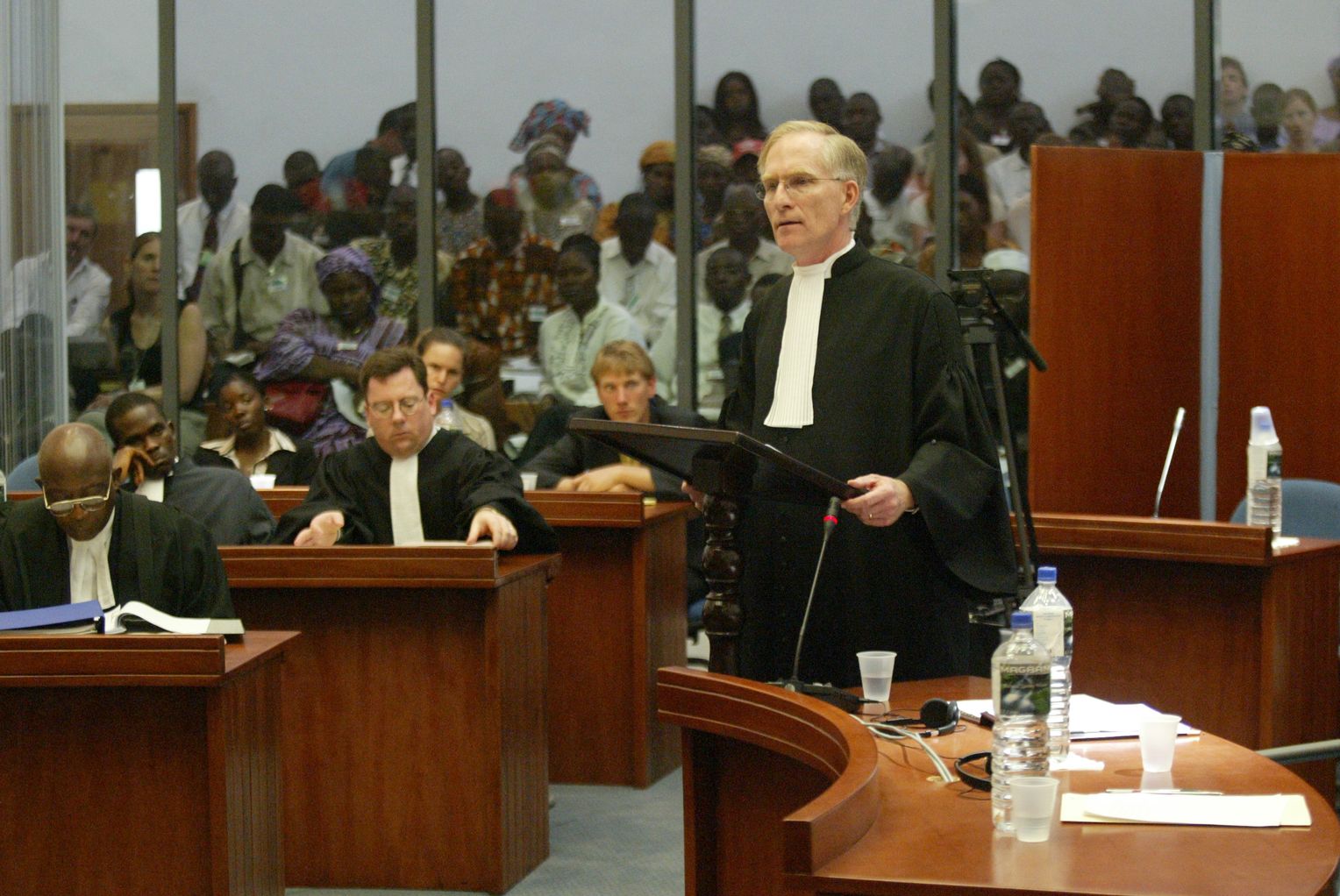
David Crane during hearings at the Special Court for Sierra Leone (Der Spiegel)

I have had the rare privilege of being one of four individuals to actually found an international tribunal, literally from the ground up, and manage it to success. The international war crimes for West Africa, called the Special Court for Sierra Leone, has been taunted as one of the more successful tribunals in modern history. Why is this so? Like the tribunals for Yugoslavia and Rwanda, each was created by the United Nations with the intent to seek justice of victims of atrocity crimes, yet the Special Court for Sierra Leone stands out from the other two as being more effective and efficient.

There are several reasons—a workable mandate (greatest responsibility), the proper location (at the scene of the crimes in Sierra Leone), a strategic plan along with a prosecution plan. Stated simply the Special Court was better led and managed across the board. Additionally, as a hybrid international tribunal, the Special Court was “of the UN”, not “in the UN”. Therefore the byzantine administrative and personnel rules that is so much of the UN management system did not apply to us. The UN is simply incapable of administering international justice in an effective and efficient manner. Because the Special Court was not tied to these archaic management principles we were able to move fast, with less cost, with a lean dedicated team of people not focused on a UN career (where initiative can be frowned on) but on seeking justice for victims of international crimes. Alas, the International Criminal Court has become somewhat a clone of the UN—more form over substance. I say this with regret.

A successful Chief Prosecutor has to be a diplomat, a politician, someone who can lead and manage effectively, as well as know the law. If one of these attributes is missing it can become a problem. When I founded the Special Court, I did it with decades of diplomatic and political experience. All this came naturally to me and I used it effectively in West Africa. Additionally, I had been leading and managing organizations in the US federal government for three decades. I knew how to be a leader and manager. I was known in the US federal government as someone who could create and manage new organizations to success, to include an office that oversaw a vast majority of the US intelligence community. The then Secretary of State Colin Powell nominated me for the post of Chief Prosecutor based on this fact that I could lead and manage. As a successful leader himself this was of paramount importance to him. It was assumed that I was a good lawyer.

Internationally, there tends to be too much emphasis placed on being a good lawyer and no focus on leading and managing. Large new enterprises and organizations need to have someone that inspires, focuses the team, builds a sense of pride and purpose, all around a centralized theme of seeking justice for victims of horrific crimes. This is done by putting together a strategic plan. This plan is the sheet of music from which all the players follow to accomplish the mandate which in the case of the Special Court was “prosecute those who bear the greatest responsibility for war crimes, crimes against humanity, and other serious violations of international humanitarian law.” That is why we were there.

A strategic plan centers the team on what they are doing on a daily, weekly, and monthly basis, why they are there, and what their job is to advance the plan in seeking justice. Everyone knows the plan and works the strategic plan. The Special Court was unique of all the major tribunals for this. It simply had a plan and it worked the plan until it was finished. The Special Court was the last tribunal to start and the first to finish with great success. It was the strategic plan that made the difference, which the other tribunals simply lacked.

Another important part of an effective and efficient tribunal is an overall prosecution plan. Taking the mandate as well as the extant facts and law, a good prosecutor builds a plan on who to prosecute, how to prosecute, when to prosecute, and why to prosecute. This plan is part of the strategic plan, but it allows an Office of the Prosecutor to come to work every morning knowing exactly why they are doing something at any one given time.

A prosecution plan allows then for appropriate budgetary planning and administrative build up. It’s a “plug and play concept”. You bring on assets as you need them. You build and office around the mandate not build the mandate around the office. This allows for efficient use of personnel. The Special Court managed to successfully achieve its mandate on a fraction of the number of personnel, assets, equipment, and other items at a quarter of the cost than the other tribunals. The Office of the Prosecutor accomplished its mandate following a strategic and prosecution plan with around 70 persons versus the hundreds that walked the halls in The Hague and Arusha.

The ICC is slightly different as it is a permanent court. That presents a different approach, but success still is achieved by having a plan, as well as good leaders and managers who are equally good diplomats and politicians. The bright read thread of international criminal law is politics. It is a naive prosecutor who does not factor in the political and diplomatic ramifications of their decisions on who to prosecute, when, and why? If they don’t they will have problems, even fail. The ICC has historically had a “tin ear” to politics and their record shows for it. Continue reading

Posted in ICC Prosecutor, International Criminal Court (ICC), International Criminal Justice, Next ICC Prosecutor | Tagged | 2 Comments

The Challenges for the Next ICC Prosecutor

Luis Moreno Ocampo joins JiC and Opinio Juris for this opening foray into our online symposium on the next ICC Prosecutor. Moreno Ocampo is the Founding Chief Prosecutor of the ICC (2003-2012).

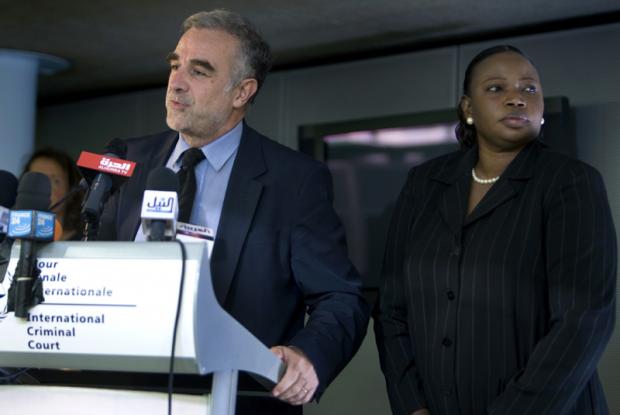
Former ICC Prosecutor Luis Moreno Ocampo speaks at a news conference as Fatou Bensouda, his former Deputy Prosecutor and current ICC Prosecutor watches on (Photo: D+C)

In late 2020, the third International Criminal Court (ICC) Prosecutor will be appointed. One thing is certain: she/he will face new challenges. Should the new Prosecutor open an investigation in Venezuela? Or against British personnel in Iraq? Burundi, Philippines or Georgia? What should be the focus of the Afghanistan and Palestine investigations?

At the beginning of the Office of the Prosecutor (OTP)’s operations the context was completely different: there were doubts about the viability of the entire Rome Statute. The George W. Bush Administration was campaigning against the ICC and even those working at the Court had doubts about its feasibility. David Bosco reminds us (at 81) that one of the first judges and his colleagues “were not at all sure about whether this new baby would be able to survive all the hostility shown by the big powers.”

The third ICC Prosecutor will work in a completely different environment. After more than 17 years, the Rome Statute is part of the international landscape, the Court’s existence is no longer at risk. What remains up for debate, however, is its relevance, and more broadly, the relevance of international law to manage violence and protect individuals in the 21st century.

The OTP has enormous responsibilities. It identifies the situations and the suspects involved in Court proceedings and obtains the evidence to put them to trial, but we must not forget that the relevance of the Rome Statute is largely defined by decisions taken outside the court room by political leaders, state representatives, regional organizations and the UN Security Council.

In the last few years, the Secretary General of the Organization of American States has been demanding the ICC’s intervention in Venezuela. Chile, Argentina, Paraguay, Canada and Peru referred the Venezuela situation to the Court, and recently, Nicolas Maduro also referred the situation to the ICC requesting the investigation of the impact of the US sanctions in Venezuela. Palestine and Ukraine are requesting investigations that could involve citizens from Israel and Russia, and both countries are refusing to recognize the legitimacy of the Court’s intervention. The CIA’s personnel could be investigated in the Afghanistan situation and the current U.S. government is threatening the Prosecutor and Judges. Furthermore, a negotiation to end the conflict was just signed between US and the Taliban and the investigation could affect its implementation. A case against UK personnel involved in war crimes in Iraq and Afghanistan could also trigger more political conflicts. There are debates in Sudan on surrendering the former President Al Bashir to the ICC. Philippines and Burundi withdrew from the Rome Statute, but the Prosecutor is analyzing or investigating the alleged crimes committed before the withdrawal. The interaction with those former state parties will, without a doubt, be complex. On the other hand, Kiribati, a small country from the Pacific Ocean, became the 123rd state party in February 2020.

The next Prosecutor

In this context, what will be the role of the new ICC’s Prosecutor? She/he will inherit an Office with more than 350 dedicated staff managing ongoing investigations and trials in accordance with Regulations, policy papers and a detailed Operational Manual based on almost two decades of practice. The Prosecutor’s role is similar to that of an orchestra director. She/he will have to harmonize the work of those 350 players coming from more than 90 different countries, who have different traditions, and expertise, including international law, investigations, security and international criminal law. The new Prosecutor could direct the OTP “orchestra” by reviewing the Office’s Regulations and the Operational manual. Or she/he could modify the organization of the work, appoint new players, and move the current players to different positions. She/he should also integrate the OTP’s ensemble with a variety of other players directed by the Registrar, like the victim unit and the witness protection unit, or states parties representatives which are following their own partiture, to obtain cooperation and arrest individuals sought by the Court. During the litigation phase, the OTP’s “orchestra” will interact with the suspects, and victims’ lawyers, who are presenting simultaneous and different arguments, like in a polyphonic music, with two or more independent but related melodies. In any case, the judges of the different Chambers, who are still consolidating the ICC’s jurisprudence, are the directors of the litigation process and will make the final decisions on the individual responsibility of the accused.

The ICC Prosecutor’s role

To clarify the Prosecutor’s specific challenges, it is important to respect the legal architecture adopted by the Rome Statute, to distinguish the roles it provides to the different players and the three substantial activities that should be exclusively performed by the OTP. Firstly, like no other previous prosecutor in the world, neither national, nor international, the ICC Prosecutor has the independent and exclusive authority to propose where and when the Court should intervene; the OTP is ‘the gatekeeper’of the entire Rome Statute connecting the national system with the Chambers of the Court. Secondly, as in some national jurisdictions and in the ad hoc international tribunals for the former Yugoslavia and Rwanda, the ICC Prosecutor must conduct the investigations. Thirdly, like any national prosecutor, the OTP has to litigate before the Chambers of the Court. The Prosecutor’s autonomy to direct the OTP’s “orchestra” is almost absolute regarding the decisions to conduct preliminary examinations and to trigger or not the Court jurisdiction. It is still broad during the investigation phase where the Office will identify the suspects. But it is very limited during the court proceedings, and the Judges have the exclusive authority to decide on the issuance of arrest warrants and the individual responsibility of the defendants.

Preliminary examinations

The new ICC Prosecutor will find that the Office has dedicated enormous efforts to developing a specific technical area to identify situations under the jurisdiction of the court, clear standards and a transparent process. The evaluation is conducted by the Situation Analysis Section. A policy paper on preliminary examinations defines in detail the procedure to apply in following the Rome Statute. Since 2011, the Office has been publishing a public report every year summarizing its findings on the different situations under analysis. Continue reading

Posted in ICC Prosecutor, International Criminal Court (ICC), International Criminal Justice, The ICC’s Impact on National Justice Symposium | 1 Comment

The Next ICC Prosecutor, a Symposium

The following symposium was organized by: Kevin Jon Heller, Associate Professor of Public International Law at the University of Amsterdam and Professor of Law at the Australian National University; Patryk I. Labuda a Postdoctoral Scholar at the Fletcher School of Law and Diplomacy; Priya Pillai, a lawyer and international law consultant; and Mark Kersten, Senior Consultant at the Wayamo Foundation and creator of the blog Justice in Conflict

Quite naturally, the world’s attention has been focused on the terrible suffering created by the COVID-19 pandemic. Life, however, goes on – including at international institutions. The International Criminal Court (ICC) is a case in point: with Fatou Bensouda’s tenure as the second Prosecutor in the Court’s history coming to an end, the Assembly of States Parties (ASP) is gearing up to elect her successor. The deadline for applications closed last November, and the ASP-appointed Committee on the Election of the Prosecutor is scheduled to hold interviews on April 24. We should know who the leading candidates will be not long after that.

It is difficult to overstate the importance of the election. Even the ICC’s most enthusiastic supporters acknowledge that the Office of the Prosecutor (OTP) has struggled to conduct effective investigations and to mount convincing prosecutions. The choice of the next Prosecutor will have a profound effect on how well – or how poorly – the Court functions for the next eight years. Simply put: the ASP has to get this right.

To assist the Committee and the ASP, the four – Kevin Jon Heller, Mark Kersten, Patryk I. Labuda, and Priya Pillai– of us asked a wide variety of individuals who work in international criminal justice – scholars, practitioners, activists – to reflect on a number of questions concerning not only the choice of the next Prosecutor, but also how the next Prosecutor should think about his or her role:

  1. What is/should be the role of prosecutors in international criminal tribunals?
  2. How should the Prosecutor engage states parties and non-states parties?
  3. How, if at all, should the next Prosecutor confront major powers in the world?
  4. What role should the next Prosecutor play in reforming the OTP? / Court?
  5. What can and should the next Prosecutor do to improve the ICC’s investigation techniques?
  6. Should the next Prosecutor address the Africa-ICC relationship? If so, how?
  7. How do we assess the Prosecutor’s performance?
  8. What is your assessment of the first two ICC Prosecutor’s performance? What did Luis Moreno Ocampo and Fatou Bensouda get right/wrong?
  9. What methods do we use to hold the Prosecutor accountable for his/her performance?
  10. How should the next Prosecutor deal with the OTP’s ongoing preliminary examinations?
  11. How should the next Prosecutor deal with the OTP’s ongoing situations? Closing situations?
  12. What strategies should the next Prosecutor employ to strategically communicate with the Court’s constituencies (states, affected communities, interested observers, scholars, etc.)?
  13. How can the next ICC Prosecutor live up the Court’s promise to effectively investigate and prosecutor SGBV crimes?
  14. What is the procedure for selecting the next Prosecutor? Process, transparency and lessons learned from previous elections.
  15. Who should be the next Prosecutor? Desirable experience/background.

The result of our inquiries is a symposium that will run for the next 10 days at both Opinio Juris and Justice in Conflict. We will kick the joint symposium off tomorrow with posts by Luis Moreno-Ocampo, the first Prosecutor at the ICC, and by David Crane, the first Prosecutor at the Special Court for Sierra Leone. We will then publish a number of posts each day next week, some at Opinio Juris and others at Justice in Conflict. We encourage readers to read the posts at both blogs – and to tell us what you think!

Posts in the symposium so far:

Posted in ICC Prosecutor, International Criminal Court (ICC), International Criminal Justice | Tagged , , | Leave a comment

International Criminal Justice – A New Feature of Middle East Politics?

Carnage and destruction is seen following a Taliban attack on a hospital in Qalat, Afghanistan, in 2019 (Photo: Reuters)

With its landmark decision to authorize an investigation into Afghanistan, the International Criminal Court (ICC) will embark upon unknown territory. Not only will it investigate alleged atrocities committed by the Afghan military and the Taliban, it will also – for the first time – probe alleged war crimes and crimes against humanity committed by American forces and CIA operatives. The unprecedented nature of the decision has and will continue to receive great scrutiny in the coming days and weeks – and rightly so. But something else is going on too: international criminal justice is spreading across the Middle East and North Africa (MENA).

What might this mean for the region and for the ICC itself?

Historically, efforts to bring perpetrators to account through international criminal justice have largely focused on European and African conflicts. Most war crimes tribunals have been created there, and in most cases, the accused came from those regions. One contemporary blind spot has been the MENA region.

There are some exceptions: there is a court prosecuting the alleged murderers of the former Lebanese President, albeit in The Hague, not Beirut, and with none of the alleged perpetrators present for trial. Israel has put to trial a handful of perpetrators involved in the Holocaust, most famously Adolf Eichmann in 1961. The alleged genocide in Darfur has received a tremendous amount of attention from international criminal law circles, although as of yet, no justice has been delivered (that might be changing soon). The Arab Spring ushered in some hope that international justice would be a new fixture in the region; but despite an ICC intervention in Libya, no one there has been prosecuted by the Court. Meanwhile, atrocities in Syria, Bahrain, and Egypt have been swept under the rug of impunity.

Perhaps in part due to these fits and starts, interest in international criminal justice is palpable and growing. It is increasingly part of the strategic and political discourse across the region. In Kurdistan, authorities have repeatedly called on the international community to set up a hybrid court to investigate and prosecute former Islamic State fighters. Sudan’s new regime has openly declared that it wants the ICC to prosecute former President Omar al-Bashir. Mandated by United Nations Security Council, A special team of investigators is currently assisting authorities in Iraq to bring ISIS fighters to justice. The Organisation of Islamic Cooperation, of which most MENA states are members, has thrown its support behind The Gambia’s efforts to bring Myanmar to the International Court of Justice over charges of genocide. It has also lent its support to the ICC opening an investigation into Palestine and alleged international crimes perpetrated by Palestinian and Israeli factions.

Of course, one shouldn’t paint too rosy a picture. The possibility of the Arab Spring harkening a new chapter in the relationship between Arab states and the ICC has borne limited fruit. Despite the evidence being the strongest since the Nuremberg trials of the Nazis, the atrocities in Syria, among the very worst of this century, have been met with scant justice. The brazen murder of Jamal Khashoggi at the behest of Saudi Crown Prince Mohammad bin Salman and the alleged war crimes committed by Saudi Arabia in Yemen cry out for attention from international investigators and prosecutors. If Tehran won’t take responsibility and investigate the downing of Ukrainian Airlines Flight 752 itself, then it too would surely constitute a crime against humanity worthy of investigation by the ICC. Continue reading

Posted in Afghanistan, Bahrain, Egypt, International Criminal Court (ICC), International Criminal Justice, Iran, Iraq, ISIS, Islamic State, Libya, Libya and the ICC, Middle East, Omar al-Bashir, Sudan, Syria | 1 Comment

The Stuff of Nightmares: How the Specter of “Enhanced Interrogations” Affects the 9/11 Military Commissions in Guantánamo

The following guest-post was written by Kate Gibson, who has been representing accused before the international criminal courts and tribunals since 2005, including as co-counsel for Radovan Karadžic and Charles Taylor, and as lead counsel for Justin Mugenzi before the ICTR. She is currently the co-counsel of Bosco Ntaganda before the ICC, where she also represented Jean-Pierre Bemba between 2009 and 2018. She was an observer to the 9/11 proceedings before the Military Commission in February 2020 as part of the ADC-ICT’s Guantánamo Bay Observer Program.

A detainee at the US detention center in Guantanamo Bay is escorted to an interrogation by military guards (Photo: Associated Press)

Almost 20 years after the event, five men are facing charges for their alleged role in the hijackings that killed nearly 3,000 people on September 11, 2001. The U.S. Government has charged the group of five accused – including the alleged 9/11 “mastermind” Khalid Shaikh Mohammed – with terrorism and murder as a war crime, among other counts. This is a capital case, with the Government seeking the death penalty, and one that exposes the all-too thin line between the legitimate pursuit of accountability and the (ab)use of defendants’ rights to reach the desired result.

The charges would have been readily prosecutable in U.S. Federal Court. In fact, some of the accused were first indictedin the Southern District of New York. Ultimately, the proceedings were carved out of the domestic legal system and are now being conducted offshore before a U.S. Military Commission in Guantánamo, Cuba.

From its peak of 780 detainees in 2005, 40 people remain incarcerated at Guantánamo, a Naval Base just over 100 square kilometres in size, located in a steamy outpost at the southeastern tip of Cuba. At a current annual cost of USD 13 million per inmate, some of the 40 who remain are “forever detainees”, who will never be charged, but will be released at the conclusion of the “War on Terror”.

The Military Commissions are essentially hybrid courts; a cross between the U.S. federal court system and a military court-martial. They have been controversial since inception. Attacked for their perceived incompatibility with international fair trial standards and on the basis that they are not ‘regularly constituted courts’ as required by Common Article 3 of the Geneva Conventions, the narrative of the Commissions being a “failed experiment” has taken hold, and is proving difficult to shake.

The fair trial concerns are neither minor nor peripheral. Under the Military Commissions Act (2009), the presumption of innocence has been significantly weakened (if not obliterated) by personal jurisdiction being triggered by a determination that the accused are “unprivileged enemy belligerents”; namely those who have engaged in or materially supported hostilities against the U.S., or were part of al-Qaeda at the time of the alleged offence. The U.S. position is that any attack on U.S. forces is a war crime, and that any support of hostilities or membership in al-Qaeda can be construed as supporting terrorism. As such, the presumption of innocence is effectively a legal fiction.

Exculpatory evidence is frequently withheld on the basis that it is “classified”, despite the lead Defence lawyer on each team (the “learned counsel”) having a security clearance of at least “top secret”. Wildly permissible evidential rules permit the admission of illegally-obtained evidence seized outside the U.S., as well as statements by the accused on the grounds of alleged coercion or compulsory self-incrimination.

Add to this last week’s revelation that Presiding Judge Colonel W. Shane Cohen granted a request from the Government to use a “device” in the courtroom, to be hidden from the Defence, allowing the CIA and other “Original Classification Authorities” (“OCAs”) to follow the proceedings in real-time and communicate directly with the Government lawyers. The OCAs can then prompt the Government lawyers to ask the Court Security Office (CSO), who sits beside the Presiding Judge, to stop evidence for reasons of national security, or to prevent potential “spills” of classified information. Defence teams first noticed the device – a small silver tablet – during the cross-examination of CIA psychologist Dr. James E. Mitchell, who co-developed the Agency’s “enhanced interrogation program”. Suspicions were raised that the device could communicate with third parties outside the courtroom, after Government lawyers were unable to explain why they had asked for an interruption to the evidence.

While conceding he was wrong to authorise real-time contact between the Government and OCAs ex parte, Judge Cohen insisted the device does nothing more than leverage technology to prevent “spills” of classified information, and reacted angrily to Defence submissions that apparent intelligence agency disruption undermines a fair trial. Given that the CSO does not consult with these OCAs before preventing evidence from entering the record, the potential for abuse is clear. Allowing third parties to unilaterally censor witnesses from outside the courtroom, introduces another layer of state control to the proceedings that is difficult to reconcile with their purported independence.

In the same heated exchange, Judge Cohen insisted the device was not being used to spy on Defence teams, and said he would “dismiss the charge without thinking twice about it” if the Government was found to be monitoring Defence communications. This is a significant statement in a case where, in 2013, defence teams discovered that the smoke detectors in attorney-client meeting rooms were in fact listening devices; in 2014 the FBI attempted to recruit a defence team member as a confidential informant; and in 2015, one of the accused identified a courtroom translator as a former interpreter from a CIA black site, following which the Government chief prosecutor Brigadier General Mark Martins accused Defence lawyers of failing to do their “due diligence” in not having identified him earlier. Continue reading

Posted in Defense Counsel, Guantanamo Bay, Guest Posts, Human Rights, International Criminal Justice, Terrorism, United States | Tagged | 3 Comments

Challenges and Opportunities: Audio-Visual Evidence in International Criminal Proceedings

The following guest post was written by Jelia Sane and Chiara Gabriele. Jelia Sane is a barrister at Doughty Street Chambers, London, specialised in the areas of international criminal law, international humanitarian law and human rights. Chiara Gabriele is a Legal Advisor for the Great Lakes program at TRIAL International. She joined the NGO in 2015 and has been based in Bukavu (DRC) since 2017. 

(Imagine: Open University)

International criminal courts and tribunals (ICTs) have long admitted audiovisual material in evidence, including photographs, videos and audio recordings. Photographs and moving images have been relied on since the first war crimes trials at Nuremberg. In the 1990s, the International Criminal Tribunal for the former Yugoslavia (ICTY) and the International Criminal Tribunal for Rwanda (ICTR) considered satellite imagery and film footage captured by journalists, amongst others.

More recently, the establishment of the International Criminal Court (ICC), Special Court for Sierra Leone (SCSL), and Special Tribunal for Lebanon (STL) has coincided with the popularisation of the internet, in particular of social media, along with the proliferation of mobile phone and communications technology. Individuals are increasingly uploading potentially relevant and probative evidence of international crimes online, especially on social media platforms. Indeed, to date, over 4 million videos of the Syrian conflict have been uploaded on YouTube alone. There are more hours of footage of the Syrian conflict than have passed since the war began in 2011. ICC investigators and prosecutors are increasingly collecting user-generated digital and open-source evidence for use at trial. The Office of the Prosecutor collected digital evidence for the first time in 2008 in the  Bemba case and video evidence was introduced in Prosecutor v Thomas Lubanga Dyilo, the first trial before the Court. By 2011, this kind of evidence had been collected in the Kenya, Ivory Coast and Libya investigations. The Court now has an ‘e-Court Protocol’, designed to ensure  the “authenticity, accuracy, confidentiality and preservation” of the record of court proceedings.

Audio-visual evidence can be a valuable source of evidence in international criminal trials. Footage from mobile phones, photographs, and videos can link a suspect to the scene of a crime; pinpoint the time and place of an incident; capture dimensions of an event that may lie beyond the recollection of a witness; and provide a credible, real-time, and objective record of a situation. The risk that information will be lost, manipulated, or destroyed is reduced, particularly in cases where evidence is preserved in a digital format. At the same time, the widespread availability of audio-visual technologies and the proliferation of “citizen” journalists and “user generated” material can raise thorny evidentiary challenges for courts, in terms of establishing provenance, authenticity, and chain of custody, amongst others. These challenges have yet to be specifically addressed in the procedural rules of the ICTs, whose approach to date has largely been to assess evidence of this nature on a case by case basis and by reference to the standard rules and principles applicable to other forms of evidence.

Audio-visual material is generally admitted as a form of documentary evidence. The term “document” has been broadly interpreted in this context to mean  “anything in which information of any description is recorded”, this encompasses  paper documents as well as  photographs and the content of audio and video recordings If the material is stored on, received, or transmitted by, an electronic device such as a smartphone, it will also be considered as digital evidence. In both cases, the “document” itself may also be preserved as physical evidence. As with other types of evidence, there are no universal standards governing the admissibility of audio-visual material. However, the admissibility threshold in ICTs is generally low relative to that of national systems, particularly common law jurisdictions.

Trial judges at the ICC for example have wide discretion to admit any evidence provided that it is (i) prima facierelevant; (ii) prima facie probative; and (iii) sufficiently relevant and probative as to outweigh any prejudicial effect its admission may cause. Relevance turns on whether the evidence makes “the existence of a fact in issue more or less probable”. Probative value is considered in terms of the reliability and authenticity of the evidence, as well as the extent to which it is likely to influence the determination of a fact at issue. This is a fact-specific inquiry that takes into account numerous factors, including the origin, form, content and date of the documentary evidence; where and in what circumstances it was seized; the chain of custody after seizure; the corroboration of the contents of the document with other evidence; and the nature of the document itself (e.g. whether it contains any signatures or stamps). Trial judges must also consider the potentially prejudicial effect of admission. Open source or user-generated evidence may raise specific challenges in this regard. For example, if a video is exceedingly graphic, or attacks the character of the accused without shedding much light on the facts in issue, it may be excluded as prejudicial. As for evidentiary weight, this will turn on the intrinsic quality of the evidence and on the totality of the evidence admitted at trial. Continue reading

Posted in Guest Posts, ICC Prosecutor, International Criminal Court (ICC), International Criminal Justice | Tagged , | 1 Comment

Inching Towards Investigation? Seeking ICC Justice and Complementarity in Ukraine

The following is a guest post by Ania Kwadrans, a lawyer, Senior Policy Advisor at the Refugee Hub, and a Master’s Student at Oxford’s International Human Rights Law Program. The post and the author’s attendance to the 18th Assembly of States Parties to the International Criminal Court are supported by the Canadian Partnership for International Justice and the Social Sciences and Humanities Research Council of Canada.

Firefighters seen here tackling a blaze following an attack on several houses Kuibishevskiy, near the airport in Donetsk, Ukraine on Nov. 20 2014. (Photo: Menahem Kahana / PRI)

It has been almost six years since the International Criminal Court (ICC) opened a preliminary examination into the situation in Ukraine. Many readers might thus be wondering: what is happening? What does the Court plan to do? Will an investigation be opened? What actions are being taken in Ukraine itself to address alleged war crimes and crimes against humanity? In this post, I offer an update on the Ukraine situation and summarize key findings of the ICC Prosecutor and views of observers of the situation and investigation in Ukraine.

Background

On 5 December 2019, coinciding with the 18th Assembly of States Parties (ASP), the ICC Prosecutor Fatou Bensouda issued her office’s 2019 Report on Preliminary Examination Activities. This included an update on the Office of the Prosecutor’s (OTP) activities in Ukraine, which has been under preliminary examination since 25 April 2014.

Although Ukraine is not a State Party to the Rome Statute of the International Criminal Court (Rome Statute), Article 12(3) of the Statute enables non-States Parties to accept the Court’s jurisdiction with respect to specific crimes. The Government of Ukraine took this step on 17 April 2014 and 8 September 2015, accepting jurisdiction of the ICC over alleged crimes committed on its territory since 21 November 2013 (OTP Report on Preliminary Examinations, paras. 256-258).

The first of three situations being examined by the ICC concern violence that occurred starting on 21 November 2013 when mass protests erupted in Maiden Independence Square in reaction to then President Viktor Yanukovych’s decision to not sign an agreement that would bring Ukraine into closer cooperation with the European Union. At least 50 anti-government protesters were killed, some shot by snipers. Hundreds were injured.

Following EU-led mediation, a new government was constituted on 21 February 2014, and on 22 February 2014 President Yanukovych was removed from office by vote of Parliament (OTP Report on Preliminary Examinations, paras. 260-261). The new government was met with growing protests, particularly in eastern Ukraine and in Crimea. On 26-27 February 2014, Russian military personnel together with members of local militia progressively occupied the Crimean peninsula. On 18 March 2014, the Russian Federation announced a formal annexation of this territory and has continued to control it ever since. Meanwhile, in eastern Ukraine, protests devolved into violent conflict between Ukrainian armed forces engaging in an “anti-terror operation” and armed anti-government protesters which continued for more than five years. According to the Global Conflict Tracker, violence in eastern Ukraine has resulted in the deaths of more than 10,300 individuals and the displacement of 1.5 million. The situations in Crimea and eastern Ukraine are also under investigation by the OTP. Continue reading

Posted in Complementarity, Guest Posts, ICC Prosecutor, International Criminal Court (ICC), International Criminal Justice, Ukraine | Tagged | Leave a comment