Natália Bueno joins JiC for this guest-post on the latest battle for Mozambique’s politics of memory. Natália is a Postdoctoral Researcher Project CROME, CES-University of Coimbra.
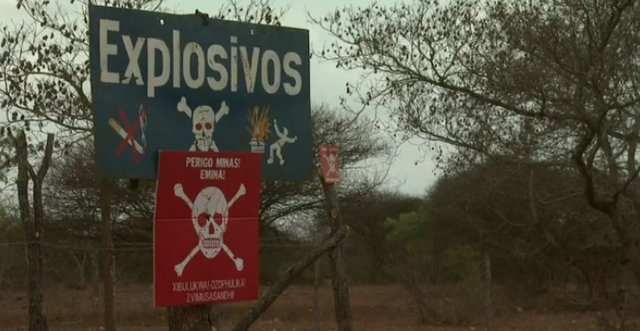
Landmines were used extensively during Mozambique’s civil war (Photo: Skoll)
Troubling news has dominated media coverage in Mozambique in recent months. The devastating impact of Cyclones Idai and Kenneth, former Finance Minister Manuel Chang´s extradition stalemate, and difficulties in voters’ registration have dominated the news cycle. In the midst of such urgent matters, the verbal attack of the member of parliament Alice Tomás from the ruling party Frelimo against the activist and researcher of the NGO Centro of Integridade Pública(CIP), Fátima Mimbirewas, was also in the news. Why? Because in Tomás’ reply to a Facebook post made by Mimbire, she argued that the activist deserved no less than “to be raped by 10 strong men”. In case the reader has not guessed yet, Mimbire’s post pertained to Afonso Dhlakama, the former leader of the opposition Renamo party; or more precisely, it was a post in which she raised questions about Mozambique’s national heroes and whether or not Dhlakama deserved to be part of this select club. Mimbire attacked the very heart of Frelimo’s politics of memory: the reproduction of a narrative in which its members are the saviors of the country and, therefore, the ones to be remembered. To include Dhlakama in such a club would either call this narrative into question or lead to its fundamental revision.
First things first. For 38 years, Dhlakama was the number one of the National Mozambican Resistance (Renamo), Mozambique’s second political force and former guerrilla movement. He had shortly joined the movement in 1976 when he became its leader following the death of André Matsangaíssa in 1979. Considering that the civil war between the Mozambique Liberation Front (Frelimo) and Renamo lasted for almost sixteen years (1977-1992), Dhlakama commanded Renamo nearly for its whole duration.
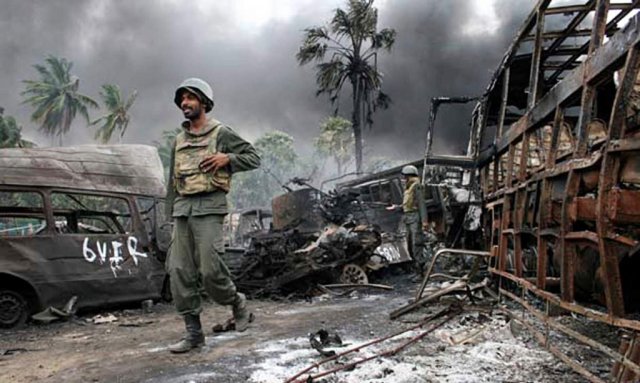
The number of war-related deaths from the civil war was close to one million. In addition, 1.5 million were forcibly displaced and made refugees in the neighboring countries due to the horrors of the war. According to UNICEF estimates, 90 percent of the population was living in poverty and 60 percent living in absolute poverty by the early 1990s. Against this backdrop, no one could argue that the war had not left Mozambique in shatters. Disagreement was reserved for ascertaining the root causes of the war.
On the one hand, Frelimo’s authorities portray the civil war as an extension of the war of external aggression, initially led by Rhodesia, and then continued by the Apartheid regime in South Africa; or, in a simpler way, a war of destabilization. On the other hand, in characterizing the civil war as a battle for democracy, Renamo emphasizes the internal element of it, namely as a violent response triggered by Frelimo’s post-independence authoritarian regime and repressive policies. Boiling down these understandings, if one agrees with Frelimo’s interpretation of events, Dhlakama should never be considered a national hero. Conversely, if one puts themselves on Renamo’s side, Dhlakama surely deserves a spot in the pantheon of heroes as the “father of democracy”. Continue reading