A Graceful Exit for South Africa’s ICC Withdrawal Plans

The following article was written by former UN High Commissioner, Navi Pillay, former Chief Prosecutor of the Rwanda and Yugoslavia tribunals, Richard Goldstone, and myself. Both Navi and Richard are members of the Africa Group for Justice and Accountability. A version of it first appeared in the Mail & Guardian, here

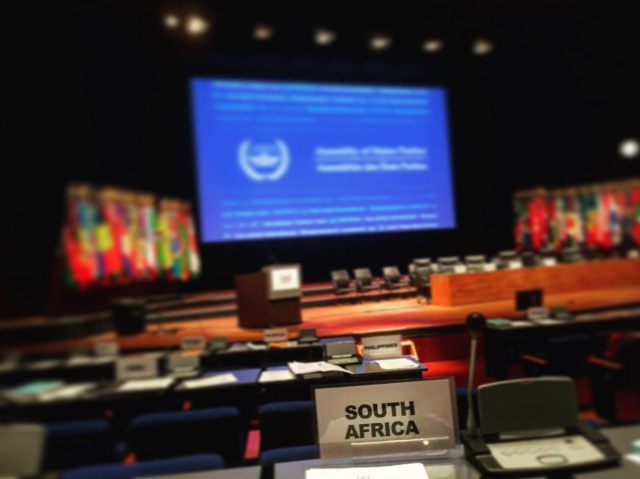
South Africa International Criminal Court

(Photo: Mark Kersten)

Almost two years after first announcing its intention to withdraw from the International Criminal Court (ICC), it remains unclear whether South Africa will exit the Rome Statute system. Last December, Justice Minister Michael Masutha told a meeting of ICC member-states that the country was forging ahead with withdrawal. A few weeks ago, however, Minister of International Relations and Cooperation Lindiwe Sisulu insisted that no final decision had been made. In the meantime, Jacob Zuma has been replaced by Cyril Ramaphosa as South African President. The issue at hand is whether parliament will pass legislation that could open the doors for the executive to eventually withdraw the country from the Rome Statute of the ICC. There is, however, more than just a sliver of hope that South Africa could find a graceful exit from any plan to withdraw from the Court.

At a recent event held by the Africa Group for Justice and Accountability and organized by the Wayamo Foundation in Cape Town, Minister Masutha stated that the International Crimes Bill – the first required for an ICC withdrawal – would soon be debated in Parliament. Critically, he stressed that parliamentarians would take into account developments relevant to South Africa’s concerns with the Court.

Masutha was specifically referring to two issues relating to the question of head of state immunity before the ICC: first, ongoing proceedings at the Court over Jordan’s 2017 decision to host Sudanese President Omar al-Bashir, who has been indicted by the ICC on charges of war crimes, crimes against humanity and genocide in Darfur; and, second, the decision by the African Union to seek an advisory opinion from the International Court of Justice (ICJ) on the status of head of state immunity under international law.

These yet-to-be-resolved developments are important because they are likely to address the key concerns that South Africa has with the ICC. According to proponents of withdrawal in Pretoria, South Africa cannot remain a member of the Court because it creates conflicting obligations for the government, between, on the one hand, fulfilling its duties under the Rome Statute and surrendering the likes of Bashir to the ICC, and on the other, meeting its obligations to fellow governments and international organizations such as the African Union to protect head of state immunity. This quandary, South Africa insists, makes it impossible to play mediator and peacemaker during negotiations to end violent political conflicts.

This leads to numerous questions: Why would South Africa rush towards an ICC exit before its core concerns are resolved? Why not wait until there is greater clarity and perhaps even compromise on the issue of head of state immunity before throwing in the towel, exiting the ICC, and therefore having no say in the Court’s future development? Continue reading

Posted in International Criminal Court (ICC), International Criminal Justice, International Law, Omar al-Bashir, South Africa | Tagged | 8 Comments

Buyer’s Beware – Is a UN Security Council Referral of Myanmar to the International Criminal Court a Good Idea?

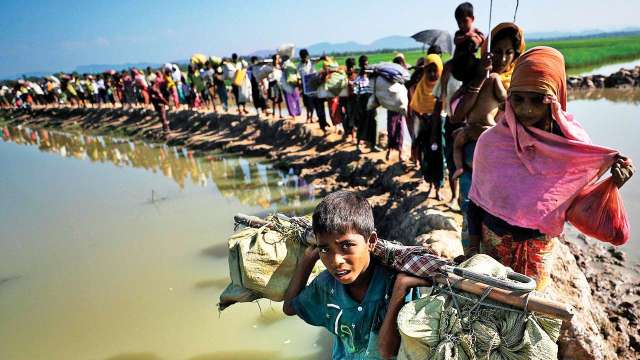
Rohingya refugees at the fence before “no man’s land” between the Myanmar and Bangladesh borders. (Photo: AFP / Getty)

Confirming what close observers have long suspected, investigators from the United Nations have determined that Burmese authorities have committed genocide against the Rohingya population. Without any prospects of the Burmese government investigating and prosecuting atrocities committed against a people they won’t even recognize, the latest revelations have predictably led to renewed calls for the United Nations Security Council to refer Myanmar to the International Criminal Court (ICC).

Before proceeding, let me be unequivocal: the ICC or some other competent judicial body should absolutely investigate crimes committed in Myanmar. While I do not purport to speak on their behalf, the Rohingya deserve justice and accountability. But there are real questions as to whether a UN Security Council is the best way to deliver that. Indeed, experience suggests that such referrals can do more harm than good to victims, survivors, the ICC, and justice itself.

The first Security Council referral of a situation to the ICC came in 2005, when Darfur was referred to the Court. The second came six years later, when the 2011 uprising and civil war in Libya was referred to the ICC. Both referrals have done damage to the institution. They included political carve-outs which ensured that citizens of states that were not members of the Court were excluded from its jurisdiction. This violates the very premise of equality before the law. Despite saddling the Court with a significant and difficult task in both Libya and Darfur, the Council also refused to provide the ICC with any commensurate funding.

The results have been brutal for the Court. Not a single individual for whom the ICC has issued an arrest warrant in Libya or Darfur has ever been convicted. Not one. Making matters worse, the Council’s role in referring situations to the ICC has become a keystone criticism of African states towards the Court. While it is true that the Security Council, and not the ICC, should be criticized for the failures to achieve justice in Darfur or Libya, it is clear that the Court has received the brunt of criticism.

Security Council referrals have also done little for those victims who favour ICC justice. They have elevated expectations that justice will be delivered and that the ICC’s investigations and prosecutions will be supported by a united Council. Not only has no justice been achieved in any Council-referred situation in over thirteen years, but in some cases, victims have resigned from participating in the cases altogether.

We should further avoid an argument which suggests that, because Darfur and Libya received referrals to the ICC, Myanmar should have one too. If the tool is broken, it needs to be fixed – not applied again, in the same way with us expecting different results.

Incredibly, none of the organizations, such as Human Rights Watch, that have pushed for a referral by the Security Council of Myanmar to the ICC, have spelled out why anything would be any different this time. Nor have they put forward a vision of what an appropriate referral would look like – one that would be good for victims, survivors, and the ICC. One possible reason for this is that they know a referral will fail, but that the process is, in and of itself, valuable. Continue reading

Posted in Burma/Myanmar, Genocide, International Criminal Court (ICC), International Criminal Justice, UN Security Council | 7 Comments

On the Human Rights Pitch, FIFA Scores an Own-Goal

FIFA President, Sepp Blatter, with former Liberian President, Charles Taylor, convicted by the Special Court for Sierra Leone for aiding and abetting war crimes in Sierra Leone.

Earlier this month, Sudanese President Omar al-Bashir took in the FIFA World Cup Final between France and Croatia. Bashir was among world leaders in the VIP section of Luzhniki Stadium, in Moscow. But he is unlike anyone else who watched from the crowd that day. He has the singular distinction of having been charged with all three major crimes before the International Criminal Court (ICC): crimes against humanity, war crimes, and genocide. The Sudanese leader is allegedly responsible for countless mass atrocities in Darfur since 2003 and has been on the run ever since he was first indicted in 2008, visiting numerous states in defiance of international law. Even if it is entirely predictable that he would want to travel like a typical head of state and thumb his nose at the ICC, FIFA’s willingness to host him at its premier event is shameful. Given the Association’s history however, it is also sadly unsurprising.

The global football association has infamously battled allegations of corruption. Less known is FIFA’s affiliation with war criminals. Officials from the organization have long cavorted with notorious international criminals. The soccer world’s purported respect for human rights appears to be cosmetic and its practice of fostering relationships with war criminals continues.

FIFA has a storied history with regimes responsible for mass atrocities. In 1978, the World Cup was held in Argentina. The festivities came in the midst of the country’s “Dirty War”, a period when an estimated 30,000 opponents of the right-wing military junta were disappeared. Decades later, many senior junta members responsible for atrocities during the Dirty War are incarcerated following convictions on charges of crimes against humanity and genocide. The intimately interwoven nature of atrocity crimes and celebration of soccer in Argentina led one survivor of the Dirty War to remark that “the 1978 World Cup is one of the deep wounds of Argentine society. Every four years, a new World Cup reactivates those wounds.”

Reports have also long suggested that a senior FIFA official, Alfredo Hawit, collaborated “in unspecified forced disappearances with General Gustavo Alvarez Martinez, the point man for CIA and Argentina intelligence operatives attempting to replicate Operation Condor in Central America.” Still, FIFA has escaped responsibility.

Throughout the 1990s and 2000s, FIFA continued this trend of working with war criminals. In 1999, then Liberian President Charles Taylor was engaged in the long-standing civil war in neighbouring Sierra Leone. Civilians were raped, maimed, in some cases cannibalized, and killed in the thousands. The country’s riches – especially its diamonds – were looted and traded by Taylor for the guns that in turn killed more civilians. In 2013, Taylor was convicted and sentenced to a fifty-year sentence by the Special Court for Sierra Leone for having aided and abetted war crimes during the war. But even in 1999 it was clear to anyone who cared to know that Taylor and the rebels he sponsored were engaged in horrific abuses of civilians. In the midst of this carnage, Taylor hosted an opulent dinner with FIFA’s now disgraced boss, Sepp Blatter. Continue reading

Posted in Argentina, Darfur, FIFA, Human Rights, Omar al-Bashir, Sierra Leone, War crimes | 3 Comments

Making a Distinction: the Rome Statute is not the ICC; it is much more than that

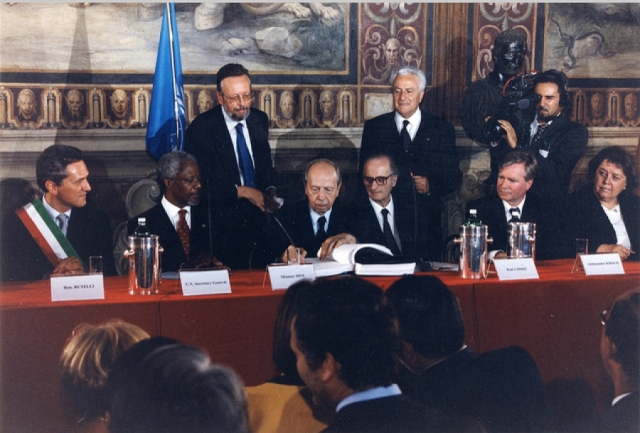
A snapshot from the signing of the Rome Statute in 1998. The International Criminal Court would become a functioning reality four years 

As this piece goes to publication, dozens of events covering the International Criminal Court (ICC) and its record are taking place or are in the pipeline. It’s a veritable deluge. The reason for this onslaught is an anniversary. July 17 marks twenty years since the treaty upon which the ICC was built was voted into existence in Rome, 1998. But there is good reason to make a subtle distinction in marking the anniversary of the Rome Statute, rather than the the ICC itself. The Statute in its own right has had a curious and remarkable impact and influence that reaches far beyond the ICC’s walls. The Rome Statute made the Court but, in many ways, it is also much more than than just the ICC.

There is no doubt that some stocktaking of the ICC’s record is warranted. The Court has had a tumultuous journey since it came into existence in July 2002. There have undoubtedly been some wins. As of today, 124 states have joined the ICC.  It has secured a number of landmark convictions and managed to get a number of influential leaders in the dock, such as former Ivorian President Laurent Gbagbo. It has ensured that the voices of many victims – especially those who have chosen to participate in ICC proceedings – have been heard. It shouldn’t require an idealistic stretch of the imagination to say that it has offered a glimmer of hope for some justice in some places when there otherwise would be none. In places like Palestine and Afghanistan, where justice is regularly, repeatedly, and violently denied to victims and survivors, the ICC may represent the only option for accountability. The Court has further pushed some states, like Colombia, to place the achievement of justice and accountability at the heart of their peace processes. It has changed expectations of what justice may be possible in the wake of violence. Justice is now part of the equation. As soon as atrocities or violent conflicts erupt, observers invariably ask: how soon can the ICC become involved?

At the same time, the demand for ICC justice far outweighs its supply. Some of the Court’s most high-profile cases have collapsed or led to acquittals. Some, including Kenyan President and Deputy President Uhuru Kenyatta and William Ruto, have used the ICC’s cases against them to consolidate and expand domestic power bases. Just days after being acquitted on charges of war crimes and crimes against humanity – following a trial that took a decade, no less – Jean-Pierre Bemba was nominated as a presidential candidate in the Democratic Republic of Congo and now stands as the best challenger to President Joseph Kabila’s rule. Researchers have long observed that governments often ‘use’ the ICC in order to delegitimize their opponents and rid themselves of their adversaries. But given the Kenyatta, Ruto, and Bemba cases, one might also ask: can being targeted by the ICC sometimes help politicians?

Moreover, the ICC’s jurisdiction is severely, and frustratingly, restricted. Despite two-thirds of states joining the ICC, the vast majority of the world’s population live outside of its jurisdictional reach – and ratifications of the Statute have stalled. Major powers are, to say the least, skeptical. Russia, China, India, the United States and others have made it clear that they won’t be joining any time soon, if at all. This isn’t something that the ICC should be blamed for. But it remains worthwhile reflecting on the purchase of the ICC moving forward.

It is a challenging time for proponents of the ICC. The spread of global populism, tensions with major powers, and the persistence of austerity, often make the project of international criminal justice more of a Sisyphean task than a marathon with a clear destination. But against all of these challenges, the Rome Statute itself has had an indelible impact beyond the walls of the ICC itself – and even beyond the court’s member-states. This impact is worth praise irrespective of the what transpires in The Hague.

Again, it is worthwhile making the distinction between the Statute and the Court, similarly to how one might distinguish between a country’s constitution and the state itself. While intimately related, they’re not the same – and, indeed, the  20th anniversary of the ICC, which became a functioning entity in 2002, will be in 2022. When we de-couple the Statute from the Court, we can observe some curious but important impacts of the Rome Statute. Take two examples: India and the Democratic Republic of Congo (DRC). Continue reading

Posted in International Criminal Court (ICC), International Criminal Justice, Rome Statute | Tagged | 1 Comment

Justice for the Rohingya? An Amicus Brief and the Road(s) to Accountability

Hundreds of thousands of Rohingya have been deported from Myanmar to Bangladesh in recent months. (Photo: Reuters)

We have all heard of the devastating situation facing the Rohingya people. Many believe the abuses committed against this vulnerable population by Burmese authorities amount to genocide. Yet almost a year since the Rohingya crisis captured global attention, the situation facing the Rohingya continues to deteriorate. Justice for the atrocities committed against them appears to be a very remote possibility. There is reason, however, for at least some hope on this front.

A few weeks ago, the Office of the Prosecutor at the International Criminal Court (ICC) sought to ascertain whether the Court might have a sliver of jurisdiction over the crimes committed by Myanmar forces against the Rohingya. In particular, the Prosecutor — in an unprecedented move — asked judges in the Pre-Trial Chamber whether she might have jurisdiction over the deportation of the Rohingya from Myanmar (a non-member state of the ICC) to Bangladesh (a member-state that seems willing to engage with the Court on this question). In putting her argument forward, ICC Prosecutor Fatou Bensouda usefully explained that:

the crime of deportation is analogous to a cross-border shooting: the crime, for example murder, is not completed until the bullet (fired in one State) strikes and kills the victim (standing in another State). In both scenarios, the occurrence on the territory of the second State is not, in legal terms, the mere remote effect of a completed criminal conduct on the territory of the first State—rather, it is a legally required element of the crime.

In this context, the Canadian Partnership of International Justice under the leadership of Fannie Lafontaine and Amanda Ghahremani filed an amicus curiae at the ICC. I’m proud to have been part of that initiative. You can read our full brief here. You can also find a list of other submissions here.

The Canadian Partnership of International Justice’s filing supports the position of the ICC Prosecutor that she can request the Pre-Trial Chamber, under Article 19(3), to ascertain whether she has jurisdiction over the deportation of Rohingya people from Myanmar into Bangladesh. It also support the view that the Office of the Prosecutor should, indeed, be granted jurisdiction to investigate this crime.

Bangladesh too has filed its observations, which many hope and believe will be favourable to an ICC investigation. For obvious geopolitical reasons, this is a sensitive issue for Dhaka. Officials in Myanmar, on the other hand, have stated that they will ignore the Court’s request to share their views on the matter, saying that they have “no reason to respond”. Ignoring the ICC is Myanmar’s way of effectively saying that they do not recognize the authority of legitimacy of the Court and therefore will not participate in its proceedings. We can expect that to turn to mud-slinging if and when the Prosecutor opens an investigation.

It is worthwhile stressing that this is not an ideal situation. Far from it. But the ICC Prosecutor should be commended for trying to make the best, or at least something, out of a bad situation where any jurisdictional reach is extremely limited. The world has stood by watching as hundreds of thousands of Rohingya have been forced to leave their homes in Rakhine State only to enter devastating conditions in camps across the border in Bangladesh. Along with their often-meagre belongings, they carry with them stories and burden of untold violence and harm. Adding insult to criminal injury, neither side will recognize them as what they are: Rohingya. They are disenfranchised and disregarded. To call it abhorrent is an understatement. Continue reading

Posted in Bangladesh, Burma/Myanmar, Canadian Partnership of International Justice , Deportation, International Criminal Court (ICC), International Criminal Justice, Rohingya | 4 Comments

It’s Not Too Late — A Proposal for South Africa to Stay in the ICC

A version of the following article was originally published in the Mail & Guardian and was co-authored with Richard Goldstone, former Chief Prosecutor of the International Criminal Tribunal for the former Yugoslavia and a member of the Africa Group for Justice and Accountability

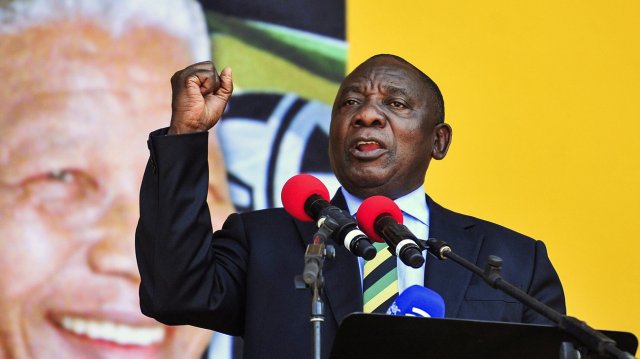
South African President Cyril Ramaphosa giving a speech in Cape Town, South Africa (Photo: AP)

South Africa’s Justice Minister has presented the International Crimes Bill to the Justice Portfolio Committee of the South African parliament. This process could be a precursor to the country repealing the Rome Statute of the International Criminal Court Act (2002) and eventually withdrawing from the International Criminal Court (ICC). This is very troubling news — for South Africa and the project of global justice itself. It is also unnecessary. South Africa can and should be a champion of the ICC and seek to improve the institution it has already invested so much into. What happens next will determine whether South Africa is a leader or a laggard on international justice. It still has an opportunity to be the latter — and avoid the former. 

This is not the first time that South Africa has moved towards withdrawal from the ICC. In October 2016, the government of Jacob Zuma announced that it would withdraw from the ICC due to a host of reasons, including its belief that, in order to be an active and effective mediator in peace processes, it could not remain a member of the Rome Statute of the ICC. 

Zuma’s efforts to withdraw South Africa from the ICC were thwarted by deft domestic legal action. According to the High Court, which found Zuma’s efforts to withdraw South Africa from the ICC to be unconstitutional and that parliamentary approval of any effort to repeal the ICC Act of 2002 and withdraw the country from the Court was necessary.

After Zuma’s resignation, many observers hoped that his successor, President Cyril Ramaphosa, would not proceed towards withdrawing South Africa from the ICC. This hope was not met by any confirmation that the ANC’s policy of seeking withdrawal from the ICC had changed. For his part, President Ramaphosa has been silent on the matter. Still, as someone widely regarded as a proponent of international law and global justice, many believed that the President would see the value and interest of remaining a state party of the Court. Ramaphosa was on the International Commission on Intervention and State Sovereignty whose conceptualization of the Responsibility to Protect posited the International Criminal Court as a cornerstone of the anti-impunity firmament. South Africa itself has a proud and impressive history of supporting efforts to achieve justice and accountability for mass atrocities, including at the ICC. In his Africa Day address last week, the President emphasised the importance of South Africa supporting international law and the United Nations. Everything should be done to avoid undermining that hard-earned reputation and record.

The government’s decision to continue pushing forward the International Crimes Bill means that the merits of South Africa’s withdrawal from the ICC will be debated in Parliament in the coming weeks and months. Hope in South Africa’s commitment to the ICC now resides amongst the country’s Parliamentarians. But President Ramaphosa and the ANC leadership could still play a role in making the best out of a bad situation. Here’s how. Continue reading

Posted in International Criminal Court (ICC), International Criminal Justice, Omar al-Bashir, South Africa | Tagged | 3 Comments

Meeting Expectations on the Road to Justice: Achieving Accountability in The Gambia

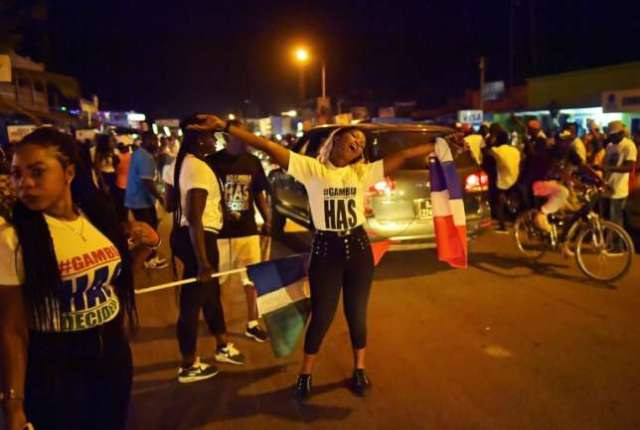
Gambians celebrate in January 2017 following the confirmed departure of Yahya Jammeh from power — and the country. (Photo: AFP)

Dear readers of JiC,

As some of you will know, over the last few months, I have been doing work and research on The Gambia’s transition following the end of Yahya Jammeh’s authoritarian rule. Last July, I was part of a joint effort between the Wayamo Foundation (where I act as Deputy Director) and the Africa Group for Justice and Accountability (AGJA) which provided feedback to Minister of Justice Ba Tambadouon on legislation that created a Truth, Reconciliation and Reparations Commission. In late October, I also had the opportunity to be part of a three-person delegation which visited The Gambia for in-depth consultations with key actors and to see how Wayamo and AGJA might be able to assist in The Gambia’s efforts to confront its past and achieve justice and accountability for Jammeh-era crimes. It was an eye-opening experience speaking to victims and survivors, relevant ministers and political officials, journalists, students, and police officers. The challenge ahead for The Gambia is immense. But so too is the opportunity.

In this context, I wanted to share with readers the mission report from our consultations in The Gambia entitled Meeting Expectations on the Road to Justice: Achieving Accountability in The Gambia. Most importantly, the report offers recommendations on a number of key issues and challenges facing the country in its efforts to achieve justice and accountability for past crimes as well as building respect for the rule of law and preventing any slide-back to authoritarian rule.

Here is the report overview:

The Africa Group for Justice and Accountability (AGJA) and the Wayamo Foundation have been engaged in The Gambia since July 2017, when they were requested to make recommendations to the Minister of Justice, Abubacarr Tambadou, on the proposed Truth, Reconciliation and Reparations Commission. Subsequent to its report and at Minister Tambadou’s express invitation, an AGJA/Wayamo fact-finding delegation was sent to the country in late October 2017 to ascertain the nature of the challenges confronting The Gambia’s transition and, in particular, with regards to achieving justice and accountability for human rights violations and crimes perpetrated under the former regime. The delegation’s efforts have since been described by high-ranking officials as the “most thorough” consultative process undertaken in the country since the beginning of its democratic transition.

Through a series of broad consultations with key stakeholders in the transitional process, including members of government, civil society, academia, and the diplomatic community, the delegation sought to understand the challenges and priorities surrounding the achievement of justice and accountability in the country. The delegation was led by former Tanzanian Chief Justice, Mohamed Chande Othman, and included human rights advocate Fatiha Serour (Algeria) and Wayamo Foundation Deputy Director, Mark Kersten (Canada).

Over four days of consultations, the delegation held meetings with a wide spectrum of interlocutors, ranging from the country’s Vice President, Ministers of Justice and Foreign Affairs, Inspector-General of Police, Speaker and members of the National Assembly, to representatives from the United Nations Development Programme, United Kingdom, United States and European Union embassies, Centre for Victims of Human Rights Violations, University Student Union, and Press Union.

Based on the delegation’s consultations as well as ongoing research on the country’s transition conducted at the Wayamo Foundation, this mission report offers a series of recommendations to authorities and officials in The Gambia as they continue to work on achieving justice and accountability and building a state that eagerly and effectively defends the rule of law and human rights. It is also expected that it will inform the work of the Wayamo Foundation, AGJA and other partners interested in further supporting The Gambia’s transition process.

A copy of the rule report can be found here. As always, please do share your thoughts!

Posted in The Gambia, Truth and Reconciliation Commissions, Truth Commission | 1 Comment

The International Criminal Court Can and Should Investigate Violence in Gaza

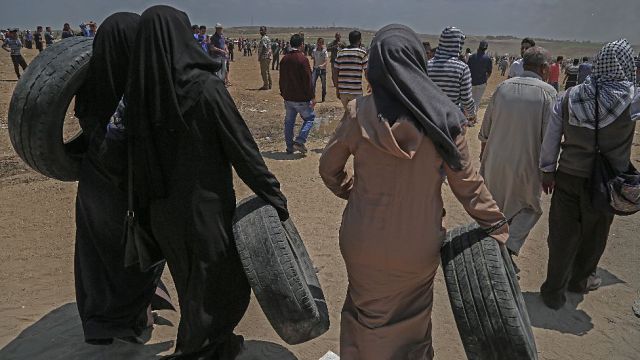
Palestinian protesters on 14 May (Photo: EPA)

As the United States moved its embassy from Tel Aviv to Jerusalem, the Israeli government was ecstatic. In contrast, Palestinians were irate, organizing public demonstrations throughout the spring. When the embassy opened its doors on May 14, Israeli soldiers fired live ammunition into large crowds of mostly unarmed demonstrators, some of whom were attempting to cross the border. 

The result was at least sixty deaths— the deadliest day in Gaza since the 2014 Israeli-Gaza war. 

What justice can be done for the victims of violence wrought by both Palestinian militants and Israeli forces on Palestinian civilians? One avenue would be the International Criminal Court (ICC), which already has jurisdiction in Palestine. This week’s events likely make an investigation by the ICC inevitable. But such a probe would not be without its challenges.

The ICC in Palestine

In response to the 2014 war in Gaza and a subsequent request from the government of Palestine, the ICC opened a preliminary examination into alleged war crimes and crimes against humanity perpetrated on Palestinian territory. The most recent unrest in Gaza will only add fuel to the fire — and add pressure on ICC Prosecutor Fatou Bensouda to open an official investigation into those responsible for atrocities. 

Despite some disagreement from a dwindling number of states who do not recognize Palestine as a state— and therefore do not believe that Palestine could request an ICC investigation into alleged crimes committed in Gaza— the ICC has both accepted Palestine as a state-party to the court and opened a preliminary examination into violence committed in Gaza since 13 June 2014.

It is important to stress that any investigation into Palestine would rightly require the ICC to investigate all sides of the conflict. While often and purposefully framed as such, the court cannot be used by Palestine against Israel. The indiscriminate shooting of rockets from Gaza into Israeli communities and other violent activities by Hamas would also be investigated and prosecuted.

Before an official investigation can be launched, however, the preliminary examination must be concluded. Doing so requires the ICC prosecutor to consider numerous factors, including whether: crimes under the court’s jurisdiction have been committed; relevant states are investigating and prosecuting the crimes themselves; the alleged crimes are sufficiently grave to merit investigation from the ICC; and if an investigation would be in the “interests of justice.” 

Palestine has been under preliminary examination for over three years. Prosecutor Bensouda insists that she cannot provide a timeframe for when the examination will conclude. This week’s violence in Gaza— including the deaths of an eight-month-old child and a disabled man in a wheelchair wielding a slingshot—should change her calculus.

A challenge to the ICC prosecutor

This week’s violence also poses a challenge to the prosecutor’s ability to effectively deter atrocities— something Bensouda said is a “crucial function” of her office. In reaction to the deaths of Palestinian protesters in March, Bensouda issued a statement, warning that “[a]ny person who incites or engages in acts of violence including by ordering, requesting, encouraging or contributing in any other manner to the commission of crimes within ICC’s jurisdiction is liable to prosecution before the Court.” She issued a similar response to the most recent violence in Gaza. 
Continue reading

Posted in Gaza, International Criminal Court (ICC), International Criminal Justice, Israel, Palestine, Palestine and the ICC | 1 Comment

Policy Paper Alert: “Building Bridges and Reaching Compromise: Constructive Engagement in the Africa-ICC Relationship”

Building Bridges and Reaching Compromise: Constructive Engagement in the Africa-ICC Relationship

Dear JiC readers,

I am thrilled to announce the publication of a policy paper entitled “Building Bridges and Reaching Compromise — Constructive Engagement in the Africa-ICC Relationship” that I have authored with contributions from colleagues at the Wayamo Foundation, where I work as Deputy Director.

The paper is the result of long-term research and was inspired by dialogues on the Africa-ICC relationship initiated by the German Ministry of Foreign Affairs and held in Pretoria in March 2017. The comprehensive and in-depth report offers policy-relevant analysis across numerous issue areas, with a particular focus on: the perception and misperceptions of the ICC, the Court’s relationship with the Security Council, the so-called “peace versus justice” debate, and reforms of the ICC from within. These core areas are assessed with regards to their impact and influence on the relationship between the ICC and African states and constituencies.

The relationship between Africa and the International Criminal Court (ICC) has received a tremendous amount of attention in recent years. Not only have dozens of articles and reports been written on the subject, but numerous conferences, symposia and diplomatic meetings have sought to assess the crux of the relationship and the concerns that African states and communities have regarding the Court. Despite allof this time, effort, and energy, it cannot be said todaythat the problems at the heart of this relationship have been resolved.

Over many years, the Wayamo Foundation has engaged with scholars, researchers, diplomats, practitioners, human rights advocates and politicalfigures on the subject of the Africa-ICC relationship. Indeed, understanding and improving the relationshipis a core feature of Wayamo’s mandate. This report thus represents much of the knowledge regarding the relationship that the Wayamo Foundation has built up and gleaned over the last year.

This policy report was further inspired in part by discussions held during the South African-German International Justice Dialogue. The event was initiated by the German Ministry of Foreign Affairs and organised by the Wayamo Foundation. It was held under Chatham House Rules, from 27-28 March 2017 in Pretoria.

In the following pages, the report focuses on four keytopics that have proven central to the relationshipbetween the Court and the African continent:

1. Perceptions regarding the ICC;

2. The relationship between the Court, the Security Council and Head of State Immunity;

3. The Peace-Justice debate; and

4. Reforms of the ICC.

The report offers analysis as well as recommendationson each of these critical subjects.

Above all else, this report urges continued engagementon the Africa-ICC relationship by all relevant actors, including ICC member states, the Court itself, civil society organisations, scholars and researchers, as well as victims and their representatives. Only through positive engagement can the legitimate concerns of African states and African communities be heard. Only through dialogue and negotiation can abetter and more effective ICC be realized.

The full paper can be accessed here.

Posted in Africa, African Union (AU), Amnesty, Article 16, Assembly of States Parties, ICC Prosecutor, International Court of Justice, International Criminal Court (ICC), International Criminal Justice, Peace Negotiations, Peace Processes, Peacebuilding, Policy Papers, UN Security Council, Wayamo Foundation | 1 Comment

Lecture in Berlin: Africa and the International Criminal Court — Building Bridges and Reaching Comprise

(Photo: Wikimedia Commons)

Dear (Berlin-based) Readers,

I am happy and very excited to announce a lecture that I will be giving entitled ‘Africa and the International Criminal Court — Building Bridges and Reaching Comprise’. The event will take place at the WZB in Berlin on 17 May at 18:00. I will be presenting findings from a research and policy paper on the Africa-ICC relationship that I have written in collaboration with colleagues at the Wayamo Foundation. Here are the details:

Africa and the International Criminal Court — Building Bridges and Reaching Comprise 

According to many observers African states and the International Criminal Court (ICC) are at loggerheads. Government leaders have derided the ICC as racist and neo-colonial in its pursuit of justice. A number of states have stated their intention to withdraw from the Court and one, Burundi, withdrew from the ICC in October 2017. At the same time, African communities affected by conflict have raised concerns about the impacts of the ICC and the apparent gap between the institution’s promise and what it can deliver. In such trying times many urgent questions arise: What is the future of the ICC-Africa relationship? What drives the antagonism of certain African states and communities towards the Court? What can be done to build bridges and reach compromises that enhance the ICC’s relationship with Africa whilst simultaneously strengthening the project of international justice?

Based on a newly released research and policy paper, this lecture will delve into these questions, elaborating the core motivations of African critiques of the Court, offering an detailed view into the current issues at the heart of the Africa-ICC relationship, as well as outlining concrete measures that can be taken to improve it. African states helped build the ICC; their engagement with the institution will determine what kind of Court — and indeed what kind of system of global justice — the world and its people can expect. 

The event is organised and moderated by Sassan Gholiagha.

More details and info for RSVP are available here.

If you are in (or near!) Berlin, please come join us. It would be great to see you — or see you again!

Mark

Posted in Africa, International Criminal Court (ICC) | 2 Comments